Kirjojen hintavertailu. Mukana 11 342 296 kirjaa ja 12 kauppaa.

Kirjahaku

Etsi kirjoja tekijän nimen, kirjan nimen tai ISBN:n perusteella.

20 kirjaa tekijältä Pope Benedict XVI

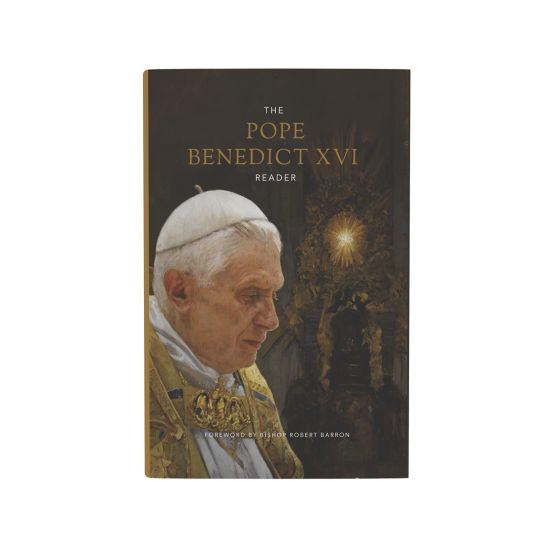
The Pope Benedict XVI Reader

The Pope Benedict XVI Reader

Pope Benedict XVI

Word on Fire
2021
sidottu
It is difficult to overestimate the impact that Pope Benedict XVI has had on the Catholic Church. He served the people of God as a priest, an advisor at the Second Vatican Council, a bishop, a cardinal, Prefect of the Congregation for the Doctrine of the Faith, and the 265th pope. But in addition to his influence as a churchman, Joseph Ratzinger also stands out as one of the most significant thinkers in recent history. He is the author of more than sixty books, numerous articles, and countless homilies. Catholics and non-Catholics alike have been inspired and challenged by his theological writings. For many people, it can be difficult to know where to begin. The Pope Benedict XVI Reader offers a point of entry for those seeking a deeper engagement with his teachings, whether you have read little of his work or have enjoyed it for years. This wide-ranging collection draws together some of the finest excerpts from Ratzinger's interviews, speeches, audiences, homilies, and books, with insights on a variety of topics, including the Trinity, the person of Jesus Christ, the Church, Mary and the saints, the Bible, the liturgy, prayer, the Second Vatican Council, and the challenge of living the faith in the modern world. What emerges is a fascinating portrait of a man whose legacy of scholarly erudition, pastoral gentleness, and deep and abiding love for Christ and his Church continues to awe the world.
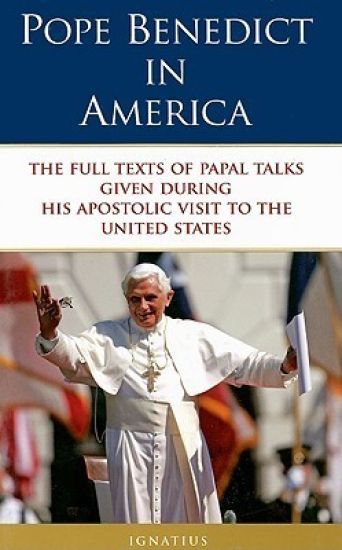
Pope Benedict in America: The Full Texts of Papal Talks
During his six-day apostolic visit to Washington and New York, Pope Benedict addressed millions of people�in person or via the media. He gave some fifteen major addresses, ranging from his remarks to the President of the United States to his address to ecumenical leaders at St. Joseph Parish in New York, from his speech to the General Assembly of the United Nations to his message to the Jewish community celebrating the feast of Passover. In all of his addresses, Benedict spoke as the Vicar of Christ with the message of divine truth and love, of genuine faith and a well-founded, Christ-centered hope.This book contains all of Benedict's major addresses in a handy slim deluxe hardcover edition perfect for studying and reflecting on the Pope's profound and insightful words on a variety of important spiritual, moral, and social issues. Readers will readily see the truth of Jesuit Father James Schall's statement from his introduction to this volume: "Benedict XVI is an amazingly learned man . . . There is no one else in any public office in the world that has � his breadth of knowledge and scholarship. Though he speaks the learned German academic tongue with the best of them, his writings are strikingly straightforward and clear . . . One sensed that the media understood this somehow, that this man was on top of every subject and operated at a depth few could match. The papacy does have the duty of teaching, and Benedict does teach. He also thinks and ponders. What is characteristic of him is that he not only speaks authoritatively when he must, but that he mostly offers what he says on the grounds of common sense and reason. He goes directly to the minds and hearts of his readers or listeners."
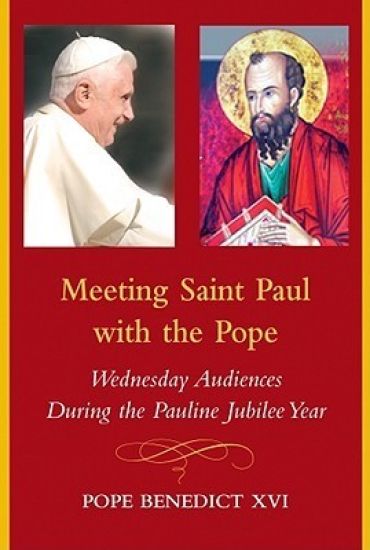
Meeting Saint Paul With the Pope

Meeting Saint Paul With the Pope

Pope Benedict XVI

Paulist Press International,U.S.
2009
pokkari
During the special Pauline Jubilee Year, Pope Benedict XVI used his Wednesday audiences as an opportunity to meet one of the most influential persons in the history of Christianity, Saint Paul. Meeting Saint Paul is the complete collection of these twenty-one papal reflections.
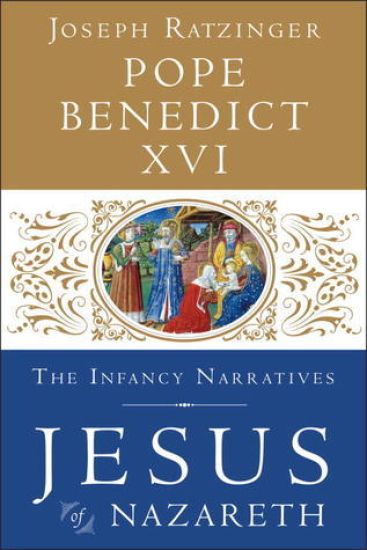
Jesus of Nazareth: The Infancy Narratives
The New York Times bestselling final volume in the Pope's Jesus of Nazareth series, detailing how the stories of Jesus' infancy and childhood are as relevant today as they were two thousand years ago. In 2007, Joseph Ratzinger published his first book as Pope Benedict XVI in order "to make known the figure and message of Jesus." Now, the Pope focuses exclusively on the Gospel accounts of Jesus' life as a child. The root of these stories is the experience of hope found in the birth of Jesus and the affirmations of surrender and service embodied in his parents, Joseph and Mary. This is a story of longing and seeking, as demonstrated by the Magi searching for the redemption offered by the birth of a new king. It is a story of sacrifice and trusting completely in the wisdom of God as seen in the faith of Simeon, the just and devout man of Jerusalem, when he is in the presence of the Christ child. Ultimately, Jesus' life and message is a story for today, one that speaks to the restlessness of the human heart searching for the sole truth which alone leads to profound joy.
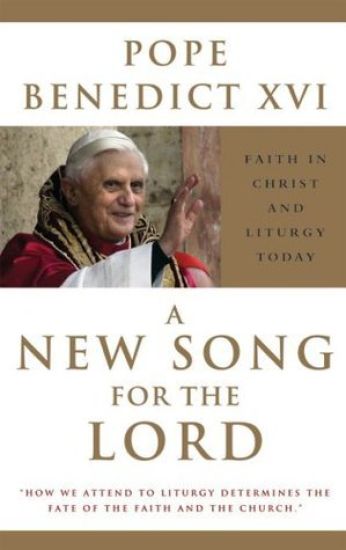
A New Song for the Lord

A New Song for the Lord

Pope Benedict XVI

Crossroad Publishing Co ,U.S.
1996
nidottu
The pope’s definitive statement on liturgical reform. Pope Benedict XVI shows that in the controversies over liturgical reform and the Latin mass, liturgy is not just a pragmatic matter but a central feature in our relationship to Christ, the Church, and ourselves.
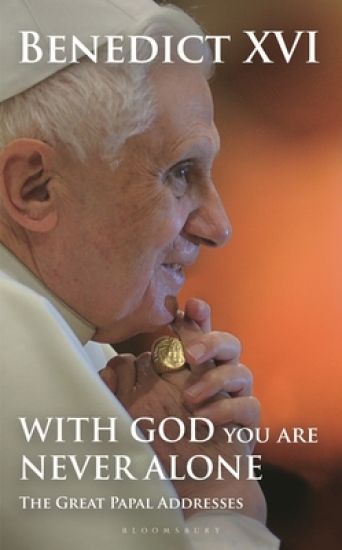
With God You Are Never Alone

With God You Are Never Alone

Pope Benedict XVI

BLOOMSBURY PUBLISHING PLC
2023
sidottu
For the first time, the 10 great speeches of Benedict XVI's pontificate are collected. From the first homily delivered as soon as he became pope to the last public hearing, these speeches reveal the depth of his theological reflection in simple language that has nourished the faith of millions.Since Pope Benedict XVI died he has had a remarkably good press. Indeed many have argued that there is a natural evolution between Pope Benedicts mission and that of his successor Pope Francis.Dubbed and dismissed by many as an unrepentant traditionalist, we now see a man of profound intelligence and wisdom on matters relating not just to religion but to what is not termed 'The Common Good'. It is thus more important to read these texts carefully and with measure and not in garbled versions dreamt up by the Press. With this in mind, Benedict will be seen as an inspiring thinker who has a lot to teach us now and the future. Included here are his speech on visiting Auschwitz, his address to the House of Commons and House of Lords, his address to the German Bundestag in Berlin, his address to the United Nations, his notorious Regensburg speech and his speech when he finally announced his resignation.
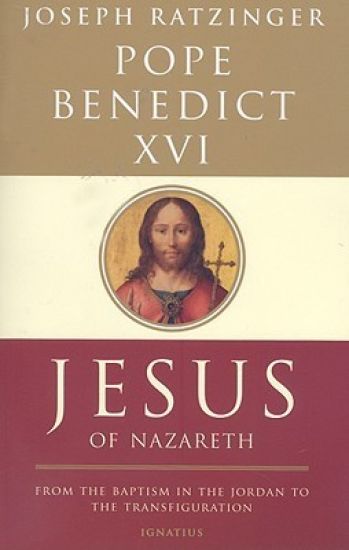
Jesus of Nazareth: From the Baptism in the Jordan to the Transfiguration Volume 1
In this bold, momentous work, Joseph Ratzinger--in his first book written since he became Pope--seeks to salvage the person of Jesus from recent "popular" depictions and to restore Jesus' true identity as discovered in the Gospels. Through his brilliance as a theologian and his personal conviction as a believer, the Pope shares a rich, compelling, flesh-and-blood portrait of Jesus and invites us to encounter, face-to-face, the central figure of the Christian faith. From Jesus of Nazareth: "the great question that will be with us throughout this entire book: What did Jesus actually bring, if not world peace, universal prosperity, and a better world? What has he brought? The answer is very simple: God. He has brought God He has brought the God who formerly unveiled his countenance gradually first to Abraham, then to Moses and the Prophets, and then in the Wisdom Literature--the God who revealed his face only in Israel, even though he was also honored among the pagans in various shadowy guises. It is this God, the God of Abraham, Isaac, and Jacob, the true God, whom he has brought to the peoples of the earth. He has brought God, and now we know his face, now we can call upon him. Now we know the path that we human beings have to take in this world. Jesus has brought God and with God the truth about where we are going and where we come from: faith, hope, and love." The Study Guide is also available
Charity in Truth: Caritas in Veritate

Charity in Truth: Caritas in Veritate

Pope Benedict XVI

IGNATIUS PRESS
2009
sidottu
Benedict XVI has something for everyone in Charity in Truth--from praising profit to defending the environment, from calling for a role for government in the economy to insisting on the necessity of moral transformation and "gratuitousness" in economic life, from the issue of immigration to the importance of technology. However, he also insists on discernment and the purification of our ideas by faith and reason, in order to temper any immoderate and one-sided enthusiasms. Charity and Truth was expected to be--and is--the Pope's encyclical on "social justice." And indeed "justice" and "rights" find their proper place. But "charity" and truth are shown to be the fundamental principles. Charity is at the heart of the Church's social doctrine, he writes. "Without truth, without trust and love for what is true, there is no social conscience and responsibility, and social action ends up serving private interests and the logic of power". Benedict calls for "integral human development," which promotes "the good of every man and of the whole man", including the spiritual dimension, "the perspective of eternal life". Without this, "human progress in this world is denied breathing-space." What's more, true development requires "openness to life". ""If there is lack of respect for the right to life and a natural death," he writes, "if human conception, gestation and birth are made artificial, if human embryos are sacrificed to research, the conscience of society ends up losing the concept of human ecology and, along with it, that of environmental ecology. It is contradictory to insist that future generations respect the natural environment when our educational system and laws do not help them to respect themselves." With respect to economics, the Pope insists every economic decision has a moral consequence. He avoids the extremes of an unbridled capitalism and socialism. Instead, he holds that "the logic of the market and the logic of the State"--free economic exchange with political oversight and restraint--are not enough to secure human flourishing. There must be a generosity and gratuitousness among citizens and nations that goes beyond economic and political systems. "Charity" is necessary for "justice" to be "justice".Benedict also argues that technology must not be seen as automatically providing solutions to problems, without the need for morality. Nor must man seek to avoid responsibility for overcoming social problems by rejecting technological development as inevitably evil. Benedict insists that man must be humble yet confident that he can, through faith and reason, make true progress in human development.
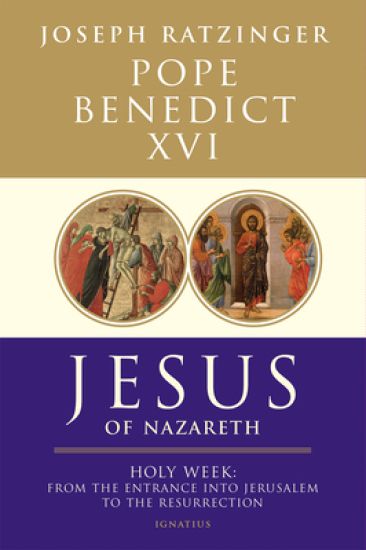
Jesus of Nazareth: Holy Week: From the Entrance Into Jerusalem to the Resurrection Volume 2
For Christians, Jesus of Nazareth is the Son of God, who died for the sins of the world, and who rose from the dead in triumph over sin and death. For non-Christians, he is almost anything else--a myth, a political revolutionary, a prophet whose teaching was misunderstood or distorted by his followers. Jesus of Nazareth is the Son of God, and no myth, revolutionary, or misunderstood prophet, insists Benedict XVI. He thinks that the best of historical scholarship, while it can't "prove" Jesus is the Son of God, certainly doesn't disprove it. Indeed, Benedict maintains that the evidence, fairly considered, brings us face-to-face with the challenge of Jesus--a real man who taught and acted in ways that were tantamount to claims of divine authority, claims not easily dismissed as lunacy or deception. Benedict XVI presents this challenge in his new book, Jesus of Nazareth: Holy Week: From the Entrance into Jerusalem to the Resurrection, the sequel volume to Jesus of Nazareth: From the Baptism in the Jordan to the Transfiguration.Why was Jesus rejected by the religious leaders of his day? Who was responsible for his death? Did he establish a Church to carry on his work? How did Jesus view his suffering and death? How should we? And, most importantly, did Jesus really rise from the dead and what does his resurrection mean? The story of Jesus raises many crucial questions. Benedict brings to his study the vast learning of a brilliant scholar, the passionate searching of a great mind, and the deep compassion of a pastor's heart. In the end, he dares readers to grapple with the meaning of Jesus' life, teaching, death, and resurrection. "Only in this second volume do we encounter the decisive sayings and events of Jesus' life . . . I hope that I have been granted an insight into the figure of Our Lord that can be helpful to all readers who seek to encounter Jesus and to believe in Him." -Pope Benedict XVI
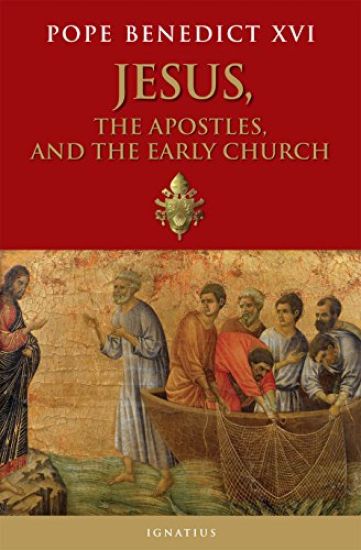
Jesus, the Apostles, and the Early Church

Jesus, the Apostles, and the Early Church

Pope Benedict XVI

Ignatius Press
2015
pokkari
Based on Pope Benedict XVI's weekly teaching on the relationship between Christ and the Church, this book tells the drama of Jesus' first disciples his Apostles and their associates and how they spread Jesus' message throughout the ancient world. Far from distorting the truth about Jesus of Nazareth, insists Pope Benedict, the early disciples remained faithful to it, even at the cost of their lives. Beginning with the Twelve as the foundation of Jesus' re-establishment of the Holy People of God, Pope Benedict examines the story of the early followers of Christ. He draws on Scripture and early tradition to consider such important figures as Peter, Andrew, James and John, and even Judas Iscariot. Benedict moves beyond the original Twelve to discuss Paul of Tarsus, the persecutor of Christianity who became one of Jesus' greatest disciples. Also considered are Stephen, the first Christian martyr, Barnabas, Timothy, Titus, the wife and husband "team" of Priscilla and Aquila, and such key women figures as Mary, the Mother of Jesus, Mary Magdalene, and Phoebe. Jesus, the Apostles and the Early Church is a fascinating journey back to the origins of Christianity. It reveals how Jesus' earliest disciples faithfully conveyed the truth about the "Jesus of history" and how they laid the foundations for the Church, through whom people today can know the same Jesus."
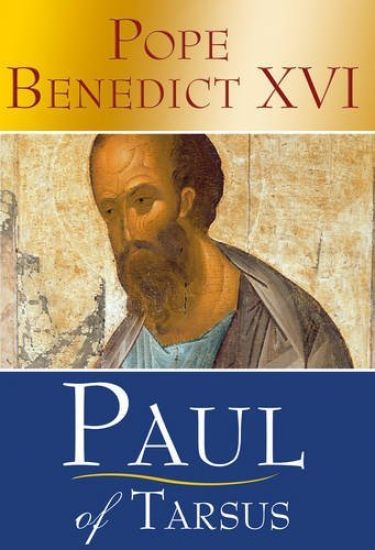
Saint Paul

Saint Paul

Pope Benedict XVI

IGNATIUS PRESS
2017
nidottu
Saint Paul is one of the most important figures in Christian history. As Saul of Tarsus he vigorously persecuted Christianity, even collaborating in the death of Saint Stephen, the first Christian martyr. Paul's encounter with the resurrected Jesus on the road to Damascus changed his life, the Church, and the world. More than anyone else in the early Church, Paul saw the universal nature of the Christian message. He became the "Apostle to the Gentiles" and the "Teacher of the Nations". As the author of half of the New Testament, Paul is a figure who cannot be overlooked by anyone who wants to understand Jesus Christ and Christianity.In this book, Pope Benedict XVI, a profound spiritual leader and a first-rate theologian and Bible commentator, explores the legacy of Saint Paul. The pope follows the course of the Apostle's life, including his missionary journeys, his relationships with the other Apostles, and his martyrdom in Rome. Benedict also examines the following questions: Did Paul know Jesus during his earthly life. How much of Jesus' teaching and ministry did he know about? Did Paul distort the teachings of Jesus? What role did Jesus' death and resurrection play in Paul's teaching? What are we to make of Paul's teaching about the end of the world? What does his teaching say about salvation and the roles of faith and works in the Christian life? How have modern Catholic and Protestant scholars come together in their understanding of Paul? What does Paul have to teach us today about living a spiritual life?"The Apostle Paul, an outstanding and almost inimitable yet stimulating figure, stands before us as an example of total dedication to the Lord and to his Church, as well as of great openness to humanity and its cultures." -- Pope Benedict XVI
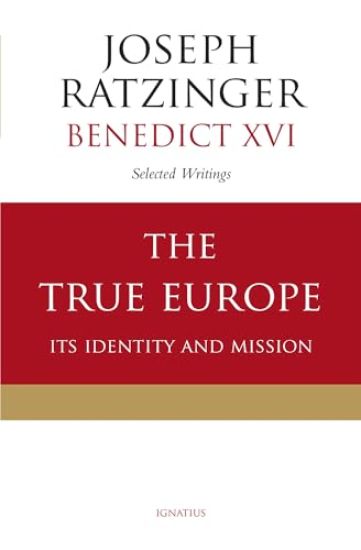
The True Europe: Its Identity and Mission

The True Europe: Its Identity and Mission

Pope Benedict XVI

IGNATIUS PRESS
2024
nidottu
"The ecological movement discovered that 'nature' prescribes for us a moderation that we cannot ignore with impunity. Unfortunately, 'human ecology' has still not been made concrete. A human being, too, has a 'nature' that is prescribed for him, and violating or denying it leads to self-destruction." -- Benedict XVI, from the preface This collection of selected works is Benedict XVI's heartfelt call for Europe to rediscover its true origin and identity, in order to become once again a beacon of beauty and humanity for the world. Such a revival would be not simply about imposing the truths of faith as the foundation of Europe, but about making a fundamental choice for justice: to live as if God exists rather than as if he does not. Just as Pope John XXIII once called on the great nations of the earth to avoid a devastating nuclear war, Benedict XVI addresses not only Europe but the whole West, so that, by again finding their own soul as a people, they can save the world from self-destruction--both physical and spiritual. "With his characteristic clarity, immediate accessibility, and at the same time depth, the Pope Emeritus magnificently outlines here the 'idea of Europe' that undoubtedly inspired its Founding Fathers and is the basis for its greatness; the definitive dimming of this ideal would ratify its complete and irreversible decline." -- Pope Francis, from the Introduction
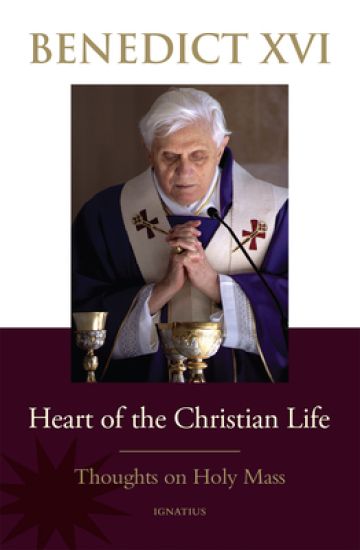
Heart of the Christian Life: Thoughts on the Holy Mass
The celebration of the Eucharist, in which Jesus Christ becomes present, is the center of the Catholic faith. This volume brings together substantive texts of the Holy Father on the many aspects and dimensions of the Mass and the Mystery of the Eucharist, a rich source for every Christian and a spur to reflection and personal prayer. Delivered in addresses and homilies to a wide variety of audiences, these reflections reveal the depth and breadth of Pope Benedict XVI's profound and life-long love for the Holy Eucharist. A major theme throughout the works of Joseph Ratzinger, the Real Presence of Jesus in the Eucharist is the Church's source of life, unity and fruitfulness. This theme has been carried deeply into his pontificate, as can be seen in this collection, which challenges the faithful to believe that by receiving Christ in Holy Communion, they are drawn not only into the very life of God, but into the community that is Christ's Body, the Church. "In the institution of the Eucharist we see the very foundational act of the Church. Through the Eucharist the Lord not only gives himself to his own, but gives the reality of a new community 'until he comes' (cf. 1 Cor 11:26). Through the Eucharist the disciples become his living house that grows through history as the living Temple of God in this world." -- Pope Benedict XVI
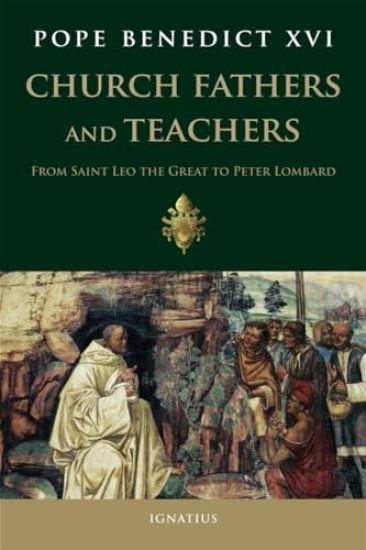
Church Fathers and Teachers: From Leo the Great to Peter Lombard
After meditating on the Apostles and then on the Fathers of the early Church, as seen in his earlier works Jesus, the Apostles and the Early Church and Church Fathers, Pope Benedict XVI devoted his attention to the most influential Christian men from the fifth through the twelfth centuries. In his first book, Church Fathers, Benedict began with Clement of Rome and ended with Saint Augustine. In this volume, the Holy Father reflects on some of the greatest theologians of the Middle Ages: Benedict, Anselm, Bernard, and Gregory the Great, to name just a few. By exploring both the lives and the ideas of the great popes, abbots, scholars and missionaries who lived during the fall of the Roman Empire and the rise of Christendom, Pope Benedict XVI highlights the key elements of Catholic dogma and practice that remain the foundation stones not only of the Roman Catholic Church but of Christian society itself. This book is a wonderful way to get to know these later Church Fathers and Teachers and the tremendous spiritually rich patrimony they have bequeathed to us. "Without this vital sap, man is exposed to the danger of succumbing to the ancient temptation of seeking to redeem himself by himself." -- Pope Benedict XVI
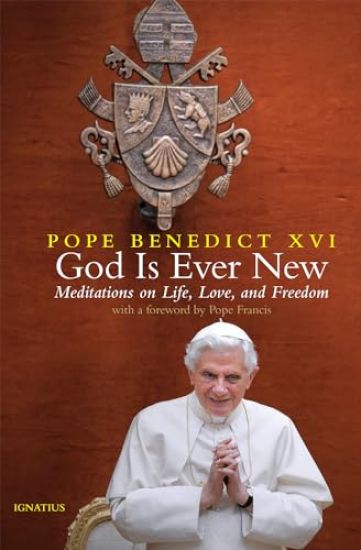
God Is Ever New: Meditations on Life, Love, and Freedom
With this concise anthology of Benedict XVI's lessons on the Christian life--on faith, hope, love, joy, youth, holiness, and freedom--readers find themselves walking side by side with a great spiritual father. "Benedict XVI", as Pope Francis reflects in the book's foreword, "knew how to bring heart and mind, thought and feeling, rationality and emotion in concert with one another--a fruitful model of how one can tell the world about the shattering power of the Gospel." The crystallized excerpts in God Is Ever New are drawn from lectures, speeches, homilies, and documents across the course of Benedict's papacy. Each grants a glimpse of a God who is full of surprises, never dull. Here, Benedict speaks not in the voice of an academic theologian but of a pastor, a companion on the journey. Let these poetic insights of Benedict XVI accompany you daily: in prayer, in adoration, in study, and in love.
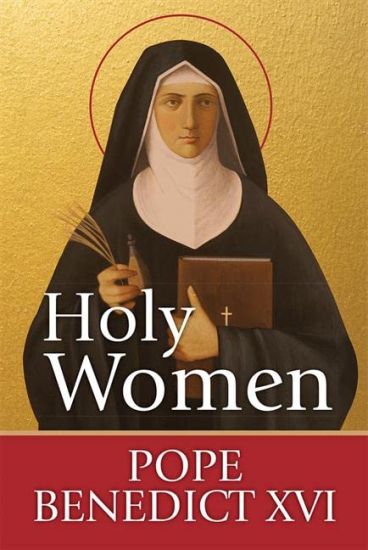
Holy Women

Holy Women

Pope Benedict XVI

Our Sunday Visitor
2023
nidottu
From the earliest days of the Church through modern times, women have always played a unique and critical role in the story of Christianity. Jesus Christ called both men and women to be his disciples, and countless women in Church history have stood out for the holiness of their lives and the wealth of their teaching.In each chapter, derived from catechesis given during his weekly general audiences from September 2010 to April 2011, Pope Benedict XVI expertly and thoughtfully explores the life stories and writings of these seventeen holy women: Saint Hildegard of BingenSaint Clare of AssisiSaint Matilda of HackebornSaint Gertrude the GreatBlessed Angela of FolignoSaint Elizabeth of HungarySaint Bridget of SwedenMarguerite d'OingtSaint Juliana of CornillonSaint Catherine of SienaJulian of NorwichSaint Veronica GiulianiSaint Catherine of BolognaSaint Catherine of GenoaSaint Joan of ArcSaint Teresa of vilaSaint Th r se of LisieuxThe remarkable examples of the feminine genius in Holy Women are still relevant today. These models of prayer, faith, and good works will help you gain a fuller understanding of Church history and serve as guides on your faith journey.
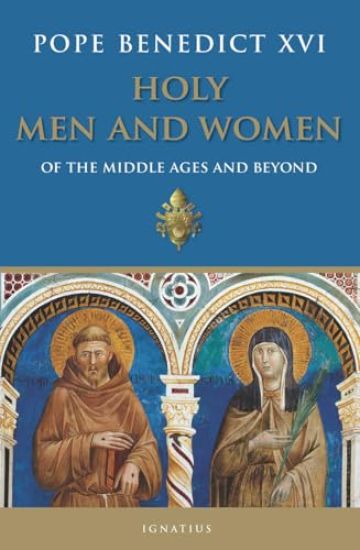
Holy Men and Women: Of the Middle Ages and Beyond
Pope Benedict XVI continues his exploration of the greatest teachers and role models in the history of the Church with these sketches of twenty-six men and women from the Middle Ages and beyond. From the start of his pontificate, the Pope has used his Wednesday audiences to present the timeless wisdom that has been expressed in the writings and lives of holy men and women down through the ages. He began with the Apostles and then moved to the Fathers of the Church. Next he presented the great Christian teachers of the late Roman Empire and the early Middle Ages. In this volume, he picks up the thread in the high Middle Ages with the inspirational St. Francis and St. Dominic, followed by some of the men and women they profoundly influenced, such as Clare, Bonaventure, and Thomas Aquinas. The collection goes beyond the Middle Ages and includes some Counter-Reformation saints, for example, Teresa of Avila, John of the Cross, and Robert Bellarmine. It concludes with a very popular saint closer to our own times who was made a Doctor of the Church by Pope John Paul II: Th r se of Lisieux. The theme that unites these men and women across time is the constant need of the Church for renewal. In every generation, God raises up holy ones who challenge Christians to live as they ought-as true disciples of Christ.
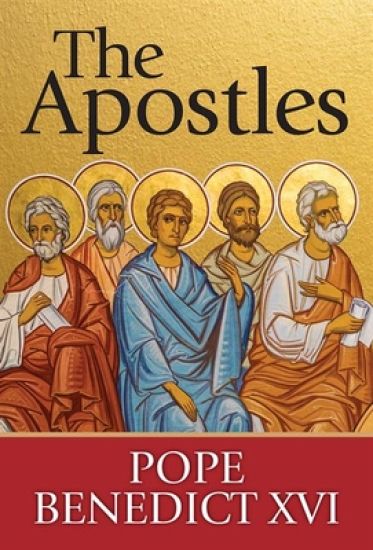
The Apostles

The Apostles

Pope Benedict XVI

Our Sunday Visitor
2023
nidottu
"Through the Apostles, we come to Jesus himself." - Pope Benedict XVI In this fascinating and inspirational journey with the chosen disciples of Jesus, Pope Benedict XVI demonstrates a profound, unbreakable continuity by which Christ is present today in his Church. In choosing the Apostles, Jesus brought them into communion with himself and involved them in his mission of proclaiming the Gospel. After Mary, the Mother of God, it is from the Apostles, through their word and witness, that we receive the truth of Christ. Delving into Sacred Scripture and writings from the early Church fathers, Benedict XVI highlights each of the Twelve, along with Saint Paul and select men and women who were coworkers of the Apostles. By studying the origins of the Church, we see that the Apostles are the foundation of the community of faith, hope, and charity that involves the entire people of God.