Kirjojen hintavertailu. Mukana 11 244 527 kirjaa ja 12 kauppaa.

Kirjahaku

Etsi kirjoja tekijän nimen, kirjan nimen tai ISBN:n perusteella.

10 kirjaa tekijältä Quentin R. Skrabec

The Metallurgic Age

The Metallurgic Age

Quentin R. Skrabec

McFarland Co Inc
2005
pokkari
"In many ways the mind of the Victorian age was absorbed by invention and innovation. A passion for technology and learning resulted in a period not only of discovery but of practical application of the sciences. This volume examines this age of invention and the evolution of fields such as metallurgy, automotive engineering, aerodynamics and industrial arts"--Provided by publisher.
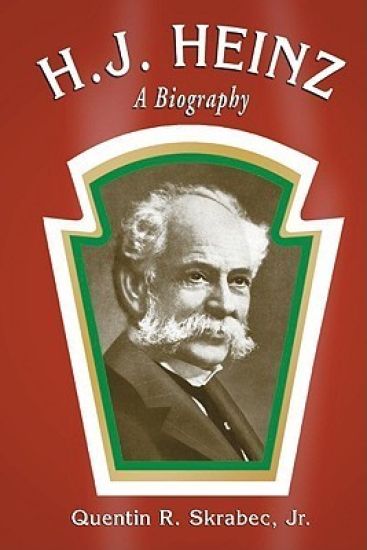
H.J. Heinz

H.J. Heinz

Quentin R. Skrabec

McFarland Co Inc
2009
nidottu
Though Heinz Ketchup is one of the most recognized corporate symbols in the world, few people know anything at all about the founder of this global brand, H. J. Heinz. Whereas industrial giants Rockefeller, Carnegie, Westinghouse, and Mellon are household names, Heinz has slipped into obscurity. Yet during a time of great transfers of wealth brought about in part by these famous robber barons, Heinz was well known for his humane treatment of his employees, customers, and suppliers. At the same time Heinz built a commercial empire by his use of industrialized food processing before Henry Ford. This book includes over forty photographs many of which are being published for the first time. Quentin R. Skrabec, Jr., lives in Maumee, Ohio.
Henry Clay Frick

Henry Clay Frick

Quentin R. Skrabec

McFarland Co Inc
2010
pokkari
Henry Clay Frick, reviled in his own time, infamous in ours, was blamed for the Johnstown Flood (which killed 2,200 people) as well as the violent Homestead Strike of 1892, and survived an assassination attempt, yet at the same time was an ardent philanthropist, giving more than $100 million during his lifetime and in his will, while insisting on anonymity. This biography explores the contradictions in this great industrialist's nature and avoids the extremes of both hagiography and denunciation.
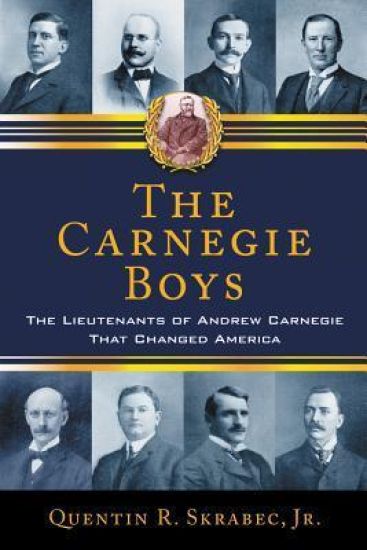
The Carnegie Boys

The Carnegie Boys

Quentin R. Skrabec

McFarland Co Inc
2012
pokkari
In the 1890s, the Carnegie Veterans Association began as a group of boyhood friends and older Andrew Carnegie steel partners united to share business ideas, but it evolved into a powerful secretive network in American business circles. By 1925, these Carnegie lieutenants controlled more than 60 percent of the country's industrial assets. Haunted by their past with Carnegie Steel, they demanded a new ethical relationship with labor and adopted a philanthropic philosophy of paternal capitalism, building libraries, churches, schools, and hospitals. Ultimately, their experiments in industrial democracy and "progressive industrialism" failed, but their efforts formed the root of future cooperative management and employee participation. This chronicle of the evolution and legacy of this influential association offers a new, more complex perspective on Carnegie and demonstrates how he and his lieutenants helped to shape America's view of capitalism.
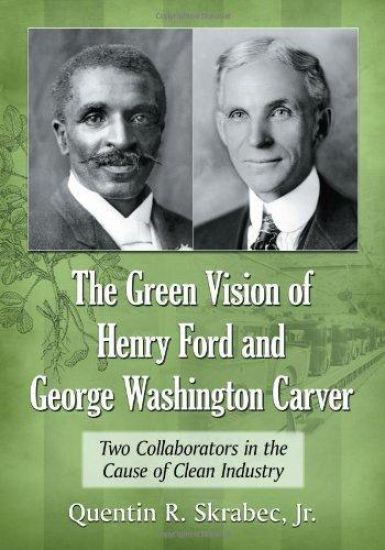
The Green Vision of Henry Ford and George Washington Carver
Henry Ford and George Washington Carver had a unique friendship and a shared vision. This book details their paths to "green" manufacturing and the start of the chemurgic movement in America. It covers a number of little known projects such as their efforts to use ethanol as a national fuel, the use of soybeans for plastic production, and the use of waterpower for factories. This study of their collaboration shows how capitalism can drive the green movement and expand American industry.
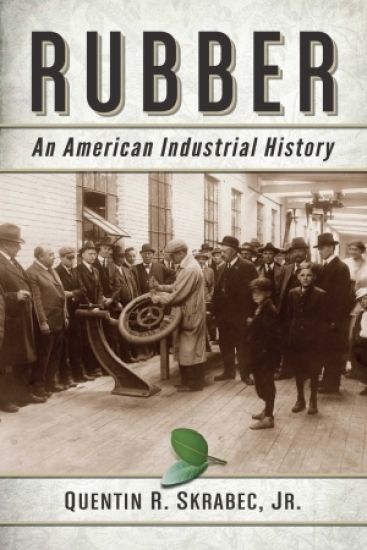
Rubber

Rubber

Quentin R. Skrabec

McFarland Co Inc
2014
pokkari
The rubber industry was born in bankruptcy and built through bankruptcies. As this history details, many of the great rubber barons--Charles Goodyear, Harvey Firestone, B.F. Goodrich, F.A. Seiberling--found themselves or their companies in bankruptcy courts. Fortunately, the industry has always proven as elastic as its product. From the early search for an American location to process the rubber of the tropics to the collapse of the industry, this is the story of rubber in America.
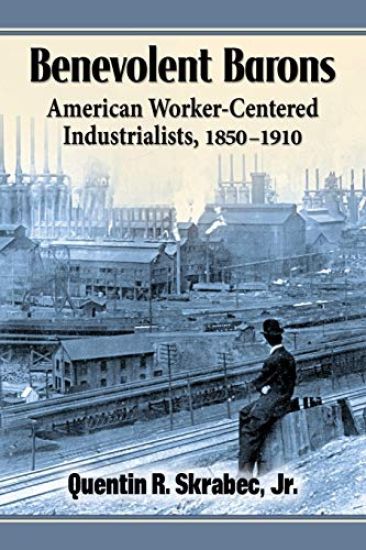
Benevolent Barons

Benevolent Barons

Quentin R. Skrabec

McFarland Co Inc
2015
pokkari
American business has always had deep roots in community. For over a century, the country looked to philanthropic industrialists to finance hospitals, parks, libraries, civic programs, community welfare and disaster aid. Worker-centered capitalists saw the workplace as an extension of the community and poured millions into schools, job training and adult education. Often criticized as welfare capitalism, this system was unique in the world. Lesser known capitalists like Peter Cooper and George Westinghouse led the movement in the mid- to late 1800s. Westinghouse, in particular, focused on good wages and benefits. Robber barons like George Pullman and Andrew Carnegie would later succeed in corrupting the higher benefits of worker-centered capitalism. This is the story of those accomplished Americans who sought to balance the accumulation of wealth with communal responsibility.
Aluminum in America

Aluminum in America

Quentin R. Skrabec

McFarland Co Inc
2017
pokkari
The history of aluminum: metallurgy, engineering, global business and politics--and the advance of civilization itself. The earth's most abundant metal, aluminum remained largely inaccessible until after the Industrial Revolution. A precious commodity in 1850s, it later became a strategic resource: while steel won World War I, aluminum won World War II. A generation later, it would make space travel possible and the 1972 Pioneer spacecraft would carry a message from mankind to extraterrestrial life, engraved on an aluminum plate. Today aluminum, along with oil, is the natural resource driving geopolitics, and China has taken the lead in manufacture.
The Ohio Presidents

The Ohio Presidents

Quentin R. Skrabec

McFarland Co Inc
2018
pokkari
Ohio sent eight presidents to the White House--one Whig and seven Republicans--from 1841 to 1923: William Harrison, U.S. Grant, Rutherford Hayes, James Garfield, Benjamin Harrison, William McKinley, William Taft and Warren Harding. Collectively their social policies and beliefs formed a unified philosophy and legacy. Ohio republicanism--an alliance of Christianity, populism, nationalism, industrialism and conservative economics--dominated politics across America from 1860 to 1930. Initially several factions in search of a party, it morphed from the anti-slavery Whig Party of Abraham Lincoln and swallowed up a group of single-issue parties, including the Abolition and Free Soil parties, under a national banner. The ghost of Ohio republicanism can still be seen today.