Kirjojen hintavertailu. Mukana 11 244 527 kirjaa ja 12 kauppaa.

Kirjahaku

Etsi kirjoja tekijän nimen, kirjan nimen tai ISBN:n perusteella.

15 kirjaa tekijältä Quentin Skinner

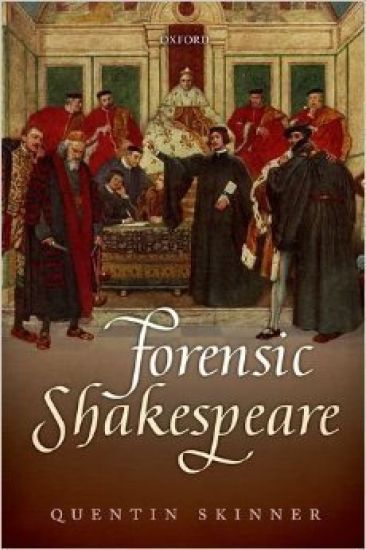
Forensic Shakespeare

Forensic Shakespeare

Quentin Skinner

Oxford University Press
2018
nidottu
Forensic Shakespeare illustrates Shakespeare's creative processes by revealing the intellectual materials out of which some of his most famous works were composed. Focusing on the narrative poem Lucrece, on four of his late Elizabethan plays (Romeo and Juliet, The Merchant of Venice, Julius Caesar and Hamlet) and on three early Jacobean dramas, (Othello, Measure for Measure and All's Well That Ends Well), Quentin Skinner argues that major speeches, and sometimes sequences of scenes, are crafted according to a set of rhetorical precepts about how to develop a persuasive judicial case, either in accusation or defence. Some of these works have traditionally been grouped together as 'problem plays', but here Skinner offers a different explanation for their frequent similarities of tone. There have been many studies of Shakespeare's rhetoric, but they have generally concentrated on his wordplay and use of figures and tropes. By contrast, this study concentrates on Shakespeare's use of judicial rhetoric as a method of argument. By approaching the plays from this perspective, Skinner is able to account for some distinctive features of Shakespeare's vocabulary, and also help to explain why certain scenes follow a recurrent pattern and arrangement. More broadly, he is able to illustrate the extent of Shakespeare's engagement with an entire tradition of classical and Renaissance humanist thought.
Machiavelli

Machiavelli

Quentin Skinner

Oxford University Press
2019
nidottu
Niccolò Machiavelli taught that political leaders must be prepared to do evil so that good may come of it, and his name has been a byword ever since for duplicity and immorality. Is his sinister reputation deserved? In answering this question Quentin Skinner traces the course of Machiavelli's adult life, from his time as Second Chancellor of the Florentine republic, during which he met with kings, the pope, and the Holy Roman Emperor; to the fall of the republic in 1512; to his death in 1527. It was after the fall of the Republic that Machiavelli composed his main political works: The Prince, the Discourses, and The History of Florence. In this second edition of his Very Short Introduction Skinner includes new material on The Prince, showing how Machiavelli developed his neo-classical political theory, through engaging in continual dialogue with the ancient Roman moralists and historians, especially Cicero and Livy. The aim of political leaders, Machiavelli argues, should be to act virtuously so far as possible, but to stand ready 'to be not good' when this course of action is dictated by necessity. Exploring the pivotal concept of princely virtù to be found in classical and Renaissance humanist texts, Skinner brings new light to Machiavelli's philosophy of a willingness to do whatever may be necessary - whether moral or otherwise -to maintain a position of power. ABOUT THE SERIES: The Very Short Introductions series from Oxford University Press contains hundreds of titles in almost every subject area. These pocket-sized books are the perfect way to get ahead in a new subject quickly. Our expert authors combine facts, analysis, perspective, new ideas, and enthusiasm to make interesting and challenging topics highly readable.
Forensic Shakespeare

Forensic Shakespeare

Quentin Skinner

Oxford University Press
2014
sidottu
Forensic Shakespeare illustrates Shakespeare's creative processes by revealing some of the intellectual materials out of which some of his most famous works were composed. Focusing on the narrative poem Lucrece, on four of his late Elizabethan plays -- Romeo and Juliet, The Merchant of Venice, Julius Caesar and Hamlet -- and on three early Jacobean dramas, Othello, Measure for Measure and All's Well That Ends Well, Quentin Skinner argues that there are major speeches, and sometimes sequences of scenes, that are crafted according to a set of rhetorical precepts about how to develop a persuasive judicial case, either in accusation or defence. Some of these works have traditionally been grouped together as 'problem plays', but here Skinner offers a different explanation for their frequent similarities of tone. There have been many studies of Shakespeare's rhetoric, but they have generally concentrated on his wordplay and use of figures and tropes. By contrast, this study concentrates on Shakespeare's use of judicial rhetoric as a method of argument. By approaching the plays from this perspective, Skinner is able to account for some distinctive features of Shakespeare's vocabulary, and also help to explain why certain scenes follow a recurrent pattern and arrangement.
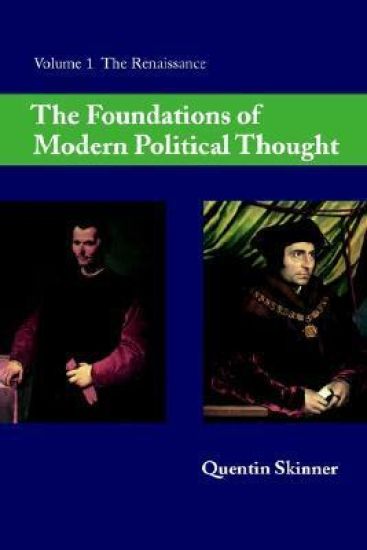
The Foundations of Modern Political Thought: Volume 1, The Renaissance
A two-volume study of political thought from the late thirteenth to the end of the sixteenth century, the decisive period of transition from medieval to modern political theory. The work is intended to be both an introduction to the period for students, and a presentation and justification of a particular approach to the interpretation of historical texts. Volume One deals with the Renaissance, Volume Two with the Age of Reformation. Quentin Skinner gives an outline account of all the principal texts of the period, discussing in turn the chief political writings of Dante, Marsiglio, Bartolus, Machiavelli, Erasmus and more, Luther and Calvin, Bodin and the Calvinist revolutionaries. But he also examines a very large number of lesser writers in order to explain the general social and intellectual context in which these leading theorists worked. He thus presents the history not as a procession of ‘classic texts’ but are more readily intelligible. He traces by this means the gradual emergence of the vocabulary of modern political thought, and in particular the crucial concept of the State. We are given an insight into the actual processes of the formation of ideologies and into some of the linkages between political theory and practice. The work aspires, in this sense, to give the first genuinely historical account of the political thought of the period.
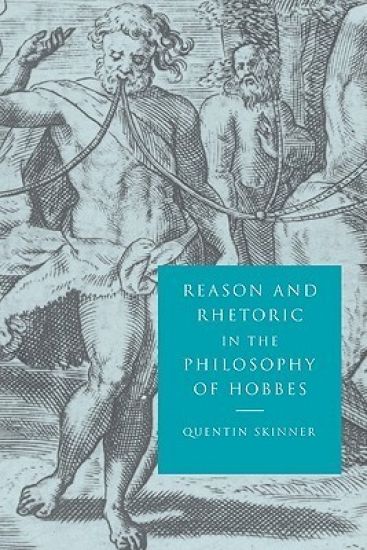
Reason and Rhetoric in the Philosophy of Hobbes

Reason and Rhetoric in the Philosophy of Hobbes

Quentin Skinner

Cambridge University Press
1996
sidottu
This major new work from Quentin Skinner presents a fundamental reappraisal of the political theory of Hobbes. Using, for the first time, the full range of manuscript as well as printed sources, it documents an entirely new view of Hobbes’s intellectual development, and re-examines the shift from a humanist to a scientific culture in European moral and political thought. By examining Hobbes’s philosophy against the background of his humanist education, Professor Skinner rescues this most difficult and challenging of political philosophers from the intellectual isolation in which he is so often discussed. This book presents a splendid exemplification of the ‘Cambridge’ contextual approach to the study of intellectual history with which Professor Skinner himself is especially associated. It will be of interest and importance to a wide range of scholars in history, philosophy, politics, and literary theory.
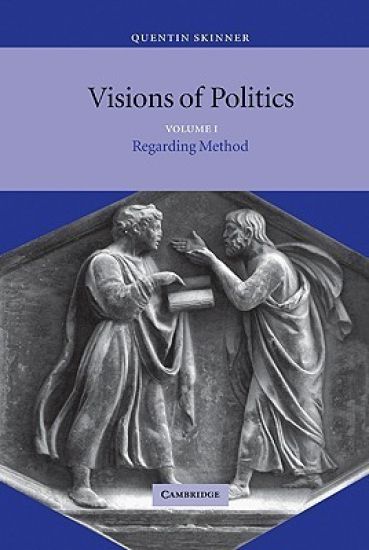
Visions of Politics

Visions of Politics

Quentin Skinner

Cambridge University Press
2002
sidottu
The first of three volumes of essays by Quentin Skinner, one of the world's leading intellectual historians. This collection includes some of his most important philosophical and methodological statements written over the past four decades, each carefully revised for publication in this form. In a series of seminal essays Professor Skinner sets forth the intellectual principles that inform his work. Writing as a practising historian, he considers the theoretical difficulties inherent in the pursuit of knowledge and interpretation, and elucidates the methodology which finds its expression in his two successive volumes. All of Professor Skinner's work is characterised by philosophical power, limpid clarity, and elegance of exposition; these essays, many of which are now recognised classics, provide a fascinating and convenient digest of the development of his thought. Professor Skinner has been awarded the Balzan Prize Life Time Achievement Award for Political Thought, History and Theory. Full details of this award can be found at http://www.balzan.it/News_eng.aspx?ID=2474
Visions of Politics

Visions of Politics

Quentin Skinner

Cambridge University Press
2002
pokkari
The second of three volumes of essays by Quentin Skinner, one of the world’s leading intellectual historians. This collection includes some of his most important essays on the political thought of the Italian renaissance, each of which has been carefully revised for publication in this form. All of Professor Skinner’s work is characterised by philosophical power, limpid clarity, and elegance of exposition; these essays, many of which are now recognised classics, provide a fascinating and convenient digest of the development of his thought.
Visions of Politics

Visions of Politics

Quentin Skinner

Cambridge University Press
2002
sidottu
The third of three volumes of essays by Quentin Skinner, one of the world's leading intellectual historians. This collection includes some of his most important essays on Thomas Hobbes, each of which has been carefully revised for publication in this form. In a series of writings spanning the past four decades Professor Skinner examines, with his customary perspicuity, the evolution and character of Hobbes's political thought. An indispensable work in its own right, this volume also serves as a demonstration of those methodological theories propounded in Volume I, and as an appositional commentary on the Renaissance values of civic virtue treated in Volume II. All of Professor Skinner's work is characterised by philosophical power, limpid clarity, and elegance of exposition; these essays, many of which are now recognised classics, provide a fascinating and convenient digest of the development of his thought. Professer Skinner has been awarded the Balzan Prize Life Time Achievement Award for Political Thought, History and Theory. Full details of this award can be found at http://www.balzan.it/News_eng.aspx?ID=2474
Hobbes and Republican Liberty

Hobbes and Republican Liberty

Quentin Skinner

Cambridge University Press
2008
sidottu
Quentin Skinner is one of the foremost historians in the world, and in Hobbes and Republican Liberty he offers a dazzling comparison of two rival theories about the nature of human liberty. The first originated in classical antiquity, and lay at the heart of the Roman republican tradition of public life. Thomas Hobbes was the most formidable enemy of this pattern of thought, and his successive attempts to discredit it constitute a truly epochal moment in the history of Anglophone political thought. Hobbes and Republican Liberty develops several of the themes announced by Quentin Skinner in his celebrated inaugural lecture on Liberty before Liberalism of 1997. Cogent, engaged, accessible, and indeed exhilarating, this new book will appeal to readers of history, politics, and philosophy at all levels from upper-undergraduate upwards, and provides an excellent introduction to the work of one of the most celebrated thinkers of our time.
Liberty as Independence

Liberty as Independence

Quentin Skinner

Cambridge University Press
2025
sidottu
What does liberty entail? How have concepts of liberty changed over time? And what are the global consequences? This book surveys the history of rival views of liberty from antiquity to modern times. Quentin Skinner traces the understanding of liberty as independence from the classical ideal to early modern Britain, culminating in the claims of the Whig oligarchy to have transformed this idea into reality. Yet, with the Whig vision of a free state and civil society undermined by the American Revolution of 1776, Skinner explores how claims that liberty was fulfilled by an absence of physical or coercive restraint came to prominence. Liberty as Independence examines new dimensions of these rival views, considering the connections between debates on liberty and debates on slavery, and demonstrating how these ideas were harnessed in feminist discussions surrounding limitations on the liberty of women. The concept of liberty is inherently global, and Skinner argues strongly for the reinstatement of the understanding of liberty as independence.
From Humanism to Hobbes

From Humanism to Hobbes

Quentin Skinner

Cambridge University Press
2018
sidottu
The aim of this collection is to illustrate the pervasive influence of humanist rhetoric on early-modern literature and philosophy. The first half of the book focuses on the classical rules of judicial rhetoric. One chapter considers the place of these rules in Shakespeare's The Merchant of Venice, while two others concentrate on the technique of rhetorical redescription, pointing to its use in Machiavelli's The Prince as well as in several of Shakespeare's plays, notably Coriolanus. The second half of the book examines the humanist background to the philosophy of Thomas Hobbes. A major new essay discusses his typically humanist preoccupation with the visual presentation of his political ideas, while other chapters explore the rhetorical sources of his theory of persons and personation, thereby offering new insights into his views about citizenship, political representation, rights and obligations and the concept of the state.
From Humanism to Hobbes

From Humanism to Hobbes

Quentin Skinner

Cambridge University Press
2018
pokkari
The aim of this collection is to illustrate the pervasive influence of humanist rhetoric on early-modern literature and philosophy. The first half of the book focuses on the classical rules of judicial rhetoric. One chapter considers the place of these rules in Shakespeare's The Merchant of Venice, while two others concentrate on the technique of rhetorical redescription, pointing to its use in Machiavelli's The Prince as well as in several of Shakespeare's plays, notably Coriolanus. The second half of the book examines the humanist background to the philosophy of Thomas Hobbes. A major new essay discusses his typically humanist preoccupation with the visual presentation of his political ideas, while other chapters explore the rhetorical sources of his theory of persons and personation, thereby offering new insights into his views about citizenship, political representation, rights and obligations and the concept of the state.
Liberty before Liberalism

Liberty before Liberalism

Quentin Skinner

Cambridge University Press
2012
pokkari
This extended essay by one of the world's leading historians seeks, in its first part, to excavate and to vindicate, the neo-Roman theory of free citizens and free states as it developed in early modern Britain. This analysis leads on to a powerful defence of the nature, purposes and goals of intellectual history and the history of ideas. As Quentin Skinner says, 'the intellectual historian can help us to appreciate how far the values embodied in our present way of life, and our present ways of thinking about those values, reflect a series of choices made at different times between different possible worlds'. This essay provides one of the most substantial statements yet made about the importance, relevance and potential excitement of this form of historical enquiry. Liberty before Liberalism is based on Quentin Skinner's Inaugural Lecture as Regius Professor of Modern History in the University of Cambridge, delivered in 1997.
Machiavelli zur Einführung

Machiavelli zur Einführung

Quentin Skinner

JUNIUS VERLAG GMBH
2013
nidottu
Niccol? Machiavelli (1469-1527) lehrte, dass Politiker bereit sein müssen, unmoralisch zu handeln. Sein Name ist Inbegriff von Skrupellosigkeit, List und Heuchelei. Was steckt hinter diesem schlechten Ruf? Welche Ansichten hat Machiavelli wirklich vertreten? Diese Fragen beantwortet Quentin Skinner, indem er die Hauptwerke "Der Fürst", "Discorsi" und "Geschichte von Florenz" im Kontext der Frühen Neuzeit liest. Machiavelli war ein Exponent der humanistischen Tradion des klassischen Republikanismus. Die originellsten Aspekte seiner politischen Anschauungen lassen sich indes als eine Reihe polemischer und satirischer Reaktionen auf jene Tradition verstehen.
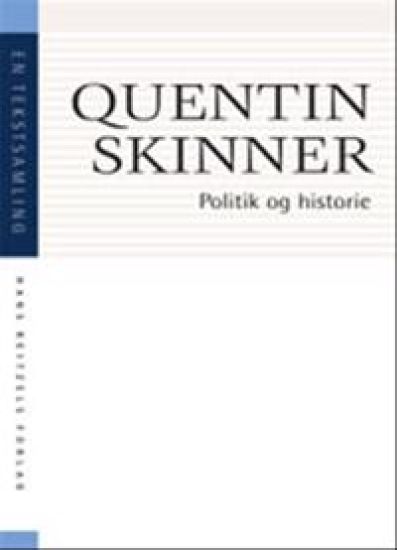
Politik og historie

Politik og historie

Quentin Skinner

Gyldendal
2009
nidottu
Politik og historie er den første bog på dansk af den britiske politolog og idéhistoriker Quentin Skinner, hvis arbejde i disse år vinder stadig større udbredelse inden for samfundsvidenskab og humaniora. Skinner har markeret sig med en række banebrydende arbejder, hvor han har påvist, at politisk tænkning ofte ikke handler så meget om at undersøge almengyldige fænomener, men nærmere om at positionere sig i en historisk kontekst. I forlængelse af det har han udviklet en enestående metode til at analysere den måde, politiske udsagn og andre samfundsrelaterede ideer bliver til i relation til de givne omstændigheder. Bogen indeholder to sider af Skinners arbejde. For det første samler den en række af hans vigtigste metodetekster, bl.a. ”Mening og forståelse i idéhistorien”, som må betegnes som en af efterkrigstidens absolut vigtigste tekster om historisk metode og kvalitativ analyse. For det andet rummer bogen en række af Skinners analyser af frihedsbegrebet, bl.a. forholdet mellem statsmagten og den individuelle frihed. Skinner viser sig her som en af vor tids vigtigste politiske teoretikere. Politik og historie giver både et indblik i Skinners forfatterskab og mere generelt en indføring i samfundsvidenskabelig metode. Bogen henvender sig til studerende på de samfundsvidenskabelige og humanistiske universitetsuddannelser og på mellemlange uddannelser. Oversat fra engelsk af Morten Visby. Quentin Skinner er mangeårig professor i statskundskab ved Cambridge University, England. Han har været hovedfigur i den såkaldte Cambridge-skole, der især har sat fokus på sprogets betydning i politisk tænkning. Fra 2008-2009 er han ansat som professor i humaniora ved Queen Mary, University of London. Frank Beck Lassen og Mikkel Thorup er henholdsvis ph.d-studerende og adjunkt ved Afdeling for Idehistorie, Aarhus Universitet.