Kirjojen hintavertailu. Mukana 11 699 587 kirjaa ja 12 kauppaa.

Kirjahaku

Etsi kirjoja tekijän nimen, kirjan nimen tai ISBN:n perusteella.

14 kirjaa tekijältä Quinn Slobodian

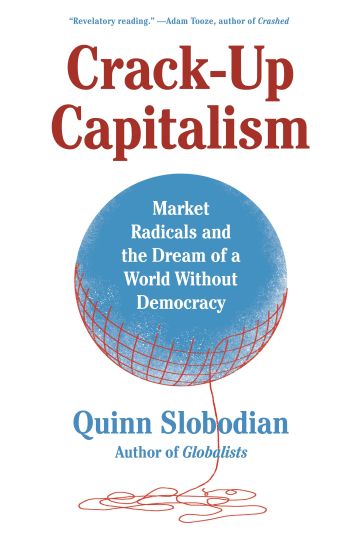
Crack-Up Capitalism

Crack-Up Capitalism

Quinn Slobodian

PENGUIN BOOKS LTD
2024
pokkari
'Gonzo brilliance ... unique and highly entertaining' Financial Times'Revelatory reading' Adam Tooze, author of Crashed'After reading Quinn Slobodian's new book, you are not likely to think about capitalism the same way' JacobinLook at a map of the world and you'll see a neat patchwork of nation-states. But this is not where power actually resides. From the 1990s onwards, globalization has shattered the map, leading to an explosion of new legal entities: tax havens, free ports, city-states, gated enclaves and special economic zones. These new spaces are freed from ordinary forms of regulation, taxation and mutual obligation - and with them, ultracapitalists believe that it is possible to escape the bonds of democratic government and oversight altogether.Historian Quinn Slobodian follows the most notorious radical libertarians - from Milton Friedman to Peter Thiel - around the globe as they search for the perfect home for their free market fantasy. The hunt leads from Hong Kong in the 1970s to South Africa in the late days of apartheid, from the neo-Confederate South to the medieval City of London, and finally into the world's oceans and war zones, charting the relentless quest for a blank slate where capitalism and democracy can be finally uncoupled.Crack-Up Capitalism is a propulsive history of the recent past, and an alarming view of our near future.
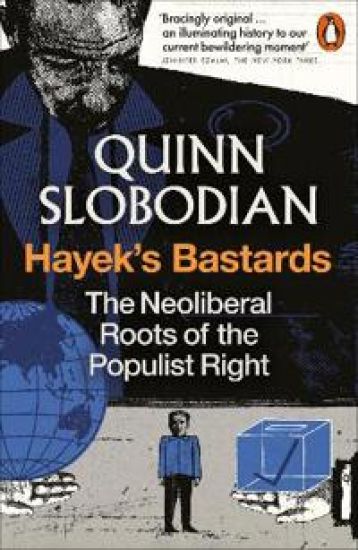
Hayek's Bastards

Hayek's Bastards

Quinn Slobodian

PENGUIN BOOKS LTD
2025
sidottu
'Bracingly original... Hayek’s Bastards demonstrates how a history of ideas can be riveting. Slobodian grounds intellectual abstractions in the lives of the people who espoused them... His book offers an illuminating history to our current bewildering moment, as right-wing populists join forces with billionaire oligarchs to take a chain saw to the foundations of public life, until there’s nothing left to stand on' - Jennifer Szalai, The New York Times A revelatory exploration of how today’s rightwing authoritarianism emerged not in opposition to neoliberalism, but from within itAfter the end of the Cold War, neoliberalism, with its belief in the virtues of markets and competition, seemed to have triumphed. Communism had been defeated – and Friedrich Hayek, the spiritual father of neoliberal economics, had just about lived to see it. But in the decades that followed, Hayek’s disciples knew that they had a problem. The rise of social movements, from civil rights and feminism to environmentalism, were now proving roadblocks in the road to freedom, nurturing a culture of government dependency, public spending, political correctness and special pleading. Neoliberals needed an antidote.In this illuminating new book, historian Quinn Slobodian reveals how, from the 1990s onwards, neoliberal thinkers turned to nature, in an attempt to roll back social changes and to return to a hierarchy of gender, race and cultural difference. He explores how these thinkers drew on the language of science, from cognitive psychology to genetics, in order to embed the idea of ‘competition’ ever deeper into social life, and to advocate cultural homogeneity as essential for markets to truly work. Reading and misreading the writings of their sages, Friedrich Hayek and Ludwig von Mises, they forged the alliances with racial psychologists, neoconfederates, ethnonationalists that would become known as the alt-right. Hayek’s Bastards shows that many contemporary iterations of the Far Right, from Javier Milei to Donald Trump, emerged not in opposition to neoliberalism, but within it. As repellent as their politics may be, these supposed disruptors are not defectors from the neoliberal order, but its latest cheerleaders.
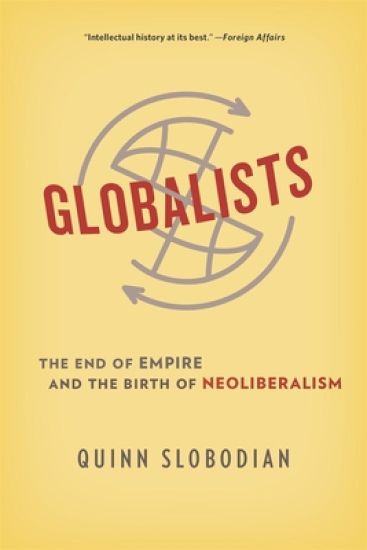
Globalists

Globalists

Quinn Slobodian

Harvard University Press
2020
nidottu
George Louis Beer Prize WinnerWallace K. Ferguson Prize FinalistA Marginal Revolution Book of the Year“A groundbreaking contribution…Intellectual history at its best.”—Stephen Wertheim, Foreign AffairsNeoliberals hate the state. Or do they? In the first intellectual history of neoliberal globalism, Quinn Slobodian follows a group of thinkers from the ashes of the Habsburg Empire to the creation of the World Trade Organization to show that neoliberalism emerged less to shrink government and abolish regulations than to redeploy them at a global level. It was a project that changed the world, but was also undermined time and again by the relentless change and social injustice that accompanied it.“Slobodian’s lucidly written intellectual history traces the ideas of a group of Western thinkers who sought to create, against a backdrop of anarchy, globally applicable economic rules. Their attempt, it turns out, succeeded all too well.”—Pankaj Mishra, Bloomberg Opinion“Fascinating, innovative…Slobodian has underlined the profound conservatism of the first generation of neoliberals and their fundamental hostility to democracy.”—Adam Tooze, Dissent“The definitive history of neoliberalism as a political project.”—Boston Review
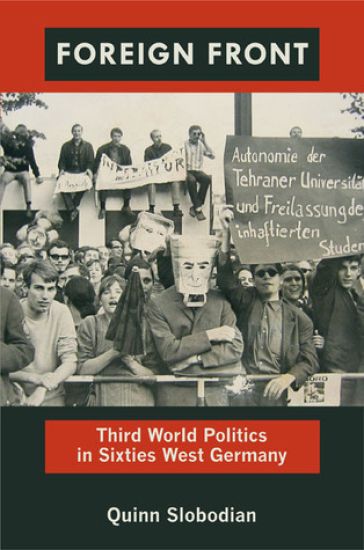
Foreign Front

Foreign Front

Quinn Slobodian

Duke University Press
2012
sidottu
It is often asserted that West German New Leftists "discovered the Third World" in the pivotal decade of the 1960s. Quinn Slobodian upsets that storyline by beginning with individuals from the Third World themselves: students from Africa, Asia, and Latin America who arrived on West German campuses in large numbers in the early 1960s. They were the first to mobilize German youth in protest against acts of state violence and injustice perpetrated beyond Europe and North America. The activism of the foreign students served as a model for West German students, catalyzing social movements and influencing modes of opposition to the Vietnam War. In turn, the West Germans offered the international students solidarity and safe spaces for their dissident engagements. This collaboration helped the West German students to develop a more nuanced, empathetic understanding of the Third World, not just as a site of suffering, poverty, and violence, but also as the home of politicized individuals with the capacity and will to speak in their own names.
Foreign Front

Foreign Front

Quinn Slobodian

Duke University Press
2012
pokkari
It is often asserted that West German New Leftists "discovered the Third World" in the pivotal decade of the 1960s. Quinn Slobodian upsets that storyline by beginning with individuals from the Third World themselves: students from Africa, Asia, and Latin America who arrived on West German campuses in large numbers in the early 1960s. They were the first to mobilize German youth in protest against acts of state violence and injustice perpetrated beyond Europe and North America. The activism of the foreign students served as a model for West German students, catalyzing social movements and influencing modes of opposition to the Vietnam War. In turn, the West Germans offered the international students solidarity and safe spaces for their dissident engagements. This collaboration helped the West German students to develop a more nuanced, empathetic understanding of the Third World, not just as a site of suffering, poverty, and violence, but also as the home of politicized individuals with the capacity and will to speak in their own names.
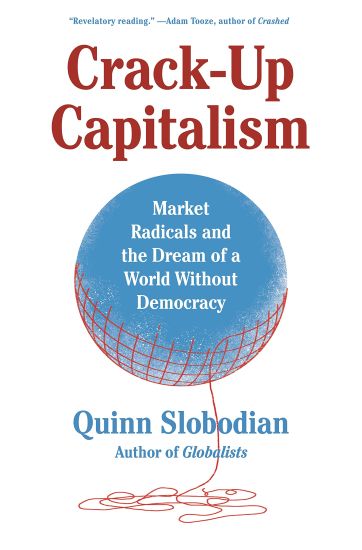
Crack-Up Capitalism: Market Radicals and the Dream of a World Without Democracy
A Fortune best nonfiction book of 2023 In a revelatory dispatch from the frontier of capitalist extremism, an acclaimed historian of ideas shows how free marketeers are realizing their ultimate goal: an end to nation-states and the constraints of democracy. Look at a map of the world and you'll see a colorful checkerboard of nation-states. But this is not where power actually resides. Over the last decade, globalization has shattered the map into different legal spaces: free ports, tax havens, special economic zones. With the new spaces, ultracapitalists have started to believe that it is possible to escape the bonds of democratic government and oversight altogether. Crack-Up Capitalism follows the most notorious radical libertarians--from Milton Friedman to Peter Thiel--around the globe as they search for the perfect space for capitalism. Historian Quinn Slobodian leads us from Hong Kong in the 1970s to South Africa in the late days of apartheid, from the neo-Confederate South to the former frontier of the American West, from the medieval City of London to the gold vaults of right-wing billionaires, and finally into the world's oceans and war zones, charting the relentless quest for a blank slate where market competition is unfettered by democracy. A masterful work of economic and intellectual history, Crack-Up Capitalism offers both a new way of looking at the world and a new vision of coming threats. Full of rich details and provocative analysis, Crack-Up Capitalism offers an alarming view of a possible future.
Crack-Up Capitalism: Market Radicals and the Dream of a World Without Democracy
A Fortune best nonfiction book of 2023 In a revelatory dispatch from the frontier of capitalist extremism, an acclaimed historian of ideas shows how free marketeers are realizing their ultimate goal: an end to nation-states and the constraints of democracy. Look at a map of the world and you'll see a colorful checkerboard of nation-states. But this is not where power actually resides. Over the last decade, globalization has shattered the map into different legal spaces: free ports, tax havens, special economic zones. With the new spaces, ultracapitalists have started to believe that it is possible to escape the bonds of democratic government and oversight altogether. Crack-Up Capitalism follows the most notorious radical libertarians--from Milton Friedman to Peter Thiel--around the globe as they search for the perfect space for capitalism. Historian Quinn Slobodian leads us from Hong Kong in the 1970s to South Africa in the late days of apartheid, from the neo-Confederate South to the former frontier of the American West, from the medieval City of London to the gold vaults of right-wing billionaires, and finally into the world's oceans and war zones, charting the relentless quest for a blank slate where market competition is unfettered by democracy. A masterful work of economic and intellectual history, Crack-Up Capitalism offers both a new way of looking at the world and a new vision of coming threats. Full of rich details and provocative analysis, Crack-Up Capitalism offers an alarming view of a possible future.
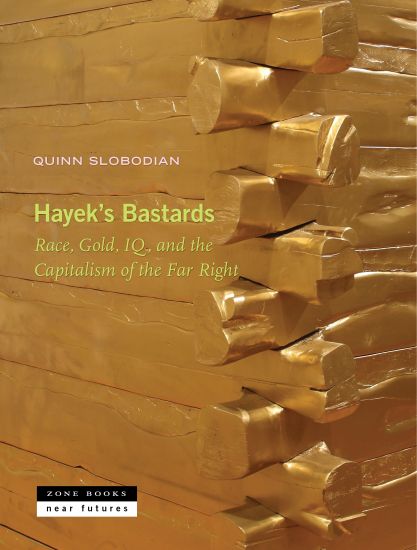
Hayek's Bastards: Race, Gold, Iq, and the Capitalism of the Far Right
How neoliberals turned to nature to defend inequality after the end of the Cold War Neoliberals should have seen the end of the Cold War as a total victory--but they didn't. Instead, they saw the chameleon of communism changing colors from red to green. The poison of civil rights, feminism, and environmentalism ran through the veins of the body politic and they needed an antidote. To defy demands for equality, many neoliberals turned to nature. Race, intelligence, territory, and precious metal would be bulwarks against progressive politics. Reading and misreading the writings of their sages, Friedrich Hayek and Ludwig von Mises, they articulated a philosophy of three hards--hardwired human nature, hard borders, and hard money--and forged the alliances with racial psychologists, neoconfederates, ethnonationalists, and goldbugs that would become known as the alt-right. Following Hayek's bastards from Murray Rothbard to Charles Murray to Javier Milei, we find that key strains of the Far Right emerged within the neoliberal intellectual movement not against it. What has been reported as an ideological backlash against neoliberal globalization in recent years is often more of a frontlash. This history of ideas shows us that the reported clash of opposites is more like a family feud.
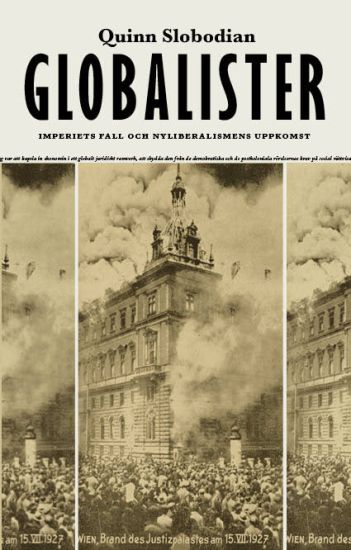
Globalister : imperiets fall och nyliberalismens uppkomst

Globalister : imperiets fall och nyliberalismens uppkomst

Quinn Slobodian

Bokförlaget Hansson Bruce
2023
nidottu
Mot slutet av 1900-talet tycktes en nyliberal marknadsekonomi ha erövrat världen. Globalister beskriver i en ögonöppnande historia denna nyliberalism som ett svar på de utmaningar som den klassiska liberalismen ställdes inför av den framväxande demokratin och den postkoloniala rörelsen. I centrum står kända och okända aktörer i den liberala internationalism som agerade inom affärsliv, akademiskt arbete, organisationer och förvaltningar från 20-talets Wien till skapandet av Europeiska unionen och 90-talets WTO — nyliberala ikoner som ekonomen F. A. von Hayek, politiska entreprenörer som William Rappard och diskreta jurister som Jan Tumlir. De som genom idé och handling bidrog till en konstitutionell begränsning av demokratin där ekonomin kapslades in till skydd från kraven på social rättvisa genom att makten överfördes till federala, transnationella och övernationella juridiska eller politiska institutioner. En rörelse som avfärdar social rättvisa som en utopi men som ersatte den med en egen utopisk världsordning.
Hayek's Bastards

Hayek's Bastards

Quinn Slobodian

PENGUIN BOOKS LTD
2026
pokkari
A revelatory exploration of how today’s right-wing authoritarianism emerged not in opposition to neoliberalism, but from within it Bracingly original... Hayek’s Bastards demonstrates how a history of ideas can be riveting. Slobodian grounds intellectual abstractions in the lives of the people who espoused them... His book offers an illuminating history to our current bewildering moment, as right-wing populists join forces with billionaire oligarchs to take a chain saw to the foundations of public life, until there’s nothing left to stand on' - Jennifer Szalai, The New York Times After the end of the Cold War, neoliberalism, with its belief in the virtues of markets and competition, seemed to have triumphed. Communism had been defeated – and Friedrich Hayek, the spiritual father of neoliberal economics, had just about lived to see it. But in the decades that followed, Hayek’s disciples knew that they had a problem. The rise of social movements, from civil rights and feminism to environmentalism, were now proving roadblocks in the road to freedom, nurturing a culture of government dependency, public spending, political correctness and special pleading. Neoliberals needed an antidote. In this illuminating new book, historian Quinn Slobodian reveals how, from the 1990s onwards, neoliberal thinkers turned to nature, in an attempt to roll back social changes and to return to a hierarchy of gender, race and cultural difference. He explores how these thinkers drew on the language of science, from cognitive psychology to genetics, in order to embed the idea of ‘competition’ ever deeper into social life, and to advocate cultural homogeneity as essential for markets to truly work. Reading and misreading the writings of their sages, Friedrich Hayek and Ludwig von Mises, they forged the alliances with racial psychologists, neo-confederates, ethnonationalists that would become known as the alt-right. Hayek’s Bastards shows that many contemporary iterations of the Far Right, from Javier Milei to Donald Trump, emerged not in opposition to neoliberalism, but within it. As repellent as their politics may be, these supposed disruptors are not defectors from the neoliberal order, but its latest cheerleaders.