Kirjojen hintavertailu. Mukana 11 627 220 kirjaa ja 12 kauppaa.

Kirjahaku

Etsi kirjoja tekijän nimen, kirjan nimen tai ISBN:n perusteella.

5 kirjaa tekijältä Quintard Taylor

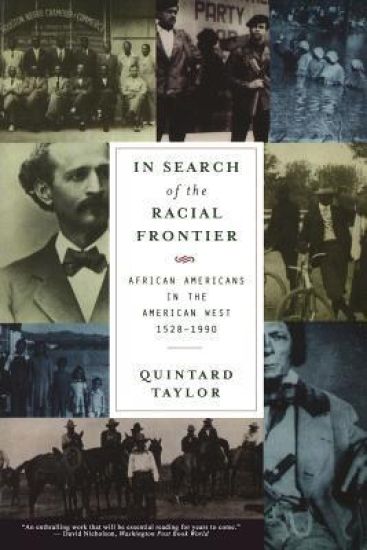
In Search of the Racial Frontier

In Search of the Racial Frontier

Quintard Taylor

WW Norton Co
1999
nidottu
A landmark history of African Americans in the West, In Search of the Racial Frontier rescues the collective American consciousness from thinking solely of European pioneers when considering the exploration, settling, and conquest of the territory west of the Mississippi. From its surprising discussions of groups of African American wholly absorbed into Native American culture to illustrating how the largely forgotten role of blacks in the West helped contribute to everything from the Brown vs. Board of Education desegregation ruling to the rise of the Black Panther Party, Quintard Taylor fills a major void in American history and reminds us that the African American experience is unlimited by region or social status.
Freedom's Racial Frontier

Freedom's Racial Frontier

Quintard Taylor

University of Oklahoma Press
2018
nidottu
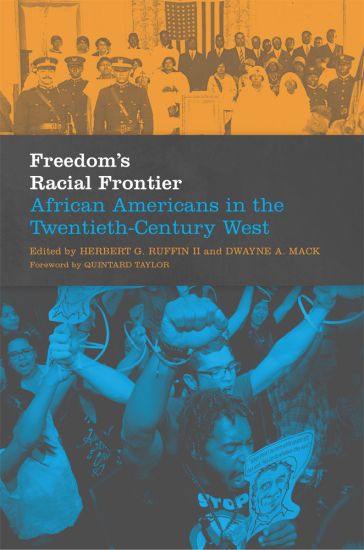
Between 1940 and 2010, the black population of the American West grew from 710,400 to 7 million. With that explosive growth has come a burgeoning interest in the history of the African American West - an interest reflected in the remarkable range and depth of the works collected in Freedom's Racial Frontier. Editors Herbert G. Ruffin II and Dwayne A. Mack have gathered established and emerging scholars in the field to create an anthology that links past, current, and future generations of African American West scholarship. The volume's sixteen chapters address the African American experience within the framework of the West as a multicultural frontier. The result is a fresh perspective on western-U.S. history, centered on the significance of African American life, culture, and social justice in almost every trans-Mississippi state. Examining and interpreting the twentieth century while mindful of events and developments since 2000, the contributors focus on community formation, cultural diversity, civil rights and black empowerment, and artistic creativity and identity. Reflecting the dynamic evolution of new approaches and new sites of knowledge in the field of western history, the authors consider its interconnections with fields such as cultural studies, literature, and sociology. Some essays deal with familiar places, while others look at understudied sites such as Albuquerque, Oahu, and Las Vegas, Nevada. By examining black suburbanization, the Information Age, and gentrification in the urban West, several authors conceive of a Third Great Migration of African Americans to and within the West. The West revealed in Freedom's Racial Frontier is a place where black Americans have fought - and continue to fight - to make their idea of freedom live up to their expectations of equality; a place where freedom is still a frontier for most persons of African heritage.
Freedom's Racial Frontier

Freedom's Racial Frontier

Quintard Taylor

University of Oklahoma Press
2018
sidottu
Between 1940 and 2010, the black population of the American West grew from 710,400 to 7 million. With that explosive growth has come a burgeoning interest in the history of the African American West - an interest reflected in the remarkable range and depth of the works collected in Freedom's Racial Frontier. Editors Herbert G. Ruffin II and Dwayne A. Mack have gathered established and emerging scholars in the field to create an anthology that links past, current, and future generations of African American West scholarship. The volume's sixteen chapters address the African American experience within the framework of the West as a multicultural frontier. The result is a fresh perspective on western-U.S. history, centered on the significance of African American life, culture, and social justice in almost every trans-Mississippi state. Examining and interpreting the twentieth century while mindful of events and developments since 2000, the contributors focus on community formation, cultural diversity, civil rights and black empowerment, and artistic creativity and identity. Reflecting the dynamic evolution of new approaches and new sites of knowledge in the field of western history, the authors consider its interconnections with fields such as cultural studies, literature, and sociology. Some essays deal with familiar places, while others look at understudied sites such as Albuquerque, Oahu, and Las Vegas, Nevada. By examining black suburbanization, the Information Age, and gentrification in the urban West, several authors conceive of a Third Great Migration of African Americans to and within the West. The West revealed in Freedom's Racial Frontier is a place where black Americans have fought - and continue to fight - to make their idea of freedom live up to their expectations of equality; a place where freedom is still a frontier for most persons of African heritage.
Black Americans and the Civil Rights Movement in the West

Black Americans and the Civil Rights Movement in the West

Quintard Taylor

University of Oklahoma Press
2019
nidottu
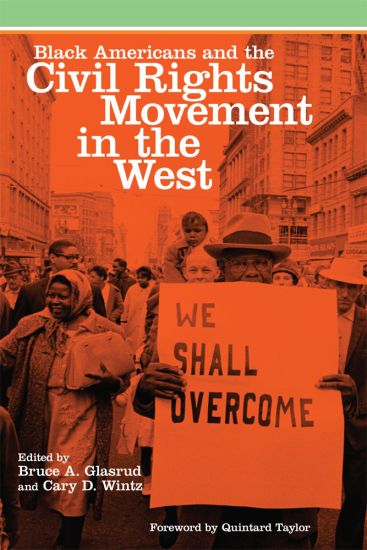
In 1927, Beatrice Cannady succeeded in removing racist language from the Oregon Constitution. During World War II, Rowena Moore fought for the right of black women to work in Omaha's meat packinghouses. In 1942, Thelma Paige used the courts to equalize the salaries of black and white schoolteachers across Texas. In 1950 Lucinda Todd of Topeka laid the groundwork for the landmark Supreme Court decision Brown v. Board of Education. These actions - including sit-ins long before the Greensboro sit-ins of 1960 - occurred well beyond the borders of the American South and East, regions most known as the home of the civil rights movement. By considering social justice efforts in western cities and states, Black Americans and the Civil Rights Movement in the West convincingly integrates the West into the historical narrative of black Americans' struggle for civil rights. From Iowa and Minnesota to the Pacific Northwest, and from Texas to the Dakotas, black westerners initiated a wide array of civil rights activities in the early to late twentieth century. Connected to national struggles as much as they were tailored to local situations, these efforts predated or prefigured events in the East and South. In this collection, editors Bruce A. Glasrud and Cary D. Wintz bring these moments into sharp focus, as the contributors note the ways in which the racial and ethnic diversity of the West shaped a specific kind of African American activism. Concentrating on the far West, the mountain states, the desert Southwest, the upper Midwest, and states both southern and western, the contributors examine black westerners' responses to racism in its various manifestations, whether as school segregation in Dallas, job discrimination in Seattle, or housing bias in San Francisco. Together their essays establish in unprecedented detail how efforts to challenge discrimination impacted and changed the West and ultimately the United States.