Kirjojen hintavertailu. Mukana 12 016 292 kirjaa ja 12 kauppaa.

Kirjahaku

Etsi kirjoja tekijän nimen, kirjan nimen tai ISBN:n perusteella.

6 kirjaa tekijältä R Lee

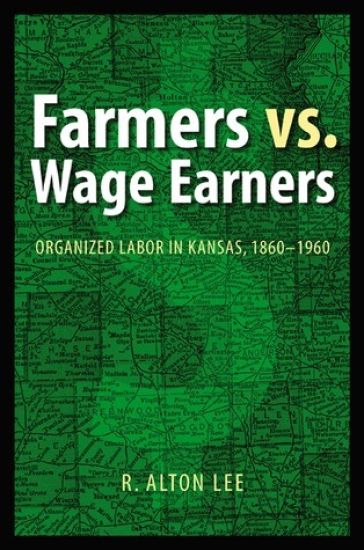
Farmers vs. Wage Earners

Farmers vs. Wage Earners

R Lee

University of Nebraska Press
2006
sidottu
While predominantly agrarian, Kansas has a surprisingly rich heritage of labour history and played an active role in the major labour strife of the late nineteenth and early twentieth centuries. "Farmers vs. Wage Earners" is a survey of the organized labour movement in the Sunflower State, which reflected in a microcosm the evolution of attitudes toward labour in the United States. R. Alton Lee emphasizes the social and political developments of labour in Kansas and what it was like to work in the mines, the oil fields, and the factories that created the modern industrial world. He vividly describes the stories of working people: how they and their families lived and worked, their dreams and aspirations, their reasons for joining a union and how it served their interests, how they fought to achieve their goals through the political process, and how employment changed over the decades in terms of race, gender, and working conditions.The general public supported labour after the Civil War, but increasing urbanization and the farmer-dominated legislatures helped quell this sympathy, and new ire was eventually directed at the workingman. By examining the progress of industrial labour in an agrarian state, Lee shows how Kansans, like many Americans, could eagerly accept the federal largesse of the New Deal but at the same time bitterly denounce its philosophy and goals in the wake of the Great Depression. R. Alton Lee is a professor emeritus of history from the University of South Dakota. He is the author of "The Bizarre Careers of John R. Brinkley" and "T-Town on the Plains".
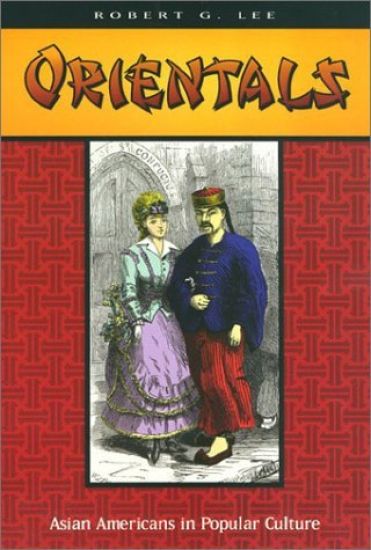
Orientals

Orientals

R Lee

Temple University Press,U.S.
1999
sidottu
Sooner or later every Asian American must deal with the question \u0022Where do you come from?\u0022 It is probably the most familiar if least aggressive form of racism. It is a tip-off to the persistent notion that people of Asian ancestry are not real Americans, that \u0022Orientals\u0022 never really stop being loyal to their foreign homeland, no matter how long they or their families have been in this country. Confronting the cultural stereotypes that have been attached to Asian Americans over the last 150 years, Robert G. Lee seizes the label \u0022Oriental\u0022 and asks where it came from. The idea of Asians as mysterious strangers who could not be assimilated into the cultural mainstream was percolating to the surface of American popular culture in the mid-nineteenth century, when Chinese immigrant laborers began to arrive in this country in large numbers. Lee shows how the bewildering array of racialized images first proffered by music hall songsters and social commentators have evolved and become generalized to all Asian Americans, coalescing in particular stereotypes. Whether represented as Pollutant, Coolie, Deviant, Yellow Peril, Model Minority, or Gook, the Oriental is portrayed as alien and a threat to the American family -- the nation writ small. Refusing to balance positive and negative stereotypes, Lee connects these stereotypes to particular historical moments, each marked by shifting class relations and cultural crises. Seen as products of history and racial politics, the images that have prevailed in songs, fiction, films, and nonfiction polemics are contradictory and complex. Lee probes into clashing images of Asians as (for instance) seductively exotic or devious despoilers of (white) racial purity, admirably industrious or an insidious threat to native laborers. When Lee dissects the ridiculous, villainous, or pathetic characters that amused or alarmed the American public, he finds nothing generated by the real Asian American experience; whether they come from the Gold Rush camps or Hollywood films or the cover of Newsweek, these inhuman images are manufactured to play out America's racial myths. Orientals comes to grips with the ways that racial stereotypes come into being and serve the purposes of the dominant culture.