
Kirjojen hintavertailu. Mukana 11 717 486 kirjaa ja 12 kauppaa.

Kirjahaku

Etsi kirjoja tekijän nimen, kirjan nimen tai ISBN:n perusteella.

4 kirjaa tekijältä R. Gerald Hughes

Britain, Germany and the Cold War

Britain, Germany and the Cold War

R. Gerald Hughes

Routledge
2007
sidottu
This well-researched book details the ambiguity in British policy towards Europe in the Cold War as it sought to pursue détente with the Soviet Union whilst upholding its commitments to its NATO allies.From the early 1950s, Britain pursued a dual policy of strengthening the West whilst seeking détente with the Soviet Union. British statesmen realized that only through compromise with Moscow over the German question could the elusive East-West be achieved. Against this, the West German hard line towards the East (endorsed by the United States) was seen by the British as perpetuating tension between the two blocs. This cast British policy onto an insoluble dilemma, as it was caught between its alliance obligations to the West German state and its search for compromise with the Soviet bloc. Charting Britain's attempts to reconcile this contradiction, this book argues that Britain successfully adapted to the new realities and made hitherto unknown contributions towards détente in the early 1960s, whilst drawing towards Western Europe and applying for membership of the EEC in 1961.Drawing on unpublished US and UK archives, Britain, Germany and the Cold War casts new light on the Cold War, the history of détente and the evolution of European integration.This book will appeal to students of Cold War history, British foreign policy, German politics, and international history.

Britain, Germany and the Cold War

Britain, Germany and the Cold War

R. Gerald Hughes

Routledge
2014
nidottu
This well-researched book details the ambiguity in British policy towards Europe in the Cold War as it sought to pursue détente with the Soviet Union whilst upholding its commitments to its NATO allies.From the early 1950s, Britain pursued a dual policy of strengthening the West whilst seeking détente with the Soviet Union. British statesmen realized that only through compromise with Moscow over the German question could the elusive East-West be achieved. Against this, the West German hard line towards the East (endorsed by the United States) was seen by the British as perpetuating tension between the two blocs. This cast British policy onto an insoluble dilemma, as it was caught between its alliance obligations to the West German state and its search for compromise with the Soviet bloc. Charting Britain's attempts to reconcile this contradiction, this book argues that Britain successfully adapted to the new realities and made hitherto unknown contributions towards détente in the early 1960s, whilst drawing towards Western Europe and applying for membership of the EEC in 1961.Drawing on unpublished US and UK archives, Britain, Germany and the Cold War casts new light on the Cold War, the history of détente and the evolution of European integration.This book will appeal to students of Cold War history, British foreign policy, German politics, and international history.
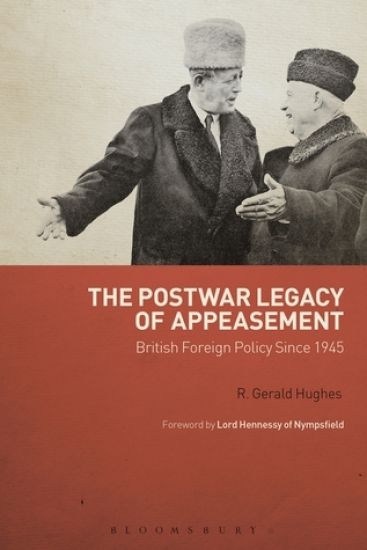
The Postwar Legacy of Appeasement

The Postwar Legacy of Appeasement

R. Gerald Hughes

Bloomsbury Academic
2014
nidottu
Focusing on the Cold War and the post-Cold War eras, R. Gerald Hughes explores the continuing influence of Appeasement on British foreign policy and re-evaluates the relationship between British society and Appeasement, both as historical memory and as a foreign policy process.The Postwar Legacy of Appeasement explores the reaction of British policy makers to the legacies of the era of Appeasement, the memory of Appeasement in public opinion and the media and the use of Appeasement as a motif in political debate regarding threats faced by Britain in the post-war era. Using many previously unpublished archival sources, this book clearly demonstrates that many of the core British beliefs and cultural norms that had underpinned the Chamberlainite Appeasement of the 1930s persisted in the postwar period.
The Postwar Legacy of Appeasement

The Postwar Legacy of Appeasement

R. Gerald Hughes

Bloomsbury Academic
2014
sidottu
Focusing on the Cold War and the post-Cold War eras, R. Gerald Hughes explores the continuing influence of Appeasement on British foreign policy and re-evaluates the relationship between British society and Appeasement, both as historical memory and as a foreign policy process.The Postwar Legacy of Appeasement explores the reaction of British policy makers to the legacies of the era of Appeasement, the memory of Appeasement in public opinion and the media and the use of Appeasement as a motif in political debate regarding threats faced by Britain in the post-war era. Using many previously unpublished archival sources, this book clearly demonstrates that many of the core British beliefs and cultural norms that had underpinned the Chamberlainite Appeasement of the 1930s persisted in the postwar period.