Kirjojen hintavertailu. Mukana 11 244 527 kirjaa ja 12 kauppaa.

Kirjahaku

Etsi kirjoja tekijän nimen, kirjan nimen tai ISBN:n perusteella.

8 kirjaa tekijältä R. H. Helmholz

The ius commune in England

The ius commune in England

R. H. Helmholz

Oxford University Press Inc
2001
sidottu
Ius commune is the amalgamation of Roman and canon laws on the continent. Helmholz addresses the ius commune's relation to and influence on English law. He begins by observing that there were many overlapping areas between English institutions. Through four studies (the law of sanctuary, the law of compurgation, mortuaries and the law of custom, and civil jurisdiction and the clergy), he draws out the coincidences between English law and the ius commune and shows where they developed parallel bodies of doctrine. Helmholz aims to fill in some of the gaps in scholarship on the common legal past of Western law, the history of the Roman and canon laws, the history of the ecclesiastical courts, parallels between the ius commune and English common law, and English church history.
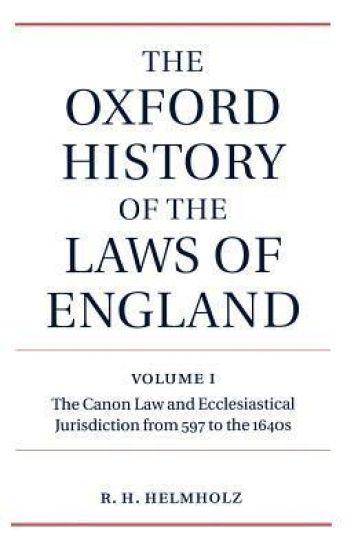
The Oxford History of the Laws of England Volume I

The Oxford History of the Laws of England Volume I

R. H. Helmholz

Oxford University Press
2004
sidottu
This volume traces the reception and subsequent history of the canon law in England between 597 and 1649. It covers, amongst other topics, the Anglo-Saxon laws, both secular and spiritual; the establishment of consistory courts; and the fate of the canon law during and after the English reformation. Secondly, this volume addresses the subjects under ecclesiastical jurisdiction: Civil procedure and the Law of Proof; monetary obligations and economic regulation; testamentary law and probate jurisdiction; tithes and spiritual dues; churches and the clergy; marriage and divorce; defamation; and crimes and criminal procedure. These subjects are examined using evidence from later medieval and early modern court records, and the volume seeks to place them within the context of formal canon law. The volume also places ecclesiastical jurisdiction within the context of English society and the English common law.
Roman Canon Law in Reformation England

Roman Canon Law in Reformation England

R. H. Helmholz

Cambridge University Press
1990
sidottu
In this book one of the world’s foremost legal historians draws upon the evidence of the canon law, court records and the English common-law system to demonstrate the extent to which, contrary to received wisdom, Roman canon law survived in England after the upheavals of the Protestant Reformation. R. H. Helmholz provides an extensive examination of the manuscript records of the ecclesiastical courts and professional literature of the English civilians. Rebutting the views of Maitland and others, he shows how English looked to the Continent for guidance and authority in administering the system of justice they had inherited from the Middle Ages. Intellectual links between England and the Continent are shown to have survived the Reformation and the abolition of papal jurisdiction. The extent to which papal material was still used in England during the sixteenth and seventeenth centuries will interest all readers and surprise many.
Roman Canon Law in Reformation England

Roman Canon Law in Reformation England

R. H. Helmholz

Cambridge University Press
2004
pokkari
In this book one of the world’s foremost legal historians draws upon the evidence of the canon law, court records and the English common-law system to demonstrate the extent to which, contrary to received wisdom, Roman canon law survived in England after the upheavals of the Protestant Reformation. R. H. Helmholz provides an extensive examination of the manuscript records of the ecclesiastical courts and professional literature of the English civilians. Rebutting the views of Maitland and others, he shows how English looked to the Continent for guidance and authority in administering the system of justice they had inherited from the Middle Ages. Intellectual links between England and the Continent are shown to have survived the Reformation and the abolition of papal jurisdiction. The extent to which papal material was still used in England during the sixteenth and seventeenth centuries will interest all readers and surprise many.
Natural Law in Court

Natural Law in Court

R. H. Helmholz

Harvard University Press
2015
sidottu
The theory of natural law grounds human laws in the universal truths of God’s creation. Until very recently, lawyers in the Western tradition studied natural law as part of their training, and the task of the judicial system was to put its tenets into concrete form, building an edifice of positive law on natural law’s foundations. Although much has been written about natural law in theory, surprisingly little has been said about how it has shaped legal practice. Natural Law in Court asks how lawyers and judges made and interpreted natural law arguments in England, Europe, and the United States, from the beginning of the sixteenth century to the American Civil War.R. H. Helmholz sees a remarkable consistency in how English, Continental, and early American jurisprudence understood and applied natural law in cases ranging from family law and inheritance to criminal and commercial law. Despite differences in their judicial systems, natural law was treated across the board as the source of positive law, not its rival. The idea that no person should be condemned without a day in court, or that penalties should be proportional to the crime committed, or that self-preservation confers the right to protect oneself against attacks are valuable legal rules that originate in natural law. From a historical perspective, Helmholz concludes, natural law has advanced the cause of justice.
The Spirit of Classical Canon Law

The Spirit of Classical Canon Law

R. H. Helmholz

University of Georgia Press
2010
pokkari
Despite the long reach of classical canon law—across Europe, well into modern times, and into such secular subjects as theft, wills, and the sale of goods—it has been the subject of far too few general studies in English. Illuminating the basic nature of the canon, this work explores the roles of moral, social, political, and religious values in the laws' development through the seventeenth century. At the same time, R. H. Helmholz makes relevant the attitudes and formal techniques of the laws' authors, practitioners, and interpreters.Helmholz first discusses the origins of the canon law; the collection of texts, known as the Corpus iuris canonici, which form its foundation; the basic sources on which the Corpus draws, including the Bible and Roman law; and the body of juristic commentary on the Corpus. He then considers, in turn, fourteen of the major areas affected by the laws such as the governance of the Church (in particular the law of election of bishops), the sacraments (baptism), and legal sanctions (the law of excommunication).In conclusion, Helmholz points to three common themes that characterize the laws and their implementation: their close connection with the goals and ideals of the Gregorian reform movement, a concern for the spiritual health of all concerned parties, and an interest in securing justice and protection for the unfortunate. Helmholz also comments on the lawyerly skill of the men who devoted their careers to the canon law and the law's ambitious goals. He does not shrink from describing its unpalatable aspects, such as its acceptance of slavery, its restrictions on religious freedom, and its use as an instrument of the clergy's agenda.The size and complexity of the body of church law and its jurisprudence have kept historians in many fields from appreciating how this topic might enrich their studies. The Spirit of Classical Canon Law provides them with the ideal entree.
The Profession of Ecclesiastical Lawyers

The Profession of Ecclesiastical Lawyers

R. H. Helmholz

Cambridge University Press
2019
sidottu
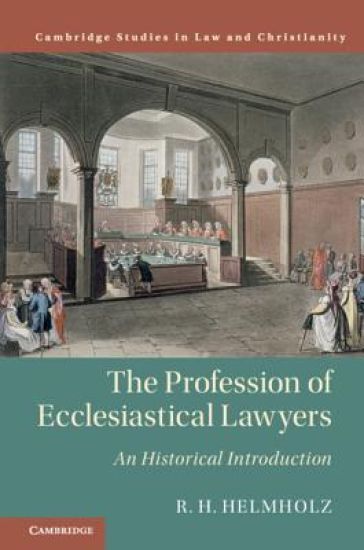
Historians of the English legal profession have written comparatively little about the lawyers who served in the courts of the Church. This volume fills a gap; it investigates the law by which they were governed and discusses their careers in legal practice. Using sources drawn from the Roman and canon laws and also from manuscripts found in local archives, R. H. Helmholz brings together previously published work and new evidence about the professional careers of these men. His book covers the careers of many lesser known ecclesiastical lawyers, dealing with their education in law, their reaction to the coming of the Reformation, and their relationship with English common lawyers on the eve of the Civil War. Making connections with the European ius commune, this volume will be of special interest to English and Continental legal historians, as well as to students of the relationship between law and religion.
The Profession of Ecclesiastical Lawyers

The Profession of Ecclesiastical Lawyers

R. H. Helmholz

Cambridge University Press
2022
pokkari
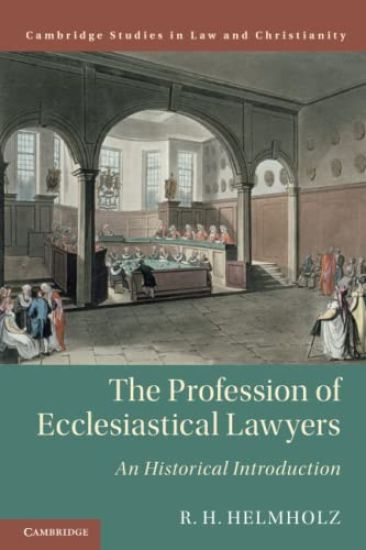
Historians of the English legal profession have written comparatively little about the lawyers who served in the courts of the Church. This volume fills a gap; it investigates the law by which they were governed and discusses their careers in legal practice. Using sources drawn from the Roman and canon laws and also from manuscripts found in local archives, R. H. Helmholz brings together previously published work and new evidence about the professional careers of these men. His book covers the careers of many lesser known ecclesiastical lawyers, dealing with their education in law, their reaction to the coming of the Reformation, and their relationship with English common lawyers on the eve of the Civil War. Making connections with the European ius commune, this volume will be of special interest to English and Continental legal historians, as well as to students of the relationship between law and religion.