Kirjojen hintavertailu. Mukana 11 342 296 kirjaa ja 12 kauppaa.

Kirjahaku

Etsi kirjoja tekijän nimen, kirjan nimen tai ISBN:n perusteella.

10 kirjaa tekijältä R. M. Hare

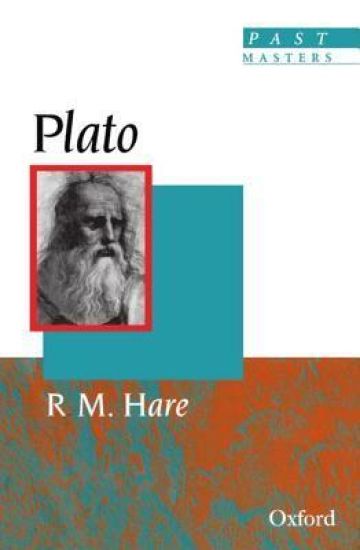
Plato

Plato

R. M. Hare

Oxford University Press
1982
nidottu
Even after twenty-three centuries Plato's work remains the starting-point for the study of logic, metaphysics, and moral and political philosophy. But though his dialogues retain their freshness and immediacy, they can be difficult to follow. Professor Hare has provided a short introduction to Plato's thought that makes their meaning clear.
Objective Prescriptions

Objective Prescriptions

R. M. Hare

Clarendon Press
1999
sidottu
R. M. Hare has brought together in this volume the best of his uncollected essays in moral philosophy, several of them previously unpublished or revised for this collection. They span the whole range of his ethical interests, from the most abstract to the most down-to-earth. The reader will find here the bases of his ethical theory in Kantian prescriptivism, utilitarianism, and the logic of imperatives, and will see that theory applied to issues of bioethics, medical ethics, business ethics, loyalty and obedience, and racism. The essays display the author's characteristic clarity and vigour; some of them are polemical, targeting particular opponents and rival theories. The volume provides a compelling demonstration of Hare's commitment to bringing together the theoretical and the practical in ethics.
Essays in Ethical Theory

Essays in Ethical Theory

R. M. Hare

Clarendon Press
1993
nidottu
In this volume, R. M. Hare has collected a number of essays which fill in the theoretical background of his thought and which together give an overall picture of his views on a variety of questions. Each essay is self-contained, and topics covered include the objectivity and rationality of moral thinking, the issue between the ethical realists and their opponents, the place in our moral thought of appeals to common convictions, and how to tell whether a feature of a situation is morally relevant. His central theme is the paradox that, if moral judgements were just statements of fact, relativism would be inescapable. We can treat moral thinking as a rational activity only because moral judgements are more than this.
Moral Thinking

Moral Thinking

R. M. Hare

Oxford University Press
1981
nidottu
In this work, the author has fashioned out of the logical and linguistic theses of his earlier books a full-scale but readily intelligible account of moral argument.
Essays on Political Morality

Essays on Political Morality

R. M. Hare

Clarendon Press
1998
nidottu
R. M. Hare, one of the most widely discussed of today's moral philosophers, presents a selection of essays in which he brings ethical theory lucidly to bear on moral problems arising in politics. He examines our obligation to obey the law; the limits of legitimate lawbreaking, civil violence, and war; rights of various sorts and their supposed conflict with utility; justice, distributive and retributive; and care of the environment. His arguments are amply illustrated by specific examples. The volume substantiates the author's claim that help with such problems can be found in philosophy, and particularly in his own ethical theory, which draws together the best insights of Kant and utilitarians.
Essays on Religion and Education

Essays on Religion and Education

R. M. Hare

Clarendon Press
1998
nidottu
R. M. Hare, one of the most widely discussed of today's moral philosophers, here presents his most important essays on religion and education, in which he brings together the theoretical and the practical. The book opens with an exposition of his ideas on the meaning of religious language. There follow several essays, theoretical and practical, on the relations between religion and morality, which have deep implications for moral education. The central question addressed in the rest of the volume is how children can be educated to think for themselves, freely but rationally, about moral questions; and Professor Hare examines the effects on society of failure to achieve this. He argues that those who want to dispense with morality are in effect resigning from a vital educational task. Attitudes to euthanasia and to equality of educational opportunity are taken as examples of how our thinking can go wrong. 'The former Professor of Moral Philosophy at Oxford . . . has brought together a collection of papers exploring, with his customary clarity of thought and elegance of expression, the light which moral philosophy can shed on certain religious and educational questions . . . it is illuminating to follow an eminent philosopher at work on matters of great practical importance, and in prodding theologians to think more clearly.' Church Times '[a] cogent and compelling vision, enunciated with all the intelligence, elegance and vigour for which Hare is justly renowned' Times Literary Supplement 'All the essays are a delight to read: clear, succinct, precisely expressed, and devoid of technical jargon. The collection will be welcomed by philosophers of education.' Theology 'an important resource for persons interested in clarifying the language of moral education in a religiously pluralist society' Religious Studies Review 'admirably clear and straightforward'Journal of the American Academy of Religion 'It is . . . a pleasure to receive for review a book by someone who is palpably expert in a particular discipline, and able to deploy that discipine on topics which have a demonstrably practical relevance to education. Most books satisfy neither criterion; this one satisfies both. Add Hare's well-known clarity of style and presentation, and we have something really worth reading.' Oxford Review of Education
Essays on Religion and Education

Essays on Religion and Education

R. M. Hare

Clarendon Press
1992
sidottu
R. M. Hare is one of the most widely discussed of today's moral philosophers. In this volume he has collected his most important essays in the related fields of religion and education, some newly published and others now inaccessible. The book starts with an exposition of his ideas on the meaning of religious language. There follow several essays, theoretical and practical, on the relations between religion and morality, which have deep implications for moral education. The central question addressed in the rest of the volume is how children can be educated to think for themselves, freely but rationally, about moral questions, and the effects on society of failure to achieve this. Professor Hare argues that those who want to dispense with morality are in effect resigning from a vital educational task. Attitudes to euthanasia and to equality of educational opportunity are taken as examples of how our thinking can go wrong.
Sorting Out Ethics

Sorting Out Ethics

R. M. Hare

Clarendon Press
2000
nidottu
R. M. Hare writes in his Preface: 'I offer this taxonomy of ethical theories to all those who are lost in the moral maze, including many of my philosophical colleagues. They are lost because, like most of those who hold forth on moral questions in the media, they have no map of the maze. This is has been my aim to provide.' Sorting Out Ethics is a characteristically lucid and lively survey of rival ethical theories by one of the most influential moral philosophers of the century. It also constitutes a definitive summary of Hare's own fundamental ethical position.