Kirjojen hintavertailu. Mukana 11 699 587 kirjaa ja 12 kauppaa.

Kirjahaku

Etsi kirjoja tekijän nimen, kirjan nimen tai ISBN:n perusteella.

3 kirjaa tekijältä Rabe Stephen G.

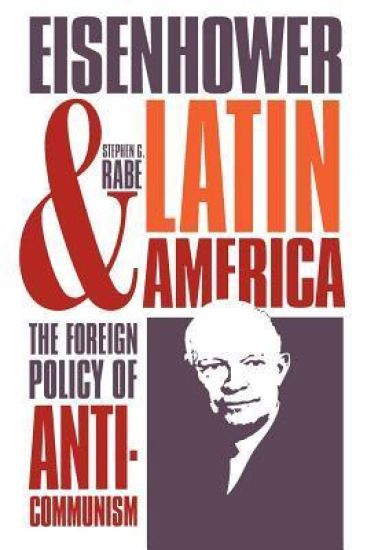
Eisenhower and Latin America

Eisenhower and Latin America

Rabe Stephen G.

The University of North Carolina Press
1988
nidottu
Stephen Rabe's timely book examines President Dwight D. Eisenhower's Latin American policy and assesses the president's actions in light of recent ""Eisenhower revisionism."" During his first term, Eisenhower paid little attention to Latin America but his objective there was clear: to prevent communism from gaining a foothold. The Eisenhower administration was prepared to cooperate with authoritarian military regimes, but not to fund developmental aid or vigorously promote political democracy. Two events in the second administration convinced Eisenhower that he had underestimated the extent of popular unrest--and thus the potential for Communist inroads: the stoning of Vice-President Richard M. Nixon in Caracas and the radicalization of the Cuban Revolution. He then began to support trade agreements, soft loans, and more strident measures that led to CIA involvement in the Bay of Pigs invasion and plots to assassinate Fidel Castro and Rafael Trujillo. In portraying Eisenhower as a virulent anti-Communist and cold warrior, Rabe challenges the Eisenhower revisionists who view the president as a model of diplomatic restraint.
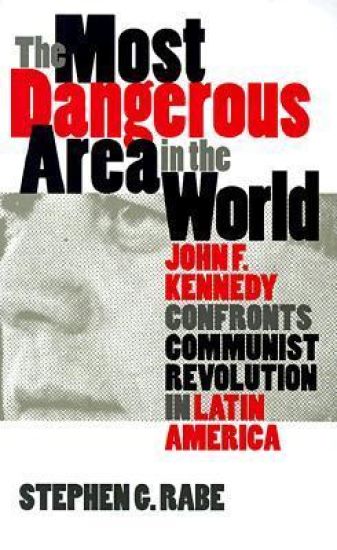
The Most Dangerous Area in the World

The Most Dangerous Area in the World

Rabe Stephen G.

The University of North Carolina Press
1999
nidottu
In March 1961, President John F. Kennedy announced the formation of the Alliance for Progress, a programme dedicated to creating prosperous, socially-just, democratic societies throughout Latin America. Despite spending $20 billion in pursuit of the Alliance's goals, Latin American economies barely grew, Latin American societies remained inequitable, and 16 extra-constitutional changes of government rocked the region. In this analysis, the author aims to explain why Kennedy's grand plan for Latin America proved to be such a policy failure. He investigates the nature of Kennedy's intense anti-Communist crusade and explores the convictions that drove him to fight the Cold War throughout the Caribbean and Latin America, a region he repeatedly referred to as ""the most dangerous area in the world"".
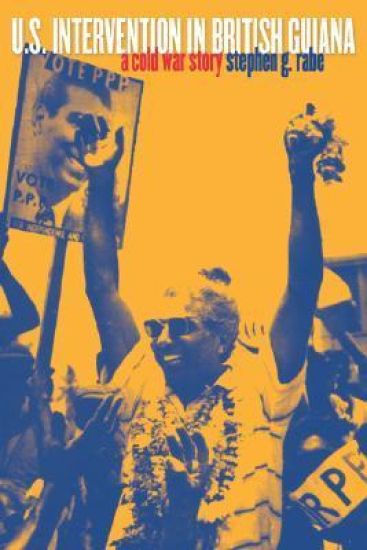
U.S. Intervention in British Guiana

U.S. Intervention in British Guiana

Rabe Stephen G.

The University of North Carolina Press
2005
nidottu
The United States installs a leader in a South American country in the first published account of the massive U.S. covert intervention in British Guiana between 1953 and 1969. Stephen G. Rabe uncovers a Cold War story of imperialism, gender bias, and racism. When the South American colony, now known as Guyana, was due to gain independence from Britain in the 1960s, U.S. officials in the Kennedy and Johnson administrations feared it would become a communist nation under the leadership of Cheddi Jagan, a Marxist who was very popular among the South Asian (mostly Indian) majority. Although to this day the CIA refuses to confirm or deny involvement, Rabe presents evidence that CIA funding, through a program run by the AFL-CIO, helped foment the labor unrest, race riots, and general chaos that led to Jagan's replacement in 1964. The political leader preferred by the United States, Forbes Burnham, went on to lead a twenty-year dictatorship in which he persecuted the majority Indian population. Considering race, gender, religion, and ethnicity along with traditional approaches to diplomatic history, Rabe's analysis of this Cold War tragedy serves as a needed corrective to interpretations that depict the Cold War as an unsullied U.S. triumph.