Kirjojen hintavertailu. Mukana 12 070 198 kirjaa ja 12 kauppaa.

Kirjahaku

Etsi kirjoja tekijän nimen, kirjan nimen tai ISBN:n perusteella.

14 kirjaa tekijältä Rachel Adams

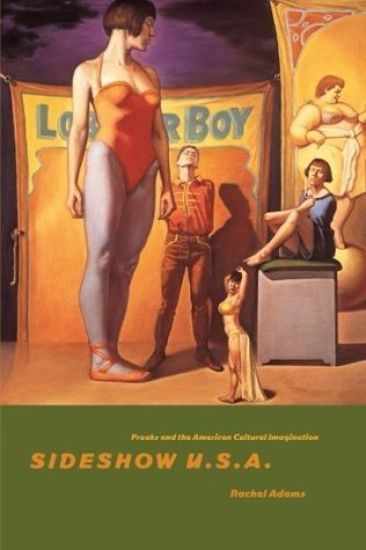
Sideshow U.S.A.

Sideshow U.S.A.

Rachel Adams

University of Chicago Press
2001
nidottu
A staple of American popular culture during the nineteenth and early twentieth centuries, the freak show seemed to vanish after the Second World War. But as Rachel Adams reveals in Sideshow U.S.A., images of the freak show, with its combination of the grotesque, the horrific, and the amusing, stubbornly reappeared in literature and the arts. Freak shows, she contends, have survived because of their capacity for reinvention. Empty of any inherent meaning, the freak's body becomes a stage for playing out some of the twentieth century's most pressing social and political concerns, from debates about race, empire, and immigration, to anxiety about gender, and controversies over taste and public standards of decency.Sideshow U.S.A. begins by revisiting the terror and fascination the original freak shows provided for their audiences, as well as exploring the motivations of those who sought fame and profit in the business of human exhibition. With this history in mind, Adams turns from live entertainment to more mediated forms of cultural expression: the films of Tod Browning, the photography of Diane Arbus, the criticism of Leslie Fiedler, and the fiction Carson McCullers, Toni Morrison, and Katherine Dunn. Taken up in these works of art and literature, the freak serves as a metaphor for fundamental questions about self and other, identity and difference, and provides a window onto a once vital form of popular culture. Adams's study concludes with a revealing look at the revival of the freak show as live performance in the late 1980s and the 1990s. Celebrated by some, the freak show's recent return is less welcome to those who have traditionally been its victims. At the beginning of a new century, Adams sees it as a form of living history, a testament to the vibrancy and inventiveness of American popular culture, as well as its capacity for cruelty and injustice."Because of its subject matter, this interesting and complex study is provocative, as well as thought-provoking."—Virginia Quarterly Review
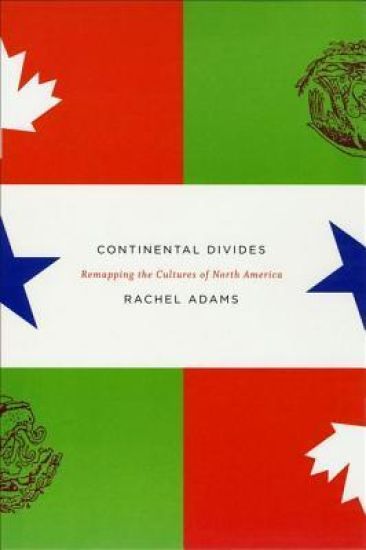
Continental Divides

Continental Divides

Rachel Adams

University of Chicago Press
2009
sidottu
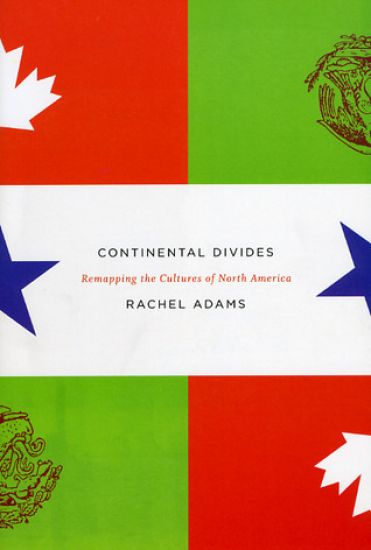
North America is more a political and an economic invention than a place people call home. Nonetheless, the region shared by the United States and its closest neighbors is an intriguing frame for comparative American studies. "Continental Divides" is the first book to study the patterns of contact, exchange, conflict, and disavowal among cultures that span the borders of Canada, the United States, and Mexico. Rachel Adams considers a broad range of literary, filmic, and visual texts that exemplify cultural traffic across North American borders. She investigates how our understanding of key themes, genres, and periods within U.S. cultural study is deepened, and in some cases transformed, when Canada and Mexico enter the picture. How, for example, does the work of the iconic American writer Jack Kerouac read differently when his Franco-American origins and Mexican travels are taken into account? Or how would our conception of American modernism be altered if Mexico were positioned as a center of artistic and political activity? In this engaging analysis, Adams charts the lengthy and often unrecognized traditions of neighborly exchange, both hostile and amicable, that have left an imprint on North America's varied cultures.
Continental Divides

Continental Divides

Rachel Adams

University of Chicago Press
2009
nidottu
North America is more a political and an economic invention than a place people call home. Nonetheless, the region shared by the United States and its closest neighbors is an intriguing frame for comparative American studies. "Continental Divides" is the first book to study the patterns of contact, exchange, conflict, and disavowal among cultures that span the borders of Canada, the United States, and Mexico. Rachel Adams considers a broad range of literary, filmic, and visual texts that exemplify cultural traffic across North American borders. She investigates how our understanding of key themes, genres, and periods within U.S. cultural study is deepened, and in some cases transformed, when Canada and Mexico enter the picture. How, for example, does the work of the iconic American writer Jack Kerouac read differently when his Franco-American origins and Mexican travels are taken into account? Or how would our conception of American modernism be altered if Mexico were positioned as a center of artistic and political activity? In this engaging analysis, Adams charts the lengthy and often unrecognized traditions of neighborly exchange, both hostile and amicable, that have left an imprint on North America's varied cultures.
Love, Money, Duty

Love, Money, Duty

Rachel Adams

Columbia University Press
2025
sidottu
From birth to death, we care and are cared for by others. Yet we rarely acknowledge care except when it fails. In Love, Money, Duty, Rachel Adams examines the stories we tell about care, those who do the work, and those who depend on it. These narratives, she argues, help us better understand our complicated feelings about care and the obligations that come with it.Combining insightful and compassionate readings of writers and artists—among them Toni Morrison, Susan Sontag, Roz Chast, Sally Mann, and Jamaica Kincaid—with stories of her own experiences, Adams analyzes the work, feelings, and ethical dilemmas associated with care, including unwelcome emotions such as boredom, resentment, exhaustion, and disgust. From the universal dependence of infancy to elder care and from the intimacy of home and family to institutions like hospitals, nursing facilities, and asylums, Love, Money, Duty considers our ambivalence about vulnerability and need and how it is shaped by capitalism, race, and gender.Drawing from moral philosophy, gender and queer theory, critical race and disability studies, and health humanities, Adams treats care as a form of work, a feeling, an ethic, and an art. Exploring the radical possibilities of care and the devastating consequences of its failure, this book invites readers to appreciate care that works, recognizing the creativity and resourcefulness of dependent people and their caregivers.
Love, Money, Duty

Love, Money, Duty

Rachel Adams

Columbia University Press
2025
pokkari
From birth to death, we care and are cared for by others. Yet we rarely acknowledge care except when it fails. In Love, Money, Duty, Rachel Adams examines the stories we tell about care, those who do the work, and those who depend on it. These narratives, she argues, help us better understand our complicated feelings about care and the obligations that come with it.Combining insightful and compassionate readings of writers and artists—among them Toni Morrison, Susan Sontag, Roz Chast, Sally Mann, and Jamaica Kincaid—with stories of her own experiences, Adams analyzes the work, feelings, and ethical dilemmas associated with care, including unwelcome emotions such as boredom, resentment, exhaustion, and disgust. From the universal dependence of infancy to elder care and from the intimacy of home and family to institutions like hospitals, nursing facilities, and asylums, Love, Money, Duty considers our ambivalence about vulnerability and need and how it is shaped by capitalism, race, and gender.Drawing from moral philosophy, gender and queer theory, critical race and disability studies, and health humanities, Adams treats care as a form of work, a feeling, an ethic, and an art. Exploring the radical possibilities of care and the devastating consequences of its failure, this book invites readers to appreciate care that works, recognizing the creativity and resourcefulness of dependent people and their caregivers.
Wanderlust

Wanderlust

Rachel Adams

MIT Press
2017
sidottu
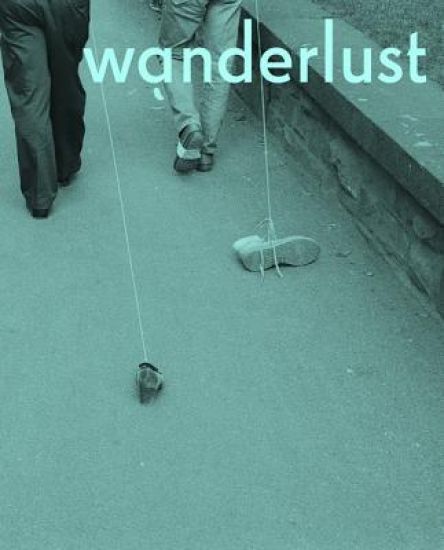
Artists as voyagers who leave their studios to make art, including Nancy Holt, Vito Acconci, Sophie Calle, and Richard Long.Wanderlust highlights artists as voyagers who leave their studios to make art. This book (and the exhibition it accompanies) is the first comprehensive survey of the artist's need to roam and the work that emerges from this need. Wanderlust presents the work of under-recognized yet pioneering artists alongside their well-known counterparts, and represents works that vary in process, with some artists working as solitary figures implanting themselves physically on the landscape while others perform and create movements in a collaborative manner or in public.Many of the earlier works use what were at the time nontraditional methods of art making. In Trail Markers (1969), for example, Nancy Holt spent time in the English countryside, where she documented the painted orange trail markers she found dotting the landscape. Vito Acconci explored his body's "occupancy" of public space through the execution of preconceived actions or activities. In Following Piece (1969), Acconci followed one randomly chosen stranger through the streets of New York. A Line Made by Walking(1967), a black-and-white photograph of Richard Long's imprint of a straight line in a field, was Long's first walking art work, made on a journey to St Martin's from his home in Bristol. Ana Mendieta's influential Silueta Works in Mexico (1977) documents performances by the artist during her travel between Iowa and Mexico, in which she imprints her body on the landscape while addressing issues of displacement.Each of these works recognizes the walk and the journey as much more than just a basic human act. Rebecca Solnit observes that walking replicates thinking, adding "the motions of the mind cannot be traced, but those of the feet can." These works trace the motions of wandering artists' focused minds.ArtistsVito Acconci, Bas Jan Ader, Nevin Aladag, Francis Alys, Janine Antoni, John Baldessari, Kim Beck, Roberley Bell, Blue Republic, Sophie Calle, Rosemarie Castoro, Cardiff/Miller, Zoe Crosher, Fallen Fruit, Mona Hatoum, Nancy Holt, Kenneth Josephson, William Lamson, Richard Long, Marie Lorenz, Mary Mattingly, Anthony McCall, Ana Mendieta, Teresa Murak, Wangechi Mutu, Efrat Natan, Gabriel Orozco, Carmen Papalia, John Pfahl, Pope.L, Teri Rueb, Michael X. Ryan, Todd Shalom, Mary Ellen Strom, and Guido van der Werve. Contributors Rachel Adams, Lucy Ainsworth, Andrew Barron, Pamela Campanaro, Andy Campbell, Hannah Cattarin, Ian Cofre, Jamie DiSarno, Katherine Finerty, Joshua Fischer, Natalie Fleming, Melanie Flood, Jason Foumberg, Allison Glenn, Kate Green, Ross Stanton Jordan, Anna Kaplan, Jamilee Lacy, Jennie Lamensdorf, Toby Lawrence, Jane McFadden, Lynnette Miranda, Conor Moynihan, Liz Munsell, Karen Patterson, Ariel Lauren Pittman, Sean Ripple, Eve Schillo, Holly Shen, Rebecca Solnit, Lexi Lee Sullivan, Whitney Tassie, Charlie Tatum, Zoe Taleporos, Lori Waxman
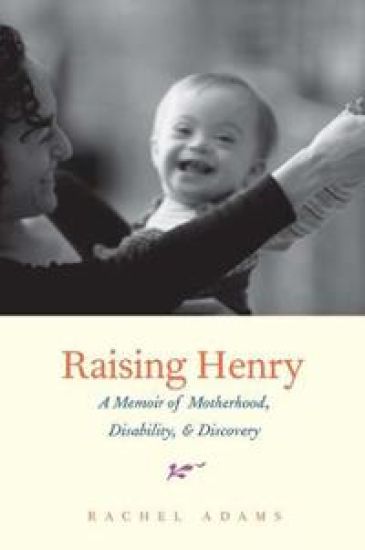
Raising Henry

Raising Henry

Rachel Adams

Yale University Press
2014
pokkari
A mother’s deeply moving account of raising a son with Down syndrome in a world crowded with contradictory attitudes toward disabilities Rachel Adams’s life had always gone according to plan. She had an adoring husband, a beautiful two-year-old son, a sunny Manhattan apartment, and a position as a tenured professor at Columbia University. Everything changed with the birth of her second child, Henry. Just minutes after he was born, doctors told her that Henry had Down syndrome, and she knew that her life would never be the same. In this honest, self-critical, and surprisingly funny book, Adams chronicles the first three years of Henry’s life and her own transformative experience of unexpectedly becoming the mother of a disabled child. A highly personal story of one family’s encounter with disability, Raising Henry is also an insightful exploration of today’s knotty terrain of social prejudice, disability policy, genetics, prenatal testing, medical training, and inclusive education. Adams untangles the contradictions of living in a society that is more enlightened and supportive of people with disabilities than ever before, yet is racing to perfect prenatal tests to prevent children like Henry from being born. Her book is gripping, beautifully written, and nearly impossible to put down. Once read, her family’s story is impossible to forget.
Transparency

Transparency

Rachel Adams

Routledge
2020
sidottu
This book critiques the contemporary recourse to transparency in law and policy. This is, ostensibly, the information age. At the heart of the societal shift toward digitalisation is the call for transparency and the liberalisation of information and data. Yet, with the recent rise of concerns such as 'fake news', post-truth and misinformation, where the policy responses to all these phenomena has been a petition for even greater transparency, it becomes imperative to critically reflect on what this dominant idea means, whom it serves, and what the effects are of its power. In response, this book provides the first sustained critique of the concept of transparency in law and policy. It offers a concise overview of transparency in law and policy around the world, and critiques how this concept works discursively to delimit other forms of governance, other ways of knowing and other realities. It draws on the work of Michel Foucault on discourse, archaeology and genealogy, together with later Foucaultian scholars, including Gayatri Chakravorty Spivak and Judith Butler, as a theoretical framework for challenging and thinking anew the history and understanding of what has become one of the most popular buzzwords of 21st century law and governance. At the intersection of law and governance, this book will be of considerable interest to those working in these fields; but also to those engaged in other interdisciplinary areas, including society and technology, the digital humanities, technology laws and policy, global law and policy, as well as the surveillance society.
Transparency

Transparency

Rachel Adams

TAYLOR FRANCIS LTD
2021
nidottu
This book critiques the contemporary recourse to transparency in law and policy. This is, ostensibly, the information age. At the heart of the societal shift toward digitalisation is the call for transparency and the liberalisation of information and data. Yet, with the recent rise of concerns such as 'fake news', post-truth and misinformation, where the policy responses to all these phenomena has been a petition for even greater transparency, it becomes imperative to critically reflect on what this dominant idea means, whom it serves, and what the effects are of its power. In response, this book provides the first sustained critique of the concept of transparency in law and policy. It offers a concise overview of transparency in law and policy around the world, and critiques how this concept works discursively to delimit other forms of governance, other ways of knowing and other realities. It draws on the work of Michel Foucault on discourse, archaeology and genealogy, together with later Foucaultian scholars, including Gayatri Chakravorty Spivak and Judith Butler, as a theoretical framework for challenging and thinking anew the history and understanding of what has become one of the most popular buzzwords of 21st century law and governance. At the intersection of law and governance, this book will be of considerable interest to those working in these fields; but also to those engaged in other interdisciplinary areas, including society and technology, the digital humanities, technology laws and policy, global law and policy, as well as the surveillance society.
The New Empire of AI

The New Empire of AI

Rachel Adams

JOHN WILEY AND SONS LTD
2024
sidottu
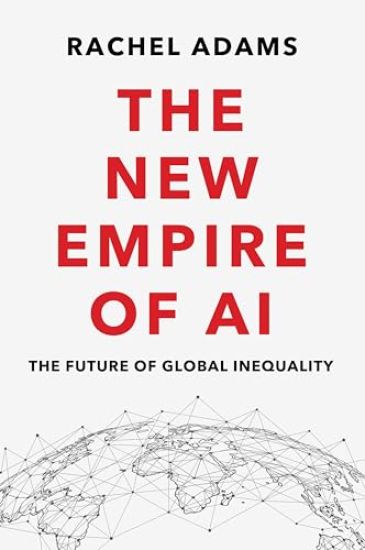
As AI takes hold across the planet and wealthy nations seek to position themselves as global leaders of this new technology, the gap is widening between those who benefit from it and those who are subjugated by it. As Rachel Adams shows in this hard-hitting book, growing inequality is the single biggest threat to the transformative potential of AI. Not only is AI built on an unequal global system of power, it stands poised to entrench existing inequities, further consolidating a new age of empire. AI’s impact on inequality will not be experienced in poorer countries only: it will be felt everywhere. The effects will be seen in an intensification of international migration, as opportunities increasingly concentrate in the hands of wealthier nations; in heightened political instability and populist politics; and in climate-related disasters caused by an industry that is blind to its environmental impact across supply chains. We need to act now to address these issues. Only if the current inequitable trajectory of AI is halted, the incentives changed, and the production and use of AI decentralized and decoupled from wealthier nations will AI be able to deliver on its promise to build a better world for all.Also available as an audiobook
The New Empire of AI

The New Empire of AI

Rachel Adams

Polity Press
2026
nidottu
As AI takes hold across the planet and wealthy nations seek to position themselves as global leaders of this new technology, the gap is widening between those who benefit from it and those who are subjugated by it. As Rachel Adams shows in this hard-hitting book, growing inequality is the single biggest threat to the transformative potential of AI. Not only is AI built on an unequal global system of power, it stands poised to entrench existing inequities, further consolidating a new age of empire. AI’s impact on inequality will not be experienced in poorer countries only: it will be felt everywhere. The effects will be seen in an intensification of international migration, as opportunities increasingly concentrate in the hands of wealthier nations; in heightened political instability and populist politics; and in climate-related disasters caused by an industry that is blind to its environmental impact across supply chains. We need to act now to address these issues. Only if the current inequitable trajectory of AI is halted, the incentives changed, and the production and use of AI decentralized and decoupled from wealthier nations will AI be able to deliver on its promise to build a better world for all. Also available as an audiobook