Kirjojen hintavertailu. Mukana 11 699 587 kirjaa ja 12 kauppaa.

Kirjahaku

Etsi kirjoja tekijän nimen, kirjan nimen tai ISBN:n perusteella.

17 kirjaa tekijältä Rachel Bowlby

Rachel Bowlby   Unexpected Items

Rachel Bowlby Unexpected Items

Rachel Bowlby

EDINBURGH UNIVERSITY PRESS
2024
sidottu
The mid-twentieth-century woman was stereotypically seen as a housewife and mother, who shopped. But whether as purchaser, parent or professional, women's defining identities have been transformed, with a loosening of seemingly stone-set gender divisions and a feminist emphasis on expanding choices and different stories. Looking especially at consumer culture and parenthood, this book delves into some of the mutations involved. Here are marketing manuals and newspaper stories, as well as novels and tragedies, from Austen to Aeschylus. Unexpected Items is in part a plea for the uses and pleasures of critical reading of all kinds of text as a historical method, showing how meanings move on in the light of new contexts and questions, and also how looking close up at the way the words work can itself be a source of new thinking. The woman, the mother, the consumer, the parent all human characters clash and change, and so do their likely stories.
Rachel Bowlby  Unexpected Items

Rachel Bowlby Unexpected Items

Rachel Bowlby

EDINBURGH UNIVERSITY PRESS
2026
nidottu
The mid-twentieth-century woman was stereotypically seen as a housewife and mother, who shopped. But whether as purchaser, parent or professional, women's defining identities have been transformed, with a loosening of seemingly stone-set gender divisions and a feminist emphasis on expanding choices and different stories. Looking especially at consumer culture and parenthood, this book delves into some of the mutations involved. Here are marketing manuals and newspaper stories, as well as novels and tragedies, from Austen to Aeschylus. Unexpected Items is in part a plea for the uses and pleasures of critical reading-of all kinds of text-as a historical method, showing how meanings move on in the light of new contexts and questions, and also how looking close up at the way the words work can itself be a source of new thinking. The woman, the mother, the consumer, the parent-all human characters clash and change, and so do their likely stories.
Everyday Stories

Everyday Stories

Rachel Bowlby

Oxford University Press
2016
nidottu
The Literary Agenda is a series of short polemical monographs about the importance of literature and of reading in the wider world and about the state of literary education inside schools and universities. The category of 'the literary' has always been contentious. What is clear, however, is how increasingly it is dismissed or is unrecognised as a way of thinking or an arena for thought. It is sceptically challenged from within, for example, by the sometimes rival claims of cultural history, contextualized explanation, or media studies. It is shaken from without by even greater pressures: by economic exigency and the severe social attitudes that can follow from it; by technological change that may leave the traditional forms of serious human communication looking merely antiquated. For just these reasons this is the right time for renewal, to start reinvigorated work into the meaning and value of literary reading. We live in days, no leaving them or choosing them. What's in a day? With their natural narrative arc they begin and they end, and in between we talk about how they are going or wonder 'where' they have gone. They each have their small stories, non-stories, ephemeral stories. So every day slips by, most days much like most other days. We eat, we sleep, we go to work; we endure, enjoy, continue. Day after day, day before day, it is the recurring of no particular story in endless, beginningless succession. At the same time, any single day is also a unique date, with its multi-digit identity, its moment-at last, and never again-of here and now, today. And on longer scales, the slow small shifts of ordinary days and their surrounding stories will eventually remake the days that have been and gone as the times that are no more. An ordinary day from decades, let alone centuries ago must now be a 'once' long passed away, the old days to be regretted-or to be revived in all the curiosity of their historical difference. Everyday Stories makes us think again about the ordinary life we are in, day after day and day by day: always the same, and always slightly changing. Entering into the single day, drawing out the stories that surround us, this book goes into everyday stories of many descriptions, old and new: both in literature and in that story-laden place and time we call real life.
A Child of One's Own

A Child of One's Own

Rachel Bowlby

Oxford University Press
2015
nidottu
Among the elementary human stories, parenthood has tended to go without saying. Compared to the spectacular attachments of romantic love, it is only the predictable sequel. Compared to the passions of childhood, it is just a background. But in recent decades, far-reaching changes in typical family forms and in procreative possibilities (through reproductive technologies) have brought out new questions. Why do people want (or not want) to be parents? How has the 'choice' first enabled by contraception changed the meaning of parenthood? Looking not only at new parental parts but at older parental stories, in novels and other works, this fascinating book offers fresh angles and arguments for thinking about parenthood today.
Back to the Shops

Back to the Shops

Rachel Bowlby

Oxford University Press
2022
sidottu
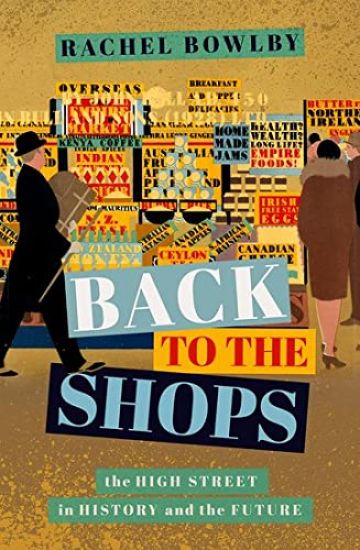
What will become of the shops? More than ever, the high street appears to be under mortal threat, its shops boarded up as the sad 'bricks and mortar' survivals of a pre-online retail world. But behind the bleak appearance, there is more to see. Back to the Shops offers a set of short and surprising chapters, each one a window into a different shop type or mode of selling. Old shopping streets are seen from new angles; fast fashion shows up in eighteenth-century edits. Here are pedlars and pop-ups, mail order catalogues and mobile greengrocers' shops. Here too are food markets open till late on a Saturday night, and tiny subscription libraries tucked away at the back of the sweet shop. Over time, shops have occupied radically different places in cultural arguments and in our everyday lives. They are essential sources of daily provisions, but they are also the visible evidence of consuming excess. They are local community hubs and they are dreamlands of distraction. Shops are inherently spaces of imagination as well as of practicality. They belong with their own surrounding streets and town; they bring back the times and places of our lives. They linger in stories of all kinds, whether far-fetched or round the corner. From butcher to baker and from markets to motor vans—after reading this book, you will want to go back to the shops.
Émile Zola

Émile Zola

Rachel Bowlby

Oxford University Press
2025
sidottu
Zola made it his aim to write novels exploring the many compartments and classes of modern French life in the later nineteenth century—and he went on to carry it out, with novels that look at the longings and troubles and everyday lives of people in their specific social milieux. Travelling through the varieties of Zola's styles and settings, realistic and comic and tragic and critical, from shopping to mining to the fertility business, this book is a guide to the different pleasures and modes of thinking to be found in reading Zola today. The last part considers the different kinds of story involved in the final years of Zola's own life. It follows him first to England—to Upper Norwood, in south London, where he was in exile for almost a year in 1898-9, as a result of his intervention in the ongoing Dreyfus affair. Long letters home offer moving insights into Zola's whole way of being, in the intimacy of his daily life and his writing routines, set against the public events of the Dreyfus process that continue to resonate today.
Freudian Mythologies

Freudian Mythologies

Rachel Bowlby

Oxford University Press
2007
sidottu
More than a hundred years ago, Freud made a new mythology by revising an old one: Oedipus, in Sophocles' tragedy the legendary perpetrator of shocking crimes, was an Everyman whose story of incest and parricide represented the fulfilment of universal and long forgotten childhood wishes. The Oedipus complex - child, mother, father - suited the nuclear families of the mid-twentieth century. But a century after the arrival of the psychoanalytic Oedipus, it might seem that modern lives are very much changed. Typical family formations and norms of sexual attachment are changing, while the conditions of sexual difference, both biologically and socially, have undergone far-reaching modifications. Today, it is possible to choose and live subjective stories that the first psychoanalytic patients could only dream of. Different troubles and enjoyments are speakable and unspeakable; different selves are rejected, discovered, or sought. Many kinds of hitherto unrepresented or unrepresentable identity have entered into the ordinary surrounding stories through which children and adults find their bearings in the world, while others have become obsolete. Biographical narratives that would previously have seemed unthinkable or incredible--'a likely story!'--have acquired the straightforward plausibility of a likely story. This book takes two Freudian routes to think about some of the present entanglements of identity. First, it follows Freud in returning to Greek tragedies - Oedipus and others - which may now appear strikingly different in the light of today's issues of family and sexuality. And second, it re-examines Freud's own theories from these newer perspectives, drawing out different strands of his stories of how children develop and how people change (or don't). Both kinds of mythology, the classical and the theoretical, may now, in their difference, illuminate some of the forming stories of our contemporary world of serial families, multiple sexualities, and new reproductive technologies.
Freudian Mythologies

Freudian Mythologies

Rachel Bowlby

Oxford University Press
2009
nidottu
More than a hundred years ago, Freud made a new mythology by revising an old one: Oedipus, in Sophocles' tragedy the legendary perpetrator of shocking crimes, was an Everyman whose story of incest and parricide represented the fulfilment of universal and long forgotten childhood wishes. The Oedipus complex - child, mother, father - suited the nuclear families of the mid-twentieth century. But a century after the arrival of the psychoanalytic Oedipus, it might seem that modern lives are very much changed. Typical family formations and norms of sexual attachment are changing, while the conditions of sexual difference, both biologically and socially, have undergone far-reaching modifications. Today, it is possible to choose and live subjective stories that the first psychoanalytic patients could only dream of. Different troubles and enjoyments are speakable and unspeakable; different selves are rejected, discovered, or sought. Many kinds of hitherto unrepresented or unrepresentable identity have entered into the ordinary surrounding stories through which children and adults find their bearings in the world, while others have become obsolete. Biographical narratives that would previously have seemed unthinkable or incredible--'a likely story!'--have acquired the straightforward plausibility of a likely story. This book takes two Freudian routes to think about some of the present entanglements of identity. First, it follows Freud in returning to Greek tragedies - Oedipus and others - which may now appear strikingly different in the light of today's issues of family and sexuality. And second, it re-examines Freud's own theories from these newer perspectives, drawing out different strands of his stories of how children develop and how people change (or don't). both kinds of mythology, the classical and the theoretical, may now, in their difference, illuminate some of the forming stories of our contemporary world of serial families, multiple sexualities, and new reproductive technologies.
A Child of One's Own

A Child of One's Own

Rachel Bowlby

Oxford University Press
2013
sidottu
Among the elementary human stories, parenthood has tended to go without saying. Compared to the spectacular attachments of romantic love, it is only the predictable sequel. Compared to the passions of childhood, it is just a background. But in recent decades, far-reaching changes in typical family forms and in procreative possibilities (through reproductive technologies) have brought out new questions. Why do people want (or not want) to be parents? How has the 'choice' first enabled by contraception changed the meaning of parenthood? Looking not only at new parental parts but at older parental stories, in novels and other works, this fascinating book offers fresh angles and arguments for thinking about parenthood today.
Carried Away

Carried Away

Rachel Bowlby

Columbia University Press
2002
pokkari
Asserting that a history of shopping was, until recently, a history of women, Rachel Bowlby trains her eye on the evolution of the modern shopper. She uses a compelling blend of history, literary analysis, and cultural criticism to explore the rise of department stores and supermarkets of the United States, France, and Great Britain. Bowlby recalls the fascinating early days of these institutions. In the mid-nineteenth century, when department stores first developed, their fabulous new buildings brought middle-class women into town, where they could indulge in what was then a new activity: a day's shopping. The stores offered luxury, flattering women into believing that they belonged in a beautiful environment. It is here, Bowlby argues, that the idea of the modern woman's passion for fashion and shopping took hold. Developed in the twentieth century, supermarkets took an opposite tack: they offered functionality, standardization, and cheapness.However, Bowlby claims, despite their differences, the two institutions belong together as emblematic of their respective eras' social developments: the department store with the growth of cities, the supermarket with the proliferation of suburbs. With their dazzling lights and displays, both supermarkets and department stores were thought to produce in females an enhanced or trance-like state of mind. For readers who regard shopping as a spectator or participatory sport, and for those who wish to understand our culture and the psychology of women, or those who simply enjoy a witty, literate romp through the aisles, Carried Away is the perfect purchase.
Shopping with Freud

Shopping with Freud

Rachel Bowlby

Routledge
1993
nidottu
What is a consumer? Shopping with Freud looks at some of the surprising ways in which the consumer subject appears in a range of writings - from literature to marketing psychology to psychoanalysis. Rachel Bowlby shows how ideas about consumption are brought to bear on contemporary conceptions of choice in areas that seem far removed from a straightforward matter of shopping. She also shows that arguments and assumptions about the psychology of consumers themselves throw light on genderal questions of human psychology.
Still Crazy After All These Years (Routledge Revivals)
The starting point for this book, first published in 1992, is a question of rhetoric – as much in the writings of feminism as in other writing about women. How do texts construct possibilities and limits, openings and impasses, which set the terms for the ways in which we think about what a woman is, or where women might be going, whether individually or collectively?Some possible answers, as well as more questions, are offered in this book which moves from Virginia Woolf to advertising and from Freud to Feminist theory.
Just Looking (Routledge Revivals)

Just Looking (Routledge Revivals)

Rachel Bowlby

Routledge
2009
sidottu
The spectacular development of early consumer society in Britain, France and the United States had a profound impact on constructions of femininity and masculinity, and commercial and cultural values in the late nineteenth and early twentieth centuries. Focusing on novels by Theodore Dreiser, George Gissing and Emile Zola, Just Looking, first published in 1985, addresses itself to a central paradox of the period: the perceived antithesis of the terms "commerce" and "culture" which emerged at a time which saw the actual drawing together of commercial and cultural practices.Drawing on structural, psychoanalytic and Marxist-feminist theory, Rachel Bowlby retrieves a relatively neglected literary area for contemporary political and theoretical concerns, re-establishing the naturalist novel as a rich source for feminists, literary theorists and cultural historians.
Still Crazy After All These Years (Routledge Revivals)
The starting point for this book, first published in 1992, is a question of rhetoric – as much in the writings of feminism as in other writing about women. How do texts construct possibilities and limits, openings and impasses, which set the terms for the ways in which we think about what a woman is, or where women might be going, whether individually or collectively?Some possible answers, as well as more questions, are offered in this book which moves from Virginia Woolf to advertising and from Freud to Feminist theory.
Just Looking (Routledge Revivals)

Just Looking (Routledge Revivals)

Rachel Bowlby

Routledge
2009
nidottu
The spectacular development of early consumer society in Britain, France and the United States had a profound impact on constructions of femininity and masculinity, and commercial and cultural values in the late nineteenth and early twentieth centuries. Focusing on novels by Theodore Dreiser, George Gissing and Emile Zola, Just Looking, first published in 1985, addresses itself to a central paradox of the period: the perceived antithesis of the terms "commerce" and "culture" which emerged at a time which saw the actual drawing together of commercial and cultural practices.Drawing on structural, psychoanalytic and Marxist-feminist theory, Rachel Bowlby retrieves a relatively neglected literary area for contemporary political and theoretical concerns, re-establishing the naturalist novel as a rich source for feminists, literary theorists and cultural historians.
Feminist Destinations and Further Essays on Virginia Woolf

Feminist Destinations and Further Essays on Virginia Woolf

Rachel Bowlby

Edinburgh University Press
1997
nidottu
Rachel Bowlby's acclaimed book on Virginia Woolf now appears with five new essays which look at Woolf in a number of new frames - as a woman essayist; as a city writer and critic of modern culture; and as a writer on love. Rachel Bowlby shows, with inimitable critical panache, how it is that Woolf's writing, in its many forms and fashions, continues to provide rich matter for thinking about the histories and futures of women, writing and culture.
Talking Walking

Talking Walking

Rachel Bowlby

Sussex Academic Press
2018
nidottu
When something called theory first broke onto the seemingly stagnant scene of literary studies, it offered bright new ways and fields for critical reading: new methods and subjects, and also new words to speak them. The syllabus and the styles would never be the same, and reading was proudly claimed as a mode of social critique. The short pieces brought together in Talking Walking engage with all sorts of arguments then, now and earlier about the uses and history of critical reading -- of literature, and also of other cultural forms. There is much on the changing styles of literary-critical writing, and on the place of particular writers -- Virginia Woolf or Jacques Derrida -- in contemporary critical culture. There are pieces on cliches, on footnotes, on the language of the university job interview, on the use of domesticate as a catch-all negative term. There are also essays on cultural questions informed by critical theory. For instance: why has the topic of walking been such a fruitful thinking theme in literature and philosophy? How does the history of shopping and marketing theory intersect with those of literature and subjectivity? How, in the light of reproductive technologies and new social forms, has becoming a parent turned into a culturally prominent kind of story? These are some of the questions that arise in the interview and essays that make up Rachel Bowlbys book, which derives from several decades of working and writing and talking and walking within the changing contemporary landscape of literary and critical studies. Old and new arrivals into this world will find pleasures of reading and matter for thinking on every page.