Kirjojen hintavertailu. Mukana 11 699 587 kirjaa ja 12 kauppaa.

Kirjahaku

Etsi kirjoja tekijän nimen, kirjan nimen tai ISBN:n perusteella.

3 kirjaa tekijältä Rachel Havrelock

River Jordan

River Jordan

Rachel Havrelock

University of Chicago Press
2011
sidottu
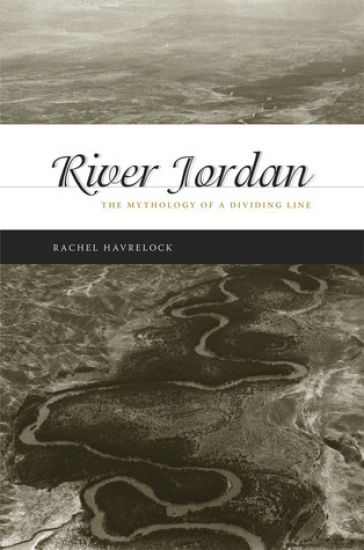
As the site of several miracles in the Jewish and Christian traditions, the Jordan is one of the world's holiest rivers. It is also the major political and symbolic border contested by Israelis and Palestinians. Combining biblical and folkloric studies with historical geography, Rachel Havrelock explores how the complex religious and mythological representations of the river have shaped the current conflict in the Middle East. Havrelock contends that the intractability of the Israeli-Palestinian conflict stems from the nationalist myths of the Hebrew Bible, where the Jordan is defined as a border of the Promised Land. Both Israelis and Palestinians claim the Jordan as a necessary boundary of an indivisible homeland. Examining the Hebrew Bible alongside ancient and modern maps of the Jordan, Havrelock chronicles the evolution of Israel's borders based on nationalist myths while uncovering additional myths that envision Israel as a bi-national state. These other myths, she proposes, provide roadmaps for future political configurations of the nation. Ambitious and masterly in its scope, River Jordan brings a fresh, provocative perspective to the ongoing struggle in this violence-riddled region.
The Joshua Generation

The Joshua Generation

Rachel Havrelock

PRINCETON UNIVERSITY PRESS
2020
sidottu
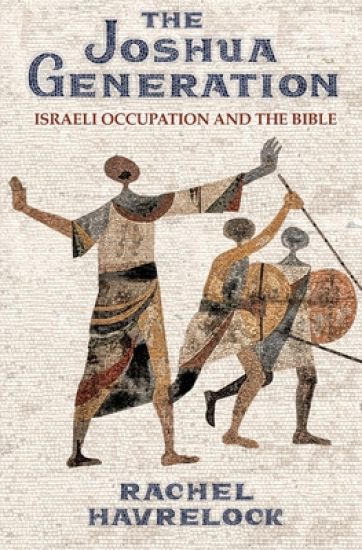
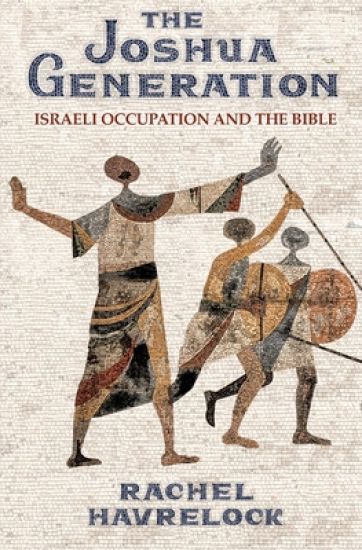
How a controversial biblical tale of conquest and genocide became a founding story of modern IsraelNo biblical text has been more central to the politics of modern Israel than the book of Joshua. Named after a military leader who became the successor to Moses, it depicts the march of the ancient Israelites into Canaan, describing how they subjugated and massacred the indigenous peoples. The Joshua Generation examines the book's centrality to the Israeli occupation today, revealing why nationalist longing and social reality are tragically out of sync in the Promised Land.Though the book of Joshua was largely ignored and reviled by diaspora Jews, the leaders of modern Israel have invoked it to promote national cohesion. Critics of occupation, meanwhile, have denounced it as a book that celebrates genocide. Rachel Havrelock looks at the composition of Joshua, showing how it reflected the fractious nature of ancient Israelite society and a desire to unify the populace under a strong monarchy. She describes how David Ben-Gurion, Israel's first prime minister, convened a study group at his home in the late 1950s, where generals, politicians, and professors reformulated the story of Israel's founding in the language of Joshua. Havrelock traces how Ben-Gurion used a brutal tale of conquest to unite an immigrant population of Jews of different ethnicities and backgrounds, casting modern Israelis and Palestinians as latter-day Israelites and Canaanites.Providing an alternative reading of Joshua, The Joshua Generation finds evidence of a decentralized society composed of tribes, clans, and woman-run households, one with relevance to today when diverse peoples share the dwindling resources of a scarred land.
The Joshua Generation

The Joshua Generation

Rachel Havrelock

PRINCETON UNIVERSITY PRESS
2022
pokkari
How a controversial biblical tale of conquest and genocide became a founding story of modern IsraelNo biblical text has been more central to the politics of modern Israel than the book of Joshua. Named after a military leader who became the successor to Moses, it depicts the march of the ancient Israelites into Canaan, describing how they subjugated and massacred the indigenous peoples. The Joshua Generation examines the book's centrality to the Israeli occupation today, revealing why nationalist longing and social reality are tragically out of sync in the Promised Land.Though the book of Joshua was largely ignored and reviled by diaspora Jews, the leaders of modern Israel have invoked it to promote national cohesion. Critics of occupation, meanwhile, have denounced it as a book that celebrates genocide. Rachel Havrelock looks at the composition of Joshua, showing how it reflected the fractious nature of ancient Israelite society and a desire to unify the populace under a strong monarchy. She describes how David Ben-Gurion, Israel's first prime minister, convened a study group at his home in the late 1950s, where generals, politicians, and professors reformulated the story of Israel's founding in the language of Joshua. Havrelock traces how Ben-Gurion used a brutal tale of conquest to unite an immigrant population of Jews of different ethnicities and backgrounds, casting modern Israelis and Palestinians as latter-day Israelites and Canaanites.Providing an alternative reading of Joshua, The Joshua Generation finds evidence of a decentralized society composed of tribes, clans, and woman-run households, one with relevance to today when diverse peoples share the dwindling resources of a scarred land.