
Kirjahaku
Etsi kirjoja tekijän nimen, kirjan nimen tai ISBN:n perusteella.
6 kirjaa tekijältä Rachel S. Mikva
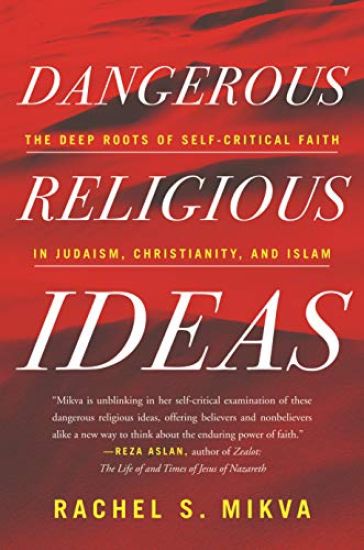
Reveals how faith traditions have long passed down tools for self-examination and debate, because all religious ideas--not just extremist ones--can cause harm as well as embody important moral teachings Often, in public life, we critique extremist or fundamentalist versions of faith. These versions of a faith tradition, we think, make a mockery of the important moral teachings at their heart. But in a provocative book grounded in close readings of scripture and tradition in Christianity, Islam, and Judaism, religious scholar Rachel Mikva corrects this easy assumption: all religious ideas are dangerous, she says, and thus self-critical faith is essential. Mikva then takes her argument one step further, showing us that the Abrahamic religions contain within themselves the seeds of the work necessary to take on dangerous religious ideas and foster self-critical faith.Aware of their tremendous power both to harm and to heal, most religions of the world have transmitted their sacred stories alongside tools for penetrating self-examination. This book demonstrates the self-critical capacities of Judaism, Christianity, and Islam by exploring three themes--Scripture, Election, and Reward & Punishment--identifying their perilous power and positive potential, and investigating how the traditions have historically grappled with them. For instance, while Scripture's abiding relevance can inspire great goodness, its authority has also been wielded to defend slavery, marginalize LGBTQ-identified individuals, ignore science, and justify violence. Many readers presume their understanding of its meaning is absolute, forgetting how these sacred texts and the history of interpretation have valued multiple perspectives and recognized ongoing rhythms of change. It is not a modern phenomenon to debate the nature of truth, hold space open for doubt, value humility, and question the capacity of human beings to know things--especially about God and God's will--with certainty. Self-critical faith is the litmus that properly distinguishes contemporary camps--not religious identity or degree of orthodoxy, but the willingness to grapple substantively with the potential harm their ideas may inflict. Traditionally rooted and radically engaged, this book's collection of religious voices certainly substantiates the dangers of religious ideas. Yet it also initiates a complementary discourse that brings religious wisdom and insight to enhance public discussion in pursuit of the common good.
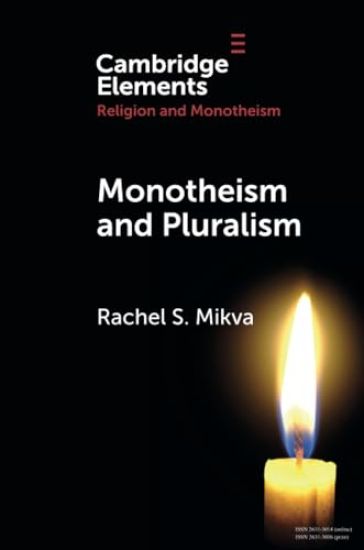
Can monotheistic traditions affirm the comparable value of diverse religions? Can they celebrate our world's multiple spiritual paths? This Element explores historical foundations and contemporary paradigms for pluralism in Judaism, Christianity, and Islam. Recognizing that there are other ways to interpret the traditions, it excavates the space for theological parity.
Can monotheistic traditions affirm the comparable value of diverse religions? Can they celebrate our world's multiple spiritual paths? This Element explores historical foundations and contemporary paradigms for pluralism in Judaism, Christianity, and Islam. Recognizing that there are other ways to interpret the traditions, it excavates the space for theological parity.

Even people who claim not to be "religious" will generally maintain that they do observe the Ten Commandments. We simply assume that these utterances shape the moral basis of our society and all good people can subscribe to them. But the "Ten Words" teach us a multitude of things, some of which we have not even yet imagined, few of which we have mastered. Why is it that these ten simple (or are they?) statements continue to have such a special hold on us? Broken Tablets helps us to understand the Ten Commandments and to see them as the very personal words that they are. Here, twelve outstanding spiritual leaders from across the spectrum of Jewish thought bring us to the life and soul of the Ten Commandments' unusual power. Inviting, accessible, and full of insights that may surprise you, Broken Tablets restores the Ten Commandments to wholeness. In the process, it restores us to a better understanding of what we do and don't do--and what this means to our spiritual lives.

Rachel S. Mikva undertakes a close examination of Midrash vaYosha, a medieval rabbinic text which explicates the Song at the Sea (Ex 15:1-18) and the events of the exodus from Egypt leading up to that climactic moment. Relatively short midrashim focusing on a brief biblical narrative or theme were composed in large numbers during the medieval period, and their extant manuscripts are sufficient in number to demonstrate the great popularity of the genre. Based on early manuscripts, two different recensions are transcribed and translated with significant annotation exploring variants, parallels, exegetical significance and literary style. A thorough historical analysis suggests that the midrash was performed as explication of the Torah reading at a certain point in its development - part of the gradual attenuation of live Targum. As Midrash vaYosha leaves the synagogue, its narrative dimension grows tremendously, yielding significant insight into the development of medieval Jewish exegesis.