Kirjojen hintavertailu. Mukana 11 627 373 kirjaa ja 12 kauppaa.

Kirjahaku

Etsi kirjoja tekijän nimen, kirjan nimen tai ISBN:n perusteella.

4 kirjaa tekijältä Radhika Chopra

Militant and Migrant

Militant and Migrant

Radhika Chopra

Routledge India
2011
sidottu
This book is a study of the transformations in Punjab created by biotechnological revolutions, economic restructuring, persistent migrations, and political upheaval in the late 20th century. The sacred centre at Amritsar, the transnational settlement of Southall and a Doaba village form the terrain for this — three sites that can seen as metonymic spaces of identity that transcend geographic boundaries, and form the structure of this book. Relations between the rural, the sacred and the transnational, fostered through migration, marriage and material exchange, existed well before 1984. After 1984, however, and through the violent decades of the militancy period, these three locations became connected via the circulation of political ideologies, violent deaths, financial aid, a sense of disaffection, and the migration of men. Analysis of the linkages between transnational migration and religious revival is a key theme of this study. Conversely, the enhanced engagements of the diaspora with homeland politics became a source of support and created sanctuary spaces for political asylum seekers and transnational migrant labour. Re-analysing existing material and drawing on fieldwork-based interviews, as well as local history archives, the book presents a different framework to analyse the politics and social history of Punjab.
Migrant Lives

Migrant Lives

Radhika Chopra

Penguin Random House India
2022
sidottu
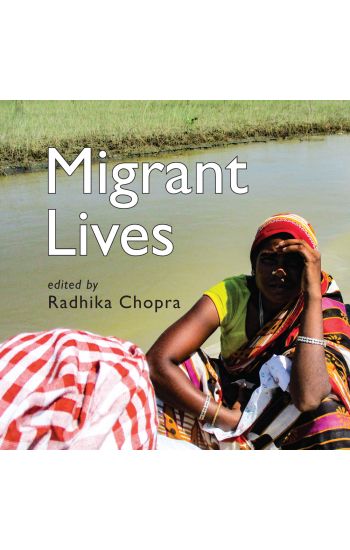
The theme of the book is visualizing migrant lives and livelihoods. It is a book of photographs taken in the field by the Principal Investigators and the researchers in Guwahati and Jalandhar, over the course of the field based research funded by UK's Economic and Social Research Council (ESRC) - Indian Council of Social Sciences Research (ICSSR), for the Collaborative Project "From the Margins: Exploring Low Income Migrant Workers Access to Basic Services". The book will also include photographs taken by the migrants about their own lives and work. These latter images emerged from workshops conducted with migrants, organized by Dr. Jeevan Sharma [PI University of Edinburgh] Prof. Anuj Kapilashrami [Co-PI, University of Essex], and Ms. Anurita Hazarika of NEN, at the two research sites, Guwahati, Assam and Jalandhar, Punjab.
Militant and Migrant

Militant and Migrant

Radhika Chopra

Routledge India
2016
nidottu
This book is a study of the transformations in Punjab created by biotechnological revolutions, economic restructuring, persistent migrations, and political upheaval in the late 20th century. The sacred centre at Amritsar, the transnational settlement of Southall and a Doaba village form the terrain for this — three sites that can seen as metonymic spaces of identity that transcend geographic boundaries, and form the structure of this book. Relations between the rural, the sacred and the transnational, fostered through migration, marriage and material exchange, existed well before 1984. After 1984, however, and through the violent decades of the militancy period, these three locations became connected via the circulation of political ideologies, violent deaths, financial aid, a sense of disaffection, and the migration of men. Analysis of the linkages between transnational migration and religious revival is a key theme of this study. Conversely, the enhanced engagements of the diaspora with homeland politics became a source of support and created sanctuary spaces for political asylum seekers and transnational migrant labour. Re-analysing existing material and drawing on fieldwork-based interviews, as well as local history archives, the book presents a different framework to analyse the politics and social history of Punjab.
Amritsar 1984

Amritsar 1984

Radhika Chopra

Lexington Books
2018
sidottu
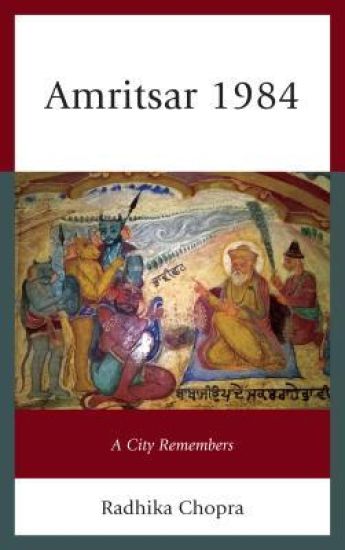
This book explores a traumatic event known throughout India as Operation Bluestar. During the Operation, the Indian army entered one of Sikhism’s most sacred shrines, the Darbar Sahib in the city of Amritsar, to dislodge militants who had taken shelter within. Among the many who died during Operation Bluestar was the militant leader, Jarnail Singh Bhindranwale, who is now remembered and commemorated as a martyr. Sikhs revere their martyrs. Images and religious souvenirs of martyrs share space with posters and portraiture of the ten Sikh Gurus. The visual idiom is a key form of remembering the modern martyrs of Operation Bluestar. Despite the emotive imagery, a tension exists between the need to forget the violence of militancy and remembrance of martyrs. It is this tension that shapes accounts of “what happened” in the city of Amritsar in 1984 before and after Operation Bluestar. But “what happened” is an account that changes over time and between storytellers. Each account might have a little omission, a small part that is overlooked, ignored, or sometimes laid to rest. Memory has the quality of bringing the past into the present, but with deletions that suit the storyteller and audience. This book traverses the terrain of memory, hollowed out by little bits of forgetting.