Kirjojen hintavertailu. Mukana 11 625 750 kirjaa ja 12 kauppaa.

Kirjahaku

Etsi kirjoja tekijän nimen, kirjan nimen tai ISBN:n perusteella.

4 kirjaa tekijältä Rafael Rodriguez

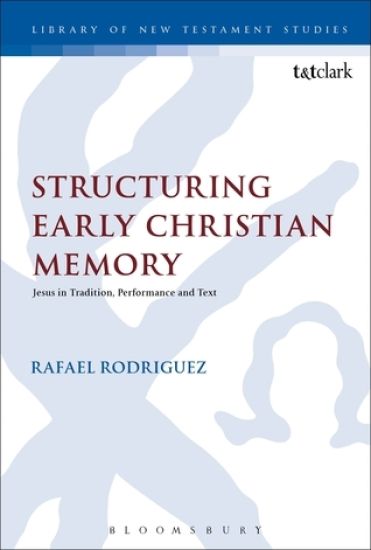
Structuring Early Christian Memory

Structuring Early Christian Memory

Rafael Rodriguez

T. T.Clark Ltd
2009
sidottu
Social memory research has complicated the relationship between past and present because it is a relationship which finds expression in memorial acts such as storytelling and text-production. This relationship has emerged as a dialectic in which "past" and "present" are mutually constitutive and implicating. The resultant complication directly affects the procedures and products of "historical Jesus" research, which depends particularly on the assumption that we can cleanly separate "authentic" from "inauthentic" traditions. In Structuring Early Christian Memory Rafael Rodriguez analyzes the problems that arise from this assumption and proposes a "historical Jesus" program that is more sensitive to the entanglement of past and present.
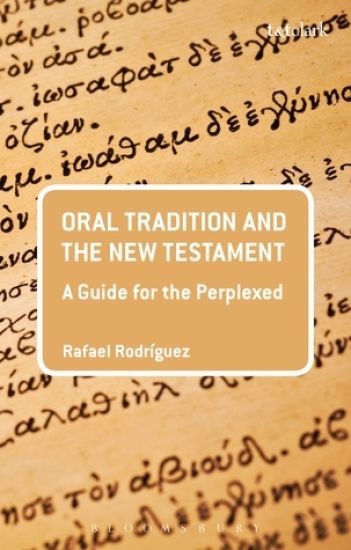
Oral Tradition and the New Testament

Oral Tradition and the New Testament

Rafael Rodriguez

T. T.Clark Ltd
2013
sidottu
The last three decades have seen an explosion of biblical scholarship on the presence and consequences of the oral expression of tradition among Jesus' followers, especially in the earliest decades of the Common Era. There is a wealth of scholarship focused on ‘orality'. This scholarship is, however, abstract and technical almost by definition, and to date no introductory discussion exists that can introduce a new generation of biblical students to the issues being discussed at higher levels of scholarship. Rafael Rodriguez address this gap. Rodriguez adopts a fourfold structure to cover the topic, beginning with basic essentials for further discussion of oral-tradition research and definitions of key terms (the ‘what'). He then moves on to discuss the key players in this area (the ‘who') before examining the methods involved in oral-tradition research among New Testament scholars (the ‘how'). Finally Rodriguez provides examples of the ways in which oral-tradition research can bring texts into clearer focus (the ‘why'). The result is a comprehensive introduction to this key area in New Testament studies.
Oral Tradition and the New Testament

Oral Tradition and the New Testament

Rafael Rodriguez

T. T.Clark Ltd
2013
nidottu
The last three decades have seen an explosion of biblical scholarship on the presence and consequences of the oral expression of tradition among Jesus' followers, especially in the earliest decades of the Common Era. There is a wealth of scholarship focused on ‘orality'. This scholarship is, however, abstract and technical almost by definition, and to date no introductory discussion exists that can introduce a new generation of biblical students to the issues being discussed at higher levels of scholarship. Rafael Rodriguez address this gap. Rodriguez adopts a fourfold structure to cover the topic, beginning with basic essentials for further discussion of oral-tradition research and definitions of key terms (the ‘what'). He then moves on to discuss the key players in this area (the ‘who') before examining the methods involved in oral-tradition research among New Testament scholars (the ‘how'). Finally Rodriguez provides examples of the ways in which oral-tradition research can bring texts into clearer focus (the ‘why'). The result is a comprehensive introduction to this key area in New Testament studies.
Structuring Early Christian Memory

Structuring Early Christian Memory

Rafael Rodriguez

T. T.Clark Ltd
2015
nidottu
Social memory research has complicated the relationship between past and present because it is a relationship which finds expression in memorial acts such as storytelling and text-production. This relationship has emerged as a dialectic in which "past" and "present" are mutually constitutive and implicating. The resultant complication directly affects the procedures and products of "historical Jesus" research, which depends particularly on the assumption that we can cleanly separate "authentic" from "inauthentic" traditions. In Structuring Early Christian Memory Rafael Rodriguez analyzes the problems that arise from this assumption and proposes a "historical Jesus" program that is more sensitive to the entanglement of past and present.