Kirjojen hintavertailu. Mukana 12 273 256 kirjaa ja 12 kauppaa.

Kirjahaku

Etsi kirjoja tekijän nimen, kirjan nimen tai ISBN:n perusteella.

11 kirjaa tekijältä Raffael Scheck

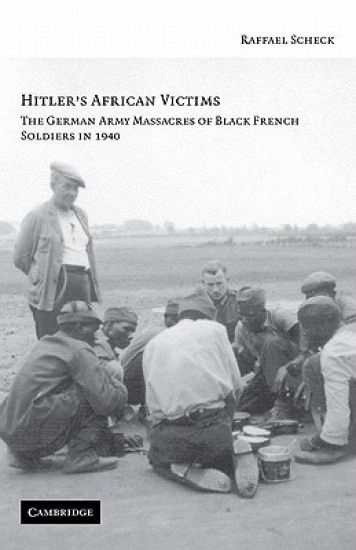
Hitler's African Victims

Hitler's African Victims

Raffael Scheck

Cambridge University Press
2008
pokkari
During its campaign against France in 1940, the German army massacred several thousand black POWs belonging to units drafted in France's West African colonies. This book, first published in 2006, documents these war crimes on the basis of extensive research in French and German archives. A massive Nazi propaganda offensive approved by Hitler, reviving traditional images of black soldiers as mutilating savages, formed the background for the massacres. The book shows, however, that the treatment of black French POWs was highly inconsistent and that abuses were often triggered by certain combat situations. It connects the massacres of black French soldiers to the debates on the Nazification of the German army during World War II and places them in the context of the treatment of non-white 'illegitimate combatants' in colonial wars.
Hitler's African Victims

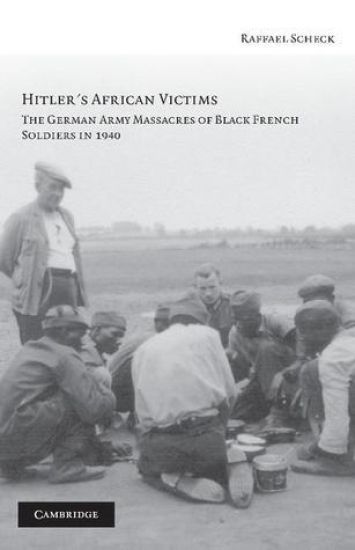
Hitler's African Victims

Raffael Scheck

Cambridge University Press
2006
sidottu
During its campaign against France in 1940, the German army massacred several thousand black POWs belonging to units drafted in France's West African colonies. This book, first published in 2006, documents these war crimes on the basis of extensive research in French and German archives. A massive Nazi propaganda offensive approved by Hitler, reviving traditional images of black soldiers as mutilating savages, formed the background for the massacres. The book shows, however, that the treatment of black French POWs was highly inconsistent and that abuses were often triggered by certain combat situations. It connects the massacres of black French soldiers to the debates on the Nazification of the German army during World War II and places them in the context of the treatment of non-white 'illegitimate combatants' in colonial wars.

French Colonial Soldiers in German Captivity during World War II
This book discusses the experience of nearly 100,000 French colonial prisoners of war captured by Nazi Germany during World War II. Raffael Scheck shows that the German treatment of French colonial soldiers improved dramatically after initial abuses, leading the French authorities in 1945 to believe that there was a possible German plot to instigate a rebellion in the French empire. Scheck illustrates that the colonial prisoners' contradictory experiences with French authorities, French civilians, and German guards created strong demands for equal rights at the end of the war, leading to clashes with a colonial administration eager to reintegrate them into a discriminatory routine.
French Colonial Soldiers in German Captivity during World War II
This book discusses the experience of nearly 100,000 French colonial prisoners of war captured by Nazi Germany during World War II. Raffael Scheck shows that the German treatment of French colonial soldiers improved dramatically after initial abuses, leading the French authorities in 1945 to believe that there was a possible German plot to instigate a rebellion in the French empire. Scheck illustrates that the colonial prisoners' contradictory experiences with French authorities, French civilians, and German guards created strong demands for equal rights at the end of the war, leading to clashes with a colonial administration eager to reintegrate them into a discriminatory routine.
Love between Enemies

Love between Enemies

Raffael Scheck

Cambridge University Press
2024
pokkari
Love between Enemies explores the forbidden relationships which formed between foreign prisoners of war and German women during the Second World War. From the desire to have fun to deep love commitments, this study examines the range of motivations which lay behind these relationships, tapping into new documents and drawing on thousands of court cases to offer a transnational analysis of personal relations between enemies. Highlighting gender roles, the contradictory reactions of the communities surrounding the couples, and the diplomatic tensions resulting from the severe punishments, this is a history of everyday life which throws light on this subversive aspect of intimacy in wartime Nazi Germany. Comparing the 'transgressing' couples to other groups persecuted for their cultural or private choices, Scheck demonstrates how the relationships were silenced or justified in the post-war memory of prisoners, while the German women, who had been publicly shamed, continued to live with the stigma, and even illegitimate children, for the years that followed.
Love between Enemies

Love between Enemies

Raffael Scheck

Cambridge University Press
2020
sidottu
Love between Enemies explores the forbidden relationships which formed between foreign prisoners of war and German women during the Second World War. From the desire to have fun to deep love commitments, this study examines the range of motivations which lay behind these relationships, tapping into new documents and drawing on thousands of court cases to offer a transnational analysis of personal relations between enemies. Highlighting gender roles, the contradictory reactions of the communities surrounding the couples, and the diplomatic tensions resulting from the severe punishments, this is a history of everyday life which throws light on this subversive aspect of intimacy in wartime Nazi Germany. Comparing the 'transgressing' couples to other groups persecuted for their cultural or private choices, Scheck demonstrates how the relationships were silenced or justified in the post-war memory of prisoners, while the German women, who had been publicly shamed, continued to live with the stigma, and even illegitimate children, for the years that followed.
Germany, 1871-1945

Germany, 1871-1945

Raffael Scheck

Berg Publishers
2008
sidottu
Germany, 1871-1945 presents an original, lucid, and thought-provoking history. Its aim is to inspire readers to weigh the historical evidence. At the end of the Second World War, the first unified German state collapsed, a disintegration with European and global ramifications. Ever since, historians have sought to explain what went wrong in German history. Many have focused on the violence which forged unification; others have highlighted the clash of authoritarian, anti-democratic, and anti-Semitic traditions with rapid industrialization and modernization. Germany, 1871-1945 presents a pragmatic interpretation of German history, from the unification to the end of the Nazi regime. This more open approach acknowledges the strong trend in German society towards modernization and democratization, particularly before 1914, while also highlighting the factors which propelled Germany toward World War I. The rise of the Nazis also demands a close analysis of the economic and political instability of the 1920s and early 1930s. Finally, a detailed assessment of the Third Reich explains how the regime's early successes fostered a loyalty and acceptance that remained hard to shake until disaster was obvious and unavoidable.
Germany, 1871-1945

Germany, 1871-1945

Raffael Scheck

Berg Publishers
2008
nidottu
Germany, 1871-1945 presents an original, lucid, and thought-provoking history. Its aim is to inspire readers to weigh the historical evidence. At the end of the Second World War, the first unified German state collapsed, a disintegration with European and global ramifications. Ever since, historians have sought to explain what went wrong in German history. Many have focused on the violence which forged unification; others have highlighted the clash of authoritarian, anti-democratic, and anti-Semitic traditions with rapid industrialization and modernization. Germany, 1871-1945 presents a pragmatic interpretation of German history, from the unification to the end of the Nazi regime. This more open approach acknowledges the strong trend in German society towards modernization and democratization, particularly before 1914, while also highlighting the factors which propelled Germany toward World War I. The rise of the Nazis also demands a close analysis of the economic and political instability of the 1920s and early 1930s. Finally, a detailed assessment of the Third Reich explains how the regime's early successes fostered a loyalty and acceptance that remained hard to shake until disaster was obvious and unavoidable.
Mothers of the Nation

Mothers of the Nation

Raffael Scheck

Berg Publishers
2004
sidottu
What role did right-wing women play in the Nazi rise to power?Mothers of the Nation analyzes the work of women in the German Peoples Party and the German National Peoples Party - parties that covered the range from the moderate to the radical right. Looking at politics on both the local and national level, the author discusses issues ranging from social welfare to foreign policy. He shows that right-wing women, in keeping with the tradition of the German bourgeois womens movement, refused to stand up primarily for womens interests and instead invoked the Volksgemeinschaft (community of the people), a vision of harmony and cooperation of the groups involved in production.These right-wing campaigners believed that German women should use their newly won political rights to strengthen the Volksgemeinschaft by reconciling the divided nation and by infusing it with a higher morality. This stance proved to be both a liability and an asset. The emphasis on the Volksgemeinschaft made it difficult for female conservatives to fight for specific womens rights. Yet it also allowed them to paste over the conflicts between interest groups that tore apart Germanys bourgeois parties prior to 1933 and that divided politically active women as well. The ways in which women sought to contain the fragmentation that ultimately rendered their parties defenceless against the Nazis sheds new light on Weimar politics.Bringing the controversial story of right-wing women to life, this book offers a compelling account of gender and politics during a crucial period in German history.
Mothers of the Nation

Mothers of the Nation

Raffael Scheck

Berg Publishers
2004
nidottu
What role did right-wing women play in the Nazi rise to power?Mothers of the Nation analyzes the work of women in the German Peoples Party and the German National Peoples Party - parties that covered the range from the moderate to the radical right. Looking at politics on both the local and national level, the author discusses issues ranging from social welfare to foreign policy. He shows that right-wing women, in keeping with the tradition of the German bourgeois womens movement, refused to stand up primarily for womens interests and instead invoked the Volksgemeinschaft (community of the people), a vision of harmony and cooperation of the groups involved in production.These right-wing campaigners believed that German women should use their newly won political rights to strengthen the Volksgemeinschaft by reconciling the divided nation and by infusing it with a higher morality. This stance proved to be both a liability and an asset. The emphasis on the Volksgemeinschaft made it difficult for female conservatives to fight for specific womens rights. Yet it also allowed them to paste over the conflicts between interest groups that tore apart Germanys bourgeois parties prior to 1933 and that divided politically active women as well. The ways in which women sought to contain the fragmentation that ultimately rendered their parties defenceless against the Nazis sheds new light on Weimar politics.Bringing the controversial story of right-wing women to life, this book offers a compelling account of gender and politics during a crucial period in German history.