Kirjojen hintavertailu. Mukana 11 342 296 kirjaa ja 12 kauppaa.

Kirjahaku

Etsi kirjoja tekijän nimen, kirjan nimen tai ISBN:n perusteella.

4 kirjaa tekijältä Rahul Sagar

To Raise a Fallen People

To Raise a Fallen People

Rahul Sagar

Columbia University Press
2022
sidottu
To Raise a Fallen People brings to light pioneering writing on international politics from nineteenth-century India. Drawing on extensive archival research, it unearths essays, speeches, and pamphlets that address fundamental questions about India’s place in the world. In these texts, prominent public figures urge their compatriots to learn English and travel abroad to study, debate whether to boycott foreign goods, differ over British imperialism in Afghanistan and China, demand that foreign policy toward the Middle East and South Africa account for religious and ethnic bonds, and query whether to adopt Western values or champion their own civilizational ethos.Rahul Sagar’s detailed introduction contextualizes these documents and shows how they fostered competing visions of the role that India ought to play on the world stage. This landmark book is essential reading for anyone interested in understanding the sources of Indian conduct in international politics.
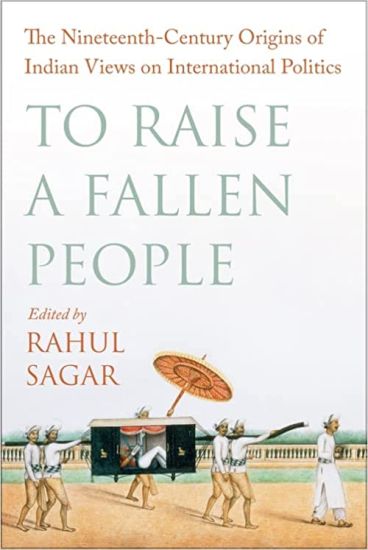
To Raise a Fallen People

To Raise a Fallen People

Rahul Sagar

Columbia University Press
2022
pokkari
To Raise a Fallen People brings to light pioneering writing on international politics from nineteenth-century India. Drawing on extensive archival research, it unearths essays, speeches, and pamphlets that address fundamental questions about India’s place in the world. In these texts, prominent public figures urge their compatriots to learn English and travel abroad to study, debate whether to boycott foreign goods, differ over British imperialism in Afghanistan and China, demand that foreign policy toward the Middle East and South Africa account for religious and ethnic bonds, and query whether to adopt Western values or champion their own civilizational ethos.Rahul Sagar’s detailed introduction contextualizes these documents and shows how they fostered competing visions of the role that India ought to play on the world stage. This landmark book is essential reading for anyone interested in understanding the sources of Indian conduct in international politics.
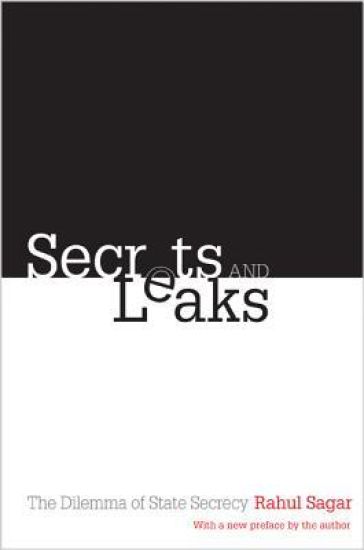
Secrets and Leaks

Secrets and Leaks

Rahul Sagar

Princeton University Press
2013
sidottu
Secrets and Leaks examines the complex relationships among executive power, national security, and secrecy. State secrecy is vital for national security, but it can also be used to conceal wrongdoing. How then can we ensure that this power is used responsibly? Typically, the onus is put on lawmakers and judges, who are expected to oversee the executive. Yet because these actors lack access to the relevant information and the ability to determine the harm likely to be caused by its disclosure, they often defer to the executive's claims about the need for secrecy. As a result, potential abuses are more often exposed by unauthorized disclosures published in the press. But should such disclosures, which violate the law, be condoned? Drawing on several cases, Rahul Sagar argues that though whistleblowing can be morally justified, the fear of retaliation usually prompts officials to act anonymously--that is, to "leak" information. As a result, it becomes difficult for the public to discern when an unauthorized disclosure is intended to further partisan interests. Because such disclosures are the only credible means of checking the executive, Sagar writes, they must be tolerated. However, the public should treat such disclosures skeptically and subject irresponsible journalism to concerted criticism.
Secrets and Leaks

Secrets and Leaks

Rahul Sagar

Princeton University Press
2016
pokkari
Secrets and Leaks examines the complex relationships among executive power, national security, and secrecy. State secrecy is vital for national security, but it can also be used to conceal wrongdoing. How then can we ensure that this power is used responsibly? Typically, the onus is put on lawmakers and judges, who are expected to oversee the executive. Yet because these actors lack access to the relevant information and the ability to determine the harm likely to be caused by its disclosure, they often defer to the executive's claims about the need for secrecy. As a result, potential abuses are more often exposed by unauthorized disclosures published in the press. But should such disclosures, which violate the law, be condoned? Drawing on several cases, Rahul Sagar argues that though whistleblowing can be morally justified, the fear of retaliation usually prompts officials to act anonymously--that is, to "leak" information. As a result, it becomes difficult for the public to discern when an unauthorized disclosure is intended to further partisan interests. Because such disclosures are the only credible means of checking the executive, Sagar writes, they must be tolerated, and, at times, even celebrated. However, the public should treat such disclosures skeptically and subject irresponsible journalism to concerted criticism.