Kirjojen hintavertailu. Mukana 11 244 527 kirjaa ja 12 kauppaa.

Kirjahaku

Etsi kirjoja tekijän nimen, kirjan nimen tai ISBN:n perusteella.

15 kirjaa tekijältä Rainer Forst

Normativity and Power

Normativity and Power

Rainer Forst

Oxford University Press
2017
sidottu
Humans are justificatory beingsthey offer, demand, and require justifications. The rules and institutions they follow rest on justification narratives that have evolved over time and, taken together, constitute a dynamic and tension-laden normative order. In this collection of essays, the first translation into English of the ground-breaking Normativität und Macht (Suhrkamp 2015), Rainer Forst presents a new approach to critical theory. Each essay reflects on the basic principles that guide our normative thinking. Forst's argument goes beyond 'ideal' and 'realist' theories and shows how closely the concepts of normativity and power are interrelated, and how power rests on the capacity to influence, determine, and possibly restrict the space of justifications for others. By combining insights from the disciplines of philosophy, history, and the social sciences, Forst re-evaluates theories of justice, as well as of power, and provides the tools for a critical theory of relations of justification.
The Right to Justification

The Right to Justification

Rainer Forst

Columbia University Press
2011
sidottu
Contemporary philosophical pluralism recognizes the inevitability and legitimacy of multiple ethical perspectives and values, making it difficult to isolate the higher-order principles on which to base a theory of justice. Rising up to meet this challenge, Rainer Forst, a leading member of the Frankfurt School's newest generation of philosophers, conceives of an "autonomous" construction of justice founded on what he calls the basic moral right to justification. Forst begins by identifying this right from the perspective of moral philosophy. Then, through an innovative, detailed critical analysis, he ties together the central components of social and political justice--freedom, democracy, equality, and toleration--and joins them to the right to justification. The resulting theory treats "justificatory power" as the central question of justice, and by adopting this approach, Forst argues, we can discursively work out, or "construct," principles of justice, especially with respect to transnational justice and human rights issues. As he builds his theory, Forst engages with the work of Anglo-American philosophers such as John Rawls, Ronald Dworkin, and Amartya Sen, and critical theorists such as Jurgen Habermas, Nancy Fraser, and Axel Honneth. Straddling multiple subjects, from politics and law to social protest and philosophical conceptions of practical reason, Forst brilliantly gathers contesting claims around a single, elastic theory of justice.
The Right to Justification

The Right to Justification

Rainer Forst

Columbia University Press
2014
pokkari
Contemporary philosophical pluralism recognizes the inevitability and legitimacy of multiple ethical perspectives and values, making it difficult to isolate the higher-order principles on which to base a theory of justice. Rising up to meet this challenge, Rainer Forst, a leading member of the Frankfurt School's newest generation of philosophers, conceives of an "autonomous" construction of justice founded on what he calls the basic moral right to justification. Forst begins by identifying this right from the perspective of moral philosophy. Then, through an innovative, detailed critical analysis, he ties together the central components of social and political justice--freedom, democracy, equality, and toleration--and joins them to the right to justification. The resulting theory treats "justificatory power" as the central question of justice, and by adopting this approach, Forst argues, we can discursively work out, or "construct," principles of justice, especially with respect to transnational justice and human rights issues. As he builds his theory, Forst engages with the work of Anglo-American philosophers such as John Rawls, Ronald Dworkin, and Amartya Sen, and critical theorists such as Jurgen Habermas, Nancy Fraser, and Axel Honneth. Straddling multiple subjects, from politics and law to social protest and philosophical conceptions of practical reason, Forst brilliantly gathers contesting claims around a single, elastic theory of justice.
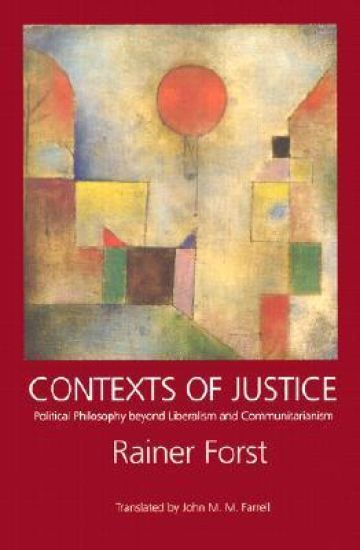
Contexts of Justice

Contexts of Justice

Rainer Forst

University of California Press
2002
pokkari
Contexts of Justice, highly acclaimed when it was published in Germany, provides a significant new intervention into the important debate between communitarianism and liberalism. Rainer Forst argues for a theory of "contexts of justice" that leads beyond the narrow confines of this debate as it has been understood until now and posits the possibility of a new conception of social and political justice. This book brings refreshing clarity to a complex topic as it provides a synthesis of traditions and theories that leads to a truly original approach. Forst makes a four-part distinction to decipher the debate between communitarianism and liberalism. These four parts concern the constitution of the self, the neutrality of law, the ethos of democracy, and the opposition between universalism and contextualism. He shows that a comprehensive theory of justice needs to take these different contexts adequately into account. He discusses recent debates about discursive democracy and feminist critiques of liberalism, and addresses such topics as multiculturalism and civil society.
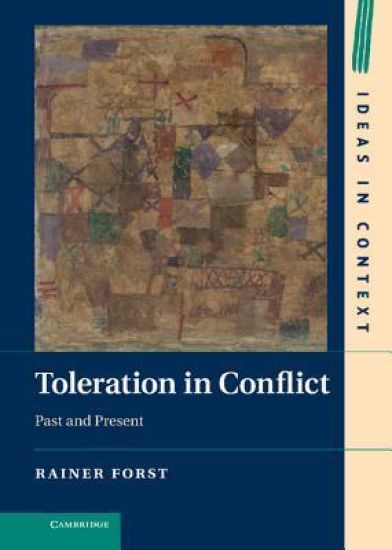
Toleration in Conflict

Toleration in Conflict

Rainer Forst

Cambridge University Press
2013
sidottu
The concept of toleration plays a central role in pluralistic societies. It designates a stance which permits conflicts over beliefs and practices to persist while at the same time defusing them, because it is based on reasons for coexistence in conflict - that is, in continuing dissension. A critical examination of the concept makes clear, however, that its content and evaluation are profoundly contested matters and thus that the concept itself stands in conflict. For some, toleration was and is an expression of mutual respect in spite of far-reaching differences, for others, a condescending, potentially repressive attitude and practice. Rainer Forst analyses these conflicts by reconstructing the philosophical and political discourse of toleration since antiquity. He demonstrates the diversity of the justifications and practices of toleration from the Stoics and early Christians to the present day and develops a systematic theory which he tests in discussions of contemporary conflicts over toleration.
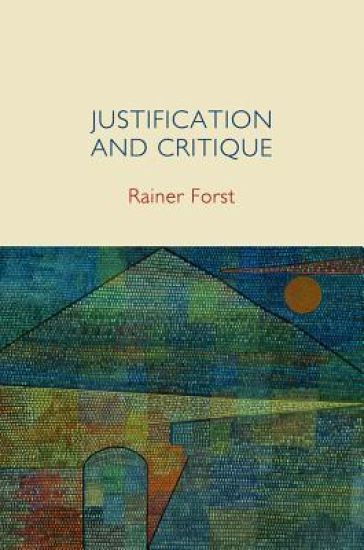
Justification and Critique

Justification and Critique

Rainer Forst

Polity Press
2013
sidottu
Rainer Forst develops a critical theory capable of deciphering the deficits and potentials inherent in contemporary political reality. This calls for a perspective which is immanent to social and political practices and at the same time transcends them. Forst regards society as a whole as an ‘order of justification’ comprising complexes of different norms referring to institutions and corresponding practices of justification. The task of a ‘critique of relations of justification’, therefore, is to analyse such legitimations with regard to their validity and genesis and to explore the social and political asymmetries leading to inequalities in the ‘justification power’ which enables persons or groups to contest given justifications and to create new ones. Starting from the concept of justification as a basic social practice, Forst develops a theory of political and social justice, human rights and democracy, as well as of power and of critique itself. In so doing, he engages in a critique of a number of contemporary approaches in political philosophy and critical theory. Finally, he also addresses the question of the utopian horizon of social criticism.
Justification and Critique

Justification and Critique

Rainer Forst

Polity Press
2013
nidottu
Rainer Forst develops a critical theory capable of deciphering the deficits and potentials inherent in contemporary political reality. This calls for a perspective which is immanent to social and political practices and at the same time transcends them. Forst regards society as a whole as an ‘order of justification’ comprising complexes of different norms referring to institutions and corresponding practices of justification. The task of a ‘critique of relations of justification’, therefore, is to analyse such legitimations with regard to their validity and genesis and to explore the social and political asymmetries leading to inequalities in the ‘justification power’ which enables persons or groups to contest given justifications and to create new ones. Starting from the concept of justification as a basic social practice, Forst develops a theory of political and social justice, human rights and democracy, as well as of power and of critique itself. In so doing, he engages in a critique of a number of contemporary approaches in political philosophy and critical theory. Finally, he also addresses the question of the utopian horizon of social criticism.
The Noumenal Republic

The Noumenal Republic

Rainer Forst

JOHN WILEY AND SONS LTD
2024
sidottu
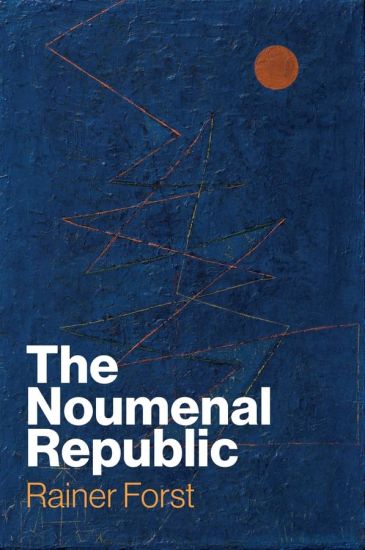
All human beings are born with equal dignity and possess equal rights. This statement appears normatively just as irrefutable as it is empirically refuted every day. But what are the grounds of this principle, and how should we think about its realization? Its philosophical truth can best be explained by going back to (and beyond) Kant’s notion of a ‘noumenal republic’ in which every person is an equal co-author of the laws that bind all. At the same time, a critical analysis of society and politics must show the extent to which the reality of power and ideology makes a mockery of this constructivist conception of dignity. To bridge the gap between unworldly idealism and practical hopelessness, we need a critical theory after Kant. Rainer Forst, one of the world’s most influential political philosophers, works to develop just such a theory in this powerful and illuminating volume. It contains no less than a new systematic account of concepts such as alienation, progress and regression, solidarity, human rights, justice, power and non-domination.
The Noumenal Republic

The Noumenal Republic

Rainer Forst

JOHN WILEY AND SONS LTD
2024
nidottu
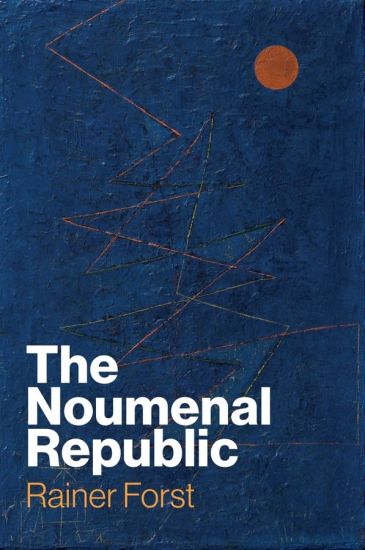
All human beings are born with equal dignity and possess equal rights. This statement appears normatively just as irrefutable as it is empirically refuted every day. But what are the grounds of this principle, and how should we think about its realization? Its philosophical truth can best be explained by going back to (and beyond) Kant’s notion of a ‘noumenal republic’ in which every person is an equal co-author of the laws that bind all. At the same time, a critical analysis of society and politics must show the extent to which the reality of power and ideology makes a mockery of this constructivist conception of dignity. To bridge the gap between unworldly idealism and practical hopelessness, we need a critical theory after Kant. Rainer Forst, one of the world’s most influential political philosophers, works to develop just such a theory in this powerful and illuminating volume. It contains no less than a new systematic account of concepts such as alienation, progress and regression, solidarity, human rights, justice, power and non-domination.
Toleration, Power and the Right to Justification

Toleration, Power and the Right to Justification

Rainer Forst

Manchester University Press
2020
sidottu
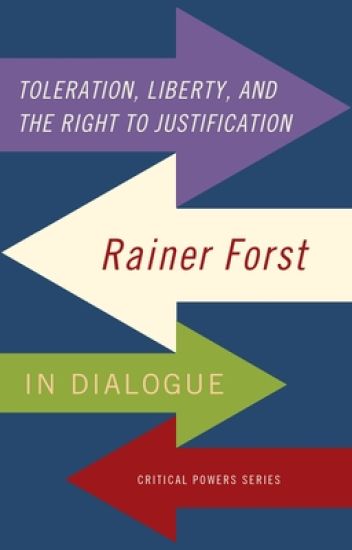
Rainer Forst's Toleration in Conflict (published in English 2013) is the most important historical and philosophical analysis of toleration of the past several decades. Reconstructing the entire history of the concept, it provides a forceful account of the tensions and dilemmas that pervade the discourse of toleration. In his lead essay for this volume, Forst revisits his work on toleration and situates it in relation to both the concept of political liberty and his wider project of a critical theory of justification. Interlocutors Teresa M. Bejan, John Horton, Chandran Kukathas, Daniel Weinstock, Melissa S. Williams, Patchen Markell and David Owen then critically examine Forst's reconstruction of toleration, his account of political liberty and the form of critical theory that he articulates in his work on such political concepts. The volume concludes with Forst’s reply to his critics.
Justice, Democracy and the Right to Justification
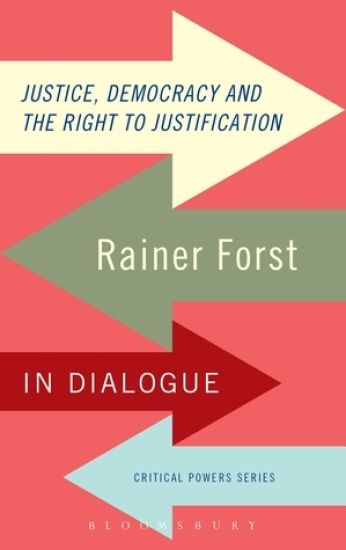
This book is available as open access through the Bloomsbury Open Access programme and is available on www.bloomsburycollections.com.Over the past 15 years, Rainer Forst has developed a fundamental research programme within the tradition of Frankfurt School Critical Theory. The core of this programme is a moral account of the basic right of justification that humans owe to one another as rational beings. This account is put to work by Forst in articulating - both historically and philosophically - the contexts and form of justice and of toleration. The result is a powerful theoretical framework within which to address issues such as transnational justice and multicultural toleration. In this volume, Forst sets out his ideas in an extended essay, which is responded to be influential interlocutors including: Andrea Sangiovanni, Amy Allen, Kevin Olson, Anthony Laden, Eva Erman and Simon Caney. The volume concludes with Forst's response to his interlocutors.
Justice, Democracy and the Right to Justification
This book is available as open access through the Bloomsbury Open Access programme and is available on www.bloomsburycollections.com.Over the past 15 years, Rainer Forst has developed a fundamental research programme within the tradition of Frankfurt School Critical Theory. The core of this programme is a moral account of the basic right of justification that humans owe to one another as rational beings. This account is put to work by Forst in articulating - both historically and philosophically - the contexts and form of justice and of toleration. The result is a powerful theoretical framework within which to address issues such as transnational justice and multicultural toleration. In this volume, Forst sets out his ideas in an extended essay, which is responded to be influential interlocutors including: Andrea Sangiovanni, Amy Allen, Kevin Olson, Anthony Laden, Eva Erman and Simon Caney. The volume concludes with Forst's response to his interlocutors.