Digital libraries are much more than we can ever imagine. If you have the link then you have the material needed at hand, whether it is books, videos, art, etc. it may be there. Then you have the people behind the scenes, working hard to push out content at a rapid pace. They must have a management system, a device to run the software on, and the material to digitize (if they have the copyright), etc. Going even further back, we have the people who helped shape what digital libraries are today. Vannevar Bush and J.C.R. Licklider’s ideas sparked a digital revolution. You have the men who made the digital libraries that are used today popular. You also have the men who made the first mouse, the first computer, and the first keyboard. The reason these three are mentioned is because how else can we view our digital libraries today if these devices were never invented. Also, the guy who created the World Wide Web (WWW). They all are founders of the technology we use today.In this book, digital libraries will be explained, introducing things you may not have known, from the history to the future of digital libraries. What has changed? Where will it go from here?
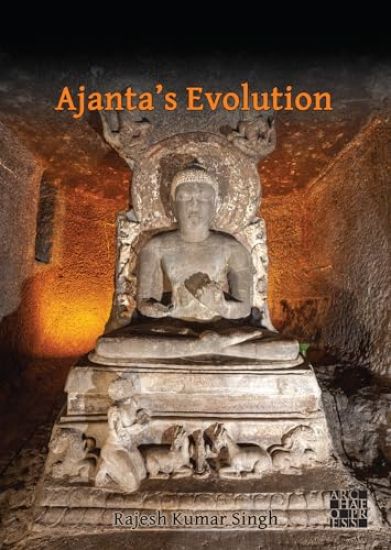
Ajanta’s Evolution: From Savakayana to Bodhisatvayana amid Hunnic Turmoil offers a new scholarly exploration of the rock-cut caves, their sculpture and paintings, meticulously tracing the rise, transformation, and legacy of these architectural marvels. The book takes an interdisciplinary approach, combining elements of historical, archaeological, artistic and Buddhist studies. Part I treats the grand epoch of Sravakayana, discussing archaeological contexts, cave classification methodologies, and the emergence of rock-cut monasteries under the influence of King Hari ?e?a. Against the backdrop of Hunnic upheaval and societal transformations, Part II delves into the Bodhisatvayana era, chronicling the impact of Alchon or Alkhan Hun raids, migrations, and the evolution of the rock-cut monuments. The principle aim is to contextualize the site of Ajanta within a new historical setting. It seeks to address the paradox of how the Early Alchon or Alkhan Hunnic invasions, despite causing significant challenges to the development of the fifth-century cave temples, also provided opportunities for innovation. Another noteworthy aspect is the introduction of a novel taxonomical approach to the monuments. A revised chart for the taxonomy and typological classification of Buddhist rock-cut monuments is presented, mapping the evolutionary trajectory of architectural development over time.
The chief aim of this book is not only to explore the occurrence of corrosion in materials but also to describe the methods of corrosion by composite barrier formation. This book is an embodiment of the long felt need and urge of the students in the field of corrosion science and engineering. The materials are used in composite barrier formation to works as repeller in ambient environments. This book is covered the methods of formation of composite barrier and their surface adsorption parameters. This book is mainly divided into six chapters and their contents are expressed as chemistry of corrosion and corrosive environments in chapter-1, chemistry of composite barrier formation in chapter-2, chemistry of corrosion rate determination in chapter-3, chemistry of synthesis of organic compounds for nanocoating in chapter-4, chemistry of nanocoating, filler and electrospray materials in corrosion protection in chapter-5 and mechanism of corrosion mitigation in chapter-6. This book is very informative about various types of corrosive pollutants, effluents, flues, acids, alkalis, salts, particulates and biowastes which create hostile environments for materials.
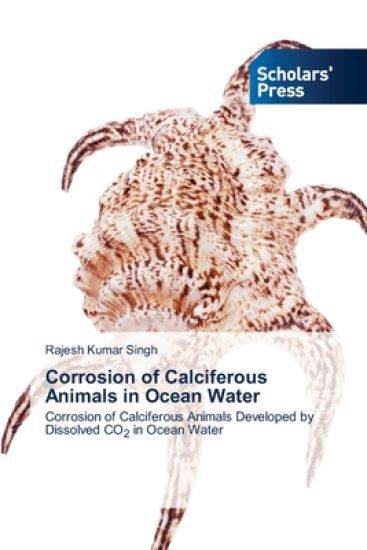
The main theme of this book is to explore the information of corrosion and corrosion protection of calciferous in ocean in front world communities to develop corrosive medium by discharge of various types wastes through different sources. The corrosive medium is generated by industrious, fertilizer, agriculture, bio-wastes, effluents, pollutants and particulates. The other factors like acid rain, greenhouse gases, global warming and climate change effect the corrosion of calciferous animals.
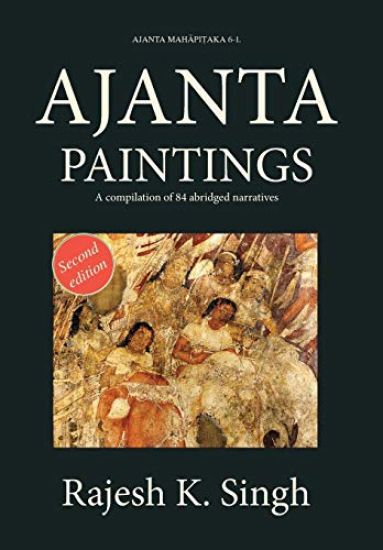
This book contains: Colour photographs of 70 Ajanta narrative paintings. 84 abridged Buddhist legends. Elementary introduction to the Ajanta paintings. Information based on the current research. A window to deeper studies. References to the scholarly works that first identified the nearest textual sources of the painted legends.
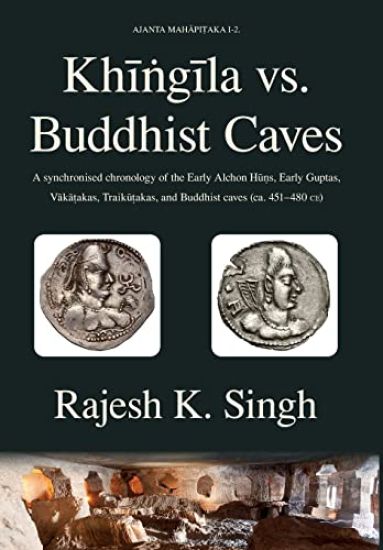
This monograph is meant for the researchers of South Asian studies with a focussed interest on the history and art of the late fifth century CE.The new study proposes a reconstructive chronology of the times. It clarifies that the fifth-century rock-cut monuments of India were all Buddhist with only a few exceptions. The excavations had begun in the peaceful times of circa 461/462 CE. However, by circa 480 CE all the cave temples were abandoned even before completion. The study re-examines the cause of the abandonment and presents some new revelations.It was ca. 465 CE when the Hephthalite Hūṇs attacked the Early Alchon Hūṇs in the Greater Gandhāra region forcing the Buddhist monks to disperse inter alia towards the Deccan, which was then peaceful. Many Buddhist rock-cut sites were flourishing there under the Gupta-Vākāṭaka-Traikūṭakas: Bagh, Ajanta, Ellora, Mahāḍ, Dhārāśiva (Jain), Banoṭī, Ghaṭotkaca, Nasik, Loṇāḍ, Kondavite, and Kanheri.The ousted Alchons led by Mahāṣāhi Khīṅgīla (r. ca. 440 to 492-496 CE) advanced into India and came up to the Narmada-Tapti valleys. The new intrusions witnessed many battles, particularly those of ca. 469, 472, and 477 CE wherein many great Indian emperors and kings were perished: Kumāragupta I, Nāgabhaṭa, Ghaṭōtkacagupta, Skandagupta, Narasimhagupta, Narendra Sena, Ravisāmba, Kumāragupta II, Hari Ṣeṇa, and Dahrasena.These disturbances in India now forced the migrant Gandhāran and the resident Deccani monks to escape to distant lands including Kucha in Central Asia. Consequently, there was catalysed the Kuchean Period III, which witnessed the introduction of many Gandhāran and Deccani ideas.Finally Buddhagupta ousted the Alchons in ca. 478 CE. The persistent defeat had taught the Alchons a lesson. They now imbibed the Indian values of liberalism as statecraft, which allowed them unobstructed rule for the next one century and two decades (ca. 479-ca. 600 CE) when they ruled from Greater Gandhāra to the Narmada valley.The new picture comes out when we attempt to synchronise and iron out the anachronisms from the known chronologies of the Early Alchons, Early Guptas, Vākāṭakas, Traikūṭakas, Gandhāra, and the rock-cut monuments of India and Kucha in the late 5th century CE. It is revealed that the monasteries were abandoned due to the attacks by the Early Alchon Hūṇs.
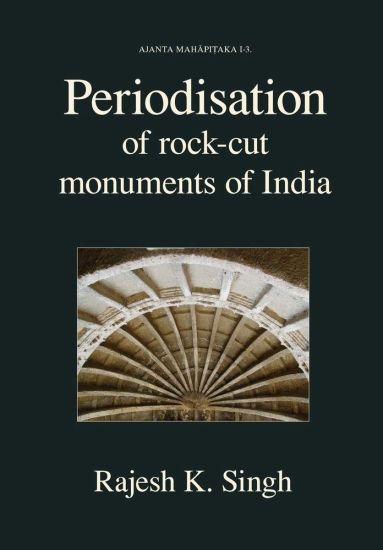
This monograph is meant for advanced researchers of South Asian architecture of the ancient times. Here you will find a novel periodisation system to better understand how the rock-cut architecture developed across time.Many unknown and lesser known facts will be found here suggesting that the rock-cut monuments of India developed through eight periods and five intervals. Data and interpretations will be found that indicate that on several junctures the Deccani rock-cut art and architecture were inspired by some compelling Gandhāran ideas.There were also some junctures when Deccani ideas inspired the developments in other lands, such as Kucha in Central Asia. It is also revealed how the early Kuchean 'central pillar caves' inspired the later developments in the Buddhist caves of Aurangabad and the Śaivite cave temples of Konkan and the Deccan.The periodisation system may be useful when no other reliable data such as inscriptions are available.
This book provides an update on heterocyclic compounds that serve as key components of anti-cancer agents administered in pre-clinical settings. Many of the compounds highlighted in the book are being actively investigated for the bioactive properties against a range of cancer cell lines. There is potential for heterocyclic compounds to design agents that can target specific molecules to treat different types of cancers. Chapters are contributed by experts in pharmaceutical chemistry and are written to give a general overview of the topic to readers involved in all levels of research and decision-making in pharmaceutical chemistry and anti-cancer drug design. Part 2 of the book set covers these topics: - Anticancer targets for heterocyclic lead compounds - Coumarin hybrids for cancer treatments - Progress in nitrogen and sulphur-based heterocyclic compounds for their anticancer activity - Imidazole as an anticancer heterocyclic ring - Morpholine for profiling anticancer lead compounds - Natural products as anticancer agents
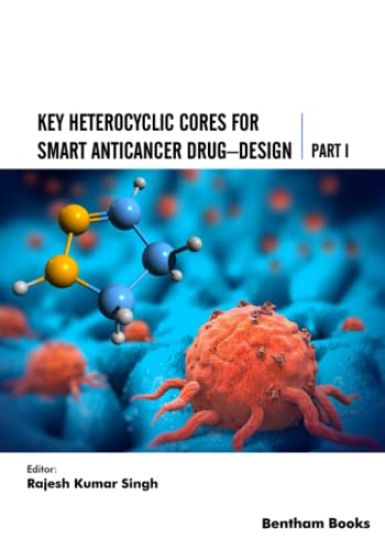
This book provides an update on heterocyclic compounds that serve as key components of anti-cancer agents administered in pre-clinical settings. Many of the compounds highlighted in the book are being actively investigated for the bioactive properties against a range of cancer cell lines. There is potential for heterocyclic compounds to design agents that can target specific molecules to treat different types of cancers. Chapters are contributed by experts in pharmaceutical chemistry and are written to give a general overview of the topic to readers involved in all levels of research and decision-making in pharmaceutical chemistry and anti-cancer drug design. Part 1 of the book set covers these topics: - Heterocyclic anticancer compounds derived from natural sources with their mechanism of action - The role of terpenoids as anticancer compounds: an insight into prevention and treatment - Recent advances in synthesis and anticancer activity of benzothiazole hybrids as anticancer agents - Structure-activity relationship (sar) studies of novel hybrid quinoline and quinolone derivatives as anticancer agents - Tetrazoles: structure and activity relationship as anticancer agents - Progress in nitrogen and oxygen-based heterocyclic compounds for their anticancer activity: an updates (2017-2020)