Kirjojen hintavertailu. Mukana 11 244 527 kirjaa ja 12 kauppaa.

Kirjahaku

Etsi kirjoja tekijän nimen, kirjan nimen tai ISBN:n perusteella.

5 kirjaa tekijältä Ralph Maud

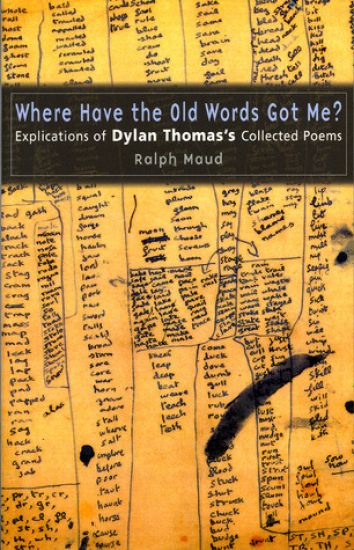
Where Have the Old Words Got Me?

Where Have the Old Words Got Me?

Ralph Maud

University of Wales Press
2003
nidottu
Dylan Thomas is one of the most well-known poets of the twentieth century, yet much of his poetry is considered obscure and difficult, and readers tend to concentrate on those poems that can be most easily understood. Where Have the Old Words Got Me? is the authoritative reader's guide to Dylan Thomas's Collected Poems, 1934-1953, consisting of detailed explications of every poem in the collection. Working from the principle that Thomas's biography offers the key to his poetry, Ralph Maud integrates critical commentary with biographical detail to elucidate Thomas's works. His aim is to allow readers to better understand the complex imagery and narrative movements of Thomas's work and to provide the basis for renewed critical investigation of the poetry. Ralph Maud is a world-renowned expert on Dylan Thomas, as well as the co-editor of the standard edition of Thomas's work. Where Have the Old Words Got Me? is the culmination of his lifetime's study of Thomas's poetry. It will be essential reading for all those interested in the life and works of Dylan Thomas, from academic specialists to the general reader.
Where Have the Old Words Got Me?

Where Have the Old Words Got Me?

Ralph Maud

University of Wales Press
2003
sidottu
Dylan Thomas is one of the most well-known poets of the twentieth century, yet much of his poetry is considered obscure and difficult, and readers tend to concentrate on those poems that can be most easily understood. Where Have the Old Words Got Me? is the authoritative reader's guide to Dylan Thomas's Collected Poems, 1934-1953, consisting of detailed explications of every poem in the collection. Working from the principle that Thomas's biography offers the key to his poetry, Ralph Maud integrates critical commentary with biographical detail to elucidate Thomas's works. His aim is to allow readers to better understand the complex imagery and narrative movements of Thomas's work and to provide the basis for renewed critical investigation of the poetry. Ralph Maud is a world-renowned expert on Dylan Thomas, as well as the co-editor of the standard edition of Thomas's work. Where Have the Old Words Got Me? is the culmination of his lifetime's study of Thomas's poetry. It will be essential reading for all those interested in the life and works of Dylan Thomas, from academic specialists to the general reader.
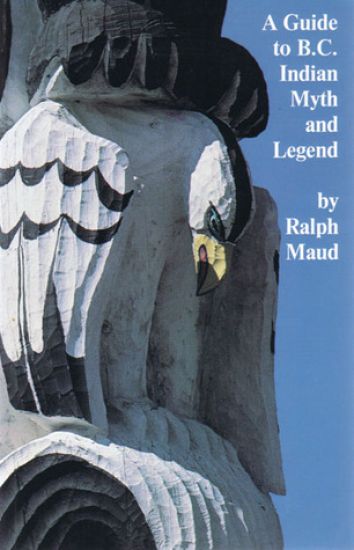
A Guide to B.C. Indian Myth and Legend
Boas, Teit, Hill-Tout, Barbeau, Swanton, Jenness, the luminaries of field research in British Columbia, are discussed here in A Guide to B.C. Indian Myth and Legend, and their work in Indian folklore evaluated. Other scholars, amateurs and Native informants of the past and present are given ample consideration, making this book a comprehensive survey of myth collecting in B.C. The aim is to reveal the true extent of this neglected body of world literature, and to begin to sort out the more valuable texts from those damaged in transmission. A Guide to B.C. Indian Myth and Legend is a valuable reference tool for beginning or advanced students of anthropology, and an absorbing look at the research process itself.
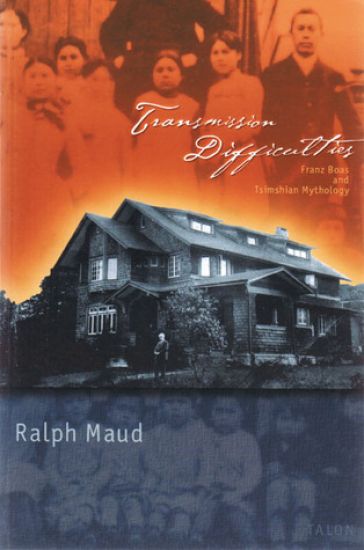
Transmission Difficulties

Transmission Difficulties

Ralph Maud

Talonbooks
2000
pokkari
It has been well known since Marius Barbeau's review of the first edition of Franz Boas's Tsimshian Mythology in 1917, that something was seriously amiss with Boas's alleged "translations" of the stories gathered by his chief Tsimshian informant, Henry Tate. But what, exactly, was it that Boas was doing with Tate's stories? It is this question that Ralph Maud sets out to address in Transmission Difficulties. Boas's original misrepresentations of the more than 2,000 pages of material he received from Henry Tate have been denied by the ethnographic establishment for more than eighty years. His distortion of Tate's stories has been rationalized, to date, as "cultural relativism"--any loss of Tate's original material in this ethnographic "collaboration" between Native informant and European scientist was "unavoidable," due to the presumably equal "cultural differences" between them. This, Maud argues convincingly, is not the case at all.The fact that Boas paid Tate for his stories by the page, and furthermore instructed Tate specifically on what stories, and even on what kinds of stories he was to gather and submit, created a profoundly unequal relationship between these two men, which resulted in an inevitable and pre-determined "authentication" of the Native material by the European ethnographer. Transmission Difficulties unfolds like a gripping, real-life mystery story. It leaves the reader with a whole new vision of what the relation between European colonials and Aboriginal inhabitants in the Americas might have been, and still might be.
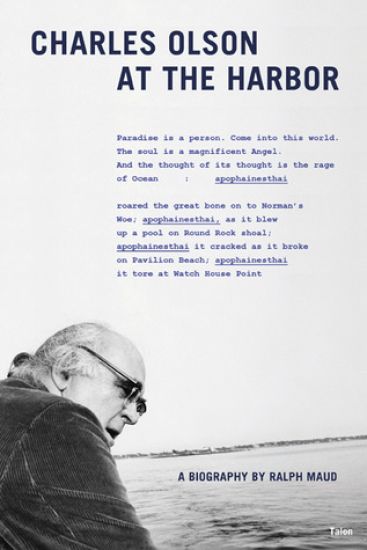
Charles Olson at the Harbor

Charles Olson at the Harbor

Ralph Maud

Talonbooks
2008
pokkari
Charles Olson was quite possibly the greatest, and without question the most influential, of the "New American Poets" published by Grove Press in the mid-twentieth century. Synthesizing the experimental avant-garde of Black Mountain College with the uncompromising existentialism of the Beat generation, the new structuralism of the San Francisco Renaissance and heralding the postmodern deconstructionism of the L=A=N=G=U=A=G=E poets, his spirit, mind and intellect are ubiquitous in late-twentieth-century poetry around the world. His archaeology of language unearthed classical sources and aboriginal, principally Mayan, cultures within the history of European colonialism and resulted in an absolute insistence that the public value of the human imagination is inseparable from the particulars of both the time and place of its origins and composition.His reputation tarnished and his poetry misread 20 years after his death in Tom Clark's carelessly biased 1991 biography, Charles Olson: The Allegory of a Poet's Life, Olson and his work have been diminished in the study of poetics since Clark's creation of his grotesque caricature of this great American poet as a young hustler who he irresponsibly and falsely claims became a defeated and pathetic old man in his later years. With Charles Olson at the Harbor, Dr. Ralph Maud, a longtime Olson scholar, friend and correspondent, finally sets the record straight, insisting that Olson was as careful with his genius as any young man could be; that he achieved critical success as a Melville scholar; that his "projective verse" established an undeniable and lasting sea change in poetic thought around the world; and that he eschewed success of the ordinary kind to create a new restorative stance in the polis that can take us into a different future--all reflected in a large body of poetry that the world can no longer ignore.