Kirjojen hintavertailu. Mukana 11 244 527 kirjaa ja 12 kauppaa.

Kirjahaku

Etsi kirjoja tekijän nimen, kirjan nimen tai ISBN:n perusteella.

3 kirjaa tekijältä Ralph Pite

The Circle of Our Vision

The Circle of Our Vision

Ralph Pite

Clarendon Press
1994
sidottu
The sudden and spectacular growth in Dante's popularity in England at the end of the eighteenth century was immensely influential for English writers of the period. But the impact of Dante on English writers has rarely been analysed and its history has been little understood. Byron, Shelley, Keats, Coleridge, Blake, and Wordsworth all wrote and painted while Dante's work - its style, project, and achievement - commanded their attention and provoked their disagreement. The Circle of Our Vision discusses each of these writers in detail, assessing the nature of their engagement with the Divine Comedy and the consequences for their own writing. It explores how these Romantic poets understood Dante, what they valued in his poetry and why, setting them in the context of contemporary commentators, translators, and illustrators, (including Fuseli, Flaxman, and Reynolds) both in England and Europe. Romantic readings of the Divine Comedy are shown to disturb our own ideas about Dante, which are based on Victorian and Modernist assumptions. Pite also presents a reconsideration of the concept of 'influence' in general, using the example of Dante's presence in Romantic poetry to challenge Harold Bloom's belief that the relations between poets are invariably a fight to the death.
Edward Thomas's Prose

Edward Thomas's Prose

Ralph Pite

Oxford University Press
2025
sidottu
Edward Thomas (1878-1917) is a renowned poet. Until recently, his prose writing has, by comparison, been neglected and very often dismissed by critics. Thanks not least to the multi-volume new edition being published by OUP (gen. eds. Guy Cuthbertson and Lucy Newlyn), this body of work is being re-evaluated. This new study by Ralph Pite forms part of that undertaking; it is the first to consider Thomas's prose on its own terms, independently of the poetry that it preceded. By considering all of Thomas's prose work in its wide variety of genres (nature writing, literary criticism, fiction, autobiography) and by drawing, for the first time, on the whole range of his reviewing, this study transforms understanding of his development. The continuity of his critical perspective emerges; his Celtic loyalties, their nature and their depth, are revealed; both the complexity and the conviction of his politics are brought to light, alongside his receptive alertness to innovative writing and his own originality and daring as a writer. The view of his achievement generated by his interwar reception (itself the outcome of societal mourning and griefwork) is challenged; so is the critical consensus regarding the quality of his prose and the reasons behind its changing styles across Thomas's career. From all of this, it becomes clear, moreover, how powerfully Thomas's work speaks in the contemporary moment of environmental and climate breakdown. Thomas's prose seeks constantly to articulate a relationship of absolute interdependence between human beings and the natural world. His writing is so exploratory and original because Thomas seeks to address the problematic reality that interdependence--this truth of humanity's place in natural world--is perceptible to Western eyes only as mystery.
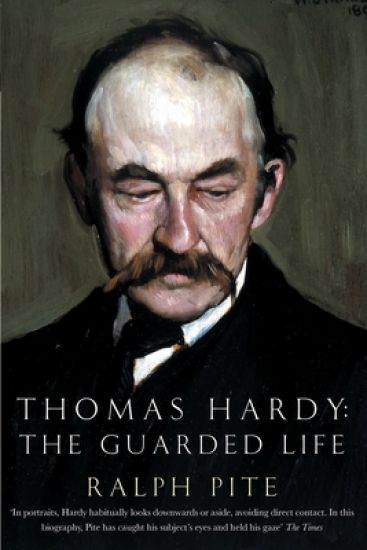
Thomas Hardy: The Guarded Life
Few writers are as strongly associated with a particular place as Thomas Hardy. His role as unofficial historian of Wessex has come to define his reputation, yet only hints at the complexities of a man who cultivated aristocratic friends, spent several months each year in London and wrote some of the most popular, but also most vilified, novels of the Victorian period. In The Guarded Life, Ralph Pite explores these contradictions in the context of Hardy's relationships with women, friends and mentors; the social, family and work pressures he experienced; and his attachment to the Dorsetshire landscape. In doing so, he reveals the personal and emotional life of a public figure who has, despite his fame, remained largely obscure - until now. 'Pite uses new critical techniques and perspectives to make his point ...He is a subtle reader of Hardy's work and applies his impressive reasoning to the man as if he, too, were a kind of text' Daily Telegraph 'An impressive, and impressively human, book, Pite's skill is in balancing the larger sweep of Hardy's life with a sense for what happened at the edges. Like his subject, Pite takes risks with what he reveals, but the detail is always enlarging. Hardy, and his times, seem bigger for this work' New Statesman 'In portraits, Hardy habitually looks downwards or aside, avoiding direct contact. In this biography, Pite has caught his subject's eyes and held his gaze' The Times 'Pite is skilful, not to say ingenious, in drawing together emblems and instances of secrecy ...This new biography encourages us to re-examine Hardy's life as a complex and often self-contradictory whole; Pite's Hardy is altogether more vulnerable than Hardy's version of himself, but also more likeable' Guardian