Kirjojen hintavertailu. Mukana 11 244 527 kirjaa ja 12 kauppaa.

Kirjahaku

Etsi kirjoja tekijän nimen, kirjan nimen tai ISBN:n perusteella.

6 kirjaa tekijältä Ralph Yarrow

Jana Sanskriti

Jana Sanskriti

Ralph Yarrow

Routledge
2021
sidottu
Regarded by Augusto Boal as the international icon of his vision, Jana Sanskriti are the leading practitioners of Theatre of the Oppressed and Forum Theatre in India and the East.The group has worked continuously with rural communities in West Bengal since its beginnings in 1985 to reconfigure social and political relationships through theatre, achieving both a solid regional presence and an international reputation.This book combines: a biography of the group, charting their history, methodology and modes of operation an examination of Jana Sanskriti through the writings of their founder, Sanjoy Ganguly a detailed analysis of their performance events and practices, including the plays collected in Ganguly's Where We Stand (2009) practical exercises and games, taken from Jana Sanskriti's workshops and festivals.As a first step towards critical understanding, and as an initial exploration before going on to further, primary research, Routledge Performance Practitioners offer unbeatable value for today’s student.
Jana Sanskriti

Jana Sanskriti

Ralph Yarrow

Routledge
2021
nidottu
Regarded by Augusto Boal as the international icon of his vision, Jana Sanskriti are the leading practitioners of Theatre of the Oppressed and Forum Theatre in India and the East.The group has worked continuously with rural communities in West Bengal since its beginnings in 1985 to reconfigure social and political relationships through theatre, achieving both a solid regional presence and an international reputation.This book combines: a biography of the group, charting their history, methodology and modes of operation an examination of Jana Sanskriti through the writings of their founder, Sanjoy Ganguly a detailed analysis of their performance events and practices, including the plays collected in Ganguly's Where We Stand (2009) practical exercises and games, taken from Jana Sanskriti's workshops and festivals.As a first step towards critical understanding, and as an initial exploration before going on to further, primary research, Routledge Performance Practitioners offer unbeatable value for today’s student.
Indian Theatre

Indian Theatre

Ralph Yarrow

RoutledgeCurzon
2000
sidottu
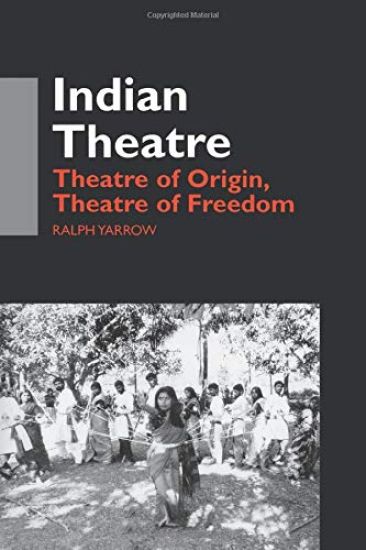
This book sets out from the question: why have so many western theatre workers come to India and what were they looking for? What is it that seemed to be lacking in western performance and understanding of the nature and function of theatre? Locating Indian theatre as a major site of reappraisal and renewal both in India and in the world of performance, the book presents both a picture of traditional and contemporary theatre in India and an examination of its processes and practice. This study questions the generative processes which impel theatre, the 'transformation' of individuals and groups through performance and the performative dynamics of 'self' and 'other'.
European Theatre 1960-1990 (Routledge Revivals)
European theatre has been the site of enormous change and struggle since 1960. There have been radical shifts in the nature and understanding of performance, fuelled by increasing cross-cultural and international influence. Theatre has had to fight for its very existence, adapting its methods of operation to survive. European Theatre 1960-1990, first published in 1992, tells that story. The contributors - who in many cases have been theatre practitioners as well as critics - provide a wealth of fascinating information, covering Germany, France, Poland, Italy, Spain and Sweden, as well as Britain. The book offers an historical and descriptive overview of developments across national boundaries, enabling the reader to compare and contrast acting and directing styles, administrative strategies and the relationship between ideology and achievement. Chapters trace the evolution of theatre in all its aspects, including such elements as the end of censorship in many countries, the upsurge in political and personal awareness of the 1960s, shifting patterns of state artistic policy, and the effects on companies, directors, performers and audiences. This book should be of interest to undergraduates, postgraduates and academics of theatre studies.
European Theatre 1960-1990 (Routledge Revivals)
European theatre has been the site of enormous change and struggle since 1960. There have been radical shifts in the nature and understanding of performance, fuelled by increasing cross-cultural and international influence. Theatre has had to fight for its very existence, adapting its methods of operation to survive. European Theatre 1960-1990, first published in 1992, tells that story. The contributors - who in many cases have been theatre practitioners as well as critics - provide a wealth of fascinating information, covering Germany, France, Poland, Italy, Spain and Sweden, as well as Britain. The book offers an historical and descriptive overview of developments across national boundaries, enabling the reader to compare and contrast acting and directing styles, administrative strategies and the relationship between ideology and achievement. Chapters trace the evolution of theatre in all its aspects, including such elements as the end of censorship in many countries, the upsurge in political and personal awareness of the 1960s, shifting patterns of state artistic policy, and the effects on companies, directors, performers and audiences. This book should be of interest to undergraduates, postgraduates and academics of theatre studies.
Indian Theatre

Indian Theatre

Ralph Yarrow

Routledge
2015
nidottu
This book sets out from the question: why have so many western theatre workers come to India and what were they looking for? What is it that seemed to be lacking in western performance and understanding of the nature and function of theatre? Locating Indian theatre as a major site of reappraisal and renewal both in India and in the world of performance, the book presents both a picture of traditional and contemporary theatre in India and an examination of its processes and practice. This study questions the generative processes which impel theatre, the 'transformation' of individuals and groups through performance and the performative dynamics of 'self' and 'other'.