Kirjojen hintavertailu. Mukana 12 390 323 kirjaa ja 12 kauppaa.

Kirjahaku

Etsi kirjoja tekijän nimen, kirjan nimen tai ISBN:n perusteella.

2 kirjaa tekijältä Ram Charitra Maurya

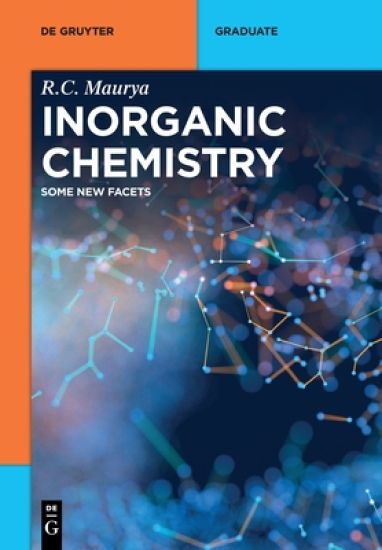
Inorganic Chemistry

Inorganic Chemistry

Ram Charitra Maurya

De Gruyter
2021
isokokoinen pokkari
This book covers different aspects of Inorganic Chemistry in terms of 10 Chapters with in-depth and up-to-date coverage. Starting with the VSEPR theory in the first chapter, the book symmetrically presents delocalized p-bonding in polyatomic molecules; structure, bonding and topology of borane and related compounds; synthesis and reactivity of metal clusters and their bonding; some aspects of stability constants of metal complexes; magnetochemistry; mechanism of inorganic reactions; molecular orbital (MO) approach of bonding in transition metals; bonding in organometallic sandwich compounds based on MO approach. Safe and economical inorganic experiments at UG and PG Levels are also presented in the last chapter. At the end, five relevant topics are included as appendices for updating students and faculty members.
Bioinorganic Chemistry

Bioinorganic Chemistry

Ram Charitra Maurya

De Gruyter
2021
isokokoinen pokkari
The book includes several topics as per Universities curriculum of M.Sc. and M.Phil. course work in Chemistry. This covers different Physiological aspects of Bioinorganic Chemistry in terms of 4 Chapters with in-depth and up-to-date coverage. The book symmetrically presents (i) Coordination chemistry of chlorophylls/bacteriochlophylls and its functional aspects in photosynthesis, (ii) Complexes containing nitric oxide: Synthesis, reactivity, structure, bonding, and therapeutic aspects of nitric oxide releasing molecules (NORMS) in human beings and plants, (iv) Complexes containing carbon monoxide: Synthesis, reactivity, structure, bonding, and therapeutic aspects of carbon monoxide releasing molecules (CORMS) in human beings and plants, and (iv) Advantageous role of gaseous signaling molecule, H2S: Hydrogen sulphide and their respective donors, in ophthalmic diseases and physiological implications in plants. At the end, three relevant topics are included as appendices for updating students and faculty members.