Kirjojen hintavertailu. Mukana 11 244 527 kirjaa ja 12 kauppaa.

Kirjahaku

Etsi kirjoja tekijän nimen, kirjan nimen tai ISBN:n perusteella.

3 kirjaa tekijältä Ramesh Srinivasan

Beyond the Valley

Beyond the Valley

Ramesh Srinivasan

MIT Press
2020
nidottu
In this provocative book, Ramesh Srinivasan describes the internet as both an enabler of frictionless efficiency and a dirty tangle of politics, economics, and other inefficient, inharmonious human activities. We may love the immediacy of Google search results, the convenience of buying from Amazon, and the elegance and power of our Apple devices, but it's a one-way, top-down process. We're not asked for our input, or our opinions--only for our data. The internet is brought to us by wealthy technologists in Silicon Valley and China. It's time, Srinivasan argues, that we think in terms beyond the Valley.Srinivasan focuses on the disconnection he sees between designers and users, producers and consumers, and tech elites and the rest of us. The recent Cambridge Analytica and Russian misinformation scandals exemplify the imbalance of a digital world that puts profits before inclusivity and democracy. In search of a more democratic internet, Srinivasan takes us to the mountains of Oaxaca, East and West Africa, China, Scandinavia, North America, and elsewhere, visiting the "design labs" of rural, low-income, and indigenous people around the world. He talks to a range of high-profile public figures--including Elizabeth Warren, David Axelrod, Eric Holder, Noam Chomsky, Lawrence Lessig, and the founders of Reddit, as well as community organizers, labor leaders, and human rights activists. To make a better internet, Srinivasan says, we need a new ethic of diversity, openness, and inclusivity, empowering those now excluded from decisions about how technologies are designed, who profits from them, and who are surveilled and exploited by them.
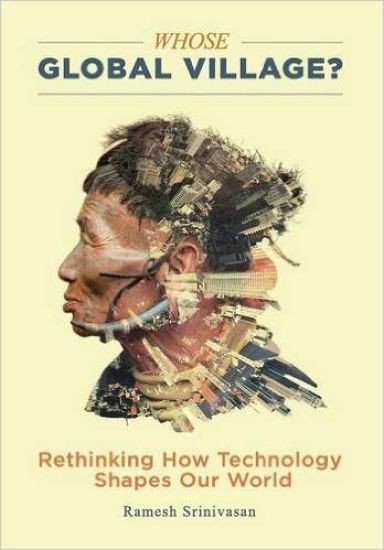
Whose Global Village?

Whose Global Village?

Ramesh Srinivasan

New York University Press
2018
pokkari
A call to action to include marginalized, non-western communities in the continuously expanding digital revolution In the digital age, technology has shrunk the physical world into a “global village,” where we all seem to be connected as an online community as information travels to the farthest reaches of the planet with the click of a mouse. Yet while we think of platforms such as Twitter and Facebook as open and accessible to all, in reality, these are commercial entities developed primarily by and for the Western world. Considering how new technologies increasingly shape labor, economics, and politics, these tools often reinforce the inequalities of globalization, rarely reflecting the perspectives of those at the bottom of the digital divide. This book asks us to re-consider ‘whose global village’ we are shaping with the digital technology revolution today. Sharing stories of collaboration with Native Americans in California and New Mexico, revolutionaries in Egypt, communities in rural India, and others across the world, Ramesh Srinivasan urges us to re-imagine what the Internet, mobile phones, or social media platforms may look like when considered from the perspective of diverse cultures. Such collaborations can pave the way for a people-first approach toward designing and working with new technology worldwide. Whose Global Village seeks to inspire professionals, activists, and scholars alike to think about technology in a way that embraces the realities of communities too often relegated to the margins. We can then start to visualize a world where technologies serve diverse communities rather than just the Western consumer.
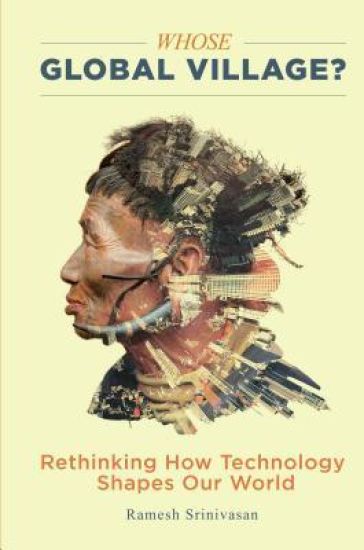
Whose Global Village?

Whose Global Village?

Ramesh Srinivasan

New York University Press
2017
sidottu
A call to action to include marginalized, non-western communities in the continuously expanding digital revolution In the digital age, technology has shrunk the physical world into a "global village," where we all seem to be connected as an online community as information travels to the farthest reaches of the planet with the click of a mouse. Yet while we think of platforms such as Twitter and Facebook as open and accessible to all, in reality, these are commercial entities developed primarily by and for the Western world. Considering how new technologies increasingly shape labor, economics, and politics, these tools often reinforce the inequalities of globalization, rarely reflecting the perspectives of those at the bottom of the digital divide. This book asks us to re-consider 'whose global village' we are shaping with the digital technology revolution today. Sharing stories of collaboration with Native Americans in California and New Mexico, revolutionaries in Egypt, communities in rural India, and others across the world, Ramesh Srinivasan urges us to re-imagine what the Internet, mobile phones, or social media platforms may look like when considered from the perspective of diverse cultures. Such collaborations can pave the way for a people-first approach toward designing and working with new technology worldwide. Whose Global Village seeks to inspire professionals, activists, and scholars alike to think about technology in a way that embraces the realities of communities too often relegated to the margins. We can then start to visualize a world where technologies serve diverse communities rather than just the Western consumer.