Kirjojen hintavertailu. Mukana 11 342 296 kirjaa ja 12 kauppaa.

Kirjahaku

Etsi kirjoja tekijän nimen, kirjan nimen tai ISBN:n perusteella.

7 kirjaa tekijältä Randall Baker

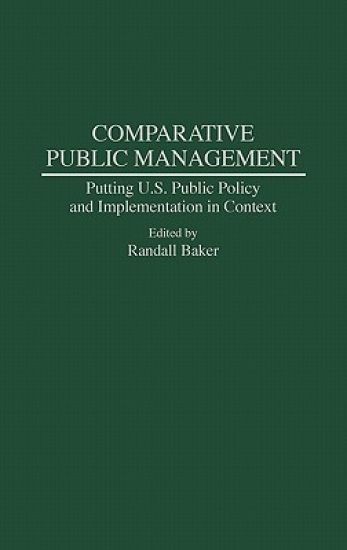
Comparative Public Management

Comparative Public Management

Randall Baker

Praeger Publishers Inc
1994
sidottu
In this new approach to a comparative text in public management, Randall Baker examines how, why, and to what extent the public sector around the world has shared in the management revolution. The book is designed to isolate and demonstrate the essential American-ness of the United States' public service by holding it up to the mirror of other developed democracies. While there are lessons to be learned from other countries, Baker and his expert contributors examine the complexities of making comparisons across cultures, even within broadly similar democratic systems, and urban-industrial economies.The volume concludes with a list of sectoral cases. These comprise most of the main dimensions of public-sector activity around the world. They are the main elements of many graduate professional degrees in public affairs, and the material has been written with the needs of both practitioners and teachers in mind. This is essential reading for all concerned with public management and administration as well as comparative government.

Environmental Law and Policy in the European Union and the United States
Authorities in the fields of environmental and international law and policy, political science, environmental technology, and public administration compare and contrast the ways in which the United States and the European Union handle similar environmental issues.The contributors critically analyze the influence of culture and history on the way apparently similar developed democracies handle the same problems; they examine the center-state relationship as it applies to EU member countries in contrast to states within the United States; they look at the challenge of transboundary, international, and global environmental problems, and how these relate to the still-emerging geopolitical reconfigurations involved in such structures as NAFTA and the EU; and they examine how transnational resources are handled in the North American and EU contexts. Randall Baker has assembled leading experts who examine significant issues for policymakers and environmentalists in North America and Western Europe.
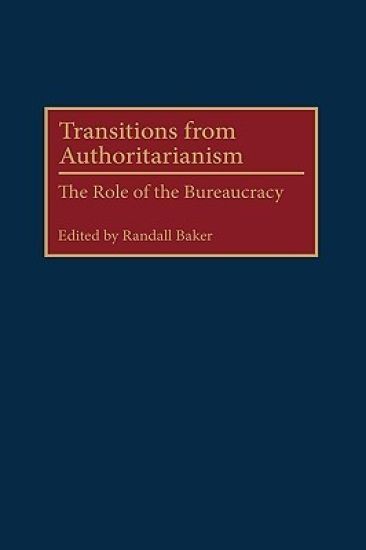
Transitions from Authoritarianism

Transitions from Authoritarianism

Randall Baker

Praeger Publishers Inc
2001
sidottu
Baker and his colleagues provide a blend of the theoretical and the empirical evidence in an examination of the nature of bureaucracy under non-democratic, authoritarian forms of government, whether on the right, as in Portugal, or the left, as in Bulgaria. In all these instances, the bureaucracy was constructed to serve the distorted interests of centralized, unaccountable power. Following the remarkable spread of democracy in the seventies in Iberia, the eighties in much of Latin America, parts of Asia and Africa, and the nineties in the former USSR and the Warsaw Pact countries, the main focus was on reforming the economy and the political institutions. Distinguished scholars concentrate on the inherited bureaucracy--the arm of government with which the people most often have to deal. They highlight the undemocratic, and sometimes antidemocratic, nature of the civil service that is supposed to serve democracy. Others consider the nature of reform as experienced, and as needed, why there is no major policy for real reform of the bureaucracy in many countries, and the similar experience of reforming from the left and the right. Contributors discuss specific experiences as case studies and examine the more general question of what lessons can be learned from this unique perspective into comparative public administration reform. Essential reading for scholars, students, policy makers, and others involved with comparative government and public administration.
Environmental Management in the Tropics
The arrival of western science and economic interests to the tropics has dramatically changed the tropical environment and its ecology. Environmental Management in the Tropics discusses the ecology of the tropics and examines how it is different from the temperate zone where western science evolved. The author discusses how native people traditionally subsisted in different ecological zones of the tropics and how they rationalized their relationship. The author also takes a critical look at the impact of colonialism in the tropics and how it changed traditional cultures and their relationship with the environment. The current clash between economics and ecology in the tropics is explored in depth. According to the author, we are now able to draw "a line in the sand" and illustrate the consequences of continuing current practices. Environmental Management in the Tropics shows how this situation developed and discusses how the two opposing concepts must be brought back into harmony. The book is one of the few studies to take a truly interdisciplinary approach combining the serious inevitabilities of natural science with the variables of history, culture, politics, and economics. It gives us a new respect for the past and tradition of the tropics and clearly spells out why dramatic changes must occur to prevent further degradation of the tropical environment. Environmental Management in the Tropics is an important reference for ecologists, conservationists, scientists, researchers, environmental consultants, land managers and developers, members of the world regulatory community, and anyone working on projects in tropical regions.
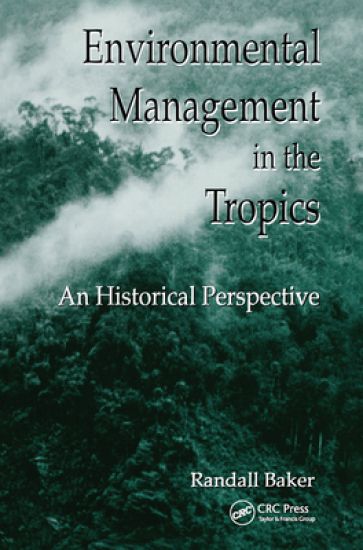
Environmental Management in the Tropics

Environmental Management in the Tropics

Randall Baker

CRC Press Inc
1992
sidottu
The arrival of western science and economic interests to the tropics has dramatically changed the tropical environment and its ecology. Environmental Management in the Tropics discusses the ecology of the tropics and examines how it is different from the temperate zone where western science evolved. The author discusses how native people traditionally subsisted in different ecological zones of the tropics and how they rationalized their relationship. The author also takes a critical look at the impact of colonialism in the tropics and how it changed traditional cultures and their relationship with the environment. The current clash between economics and ecology in the tropics is explored in depth. According to the author, we are now able to draw "a line in the sand" and illustrate the consequences of continuing current practices. Environmental Management in the Tropics shows how this situation developed and discusses how the two opposing concepts must be brought back into harmony. The book is one of the few studies to take a truly interdisciplinary approach combining the serious inevitabilities of natural science with the variables of history, culture, politics, and economics. It gives us a new respect for the past and tradition of the tropics and clearly spells out why dramatic changes must occur to prevent further degradation of the tropical environment. Environmental Management in the Tropics is an important reference for ecologists, conservationists, scientists, researchers, environmental consultants, land managers and developers, members of the world regulatory community, and anyone working on projects in tropical regions.