Kirjojen hintavertailu. Mukana 11 627 220 kirjaa ja 12 kauppaa.

Kirjahaku

Etsi kirjoja tekijän nimen, kirjan nimen tai ISBN:n perusteella.

16 kirjaa tekijältä Randall Balmer

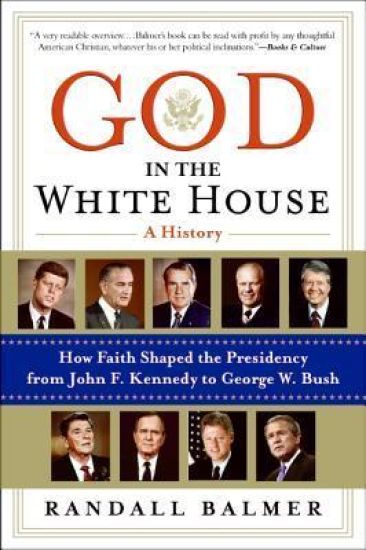
God In The White House

God In The White House

Randall Balmer

HarperOne
2009
pokkari
How did we go from John F. Kennedy declaring that religion should play no role in the elections to Bush saying, "I believe that God wants me to be president"?Historian Randall Balmer takes us on a tour of presidential religiosity in the last half of the twentieth century--from Kennedy's 1960 speech that proposed an almost absolute wall between American political and religious life to the soft religiosity of Lyndon B. Johnson's Great Society; from Richard Nixon's manipulation of religion to fit his own needs to Gerald Ford's quiet stoicism; from Jimmy Carter's introduction of evangelicalism into the mainstream to Ronald Reagan's co-option of the same group; from Bill Clinton's covert way of turning religion into a non-issue to George W. Bush's overt Christian messages, Balmer reveals the role religion has played in the personal and political lives of these American presidents.Americans were once content to disregard religion as a criterion for voting, as in most of the modern presidential elections before Jimmy Carter.But today's voters have come to expect candidates to fully disclose their religious views and to deeply illustrate their personal relationship to the Almighty. God in the White House explores the paradox of Americans' expectation that presidents should simultaneously trumpet their religious views and relationship to God while supporting the separation of church and state. Balmer tells the story of the politicization of religion in the last half of the twentieth century, as well as the "religionization" of our politics. He reflects on the implications of this shift, which have reverberated in both our religious and political worlds, and offers a new lens through which to see not only these extraordinary individuals, but also our current political situation.
Grant Us Courage

Grant Us Courage

Randall Balmer

Oxford University Press Inc
1996
sidottu
A sequel to the author's successful Mine Eyes Have Seen the Glory (OUP 1989), this book consists of twelve profiles of "great" mainline churches. Commissioned by The Christian Century magazine over a period of four years, the profiles show that not everything is as bad in mainline Protestantism as some have argued. Balmer's vivid and absorbing depictions of these congregations raise hope for the future of the mainline while still pointing to its grave and persistent troubles.
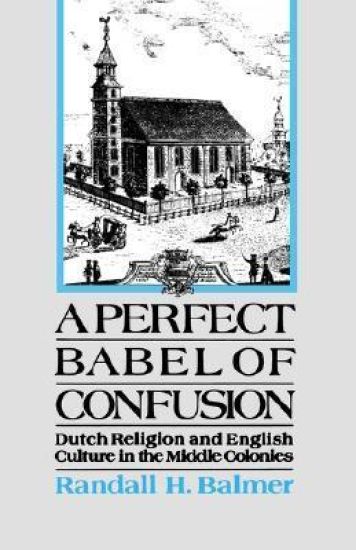
A Perfect Babel of Confusion

A Perfect Babel of Confusion

Randall Balmer

Oxford University Press Inc
2002
nidottu
Examining the interaction of the Dutch and the English in colonial New York and New Jersey, this study charts the decline of European culture in North America. Balmer argues that the combination of political intrigue, English cultural imperialism, and internal socio-economic tensions eventually drove the Dutch away from their hereditary customs, language, and culture. He shows how this process, which played itself out most visibly and poignantly in the Dutch Reformed Church between 1664 and the American Revolution, illustrates the difficulty of maintaining non-English cultures and institutions in an increasingly English world. A Perfect Babel of Confusion redresses some of the historiographical neglect of the Middle Colonies and, in the process, sheds new light on Dutch colonial culture.
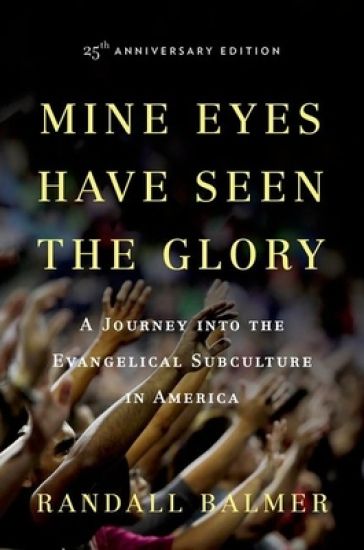
Mine Eyes Have Seen the Glory

Mine Eyes Have Seen the Glory

Randall Balmer

Oxford University Press Inc
2014
nidottu
Randall Balmer's Mine Eyes Have Seen the Glory is an insightful and engaging journey into the world of conservative Christians in America. Originally published twenty-five years ago and the basis for an award-winning PBS documentary, this timely new edition arrives just as recent elections have left an ever-growing number of secular Americans wondering exactly how the other half thinks. From Oregon to Florida, and from Texas to North Dakota, Balmer offers an immensely readable tour of the highways and byways of American evangelicalism. We visit a revival meeting in Florida, an Indian reservation in the Dakotas, a trade show for Christian booksellers, and a fundamentalist Bible camp in the Adirondacks. For this 25th-Anniversary edition, Balmer adds a new chapter and an Afterword. Mine Eyes Have Seen the Glory offers readers a genuine insight into the appeal that the evangelicals movement holds for thousands of Americans.
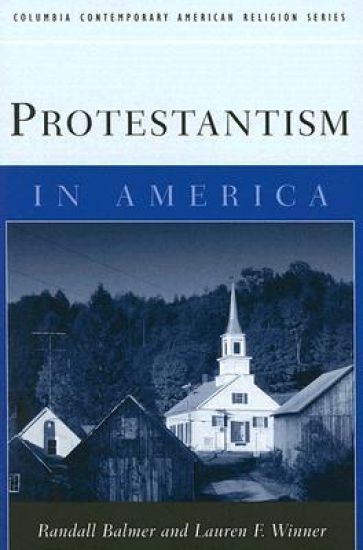
Protestantism in America

Protestantism in America

Randall Balmer

Columbia University Press
2002
sidottu
As America has become more pluralistic, Protestantism, with its long roots in American history and culture, has hardly remained static. This finely crafted portrait of a remarkably complex group of Christian denominations describes Protestantism's history, constituent subgroups and their activities, and the way in which its dialectic with American culture has shaped such facets of the wider society as healthcare, welfare, labor relations, gender roles, and political discourse. Part I provides an introduction to the religion's essential beliefs, a brief history, and a taxonomy of its primary American varieties. Part II shows the diversity of the tradition with vivid accounts of life and worship in a variety of mainline and evangelical churches. Part III explores the vexed relationship Protestantism maintains with critical social issues, including homosexuality, feminism, and social justice. The appendices include biographical sketches of notable Protestant leaders, a chronology, a glossary, and an annotated list of resources for further study.
Protestantism in America

Protestantism in America

Randall Balmer

Columbia University Press
2005
pokkari
As America has become more pluralistic, Protestantism, with its long roots in American history and culture, has hardly remained static. This finely crafted portrait of a remarkably complex group of Christian denominations describes Protestantism's history, constituent subgroups and their activities, and the way in which its dialectic with American culture has shaped such facets of the wider society as healthcare, welfare, labor relations, gender roles, and political discourse. Part I provides an introduction to the religion's essential beliefs, a brief history, and a taxonomy of its primary American varieties. Part II shows the diversity of the tradition with vivid accounts of life and worship in a variety of mainline and evangelical churches. Part III explores the vexed relationship Protestantism maintains with critical social issues, including homosexuality, feminism, and social justice. The appendices include biographical sketches of notable Protestant leaders, a chronology, a glossary, and an annotated list of resources for further study.
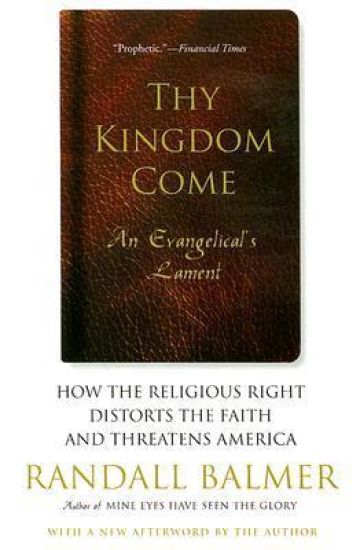
Thy Kingdom Come

Thy Kingdom Come

Randall Balmer

Basic Books
2007
pokkari
For much of American history, evangelicalism was aligned with progressive political causes-the abolition of slavery, universal suffrage, and public education. But contemporary conservative activists have defaulted on this majestic legacy, embracing instead an agenda virtually indistinguishable from the Republican Party platform. How has evangelical Christianity become so entrenched in partisan politics? Randall Balmer, an evangelical Christian and a historian of American religion, deftly combines ethnographic research, theological reflections, and historical context to examine the nature of the Religious Right today-and offers a rallying cry for liberal Christians to reclaim the noble traditions of their faith.
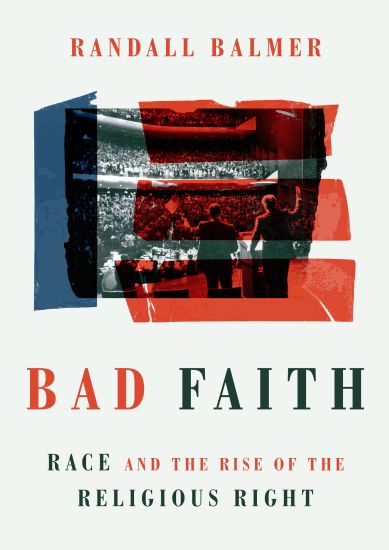
Bad Faith

Bad Faith

Randall Balmer

William B Eerdmans Publishing Co
2021
sidottu
A surprising and disturbing origin story There is a commonly accepted story about the rise of the Religious Right in the United States. It goes like this: with righteous fury, American evangelicals entered the political arena as a unified front to fight the legality of abortion after the Supreme Court's 1973 Roe v. Wade decision. The problem is this story simply isn't true. Largely ambivalent about abortion until the late 1970s, evangelical leaders were first mobilized not by Roe v. Wade but by Green v. Connally, a lesser-known court decision in 1971 that threatened the tax-exempt status of racially discriminatory institutions--of which there were several in the world of Christian education at the time. When the most notorious of these schools, Bob Jones University, had its tax-exempt status revoked in 1976, evangelicalism was galvanized as a political force and brought into the fold of the Republican Party. Only later, when a more palatable issue was needed to cover for what was becoming an increasingly unpopular position following the civil rights era, was the moral crusade against abortion made the central issue of the movement now known as the Religious Right. In this greatly expanded argument from his 2014 Politico article "The Real Origins of the Religious Right," Randall Balmer guides the reader along the convoluted historical trajectory that began with American evangelicalism as a progressive force opposed to slavery, then later an isolated apolitical movement in the mid-twentieth century, all the way through the 2016 election in which 81 percent of white evangelicals coalesced around Donald Trump for president. The pivotal point, Balmer shows, was the period in the late 1970s when American evangelicals turned against Jimmy Carter--despite his being one of their own, a professed "born-again" Christian--in favor of the Republican Party, which found it could win their loyalty through the espousal of a single issue. With the implications of this alliance still unfolding, Balmer's account uncovers the roots of evangelical watchwords like "religious freedom" and "family values" while getting to the truth of how this movement began--explaining, in part, what it has become.
Bad Faith: Race and the Rise of the Religious Right

Bad Faith: Race and the Rise of the Religious Right

Randall Balmer

William B. Eerdmans Publishing Company
2025
nidottu
What really gave rise to the Religious Right? There is a commonly accepted story about the rise of the Religious Right in the United States. It goes like this: with righteous fury, American evangelicals entered the political arena as a unified front to fight the legality of abortion after the Supreme Court's 1973 Roe v. Wade decision. The problem is this story simply isn't true. Bad Faith recounts how it was in fact the elimination of tax-exempt status for racially discriminatory Christian institutions, like Bob Jones University, that galvanized evangelicalism into a political force. Only later, when something more palatable was needed to cover for what was becoming an increasingly unpopular position following the civil rights era, was the moral crusade against abortion made the leading issue. Through exhaustive research and trenchant historical analysis, Randall Balmer exposes the ingrained priorities of the Religious Right movement and uncovers the roots of coded evangelical watchwords like "religious freedom" and "family values"--helping to explain, in part, what this movement has become.
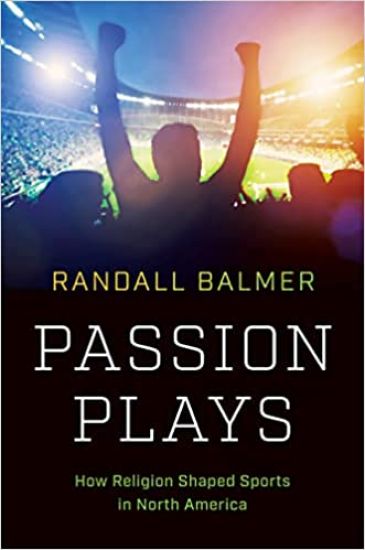
Passion Plays

Passion Plays

Randall Balmer

THE UNIVERSITY OF NORTH CAROLINA PRESS
2022
sidottu
Randall Balmer was a late convert to sports talk radio, but he quickly became addicted, just like millions of other devoted American sports fans. As a historian of religion, the more he listened, Balmer couldn't help but wonder how the fervor he heard related to religious practice. Houses of worship once railed against Sabbath-busting sports events, but today most willingly accommodate Super Bowl Sunday. On the other hand, basketball's inventor, James Naismith, was an ardent follower of Muscular Christianity and believed the game would help develop religious character. But today those religious roots are largely forgotten.Here one of our most insightful writers on American religion trains his focus on that other great passion—team sports—to reveal their surprising connections. From baseball to basketball and football to ice hockey, Balmer explores the origins and histories of big-time sports from the late nineteenth century to the present, with entertaining anecdotes and fresh insights into their ties to religious life. Referring to Notre Dame football, The Catholic Sun called its fandom "a kind of sacramental." Legions of sports fans reading Passion Plays will recognize exactly what that means.
Redeemer

Redeemer

Randall Balmer

THE UNIVERSITY OF NORTH CAROLINA PRESS
2024
nidottu
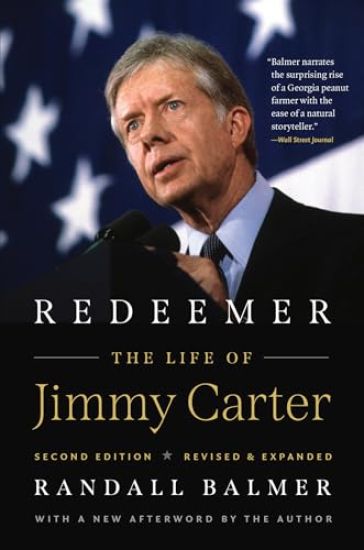
This illuminating biography of our thirty-ninth president by an acclaimed historian of American religion presents Jimmy Carter as the last great standard-bearer of progressive evangelical politics. Evangelical Christianity and conservative politics are commonly viewed today as inseparable. But when Carter, a Democrat and unabashed born-again Christian, won the presidency in 1976, he owed his victory in part to American evangelicals. Yet four years later, those very same voters abandoned Carter for Ronald Reagan and the Republican Party, signaling the eclipse of Christian progressivism by the Religious Right. Balmer briskly narrates Carter's religious and political development, his stunning rise from peanut farmer to Georgia governor to president of the United States, his accomplishments and missteps, and his swift fall from political grace. With a keen eye for the dynamic politics of the 1970s and '80s and the inner workings of right-wing religious organizing, Balmer provides a compelling account of an often-misunderstood moment in American political history, full of insight into the character and motivations of the nation's longest-lived president. Now in paperback for the first time, this edition includes a new afterword on the forces that led to Carter's 1980 defeat and the ways his policy priorities and values extended to his long career as a humanitarian and activist after leaving the White House.
The Making of Evangelicalism

The Making of Evangelicalism

Randall Balmer

Baylor University Press
2017
nidottu
With impressively clear prose and a superb command of history, best-selling author Randall Balmer offers a spirited history of evangelical Christianity in the United States. Effortlessly situating developments in evangelicalism in their wider historical context, he demonstrates the ways American social and cultural settings influenced the course of the evangelical tradition. By revealing the four key moments in the movement's history, he ably demonstrates how American Evangelicalism is truly American. Concluding with a manifesto directing where evangelicalism must go from here forth, Balmer's The Making of Evangelicalism will interest every reader - evangelical, mainline, secular - who wants to better understand evangelicals today.
Evangelicalism in America

Evangelicalism in America

Randall Balmer

Baylor University Press
2016
sidottu
Evangelicalism has left its indelible mark on American history, politics, and culture. It is also true that currents of American populism and politics have shaped the nature and character of evangelicalism. This story of evangelicalism in America is thus riddled with paradox. Despite the fact that evangelicals, perhaps more than any other religious group, have benefited from the First Amendment and the separation of church and state, several prominent evangelical leaders over the past half century have tried to abrogate the establishment clause of the First Amendment. And despite evangelicalism's legacy of concern for the poor, for women, and for minorities, some contemporary evangelicals have repudiated their own heritage of compassion and sacrifice stemming from Jesus' command to love the least of these.In Evangelicalism in America Randall Balmer chronicles the history of evangelicalism - its origins and development as well as its diversity and contradictions. Within this lineage Balmer explores the social varieties and political implications of evangelicalism's inception as well as its present and paradoxical relationship with American culture and politics. Balmer debunks some of the cherished myths surrounding this distinctly American movement while also prophetically speaking about its future contributions to American life.
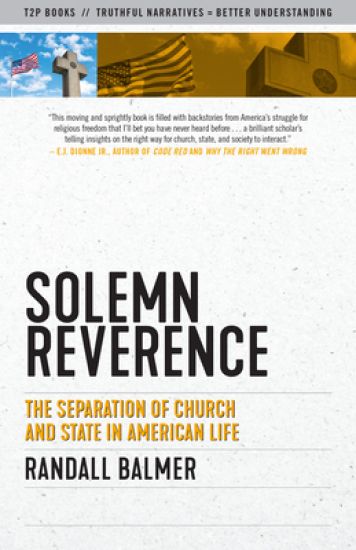
Solemn Reverence

Solemn Reverence

Randall Balmer

Steerforth Press
2021
nidottu
Solemn Reverence vividly portrays both the history of the separation of church and state and the various attempts to undermine that wall of separation. Despite the fact that the First Amendment and the separation of church and state has served the nation remarkably well, Balmer shows that previous episodes and ongoing efforts indicate its future is by no means assured. An unprecedented experiment in church-state relations, the First Amendment to the US Constitution codified the principle that the government should play no role in favoring or supporting any religion, while allowing free exercise of all religions (including unbelief). More than two centuries later, the results from this experiment are overwhelming: The separation of church and state has shielded the government from religious factionalism, and the United States boasts a diverse and salubrious religious culture unmatched anywhere in the world. At various times throughout American history, however, and continuing to the present, special interests have sought to whittle away at the wall of separation between church and state -- by seeking to declare that the United States is a "Christian nation," by installing religious symbols in public spaces, by allowing tax-exempt entities to engage in partisan politics, or by diverting taxpayer funds for the support of religious schools.
America's Best Idea: The Separation of Church and State
A historian and ordained Episcopal priest offers everything you need to know for shaping and defending your own beliefs on the role of religion in American life Filled with stories from America's struggle for religious freedom most readers have never heard before and perfect for fans of Jesus and John Wayne and On Tyranny The 1st Amendment to the US Constitution codified the principle that government should play no role in favoring or supporting any religion, while allowing free exercise of all religions (including unbelief). More than 200 years later, the results from this experiment are overwhelming: The separation of church and state has shielded the government from religious factionalism, and the United States boasts a diverse religious culture unmatched in the world. But changes have been taking place at an accelerating pace in recent years. The current Supreme Court has shifted away from excluding the influence and practice of religion at public institutions and in our laws and policies, and moved dramatically toward protecting the inclusion and promotion of religion in publicly funded undertakings. Moreover, adherents to a Christian Nationalism ideology have grown more vocal and emboldened, and are increasingly moving into positions of power. Randall Balmer, one of the premier historians of religion in America, reviews both the history of the separation of church and state and various attempts to undermine that wall. Despite the fact that the 1st Amendment and the separation of church and state has served the nation remarkably well, he argues, its future is by no means assured.