Kirjojen hintavertailu. Mukana 11 244 527 kirjaa ja 12 kauppaa.

Kirjahaku

Etsi kirjoja tekijän nimen, kirjan nimen tai ISBN:n perusteella.

5 kirjaa tekijältä Randall C. Zachman

Image and Word in the Theology of John Calvin

Image and Word in the Theology of John Calvin

Randall C. Zachman

University of Notre Dame Press
2009
nidottu
In his groundbreaking new study of the Swiss reformer, Randall C. Zachman reveals and analyzes John Calvin's understanding of image and word both comprehensively and chronologically, with attention to the way that each theme develops in Calvin's theology. Most scholars allege that John Calvin (1509–1564) insisted on the essential invisibility of God in order to deny that God could be represented in any kind of visible image. This claim formed one of his foundational arguments against the display of man-made images in worship. Given the transcendence of God, Calvin rejected the human attempt to create signs and symbols of God's presence on earth, especially the statues, images, and paintings present in Roman Catholic churches. Zachman argues, in contrast, that although Calvin rejects the use of what he calls "dead images" in worship, he does so to focus our attention on the "living images of God" in which the invisible God becomes somewhat visible. Calvin insists that these images cannot rightly be contemplated without the Word of God to clarify their meaning; we are only led to the true knowledge of God when we hold together the living images of God that we see with the Word of God that we hear. This combination of seeing and hearing pervades Calvin's theology, from his understanding of the self-revelation of God the Creator to his development of the self-manifestation of God the Redeemer in Jesus Christ. According to Zachman, Calvin maintains the same linking of seeing and hearing in our relationships with other human beings: we must always hold together what we see in others' gestures and actions with what we hear in their words, so that the hidden thoughts of their hearts might be manifested to us. Zachman's nuanced argument that Calvin holds image and word, manifestation and proclamation, in an inseparable relationship is relevant to all the major themes of Calvin's theology. It constitutes a highly significant and surprising contribution to our knowledge of the Reformation and an invitation to further study of theological aesthetics.
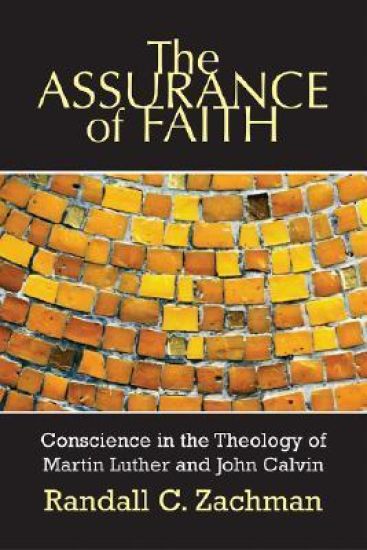
The Assurance of Faith

The Assurance of Faith

Randall C. Zachman

Westminster/John Knox Press,U.S.
2005
nidottu
Common wisdom concerning Luther and Calvin suggests that these two theologians do not relate the testimony of Christ to the conscience in the same way. Randall Zachman undertakes the long-overdue comparison of their theologies, especially the ways in which Luther and Calvin define and describe the conscience and relate this to the testimonies of the Word and the Spirit. While remaining critical of the distinction that both Luther and Calvin sought to maintain between the foundation of assurance and its confirmation in faith and election, Zachman concludes that although Luther and Calvin have different emphases in their theological treatment of the conscience, they fundamentally agree: the foundation of the peace, assurance, and certainty of conscience lies in the grace of God for us, as revealed to the conscience both by the external witness of the word of God and the internal witness of the Holy Spirit.
John Calvin as Teacher, Pastor, and Theologian

John Calvin as Teacher, Pastor, and Theologian

Randall C. Zachman

Baker Academic, Div of Baker Publishing Group
2006
nidottu
John Calvin has been the subject of numerous studies, but most have focused on one aspect of his thought or a limited selection of his writings. This study of Calvin adopts a uniquely holistic approach. Randall Zachman begins with a brief biography and considers Calvin's own understanding of his ministry as a teacher and pastor. From this perspective, he surveys Calvin's writings and their place in the work of reforming the church--both through the training of clergy and the instruction of the laity. Zachman then considers Calvin as a theologian. In contrast to Martin Luther, Calvin sought to balance the verbal proclamation of the Word with an emphasis on the visible manifestation of God--both in creation and in Christ. This study will be of great interest to Reformed clergy and to students of the Reformation and Calvinism.
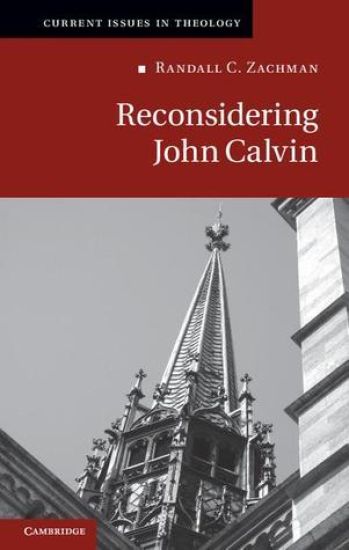
Reconsidering John Calvin

Reconsidering John Calvin

Randall C. Zachman

Cambridge University Press
2011
sidottu
Randall C. Zachman places Calvin in conversation with theologians such as Pascal, Kierkegaard, Ezra the Scribe, Julian of Norwich and Karl Barth, and attends to themes in Calvin's theology which are often overlooked. Zachman draws out Calvin's use of astronomy and great concern to see ourselves in comparison to the immensity of the universe, acknowledging in wonder and awe our nothingness before God. Throughout, Zachman presents a Calvin who seeks a route out of self-deception to self-knowledge, though Kierkegaard shows that it is love, and not judgment, that most deeply reveals us to ourselves. The book discusses Calvin's understanding of the election of the Jews and their relationship to God, and further reconsiders Calvin's understanding of judgment and how the call to love our neighbour is undermined by the formation of alliances.
Reconsidering John Calvin

Reconsidering John Calvin

Randall C. Zachman

Cambridge University Press
2011
pokkari
Randall C. Zachman places Calvin in conversation with theologians such as Pascal, Kierkegaard, Ezra the Scribe, Julian of Norwich and Karl Barth, and attends to themes in Calvin's theology which are often overlooked. Zachman draws out Calvin's use of astronomy and great concern to see ourselves in comparison to the immensity of the universe, acknowledging in wonder and awe our nothingness before God. Throughout, Zachman presents a Calvin who seeks a route out of self-deception to self-knowledge, though Kierkegaard shows that it is love, and not judgment, that most deeply reveals us to ourselves. The book discusses Calvin's understanding of the election of the Jews and their relationship to God, and further reconsiders Calvin's understanding of judgment and how the call to love our neighbour is undermined by the formation of alliances.