Kirjojen hintavertailu. Mukana 12 016 292 kirjaa ja 12 kauppaa.

Kirjahaku

Etsi kirjoja tekijän nimen, kirjan nimen tai ISBN:n perusteella.

21 kirjaa tekijältä Randall G. Holcombe

Economic Models and Methodology

Economic Models and Methodology

Randall G. Holcombe

Praeger Publishers Inc
1989
sidottu
The world is too complex for anyone to ever hope to understand all of its interrelationships simultaneously. Yet small aspects of the world we live in can be represented by comprehensible models. This is why economists use models in their analysis and research. In Economic Models and Methodology, Holcombe examines the way in which models are used in economics, and makes specific methodological recommendations more restrictive than the methodological doctrine of pluralism.Holcombe's book is not an encyclopedia of methodology, but rather an analysis of mainstream methodology, and an examination of the use of models in economics. Holcombe examines the role of assumptions in models, the use of empirical models in economics, and specific applications of models in both macroeconomics and microeconomics.
Public Policy and the Quality of Life

Public Policy and the Quality of Life

Randall G. Holcombe

Praeger Publishers Inc
1995
sidottu
This volume argues that the virtues of the market system, private property, and freedom of exchange can be applied to enhance the quality of life. Although people recognize in the abstract that markets work better than government in allocating resources, government's presence in the economy increases as government intervenes to deal with different problems. This book shows how the market mechanism that has enhanced material well-being is better suited than government planning to improve the quality of life. After examining general principles guiding both market and government allocation of resources, the book then examines specific policy issues, including environmental protection, health care, regulation of product quality, and land use planning.The book first examines the general principles that guide both market and government allocation of resources to show why market mechanisms work better than government planning to enhance the quality of life. Then specific policy issues are examined to provide examples of how market forces can be harnessed to improve the quality of life. Some of those issues are environmental protection, health care, the regulation of product quality, and land use planning.
The Economic Foundations of Government

The Economic Foundations of Government

Randall G. Holcombe

Palgrave Macmillan
1993
sidottu
Government is analysed as the product of exchange among individuals who differ in their bargaining power. This approach shows why individuals agree to political institutions that give their governments extensive power, and why even the most powerful government benefits from constitutional rules constraining the government's power. This foundation is used to examine a wide range of government activities, including its protection of rights, its military activities, and democratic political institutions.
From Liberty to Democracy

From Liberty to Democracy

Randall G. Holcombe

The University of Michigan Press
2002
sidottu
At the nation's founding, the fundamental principle underlying American government was liberty, and the nation's new government was designed to protect the rights of individuals. The American founders intended to design a government that would protect the rights of its citizens, and at that time the most serious threat to people's rights was government. Thus, the United States government was designed with a constitutionally limited scope to preserve the rights of individuals and limit the powers of government. The government's activities during two world wars and the Great Depression greatly increased its involvement in people's economic affairs, and by the time of Lyndon Johnson's Great Society, the transformation was complete. By the end of the twentieth century, the fundamental principle underlying American government had been transformed to democracy, and public policy was designed to further the will of the majority. The result has been a government that is larger and broader in scope. From Liberty to Democracy examines American political history using the framework of public choice theory to show how American government grew more democratic, and how this resulted in an increase in the size and scope of government. It should appeal to historians, political scientists, and economists who are interested in the evolution of American government but does not assume any specialized training and can be read by anyone interested in American political history. Randall G. Holcombe is DeVoe Moore Professor of Economics, Florida State University
The Economic Foundations of Government

The Economic Foundations of Government

Randall G. Holcombe

New York University Press
1993
sidottu
This welcome work argues that government is the result of a contract arrived at by individuals with varying bargaining power. Holcombe explores such issues as why the political system protects individual's rights, why individuals agree to political institutions that give their governments extensive power, and why even the most powerful government benefits from constitutional rules which constrain its power. He arrives at a theory of rights, constitutions, and government that does not rely, as economists have traditionally done, on value judgments. Very much at the cutting edge of economic thinking, this book will interest undergraduates and professionals in the fields of economics, political science, and government.
Following Their Leaders

Following Their Leaders

Randall G. Holcombe

Cambridge University Press
2023
sidottu
Models of democratic decision-making tend to assume that voters have preferences and that candidates adjust their platforms to conform with those preferences; however, the direction of causation is largely the opposite. Political elites offer policy platforms to voters, and voters adopt those policies - they follow their leaders. Following Their Leaders argues that policies are designed by the elite and the electorate has little say. Preferences for public policy tend to be anchored in a political identity associated with a candidate, party, or ideology; voters' preferences on most issues are derived from their anchor preferences. Holcombe argues that because citizens adopt the policies offered by the elite, democratic institutions are ineffective constraints on the exercise of political power. This volume explores political institutions that help control the elite who exercise political power and discusses the implications political preferences have on democracies.
Following Their Leaders

Following Their Leaders

Randall G. Holcombe

Cambridge University Press
2023
pokkari
Models of democratic decision-making tend to assume that voters have preferences and that candidates adjust their platforms to conform with those preferences; however, the direction of causation is largely the opposite. Political elites offer policy platforms to voters, and voters adopt those policies - they follow their leaders. Following Their Leaders argues that policies are designed by the elite and the electorate has little say. Preferences for public policy tend to be anchored in a political identity associated with a candidate, party, or ideology; voters' preferences on most issues are derived from their anchor preferences. Holcombe argues that because citizens adopt the policies offered by the elite, democratic institutions are ineffective constraints on the exercise of political power. This volume explores political institutions that help control the elite who exercise political power and discusses the implications political preferences have on democracies.
Politics as Exchange

Politics as Exchange

Randall G. Holcombe

Cambridge University Press
2025
sidottu
Political institutions have been depicted by academics as a marketplace where citizens transact with each other to accomplish collective ends difficult to accomplish otherwise. This depiction supports a romantic notion of democracy in which democratic governments are accountable to their citizens, and act in their best interests. In Politics as Exchange, Randall Holcombe explains why this view of democracy is too optimistic. He argues that while there is a political marketplace in which public policy is made, access to the political marketplace is limited to an elite few. A small group of well-connected individuals-legislators, lobbyists, agency heads, and others-negotiate to produce public policies with which the masses must comply. Examining the political transactions that determine policy, Holcombe discusses how political institutions, citizen mobility, and competition can limit the ability of elites to abuse their power.
Politics as Exchange

Politics as Exchange

Randall G. Holcombe

Cambridge University Press
2025
pokkari
Political institutions have been depicted by academics as a marketplace where citizens transact with each other to accomplish collective ends difficult to accomplish otherwise. This depiction supports a romantic notion of democracy in which democratic governments are accountable to their citizens, and act in their best interests. In Politics as Exchange, Randall Holcombe explains why this view of democracy is too optimistic. He argues that while there is a political marketplace in which public policy is made, access to the political marketplace is limited to an elite few. A small group of well-connected individuals-legislators, lobbyists, agency heads, and others-negotiate to produce public policies with which the masses must comply. Examining the political transactions that determine policy, Holcombe discusses how political institutions, citizen mobility, and competition can limit the ability of elites to abuse their power.
Political Capitalism

Political Capitalism

Randall G. Holcombe

Cambridge University Press
2018
pokkari
Problems associated with cronyism, corporatism, and policies that favor the elite over the masses have received increasing attention in recent years. Political Capitalism explains that what people often view as the result of corruption and unethical behavior are symptoms of a distinct system of political economy. The symptoms of political capitalism are often viewed as the result of government intervention in a market economy, or as attributes of a capitalist economy itself. Randall G. Holcombe combines well-established theories in economics and the social sciences to show that political capitalism is not a mixed economy, or government intervention in a market economy, or some intermediate step between capitalism and socialism. After developing the economic theory of political capitalism, Holcombe goes on to explain how changes in political ideology have facilitated the growth of political capitalism, and what can be done to redirect public policy back toward the public interest.
Political Capitalism

Political Capitalism

Randall G. Holcombe

Cambridge University Press
2018
sidottu
Problems associated with cronyism, corporatism, and policies that favor the elite over the masses have received increasing attention in recent years. Political Capitalism explains that what people often view as the result of corruption and unethical behavior are symptoms of a distinct system of political economy. The symptoms of political capitalism are often viewed as the result of government intervention in a market economy, or as attributes of a capitalist economy itself. Randall G. Holcombe combines well-established theories in economics and the social sciences to show that political capitalism is not a mixed economy, or government intervention in a market economy, or some intermediate step between capitalism and socialism. After developing the economic theory of political capitalism, Holcombe goes on to explain how changes in political ideology have facilitated the growth of political capitalism, and what can be done to redirect public policy back toward the public interest.
The Economic Foundations of Government

The Economic Foundations of Government

Randall G. Holcombe

Palgrave Macmillan
1994
nidottu
Government is analysed as the product of exchange among individuals who differ in their bargaining power. This approach shows why individuals agree to political institutions that give their governments extensive power, and why even the most powerful government benefits from constitutional rules constraining the government's power. This foundation is used to examine a wide range of government activities, including its protection of rights, its military activities, and democratic political institutions.
The Great Austrian Economists (Large Print Edition)

The Great Austrian Economists (Large Print Edition)

Randall G. Holcombe

Createspace Independent Publishing Platform
1999
nidottu
LARGE PRINT EDITION More at LargePrintLiberty.com This collection presents ideas from the full sweep of this intellectual history, highlighting 15 thinkers who made the greatest contribution to advancing the Austrian School of economics. These original essays are written by top Austrians who explain the Austrian view of property, markets, prices, competition, entrepreneurship, business cycles, and government policy.Contributors include Murray Rothbard, Israel Kirzner, Joseph Salerno, Hans Hoppe, Jeffrey Herbener, Peter Klein, Mark Thornton, Jes s Huerta de Soto, Larry Sechrest, John Egger, Roger Garrison, Shawn Ritenour, Thomas DiLorenzo, and Jeffrey Tucker.Economists covered are de Mariana, Cantillon, Turgot, Say, Bastiat, Menger, Wicksteed, B hm-Bawerk, Fetter, Mises, Hazlitt, Hayek, Hutt, R pke, and RothbardThis book has been such a successful introductory text that it is the primary required reading for students attending the Mises University. It provides an opportunity to discover the main ideas of the Austrian School through the lives and works of its primary expositors.
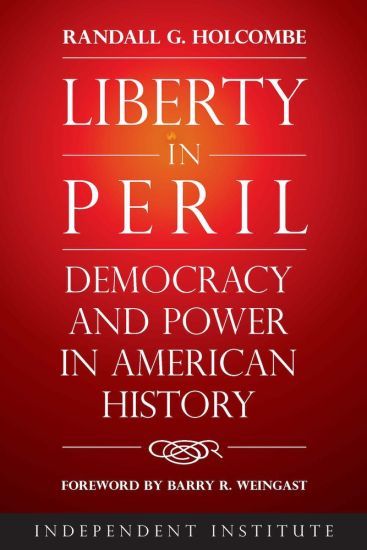
Liberty in Peril

Liberty in Peril

Randall G. Holcombe

Independent Institute,U.S.
2019
sidottu
When the United States was born in 1776, Americans viewed the role of government as the protection of their individual rights, or liberty. At that time, and now again 200 years later, the enemy of individual liberty is an intrusive and regulation obsessed government. Over time, the ideology of democracy—the idea that the role of government is to carry out the will of the people, has displaced the ideology of liberty. Holcombe narrates an account of the political history that transformed the fundamental principle of American government form liberty to democracy. And why that shift from the protection of liberty to democratic collectivism has serious and negative economic and political consequences.
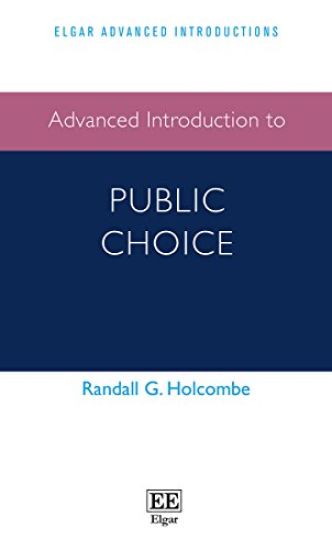
Advanced Introduction to Public Choice

Advanced Introduction to Public Choice

Randall G. Holcombe

Edward Elgar Publishing Ltd
2016
sidottu
Elgar Advanced Introductions are stimulating and thoughtful introductions to major fields in the social sciences and law, expertly written by the world's leading scholars. This Advanced Introduction presents a focused narrative about political decision-making based on the work that has defined public choice as a discipline. Randall G. Holcombe emphasizes the theoretical foundations of Public Choice, examining the way that voter preferences are aggregated through democratic decision-making, the way that political exchange leads to the production of public policy, and the way that the constitutional framework within which political activity takes place is designed. He provides a concise discussion of the main models of Public Choice in an engaging manner, giving readers a foundation for understanding the theoretical and empirical work in the field. Each chapter ends with a Notes section that discusses the research on which the chapter is based, with an emphasis on the pioneering work that has shaped the development of Public Choice.Undergraduate and graduate level students in economics, political science and public administration will find this introduction an essential resource for understanding political decision making. Instructors in those fields will find this book a useful and affordable text and an indispensable resource for teaching Public Choice.
Advanced Introduction to Public Choice

Advanced Introduction to Public Choice

Randall G. Holcombe

Edward Elgar Publishing Ltd
2016
nidottu
Elgar Advanced Introductions are stimulating and thoughtful introductions to major fields in the social sciences and law, expertly written by the world's leading scholars. This Advanced Introduction presents a focused narrative about political decision-making based on the work that has defined public choice as a discipline. Randall G. Holcombe emphasizes the theoretical foundations of Public Choice, examining the way that voter preferences are aggregated through democratic decision-making, the way that political exchange leads to the production of public policy, and the way that the constitutional framework within which political activity takes place is designed. He provides a concise discussion of the main models of Public Choice in an engaging manner, giving readers a foundation for understanding the theoretical and empirical work in the field. Each chapter ends with a Notes section that discusses the research on which the chapter is based, with an emphasis on the pioneering work that has shaped the development of Public Choice.Undergraduate and graduate level students in economics, political science and public administration will find this introduction an essential resource for understanding political decision making. Instructors in those fields will find this book a useful and affordable text and an indispensable resource for teaching Public Choice.
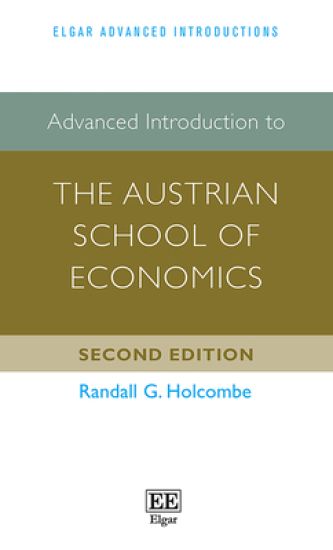
Advanced Introduction to the Austrian School of Economics

Advanced Introduction to the Austrian School of Economics

Randall G. Holcombe

Edward Elgar Publishing Ltd
2020
sidottu
Presenting a concise overview of the post-war decline in popularity of the Austrian school of economics and its subsequent revival in the late twentieth century, this updated second edition offers a theoretical and historical introduction to the ideas of the Austrian school and its intellectually distinguishing qualities. Featuring fresh and insightful comparisons between the Austrian school and other schools of thought, this enhanced second edition includes an expanded discussion on the evolution of the Austrian school in the 21st century. The Advanced Introduction considers the field's key originators and proponents and reflects on the acceleration in interest in the last two decades. Key features include: An illustration of the key arguments that have defined heterodox economics, including the Austrian school's role in the socialist calculation debateIn-depth discussions of entrepreneurship and the role of the firm in the scholarship of the Austrian schoolNew material relating Austrian economics to other schools of thought. Undergraduate and graduate students in economics and political science will find this Advanced Introduction indispensable for understanding the revival of the Austrian school. Policymakers will also benefit from its concise and sharp overview of the school and its insights into the key features and debates.
Advanced Introduction to the Austrian School of Economics

Advanced Introduction to the Austrian School of Economics

Randall G. Holcombe

Edward Elgar Publishing Ltd
2020
nidottu
Presenting a concise overview of the post-war decline in popularity of the Austrian school of economics and its subsequent revival in the late twentieth century, this updated second edition offers a theoretical and historical introduction to the ideas of the Austrian school and its intellectually distinguishing qualities. Featuring fresh and insightful comparisons between the Austrian school and other schools of thought, this enhanced second edition includes an expanded discussion on the evolution of the Austrian school in the 21st century. The Advanced Introduction considers the field's key originators and proponents and reflects on the acceleration in interest in the last two decades. Key features include: An illustration of the key arguments that have defined heterodox economics, including the Austrian school's role in the socialist calculation debateIn-depth discussions of entrepreneurship and the role of the firm in the scholarship of the Austrian schoolNew material relating Austrian economics to other schools of thought. Undergraduate and graduate students in economics and political science will find this Advanced Introduction indispensable for understanding the revival of the Austrian school. Policymakers will also benefit from its concise and sharp overview of the school and its insights into the key features and debates.
Coordination, Cooperation, and Control

Coordination, Cooperation, and Control

Randall G. Holcombe

Springer Nature Switzerland AG
2020
sidottu
There are two ways people coordinate their actions: through cooperation, exercised by economic power, and through control, exercised by political power. When economic and political power are held by the same people, the result is stagnation; when those who hold economic power are not the same people who hold political power, the result is progress. This book presents the ways in which economic power and political power can be separated, and how they can remain so, by analyzing the nature of power and the differences between economic and political power. The book then discusses the history of economic and political power, including hunter-gatherer societies, agrarian societies, and modern commercial and industrial societies. This background lends insight into why political and economic power were typically held by the same people, and why recently those without political power have been able to acquire economic power. Incentives play a key role in understanding how those two types of power can become separated, and why there is always a tendency for them to recombine. But ideas also play a crucial role, including the influence of the Enlightenment, on the progress that has occurred in the last several hundred years.