Kirjojen hintavertailu. Mukana 11 717 486 kirjaa ja 12 kauppaa.

Kirjahaku

Etsi kirjoja tekijän nimen, kirjan nimen tai ISBN:n perusteella.

8 kirjaa tekijältä Randall Kennedy

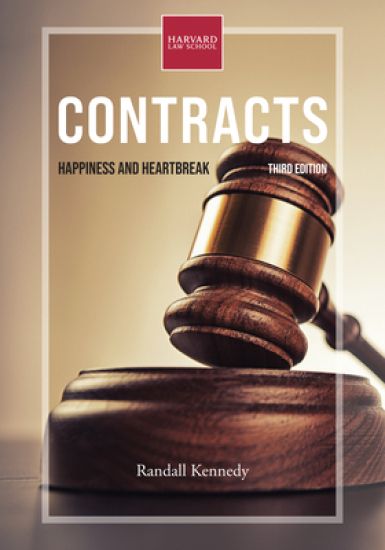
Contracts, third edition

Contracts, third edition

Randall Kennedy

MIT PRESS LTD
2023
nidottu
A casebook to be used as the primary text for first-year law school contracts courses, written by a leading scholar in contract law. Renting a home, buying a ticket, downloading an app--humans enter into contracts constantly, often with little consciousness of the legal implications. We typically become alert to the consequences only when a problem arises. Contracting can increase our happiness by enabling us to do things that we would be otherwise unable to do, but heartbreak follows when things go wrong. This casebook, which can be used as a primary text for a first-year law school contracts course, covers a wide spectrum of quandaries that emerge in contract law, from problems of overreach and interpretation to enforcement and fraud. Taken together, these cases offer an exploration of contract pathology and introduce students to concepts that are essential to understanding the vast subject of Anglo-American contract law. This book is part of the Open Casebook series from Harvard Law School Library and the MIT Press. Primary text for a first-year law school contracts course Developed for use at Harvard Law School by a leading scholar in contract law Diverse cases show differing approaches to a range of problems within contractingClassroom tested
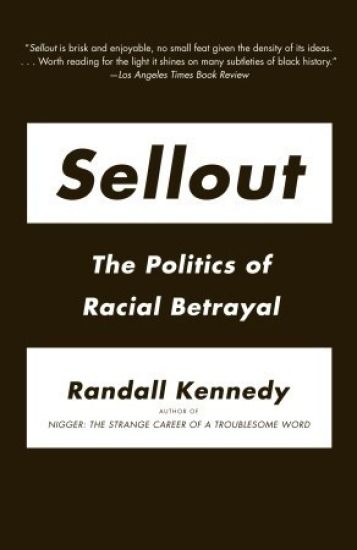
Sellout: The Politics of Racial Betrayal
An incisive and unflinching study from the national bestselling author of Say it Loud that tackles a stigma of America's racial discourse: selling out. "Brisk and enjoyable, no small feat given the density of its ideas."--Los Angeles Times Randall Kennedy explains the origins of the concept of selling out, and shows how fear of this label has haunted prominent members of the black community--including, most recently, Colin Powell, Condoleezza Rice, and Barack Obama. Sellout also contains a rigorously fair case study of America's quintessential racial "sellout"--Supreme Court Justice Clarence Thomas. In the book's final section, Kennedy recounts how he himself has dealt with accusations of being a sellout.
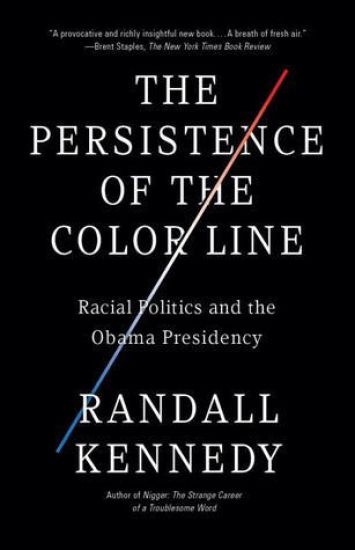
The Persistence of the Color Line: Racial Politics and the Obama Presidency
A "provocative and richly insightful new book" (The New York Times Book Review) that gives us a shrewd and penetrating analysis of the complex relationship between the first black president and his African-American constituency. Renowned for his insightful, common-sense critiques of racial politics, Randall Kennedy now tackles such hot-button issues as the nature of racial opposition to Obama; whether Obama has a singular responsibility to African Americans; the differences in Obama's presentation of himself to blacks and to whites; the challenges posed by the dream of a post-racial society; the increasing irrelevance of a certain kind of racial politics and its consequences; the complex symbolism of Obama's achievement and his own obfuscations and evasions regarding racial justice. Eschewing the critical excesses of both the left and the right, Kennedy offers an incisive view of Obama's triumphs and travails, his strengths and weaknesses, as they pertain to the troubled history of race in America.
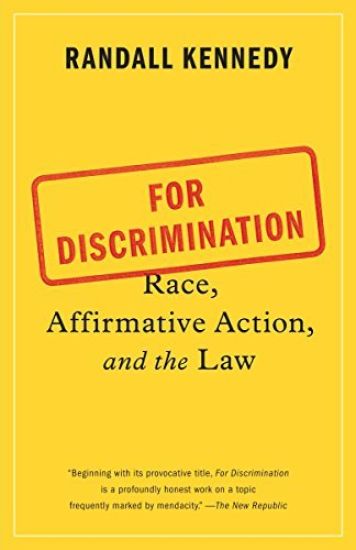
For Discrimination: Race, Affirmative Action, and the Law
The definitive reckoning with Affirmative Action, one of America's most explosively contentious and divisive issues--from "one of our most important and perceptive writers on race and the law."--The Washington Post "A clear-eyed take on America's battle over affirmative action and diversity.... Kennedy] goes straight at the issue with fearlessness and a certain cheekiness." --Los Angeles Times "Compelling.... Powerful." --Wall Street Journal What precisely is affirmative action, and why is it fiercely championed by some and just as fiercely denounced by others? Does it signify a boon or a stigma? Or is it simply reverse discrimination? What are its benefits and costs to American society? What are the exact indicia determining who should or should not be accorded affirmative action? When should affirmative action end, if it must? Randall Kennedy gives us a concise and deeply personal overview of the policy, refusing to shy away from the myriad complexities of an issue that continues to bedevil American race relations.
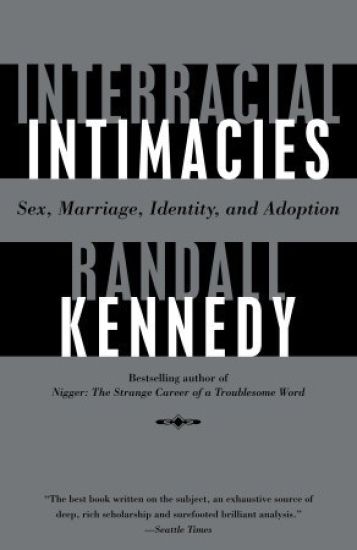
Interracial Intimacies

Interracial Intimacies

Randall Kennedy

Vintage Books
2004
pokkari
The author of Nigger and Race, Crime, and the Law sheds new light on the issue of personal interracial intimacy, past and present, discussing such issues as sex in racial politics and of race in sexual politics, legal institutions defining racial distinction, racial boundaries, and arguments for and against interracial romance, sex, and family life. Reprint. 20,000 first printing.
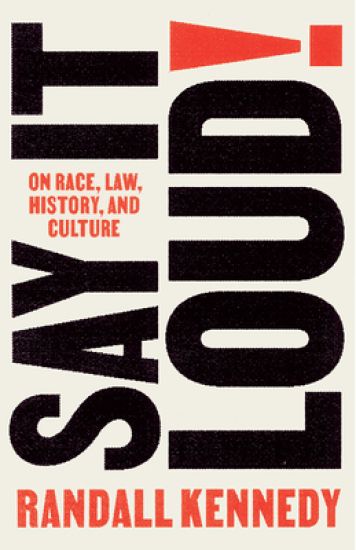
Say It Loud!: On Race, Law, History, and Culture
A NEW YORK TIMES NOTABLE BOOK OF THE YEAR - A collection of provocative essays exploring the key social justice issues of our time--from George Floyd to antiracism to inequality and the Supreme Court. Kennedy is among the most incisive American commentators on race (The New York Times). Informed by sharpness of observation and often courting controversy, deep fellow feeling, decency, and wit, Say It Loud includes: The George Floyd Moment: Promise and Peril - Isabel Wilkerson, the Election of 2020, and Racial Caste - The Princeton Ultimatum: Anti­racism Gone Awry - The Constitutional Roots of "Birtherism" - Inequality and the Supreme Court - "Nigger" The Strange Career Contin­ues - Frederick Douglass: Everyone's Hero - Remembering Thurgood Marshall - Why Clar­ence Thomas Ought to Be Ostracized - The Politics of Black Respectability - Policing Ra­cial Solidarity In each essay, Kennedy is mindful of com­plexity, ambivalence, and paradox, and he is always stirring and enlightening. Say It Loud is a wide-ranging summa of Randall Kennedy's thought on the realities and imaginaries of race in America.
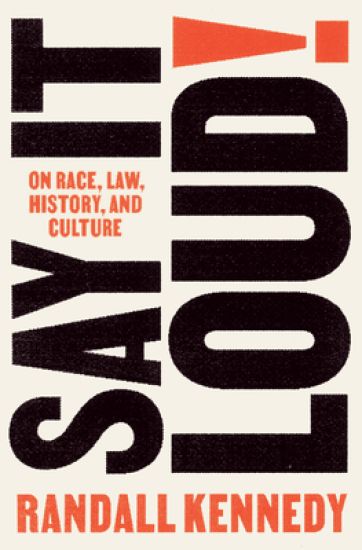
Say It Loud!: On Race, Law, History, and Culture
A NEW YORK TIMES NOTABLE BOOK OF THE YEAR - A collection of provocative essays exploring the key social justice issues of our time--from George Floyd to antiracism to inequality and the Supreme Court. Kennedy is "among the most incisive American commentators on race" (The New York Times). Informed by sharpness of observation and often courting controversy, deep fellow feeling, decency, and wit, Say It Loud includes: The George Floyd Moment: Promise and Peril - Isabel Wilkerson, the Election of 2020, and Racial Caste - The Princeton Ultimatum: Anti­racism Gone Awry - The Constitutional Roots of "Birtherism" - Inequality and the Supreme Court - "Nigger" The Strange Career Contin­ues - Frederick Douglass: Everyone's Hero - Remembering Thurgood Marshall - Why Clar­ence Thomas Ought to Be Ostracized - The Politics of Black Respectability - Policing Ra­cial Solidarity In each essay, Kennedy is mindful of com­plexity, ambivalence, and paradox, and he is always stirring and enlightening. Say It Loud is a wide-ranging summa of Randall Kennedy's thought on the realities and imaginaries of race in America.
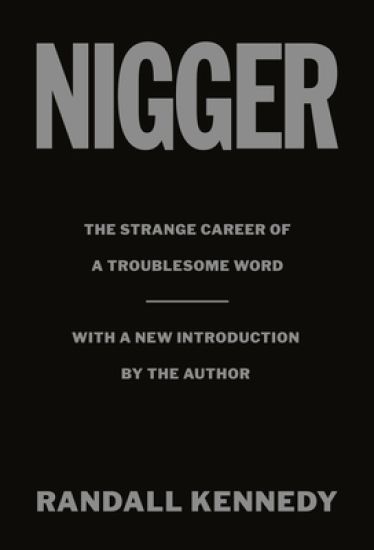
Nigger: The Strange Career of a Troublesome Word - With a New Introduction by the Author
The twentieth anniversary edition of one of the most controversial books ever published on race and language is now more relevant than ever in this season of racial reckoning--from "one of our most important and perceptive writers on race" (The Washington Post). In addition to a brave and bracing inquiry into the origins, uses, and impact of the infamous word, this edition features an extensive new introduction that addresses major developments in its evolution during the last two decades of its vexed history. In the new introduction to his classic work, Kennedy questions the claim that "nigger" is the most tabooed term in the American language, faced with the implacable prevalence of its old-fashioned anti-Black sense. "Nigger" continues to be part of the loud soundtrack of the worst instances of racial aggression in American life--racially motivated assaults and murders, arson, intentional infliction of emotional distress, and workplace harassment. Consider this: twenty years ago, Kennedy wrote that any major politician credibly accused of using "nigger" would be immediately abandoned and ostracized. He was wrong. Donald Trump, former POTUS himself, was credibly charged, and the allegation caused little more than a yawn. No one doubted the accuracy of the claim but amidst all his other racist acts his "nigger-baiting" no longer seemed shocking. "Nigger" is still very much alive and all too widely accepted. On the other hand, Kennedy is concerned to address the many episodes in which people have been punished for quoting, enunciating, or saying "nigger" in circumstances that should have made it clear that the speakers were doing nothing wrong--or at least nothing sufficiently wrong to merit the extent of the denunciation they suffered. He discusses, for example, the inquisition of Bill Maher (and his pathetic apology) and the (white) teachers who have been disciplined for reading out loud texts that contain "nigger." He argues that in assessing these controversies, we ought to be more careful about the use/mention distinction: menacingly calling someone a "nigger" is wholly different than quoting a sentence from a text by James Baldwin or Toni Morrison or Flannery O'Connor or Mark Twain. Kennedy argues against the proposition that different rules should apply depending upon the race of the speaker of "nigger," offering stunningly commonsensical reasons for abjuring the erection of such boundaries. He concludes by venturing a forecast about the likely status of "nigger" in American culture during the next twenty years when we will see the clear ascendance of a so-called "minority majority" body politic--which term itself is redolent of white supremacy.