Kirjojen hintavertailu. Mukana 11 244 527 kirjaa ja 12 kauppaa.

Kirjahaku

Etsi kirjoja tekijän nimen, kirjan nimen tai ISBN:n perusteella.

4 kirjaa tekijältä Randall L. Patton

Carpet Capital

Carpet Capital

Randall L. Patton

University of Georgia Press
2003
pokkari
After World War II, the carpet industry came to be identified with the Dalton region of northwest Georgia. Here, entrepreneurs hit upon a new technology called tufting, which enabled them to take control of this important segment of America’s textile industry, previously dominated by woven-wool carpet manufacturers in the Northeast. Dalton now dominates carpet production in the United States, manufacturing 70 percent of the domestic product, and prides itself as the carpet capital of the world.Carpet Capital is a story of revolutionary changes that transformed both an industry and a region. Its balanced and candid account details the rise of a home-grown southern industry and entrepreneurial capitalism at a time when other southern state and local governments sought to attract capital and technology from outside the region.The book summarizes the development of the American carpet industry from the early nineteenth century through the 1930s. In describing the tufted carpet boom, it focuses on Barwick Mills, Galaxy Mills, and Shaw Industries as representative of various phases in the industry’s history. It tells how owners coordinated efforts to keep carpet mills unorganized, despite efforts of the Textile Workers Union of America, by promoting a vision of the future based on individual ambition rather than collective security.Randall L. Patton and David B. Parker show that Dalton has evolved in much the same way as California’s Silicon Valley, experiencing both a rapid expansion of new firms started by entrepreneurs who had apprenticed in older firms and an air of cooperation both among owners and between mills and local government. Their close examination of this industry provides important insights for scholars and business leaders alike, enhancing our appreciation of entrepreneurial achievement and broadening our understanding of economic growth in the modern South.

Lockheed, Atlanta, and the Struggle for Racial Integration

Lockheed, Atlanta, and the Struggle for Racial Integration

Randall L. Patton

University of Georgia Press
2019
sidottu
Lockheed has been one of American’s largest corporations and most important defense contractors from World War II to the present day (since 1995 as part of Lockheed Martin Aeronautics Company). During the postwar era, its executives enacted complicated business responses to black demands for equality. Based on the papers of a personnel executive, the memoir of an African American employee, interviews, and company publications, this narrative history offers a unique inside perspective on the evolution of equal employment and affirmative action policies at Lockheed Aircraft’s massive Georgia plant from the early 1950s through the early 1980s.Randall L. Patton provides a rare, perhaps unique, account of African American struggle and management response, set within the context of the regional and national struggles for civil rights. The book describes the complex interplay of black protest, federal policy, and management action in a crucial space in the national economy and within the South, contributing to business history, policy history, labor history, and civil rights history.
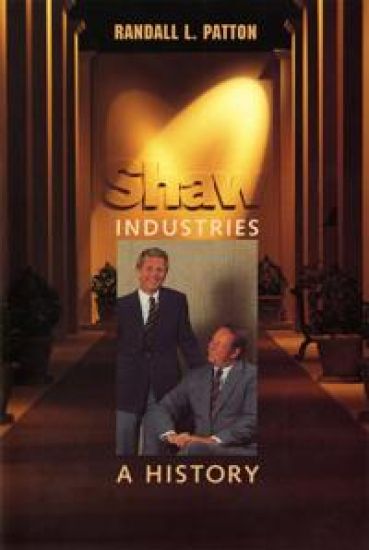
Shaw Industries

Shaw Industries

Randall L. Patton

University of Georgia Press
2019
pokkari
Shaw Industries, which is based in Dalton, Georgia, is the nation's leading textile manufacturer and the world's largest producer of carpets. This history focuses on the evolution of Shaw's business strategy and its adaptations to changing economic conditions. Randall L. Patton chronicles Shaw's rise to dominance by drawing on corporate records, industry data, and interviews with Shaw employees and management, including Robert E. Shaw, the only CEO the company has known in its more than thirty years.Patton situates Shaw within both the overall context of Sunbelt economic development and the unique circumstances behind the success of the tufted carpet industry in northwest Georgia. After surveying the state of the carpet industry nationwide at the end of World War II, Patton then tells the Shaw story from the boom years of 1955-1973, through the transitional decade of 1973-1982, the consolidation phase of the 1980s and early 1990s, and the "new economy" of the mid- to late 1990s. Throughout, Patton shows, Shaw's drive has always been toward vertical integration--controlling the outside forces that could affect its bottom line. He tells, for instance, how Shaw built its own trucking fleet and became its own yarn supplier, all to the company's advantage. He also relates less successful ventures, most notably Shaw's attempt at direct retailing.The picture emerges of a company proud of its image as a steady and profitable business surviving in a competitive industry. Patton traces the history of Shaw Industries from its start as a family-owned operation through its growth into a multinational corporation that recently joined Warren Buffett's holding company, Berkshire-Hathaway. The Shaw saga has much to tell us about the continuing vitality of "old economy" manufacturers.
Lockheed, Atlanta, and the Struggle for Racial Integration

Lockheed, Atlanta, and the Struggle for Racial Integration

Randall L. Patton

University of Georgia Press
2021
nidottu
Lockheed has been one of American’s largest corporations and most important defense contractors from World War II to the present day (since 1995 as part of Lockheed Martin Aeronautics Company). During the postwar era, its executives enacted complicated business responses to black demands for equality. Based on the papers of a personnel executive, the memoir of an African American employee, interviews, and company publications, this narrative history offers a unique inside perspective on the evolution of equal employment and affirmative action policies at Lockheed Aircraft’s massive Georgia plant from the early 1950s through the early 1980s.Randall L. Patton provides a rare, perhaps unique, account of African American struggle and management response, set within the context of the regional and national struggles for civil rights. The book describes the complex interplay of black protest, federal policy, and management action in a crucial space in the national economy and within the South, contributing to business history, policy history, labor history, and civil rights history.