Kirjojen hintavertailu. Mukana 12 016 292 kirjaa ja 12 kauppaa.

Kirjahaku

Etsi kirjoja tekijän nimen, kirjan nimen tai ISBN:n perusteella.

7 kirjaa tekijältä Randall P. Bezanson

Art and Freedom of Speech

Art and Freedom of Speech

Randall P. Bezanson

University of Illinois Press
2009
sidottu
This book analyzes the broad range of Supreme Court cases that concern the protection of art and free speech under the First Amendment. Finding that debates about free expression (whether in speech or art) swirl around sex and cultural blasphemy, Randall P. Bezanson tracks and interprets the Court's decisions on film, nude dancing, music, painting, and other visual expressions.Showing how the Court has dealt with judgments of art, quality, meaning, and how to distinguish types of speech and expression, Bezanson explores issues as diverse as homosexuality in the Boy Scouts, gay and lesbian parade floats, 2 Live Crew's alleged copyright infringement, National Endowment for the Arts grants and diversity, dangerous art, and screenings of the film Carnal Knowledge. In considering the transformative meaning of art, the importance of community judgments, and the definition of speech in Court rulings, Bezanson focuses on the fundamental questions underlying the discussion of art as protected free speech: What are the boundaries of art? What are the limits on the government's role as supporter and "patron" of the arts? And what role, if any, may core social values of decency, respect, and equality play in limiting the production or distribution of art?Accessibly written and evocatively argued, Art and Freedom of Speech explores these questions and concludes with the argument that, for legal purposes, art should be absolutely free under the First Amendment--in fact, even more free than other forms of speech.
How Free Can the Press Be?

How Free Can the Press Be?

Randall P. Bezanson

University of Illinois Press
2007
nidottu
Randall P. Bezanson explores the contradictions embedded in understanding press freedom in America by discussing nine of the most pivotal and provocative First Amendment cases in US judicial history. Each case resulted in a ruling that refined or reshaped judicial definition of the limits of press freedom. The cases concerned matters ranging from The New York Times's publication of the Pentagon Papers to Hugo Zacchini's claim that TV broadcasts of his human cannonball act threatened his livelihood. Bezanson also examines the case of politician blackballed by the Miami Herald; the Pittsburgh Press's argument that it had the right to use gender based column headings in its classifieds; and a crime victim suing the Des Moines Register over the paper's publication of intimate details, including the victim's name.
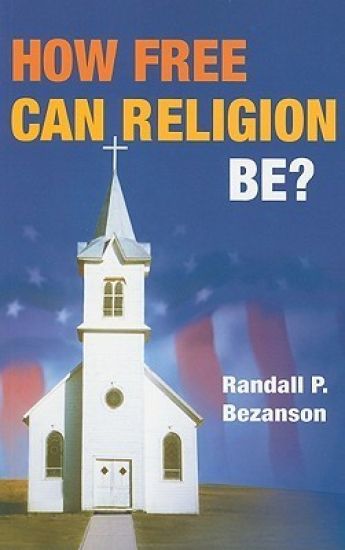
How Free Can Religion Be?

How Free Can Religion Be?

Randall P. Bezanson

University of Illinois Press
2010
nidottu
In tracking the evolution of the First Amendment's Free Exercise and Establishment Clause doctrine through Key Supreme Court decisions on religious freedom, legal scholar Randall P. Bezanson focuses on the court's shift from strict separation of church and state to a position where the government accommodates and even fosters religion. Beginning with samples from the latter half of the nineteenth century, the detailed case studies present new problems and revisit old ones as well: the purported belief of polygamy in the Mormon Church; state support for religious schools; the teaching of evolution and creationism in public schools; Amish claims for exemption from compulsory education laws; comparable claims for Native American religion in relation to drug laws; and rights of free speech and equal access by religious groups in colleges and public schools.
Too Much Free Speech?

Too Much Free Speech?

Randall P. Bezanson

University of Illinois Press
2015
nidottu
Randall P. Bezanson takes up an essential and timely inquiry into the Constitutional limits of the Supreme Court's power to create, interpret, and enforce one of the essential rights of American citizens. Analyzing contemporary Supreme Court decisions from the past fifteen years, Bezanson argues that judicial interpretations have fundamentally and drastically expanded the meaning and understanding of "speech." Bezanson focuses on judgments such as the much-discussed Citizens United case, which granted the full measure of constitutional protection to speech by corporations, and the Doe vs. Reed case in Washington state, which recognized the signing of petitions and voting in elections as acts of free speech. In each case study, he questions whether the meaning of speech has been expanded too far and critically assesses the Supreme Court's methodology in reaching and explaining its expansive conclusions.
Taxes on Knowledge in America

Taxes on Knowledge in America

Randall P. Bezanson

University of Pennsylvania Press
1994
sidottu
In Taxes on Knowledge in America, Randall P. Bezanson explores the extent to which the publication and distribution of current public information is effected by economic exactions. The book begins with a brief overview of the English history and experience with knowledge taxes, before turning to a discussion of knowledge taxes in America from colonial times to the present. In addition to covering traditional printed publications, Bezanson looks at recent developments in broadcast and cable telecommunications, devotes a chapter to the history of the postal system, and gleans insight from three benchmark Supreme Court decisions. Bezanson provocatively concludes that knowledge is common property and knowledge taxes should be measured by their impact on the diversity of ideas and availability of information throughout society.
Speech Stories

Speech Stories

Randall P. Bezanson

New York University Press
1998
sidottu
When we talk about what "freedom of speech" means in America, the discussion almost always centers on freedom rather than speech. Taking for granted that speech is an unambiguous and stable category, we move to considering how much freedom speech should enjoy. But, as Randall Bezanson demonstrates in Speech Stories, speech is a much more complicated and dynamic notion than we often assume. In an age of rapidly accelerated changes in discourse combined with new technologies of communication, the boundaries and substance of what we traditionally deem speech are being reconfigured in novel and confusing ways. In order to spark thought, discussion, and debate about these complexities and ambiguities, Bezanson probes the "stories" behind seven controversial free speech cases decided by the Supreme Court. These stories touch upon the most controversial and significant of contemporary first amendment issues: government restrictions on hate speech and obscene and indecent speech; pornography and the subordination of women; the constitutionality of campaign finance reform; and the treatment to be accorded new technologies of communication under the Constitution. The result is a provocative engagement of the reader in thinking about the puzzles and paradoxes of our commitment to free expression.
Speech Stories

Speech Stories

Randall P. Bezanson

New York University Press
1998
pokkari
When we talk about what "freedom of speech" means in America, the discussion almost always centers on freedom rather than speech. Taking for granted that speech is an unambiguous and stable category, we move to considering how much freedom speech should enjoy. But, as Randall Bezanson demonstrates in Speech Stories, speech is a much more complicated and dynamic notion than we often assume. In an age of rapidly accelerated changes in discourse combined with new technologies of communication, the boundaries and substance of what we traditionally deem speech are being reconfigured in novel and confusing ways. In order to spark thought, discussion, and debate about these complexities and ambiguities, Bezanson probes the "stories" behind seven controversial free speech cases decided by the Supreme Court. These stories touch upon the most controversial and significant of contemporary first amendment issues: government restrictions on hate speech and obscene and indecent speech; pornography and the subordination of women; the constitutionality of campaign finance reform; and the treatment to be accorded new technologies of communication under the Constitution. The result is a provocative engagement of the reader in thinking about the puzzles and paradoxes of our commitment to free expression.