

Kirjahaku
Etsi kirjoja tekijän nimen, kirjan nimen tai ISBN:n perusteella.
14 kirjaa tekijältä Randy Martin

Describes how people perform their sexual identities as athletes and spectators.
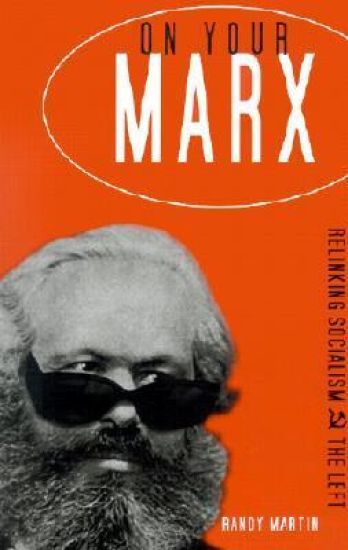
Reclaims Marx for today through a fundamental reconsideration of how his works should be read.Why-and how-does Marx speak to our day? Seeking to reestablish the link between Marx, socialism, and the Left, this book negotiates the common ground between orthodox marxism and postmarxism to show how Marx can elaborate the present. More than a claim for his relevance, this book is also a forceful statement about how theory relates to political project and organization.What, Randy Martin asks, does Marx have to say to the discourses of radical democracy, postmodernism, and globalization-all of which purport to solve problems that emerge in Marx’s writings? A reading of Marx can in fact disclose the limitations of the contemporary modes of criticism, identifying the difficult conceptual problems that cannot be avoided or overcome. Using readings of Marx to restage contemporary political discussions, On Your Marx reengages orthodox and postmarxist understandings in a critical and constructive conversation. In doing so, the book points to powerful new alliances between cultural and political theorists and activists, opening new possibilities for mobilization and social justice.

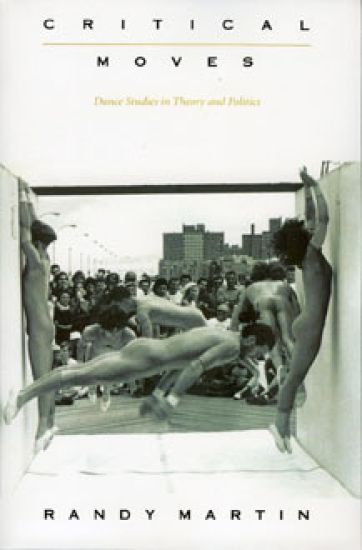
In Critical Moves Randy Martin sets in motion an inquiry into the relationship between dance, politics, and cultural theory. Drawing on his own experiences as a dancer as well as his observations as a cultural critic and social theorist, Martin illustrates how the study and practice of dance can reanimate arrested prospects for progressive politics and social change.From experimental and concert dance to more popular expressions, Martin engages a range of performances and demonstrates how a critical reflection on dance helps promote fluency in the language of mobilization that political theory alludes to yet rarely speaks. He explores how Bill T. Jones’s Last Supper at Uncle Tom’s Cabin/The Promised Land defies attempts to separate social ideas from aesthetic concerns and celebrates multiculturalism in the face of a singular national culture; he studies the choreography in rapper Ice Cube’s video “Wicked,” which confronts racialized depictions of violent crime; and he discusses how racial difference is negotiated by analyzing a hip hop aerobics class in a nonblack environment. Revealing how mastery of modern dance technique teaches an individual body to express cultural difference and display its intrinsic diversity, Critical Moves concludes with a reflection on the contribution dance studies can make to other fields within cultural studies and social sciences. As such it becomes an occasion to rethink the terms of history and agency, multiculturalism and nationalism, identity and political economy. This book will appeal not only to scholars and practitioners of dance, but also to a wide cross-section of people concerned with the study of political theory and the history of social movements.
In Critical Moves Randy Martin sets in motion an inquiry into the relationship between dance, politics, and cultural theory. Drawing on his own experiences as a dancer as well as his observations as a cultural critic and social theorist, Martin illustrates how the study and practice of dance can reanimate arrested prospects for progressive politics and social change.From experimental and concert dance to more popular expressions, Martin engages a range of performances and demonstrates how a critical reflection on dance helps promote fluency in the language of mobilization that political theory alludes to yet rarely speaks. He explores how Bill T. Jones’s Last Supper at Uncle Tom’s Cabin/The Promised Land defies attempts to separate social ideas from aesthetic concerns and celebrates multiculturalism in the face of a singular national culture; he studies the choreography in rapper Ice Cube’s video “Wicked,” which confronts racialized depictions of violent crime; and he discusses how racial difference is negotiated by analyzing a hip hop aerobics class in a nonblack environment. Revealing how mastery of modern dance technique teaches an individual body to express cultural difference and display its intrinsic diversity, Critical Moves concludes with a reflection on the contribution dance studies can make to other fields within cultural studies and social sciences. As such it becomes an occasion to rethink the terms of history and agency, multiculturalism and nationalism, identity and political economy. This book will appeal not only to scholars and practitioners of dance, but also to a wide cross-section of people concerned with the study of political theory and the history of social movements.
In this significant Marxist critique of contemporary American imperialism, the cultural theorist Randy Martin argues that a finance-based logic of risk control has come to dominate Americans’ everyday lives as well as U.S. foreign and domestic policy. Risk management-the ability to adjust for risk and to leverage it for financial gain-is the key to personal finance as well as the defining element of the massive global market in financial derivatives. The United States wages its amorphous war on terror by leveraging particular interventions (such as Iraq) to much larger ends (winning the war on terror) and by deploying small numbers of troops and targeted weaponry to achieve broad effects. Both in global financial markets and on far-flung battlegrounds, the multiplier effects are difficult to foresee or control.Drawing on theorists including Michel Foucault, Giorgio Agamben, Michael Hardt, Antonio Negri, and Achille Mbembe, Martin illuminates a frightening financial logic that must be understood in order to be countered. Martin maintains that finance divides the world between those able to avail themselves of wealth opportunities through risk taking (investors) and those who cannot do so, who are considered “at risk.” He contends that modern-day American imperialism differs from previous models of imperialism, in which the occupiers engaged with the occupied to “civilize” them, siphon off wealth, or both. American imperialism, by contrast, is an empire of indifference: a massive flight from engagement. The United States urges an embrace of risk and self-management on the occupied and then ignores or dispossesses those who cannot make the grade.
In this significant Marxist critique of contemporary American imperialism, the cultural theorist Randy Martin argues that a finance-based logic of risk control has come to dominate Americans’ everyday lives as well as U.S. foreign and domestic policy. Risk management-the ability to adjust for risk and to leverage it for financial gain-is the key to personal finance as well as the defining element of the massive global market in financial derivatives. The United States wages its amorphous war on terror by leveraging particular interventions (such as Iraq) to much larger ends (winning the war on terror) and by deploying small numbers of troops and targeted weaponry to achieve broad effects. Both in global financial markets and on far-flung battlegrounds, the multiplier effects are difficult to foresee or control.Drawing on theorists including Michel Foucault, Giorgio Agamben, Michael Hardt, Antonio Negri, and Achille Mbembe, Martin illuminates a frightening financial logic that must be understood in order to be countered. Martin maintains that finance divides the world between those able to avail themselves of wealth opportunities through risk taking (investors) and those who cannot do so, who are considered “at risk.” He contends that modern-day American imperialism differs from previous models of imperialism, in which the occupiers engaged with the occupied to “civilize” them, siphon off wealth, or both. American imperialism, by contrast, is an empire of indifference: a massive flight from engagement. The United States urges an embrace of risk and self-management on the occupied and then ignores or dispossesses those who cannot make the grade.
.Coming at a time when scarce attention is being paid to new sources for a political impulse in the West, Performance as Political Act seeks to re-embody the political subject, arguing that when the mind has been dominated by mass communications as in Western capitalism, the body emerges as a site of opposition. Martin's study goes against the conventional wisdom of the three areas it seeks to synthesize: politics, the performing arts, and the body. Whereas most left political studies presuppose consciousness as necessary for political activity, the author contends that consciousness is inadequate without political feeling and senses which are the province of the body. The performing arts, generally viewed from the audience's perspective, are here seen from the standpoint of the performers because the power of social relations, Martin asserts, lies ultimately in performance. Finally, the body, viewed in the relevant literature as either a natural, individual essence or as subjugated to mind is established here as a social, historical agent of political activity. Two distinct, yet related, studies form the basis for Martin's contention that an alternative politics must be based on the body engaged in performance: first, an inside view of the making of a modern dance displays the sources of power for a social body; and second, a comparison of political theatre in the Soviet twenties and American sixties identifies the way in which the body's potential for politics changes. A sustained theoretical discussion that critiques semiotic and phenomenological approaches to the body and outlines a body politics links the two studies. Performing artists concerned with the political aspects of their work; sociologists engaged in the study of problems of culture and everyday life; and literary theorists involved with the application of the tools of literary criticism to political problems will find that the perspectives expressed in this groundbreaking examination of the contemporary theory and history of the body form a compelling argument for the extent to which the body can become a source of political activity.
A balanced review of the changing nature of the corporate university
A balanced review of the changing nature of the corporate university
Catastrophes ranging from the travesties of financial markets and the explosion of the Deepwater Horizon oil well to the tsunami that struck northern Japan and the levees breaking in New Orleans are examples of the limits of knowledge. Author Randy Martin insists that the expertise erected to prevent these natural and social disasters failed in each case. In Knowledge LTD, Martin explores how both the limits of knowledge and the social constructions of culture reflect the way we organize social life in the face of disasters and their aftermath. He examines this crisis of knowledge as well as the social movements that rose up in its wake. Martin not only treats derivatives as financial contracts for pricing risk, but also shows how the derivative works in economic terms, where the very unity of the economy is undone. Knowledge LTD ultimately points to a more comprehensive reordering of the once separate spheres of economy, polity, and culture. Martin provides a new way of understanding the social significance of the all-pervasive derivative logic.

Catastrophes ranging from the travesties of financial markets and the explosion of the Deepwater Horizon oil well to the tsunami that struck northern Japan and the levees breaking in New Orleans are examples of the limits of knowledge. Author Randy Martin insists that the expertise erected to prevent these natural and social disasters failed in each case. In Knowledge LTD, Martin explores how both the limits of knowledge and the social constructions of culture reflect the way we organize social life in the face of disasters and their aftermath. He examines this crisis of knowledge as well as the social movements that rose up in its wake. Martin not only treats derivatives as financial contracts for pricing risk, but also shows how the derivative works in economic terms, where the very unity of the economy is undone. Knowledge LTD ultimately points to a more comprehensive reordering of the once separate spheres of economy, polity, and culture. Martin provides a new way of understanding the social significance of the all-pervasive derivative logic.

While trillions of dollars came and went in the stock market boom of the 1990s, the image of "every man and woman a CEO" may turn out to be the era's lasting legacy. Business news, once reserved to specialized papers or sections of the larger news of the day, came to the forefront in cable television and in cultural images of how ordinary people, through the internet and other avenues could not only master their financial life, but move money and equity around with the ease of a financial titan. Financialization of Daily Life looks at how this transformation occurred, and how it is just now becoming a significant, and troubling, aspect of our political and cultural life.Randy Martin takes us through all of the aspects of our "financialization." He examines how the shift in economic life arose not only from changes in culture, but also from new policy priorities that emphasize controlling inflation over promoting growth. He offers a close reading of self-help literature that teaches parents how to rear financially literate children and to instruct adults in the fundamentals of fiscal management. He examines just what a society that treats financial investment as a national past time really looks like, and how that society is transforming the world.In a country rocked by scandals in accounting and banking, the identification ordinary citizens make with, and the risk with which they engage in, the stock market calls into question the very basis of our economic system. Randy Martin spells out in clear terms the implications our financial doings-and undoing-have for the way we organize our lives, and, especially, our money.
While trillions of dollars came and went in the stock market boom of the 1990s, the image of "every man and woman a CEO" may turn out to be the era's lasting legacy. Business news, once reserved to specialized papers or sections of the larger news of the day, came to the forefront in cable television and in cultural images of how ordinary people, through the internet and other avenues could not only master their financial life, but move money and equity around with the ease of a financial titan. Financialization of Daily Life looks at how this transformation occurred, and how it is just now becoming a significant, and troubling, aspect of our political and cultural life. Randy Martin takes us through all of the aspects of our "financialization." He examines how the shift in economic life arose not only from changes in culture, but also from new policy priorities that emphasize controlling inflation over promoting growth. He offers a close reading of self-help literature that teaches parents how to rear financially literate children and to instruct adults in the fundamentals of fiscal management. He examines just what a society that treats financial investment as a national past time really looks like, and how that society is transforming the world. In a country rocked by scandals in accounting and banking, the identification ordinary citizens make with, and the risk with which they engage in, the stock market calls into question the very basis of our economic system. Randy Martin spells out in clear terms the implications our financial doings--and undoing--have for the way we organize our lives, and, especially, our money. Author note: Randy Martin is Professor of Art and Public Policy and Associate Dean of Faculty and Interdisciplinary Programs at New York University. He is the author and editor of seven books, including, most recently, On Your Marx: Rethinking Socialism and the Left.