
Kirjahaku
Etsi kirjoja tekijän nimen, kirjan nimen tai ISBN:n perusteella.
12 kirjaa tekijältä Ranjit Hoskote
Set in an age of ecological catastrophe, Icelight eloquently accepts transience yet asserts the robustness of hopeIcelight, Ranjit Hoskote's eighth collection of poems, enacts the experience of standing at the edge--of a life, a landscape, a world assuming new contours or going up in flames. Yet, the protagonists of these poems also stand at the edge of epiphany. In the title poem, we meet the Neolithic cave-dweller who, dazzled by a shapeshifting nature, crafts the first icon. The 'I' of these poems is not a sovereign 'I'. A questing, questioning voice, it locates itself in the web of life, in relation to the cosmos. In 'Tacet', the speaker asks: "What if I had/ no skin/ Of what/ am I the barometer?" Long committed to the Japanese mono no aware aesthetic, Hoskote embraces talismans, premonitions, fossils: active residues from the previous lives of people and places. Icelight is a book about transitions and departures, eloquent in its acceptance of transience in the face of mortality. AubadeRumours of wind, banners of cloud.The low earth shakes but the stormhas not arrived. You packfor the journey, look up, look throughthe doors at trees shedding their leavestoo soon, a track on which silk shoeswould be wasted, a moonstill dangling above a boat.Wearing your salt mask, you facethe mulberry shadows.The valley into whichyou're rappellingis you.
Set in an age of ecological catastrophe, Icelight eloquently accepts transience yet asserts the robustness of hopeIcelight, Ranjit Hoskote's eighth collection of poems, enacts the experience of standing at the edge--of a life, a landscape, a world assuming new contours or going up in flames. Yet, the protagonists of these poems also stand at the edge of epiphany. In the title poem, we meet the Neolithic cave-dweller who, dazzled by a shapeshifting nature, crafts the first icon. The 'I' of these poems is not a sovereign 'I'. A questing, questioning voice, it locates itself in the web of life, in relation to the cosmos. In 'Tacet', the speaker asks: "What if I had/ no skin/ Of what/ am I the barometer?" Long committed to the Japanese mono no aware aesthetic, Hoskote embraces talismans, premonitions, fossils: active residues from the previous lives of people and places. Icelight is a book about transitions and departures, eloquent in its acceptance of transience in the face of mortality. AubadeRumours of wind, banners of cloud.The low earth shakes but the stormhas not arrived. You packfor the journey, look up, look throughthe doors at trees shedding their leavestoo soon, a track on which silk shoeswould be wasted, a moonstill dangling above a boat.Wearing your salt mask, you facethe mulberry shadows.The valley into whichyou're rappellingis you.
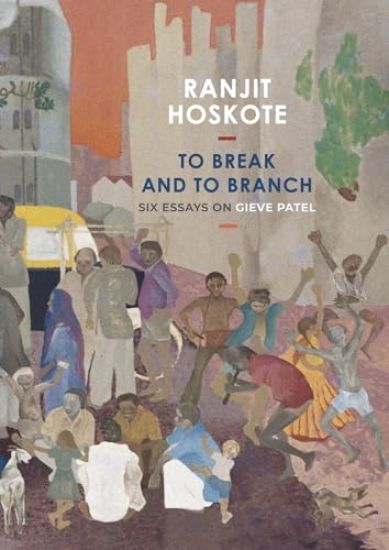
Reflections on the evolution and philosophical depth of Gieve Patel’s art, adorned with illustrations of his paintings. To Break and to Branch is a collection of six essays on the artist Gieve Patel (1940–2023), written by poet, cultural theorist, and curator Ranjit Hoskote over nearly two decades, gathered together for the first time and accompanied by over fifty illustrations of Patel's paintings. In an introductory essay written especially for this edition, Hoskote looks back over the long friendship he shared with Patel, contextualizing it within the vibrant artistic milieu that was once special to Bombay, their home city: a milieu premised on a mutual curiosity that brought the arts together, hospitable to poetry, painting, theater, cinema, music, and architecture. Embodying this spirit, Hoskote engages with Patel’s evolving oeuvre as a painter and his experiments with sculpture, while connecting them to his investments in poetry, theater, and his growing philosophical awareness of the more-than-human. Hoskote’s writings trace both the constant preoccupations and the changing interests that gave Patel’s art its distinctive character and reflect on the aesthetic, philosophical, and political dimensions of Patel’s gradual movement from a human-centric understanding of the world to a more holistic view as generated and sustained by interrelationships across orders of being.
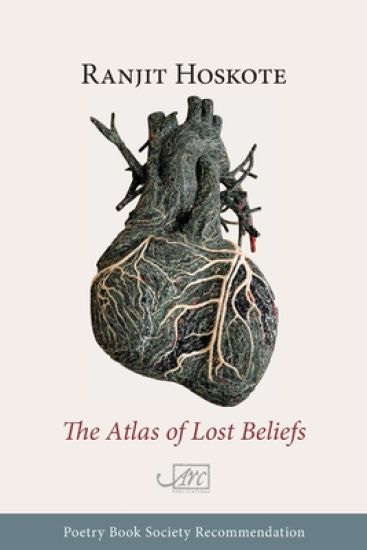
Commenting on Hoskote's poetry on the Poetry International website, the poet and editor Arundhathi Subramaniam observes: "His writing has revealed a consistent and exceptional brilliance in its treatment of image. Hoskote's metaphors are finely wrought, luminous and sensuous, combining an artisanal virtuosity with passion, turning each poem into a many-angled, multifaced experience."
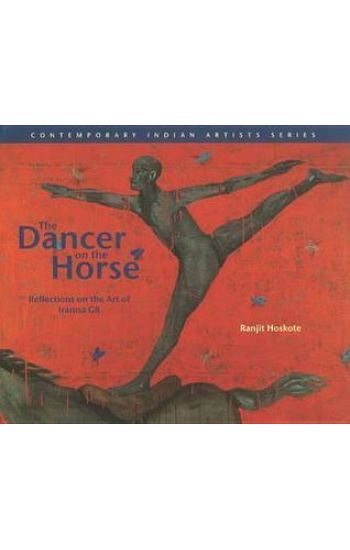
The Dancer on the Horse Reflections on the Art of Iranna Gr
Ranjit Hoskote
Mapin Publishing Pvt.Ltd
2007
sidottu
Iranna GR was born in 1970, and has painted professionally for 10 years. His studentship took place amid great upheaval in the Indian class system and a fierce debate about Indian art. The State ceased to control the economy thus opening the country up to private business. Although this was generally positive it also had the effect of generating religious and traditionalist friction. Between 1999 and 2000 Iranna acted as artist-in-residence at Wimbledon School of Art, London. His art is thought to be a stylistic challenge to post-modernism, using instead the representative, idealistic and modernist language of contemporary Indian painting. He has won several awards, held a series of one-man shows and participated in exhibitions in Amsterdam and Chicago. This is a meditation on the life and work of the artist. Ranjit Hoskote emphasises the spirituality of the artist's work and the importance of his Guru. Frequently, Iranna depicts a solitary figure in an unreal landscape, and this has been interpreted by the author as a self-portrait of one who feels estranged from his context. "The Dancer on the Horse" refers to a self-portrait by this name.The dancer must maintain both his own logical plan and take into account the movement of the horse which is unpredictable. This balancing act is a metaphor for the artist's obligation to find the appropriate relationship between the inner and outer realities and the private space of the studio and the public space of the gallery. For Ranjit Hoskote, Iranna is immensely successful in achieving this equilibrium.
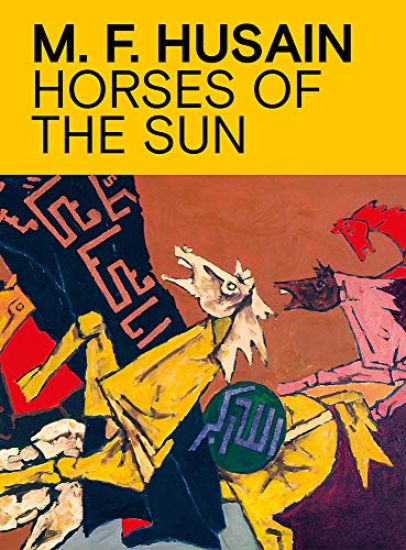
Maqbool Fida Husain (1913-2011) is a central figure in Indian modern art, and the most represented artist in Mathaf’s collection. A founding member of the Progressive Artists Group, formed in Bombay in 1947, Husain played a leading role in revolutionising art in India by parting ways with the dominant genres of academic painting and miniaturist nostalgia. This book investigates the work produced in all six decades of Husain’s artistic practice, and includes paintings, prints, poetry, architecture, textile and film. It is divided into three themes: first, the idea of home as a habitat, a repository of Husain’s childhood memories, and a space of exploration; second, the human passion for creativity and knowledge; and third, a multitude of approaches to the cosmic and divine aspects of being – expressed in myths, philosophies, world religions, narratives and symbols. The book also presents Husain’s portfolio on Islamic Civilisations, a series of 99 works commissioned by Her Highness Sheikha Moza bint Nasser in 2007.
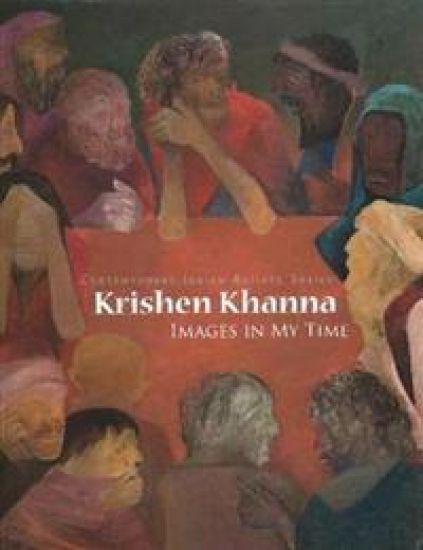
Krishen Khanna: Images in My Time Images in My Time
Ranjit Hoskote; Marilyn Rushton; Tanuj Berry
Mapin Publishing Pvt.Ltd
2007
sidottu
Krishen Khanna is a painter whose work engages the social, historical and political landscape of India. He was a member of the Progressive Artists Group which promoted modernity in the art scene. The artist briefly worked in an abstract style but soon reverted to representational art. Khanna painted a series of musicians (bandwallah) and there are strong references to music in his work. The book looks at this theme in some detail. This is the first monograph of the artist and will be valuable for its care to set Khanna's paintings in a broader context.
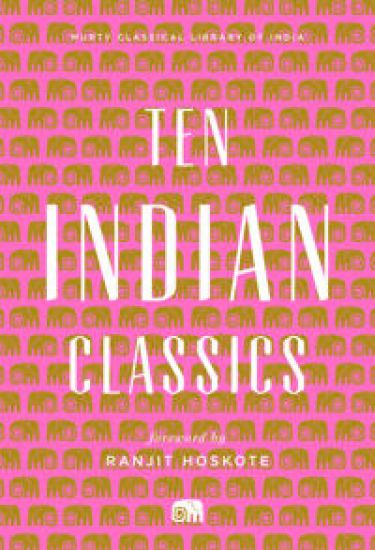
Ten Indian Classics
Murty Classical Library of India; Ranjit Hoskote
HARVARD UNIVERSITY PRESS
2025
sidottu
“The Murty Classical Library of India sifts through multiple languages and thousands of years to bring a nation’s literary treasures to English-language readers.” —Wall Street Journal Romantic ghazals and devotional quatrains, medieval battles and separated lovers, Buddhist women on their journeys toward nirvana and Ram’s battle against a demon army to rescue Sita—all this and more can be found in the Murty Classical Library of India’s Ten Indian Classics.Beginning in the sixth century B.C.E. and coming up to the eighteenth century, spanning the Indian subcontinent, the selections in this anthology include some of the oldest women’s writing in the world, exquisite Sanskrit court poems, verses from the Sikh sacred tradition recited by millions around the world, the renowned chronicle of the Mughal emperor Akbar, and Tulsidas’s retelling of the epic Ramayana that is cherished in north India to this day. Here, too, are the poems of Surdas, Mir Taqi Mir, and Bullhe Shah, which continue to inspire artists today and live on in contemporary music.The anthology showcases original translations by leading experts from a vast array of India’s literary traditions: Hindi, Kannada, Pali, Panjabi, Persian, Sanskrit, Telugu, and Urdu. With a foreword by the award-winning poet and translator Ranjit Hoskote, Ten Indian Classics is an invitation to readers worldwide to immerse themselves in a literary tradition that continues to shape modern South Asian culture and aesthetics in all its stunning diversity.
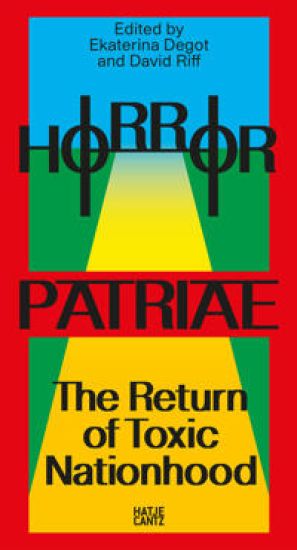
Horror Patriae: The Return of Toxic Nationhood
Boris Buden; Keti Chukhrov; Ranjit Hoskote
HATJE CANTZ
2025
pokkari