Kirjojen hintavertailu. Mukana 11 342 296 kirjaa ja 12 kauppaa.

Kirjahaku

Etsi kirjoja tekijän nimen, kirjan nimen tai ISBN:n perusteella.

4 kirjaa tekijältä Rashad Shabazz

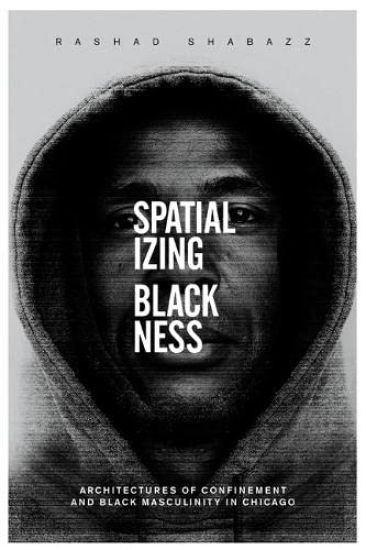
Spatializing Blackness

Spatializing Blackness

Rashad Shabazz

University of Illinois Press
2015
sidottu
Over 277,000 African Americans migrated to Chicago between 1900 and 1940, an influx unsurpassed in any other northern city. From the start, carceral powers literally and figuratively created a prison-like environment to contain these African Americans within the so-called Black Belt on the city's South Side. A geographic study of race and gender, Spatializing Blackness casts light upon the ubiquitous--and ordinary--ways carceral power functions in places where African Americans live. Moving from the kitchenette to the prison cell, and mining forgotten facts from sources as diverse as maps and memoirs, Rashad Shabazz explores the myriad architectures of confinement, policing, surveillance, urban planning, and incarceration. In particular, he investigates how the ongoing carceral effort oriented and imbued black male bodies and gender performance from the Progressive Era to the present. The result is an essential interdisciplinary study that highlights the racialization of space, the role of containment in subordinating African Americans, the politics of mobility under conditions of alleged freedom, and the ways black men cope with--and resist--spacial containment. A timely response to the massive upswing in carceral forms within society, Spatializing Blackness examines how these mechanisms came to exist, why society aimed them against African Americans, and the consequences for black communities and black masculinity both historically and today.

Spatializing Blackness

Spatializing Blackness

Rashad Shabazz

University of Illinois Press
2015
nidottu
Over 277,000 African Americans migrated to Chicago between 1900 and 1940, an influx unsurpassed in any other northern city. From the start, carceral powers literally and figuratively created a prison-like environment to contain these African Americans within the so-called Black Belt on the city's South Side. A geographic study of race and gender, Spatializing Blackness casts light upon the ubiquitous--and ordinary--ways carceral power functions in places where African Americans live. Moving from the kitchenette to the prison cell, and mining forgotten facts from sources as diverse as maps and memoirs, Rashad Shabazz explores the myriad architectures of confinement, policing, surveillance, urban planning, and incarceration. In particular, he investigates how the ongoing carceral effort oriented and imbued black male bodies and gender performance from the Progressive Era to the present. The result is an essential interdisciplinary study that highlights the racialization of space, the role of containment in subordinating African Americans, the politics of mobility under conditions of alleged freedom, and the ways black men cope with--and resist--spacial containment. A timely response to the massive upswing in carceral forms within society, Spatializing Blackness examines how these mechanisms came to exist, why society aimed them against African Americans, and the consequences for black communities and black masculinity both historically and today.

Prince's Minneapolis

Prince's Minneapolis

Rashad Shabazz

THE UNIVERSITY OF NORTH CAROLINA PRESS
2026
sidottu
When nineteen-year-old Prince took the stage to perform “I Wanna Be Your Lover” on American Bandstand, those who watched couldn’t reconcile how Prince’s funky disco-pop sounds had hailed from a place like Minneapolis. But the Minneapolis Sound, Prince’s signature pop-musical fusion of funk, R & B, rock, punk, and new wave, did not emerge from a vacuum. The place and space of Minneapolis shaped the musical ecosystem that made Prince famous. And in turn, a complex array of social forces shaped the city’s soundscape. An expert on place, race, and culture, geographer Rashad Shabazz reveals the hidden history of the Minneapolis Sound, Prince, and his beloved city. More than a biography of Prince, this is a biography of the city and the world of sound from which Prince emerged. Shabazz traces the history of the Minneapolis Sound alongside the city’s history, from colonial contact and through periods of Indigenous removal, white settlement, mass migration, industrialization, music education, suburbanization, and systemic racism. This complex history, combined with the exceptional talent cultivated in Minneapolis’s small Black communities, gave rise to a groundbreaking genre, the otherworldly legend that was Prince, and music that captivated the world.
Prince's Minneapolis

Prince's Minneapolis

Rashad Shabazz

THE UNIVERSITY OF NORTH CAROLINA PRESS
2026
pokkari
When nineteen-year-old Prince took the stage to perform “I Wanna Be Your Lover” on American Bandstand, those who watched couldn’t reconcile how Prince’s funky disco-pop sounds had hailed from a place like Minneapolis. But the Minneapolis Sound, Prince’s signature pop-musical fusion of funk, R & B, rock, punk, and new wave, did not emerge from a vacuum. The place and space of Minneapolis shaped the musical ecosystem that made Prince famous. And in turn, a complex array of social forces shaped the city’s soundscape. An expert on place, race, and culture, geographer Rashad Shabazz reveals the hidden history of the Minneapolis Sound, Prince, and his beloved city. More than a biography of Prince, this is a biography of the city and the world of sound from which Prince emerged. Shabazz traces the history of the Minneapolis Sound alongside the city’s history, from colonial contact and through periods of Indigenous removal, white settlement, mass migration, industrialization, music education, suburbanization, and systemic racism. This complex history, combined with the exceptional talent cultivated in Minneapolis’s small Black communities, gave rise to a groundbreaking genre, the otherworldly legend that was Prince, and music that captivated the world.