Kirjojen hintavertailu. Mukana 11 342 296 kirjaa ja 12 kauppaa.

Kirjahaku

Etsi kirjoja tekijän nimen, kirjan nimen tai ISBN:n perusteella.

21 kirjaa tekijältä Ravindra Das

Adopting Biometric Technology

Adopting Biometric Technology

Ravindra Das

Routledge
2020
nidottu
Many types of security technologies are currently in use, with biometrics being one of the latest and most cutting-edge forms that has been produced for mass application. Biometrics, while intriguing, is often broached with hesitation and poor understanding. Adopting Biometric Technology: Challenges and Solutions advocates increased implementation of biometric technology areas of the world where it has been least accepted, particularly in the United States.This book looks at several specific applications of biometric technology, challenging issues that have obstructed the use of biometrics in security and offering realistic solutions for increasing its worldwide utilization. It is divided into three sections, with the first discussing societal barriers against the adoption of biometric technology in security. The second section presents case studies of specific applications, such as e-passports and e-voting, that have already been implemented and could be expanded into regions where usage is low. The third section lays out a case for the general practicality and value that biometrics offers to relevant business sectors, including the benefits of implementing the currently controversial technology in place of the conventional forms of verification.While biometric technology has been poorly accepted and adopted in the United States as well as other developed nations, it is already a popular tool in developing nations in Asia, Africa, and Eastern Europe. Adopting Biometric Technology examines the societal resistance hindering the broader usage of biometrics and provides practical solutions for overcoming those barriers while showing how its increased application would be overall advantageous.
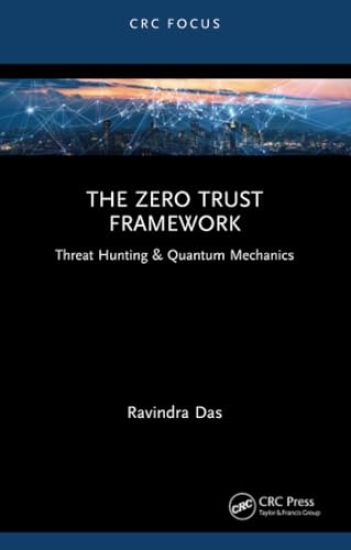
The Zero Trust Framework

The Zero Trust Framework

Ravindra Das

TAYLOR FRANCIS LTD
2023
sidottu
The Cybersecurity landscape is a daunting one today. It is nothing like it was 10 years ago. Now, it has become very complex, covert, dynamic, and stealthy. It has literally become a cat and mouse game, in which the Cyberattacker is still one step ahead. This is despite all of the technology that is available to us a society, which includes Artificial Intelligence (AI) and Machine Learning.Part of the other problem is that human beings are resistant to change. For example, the password is still the favored way of authenticating and authorizing an individual, but it too has shown its grave limitations. Despite the use of Password Managers, which can create long and complex passwords, people still resort to their old fashioned ways of doing things.So what is needed now is an extreme change, in which, unfortunately, people have no choice in whether or not they will participate. It is called the Zero Trust Framework, and in this methodology, absolutely nobody can be trusted in either the internal or the external environments. The mantra here is to keep verifying everybody, all the time. The Zero Trust Framework also involves the concept of segmentation, in which the IT and Network Infrastructure of a business is broken down into smaller components, much like a Subnet. Each component will have its own layer of security, and every individual must be authenticated via the use of Multifactor Authentication (MFA).In this book, we review both the concepts and mechanics behind the Zero Trust Framework. We also introduce advanced technologies into it, including the use of Biometrics, the Public Key Infrastructure, and Quantum Mechanics/Quantum Cryptography.
The Zero Trust Framework

The Zero Trust Framework

Ravindra Das

TAYLOR FRANCIS LTD
2024
nidottu
The Cybersecurity landscape is a daunting one today. It is nothing like it was 10 years ago. Now, it has become very complex, covert, dynamic, and stealthy. It has literally become a cat and mouse game, in which the Cyberattacker is still one step ahead. This is despite all of the technology that is available to us a society, which includes Artificial Intelligence (AI) and Machine Learning.Part of the other problem is that human beings are resistant to change. For example, the password is still the favored way of authenticating and authorizing an individual, but it too has shown its grave limitations. Despite the use of Password Managers, which can create long and complex passwords, people still resort to their old fashioned ways of doing things.So what is needed now is an extreme change, in which, unfortunately, people have no choice in whether or not they will participate. It is called the Zero Trust Framework, and in this methodology, absolutely nobody can be trusted in either the internal or the external environments. The mantra here is to keep verifying everybody, all the time. The Zero Trust Framework also involves the concept of segmentation, in which the IT and Network Infrastructure of a business is broken down into smaller components, much like a Subnet. Each component will have its own layer of security, and every individual must be authenticated via the use of Multifactor Authentication (MFA).In this book, we review both the concepts and mechanics behind the Zero Trust Framework. We also introduce advanced technologies into it, including the use of Biometrics, the Public Key Infrastructure, and Quantum Mechanics/Quantum Cryptography.
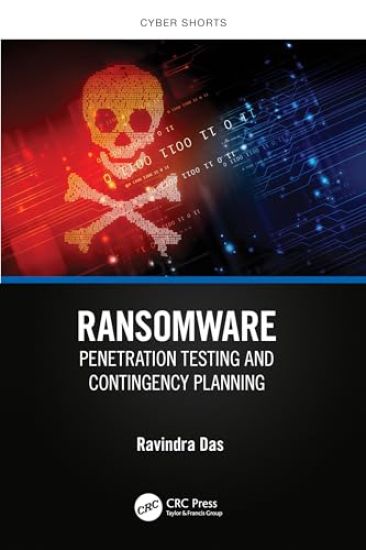
Ransomware

Ransomware

Ravindra Das

TAYLOR FRANCIS LTD
2023
sidottu
Ransomware is a threat variant that has existed for a very long time, contrary to popular belief. Today, ransomware attacks have become much more covert and stealthier than when they first came out. In this book, the author provides an overview of ransomware and the timeline of its evolution.The author also discusses famous ransomware attacks that have occurred, with a special focus on SolarWinds and critical infrastructure before taking a deep dive into penetration testing and how it can be used to mitigate the risks of a ransomware attack from happening. The author also covers incident response, disaster recovery, and business continuity planning. We even look at an appropriate data backup plan as well.
Ransomware

Ransomware

Ravindra Das

TAYLOR FRANCIS LTD
2023
nidottu
Ransomware is a threat variant that has existed for a very long time, contrary to popular belief. Today, ransomware attacks have become much more covert and stealthier than when they first came out. In this book, the author provides an overview of ransomware and the timeline of its evolution.The author also discusses famous ransomware attacks that have occurred, with a special focus on SolarWinds and critical infrastructure before taking a deep dive into penetration testing and how it can be used to mitigate the risks of a ransomware attack from happening. The author also covers incident response, disaster recovery, and business continuity planning. We even look at an appropriate data backup plan as well.
Deploying the Zero Trust Framework in MSFT Azure
The Cloud is fast becoming the de facto standard for businesses in Corporate America today, with Microsoft Azure being one of the most widely used systems. However, given its stature, it has also become a prime target for the cyberattacker. Thus, a Zero Trust Framework is strongly needed. Deploying the Zero Trust Framework in MSFT Azure takes a closer look at the Cloud, the Zero Trust Framework, and how to deploy from both the technical and psychological perspectives.
Deploying the Zero Trust Framework in MSFT Azure
The Cloud is fast becoming the de facto standard for businesses in Corporate America today, with Microsoft Azure being one of the most widely used systems. However, given its stature, it has also become a prime target for the cyberattacker. Thus, a Zero Trust Framework is strongly needed. Deploying the Zero Trust Framework in MSFT Azure takes a closer look at the Cloud, the Zero Trust Framework, and how to deploy from both the technical and psychological perspectives.
Generative AI and Cyberbullying

Generative AI and Cyberbullying

Ravindra Das

TAYLOR FRANCIS LTD
2024
sidottu
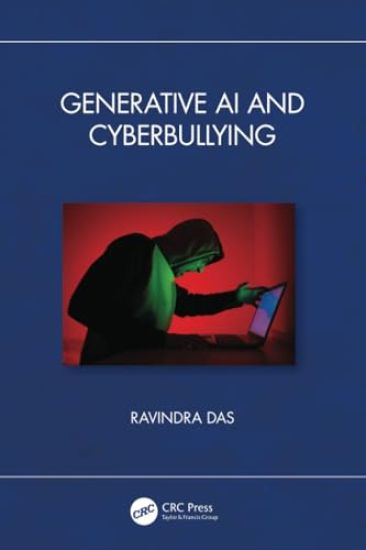
Ever since the COVID-19 pandemic occurred in 2020, the world has transformed itself greatly. For example, not only is the near-99% remote workforce now a reality, but businesses today are taking incident response and disaster recovery much more seriously these days as well. But another area that has blossomed in the last couple of years has been that of Generative AI. It is actually a subfield of artificial intelligence, which has been around since the 1950s.But Gen AI (as it is also called) has been fueled by the technology of ChatGPT, which has been developed and created by OpenAI. Given the GPT4 algorithms Gen AI is powered by, an end user can merely type in, or even speak into the platform a query, and an output that is specific to that query will be automatically generated. The answer (or "output") can be given as a text, video, image, or even an audio file.The scalability and diversity of Gen AI has allowed it to be used in a myriad of industries and applications. But although it has been primarily designed to serve the greater good, it can also be used for very nefarious purposes, such as online harassment and Cyberbullying.In this particular book, we actually take the good side of Gen AI and provide an overview as to how it can be used to help combat Cyberbullying. This book is broken down into the following topics: What Cyberbullying is all about How Gen AI can be used to combat Cyberbullying An overview into Gen AI Advanced topics into Gen AI Conclusions
Generative AI and Cyberbullying

Generative AI and Cyberbullying

Ravindra Das

TAYLOR FRANCIS LTD
2024
nidottu
Ever since the COVID-19 pandemic occurred in 2020, the world has transformed itself greatly. For example, not only is the near-99% remote workforce now a reality, but businesses today are taking incident response and disaster recovery much more seriously these days as well. But another area that has blossomed in the last couple of years has been that of Generative AI. It is actually a subfield of artificial intelligence, which has been around since the 1950s.But Gen AI (as it is also called) has been fueled by the technology of ChatGPT, which has been developed and created by OpenAI. Given the GPT4 algorithms Gen AI is powered by, an end user can merely type in, or even speak into the platform a query, and an output that is specific to that query will be automatically generated. The answer (or "output") can be given as a text, video, image, or even an audio file.The scalability and diversity of Gen AI has allowed it to be used in a myriad of industries and applications. But although it has been primarily designed to serve the greater good, it can also be used for very nefarious purposes, such as online harassment and Cyberbullying.In this particular book, we actually take the good side of Gen AI and provide an overview as to how it can be used to help combat Cyberbullying. This book is broken down into the following topics: What Cyberbullying is all about How Gen AI can be used to combat Cyberbullying An overview into Gen AI Advanced topics into Gen AI Conclusions
Generative AI and Digital Forensics

Generative AI and Digital Forensics

Ravindra Das

TAYLOR FRANCIS LTD
2024
sidottu
In today’s world, cybersecurity attacks and security breaches are becoming the norm. Unfortunately, we are not immune to it, and any individual and entity is at dire risk. The best and only thing that we can do is to mitigate the risks as much as much as possible so that they do not happen at all. But even when a security breach does indeed happen, the immediate reaction is to contain it so that it does not penetrate further into the information technology/network infrastructure. From there, mission-critical processes need to be restored, until the business can resume a normal state of operations, like it was before the security breach.But another key step here is to investigate how and why the security breach happened in the first place. The best way to do this is through what is known as “digital forensics”. This is where specially trained digital forensics investigators collect and comb through every piece of evidence to determine this. Eventually, the goal is then to use this evidence in a court of law so the cyberattacker can be made to answer for their crime and eventually be brought to justice.However, the area of digital forensics is a large one, and many topics around it can be covered. Also, generative AI is being used to not only help in the analysis of the evidence but also to help automate the digital forensics software packages that are available today. Therefore, in this book, the following is covered:Examples of security breaches and overview of digital forensics.How digital forensics can be used to investigate the loss or theft of data.An introduction to the SQL Server Database.A review of the SQL Injection Attack.How generative AI can be used in digital forensics.
The Zero Trust Framework and Privileged Access Management (PAM)
This book is about the Zero Trust Framework. Essentially, this is a methodology where the IT/Network Infrastructure of a business is segmented into smaller islands, each having its own lines of defense. This is primarily achieved through the use of Multifactor Authentication (MFA), where at least three more authentication layers are used, preferably being different from one another.Another key aspect of the Zero Trust Framework is known as Privileged Access Management (PAM). This is an area of Cybersecurity where the protection of superuser accounts, rights, and privileges must be protected at all costs from Cyberattackers. In this regard, this is where the Zero Trust Framework and PAM intertwine, especially in a Cloud-based platform, such as Microsoft Azure.However, as it has been reviewed in one of our previous books, the use of passwords is now becoming a nemesis, not only for individuals but for businesses as well. It is hoped that by combining the Zero Trust Framework with PAM, password use can be eradicated altogether, thus giving rise to a passwordless society.
Generative AI and Digital Forensics

Generative AI and Digital Forensics

Ravindra Das

TAYLOR FRANCIS LTD
2024
nidottu
In today’s world, cybersecurity attacks and security breaches are becoming the norm. Unfortunately, we are not immune to it, and any individual and entity is at dire risk. The best and only thing that we can do is to mitigate the risks as much as much as possible so that they do not happen at all. But even when a security breach does indeed happen, the immediate reaction is to contain it so that it does not penetrate further into the information technology/network infrastructure. From there, mission-critical processes need to be restored, until the business can resume a normal state of operations, like it was before the security breach.But another key step here is to investigate how and why the security breach happened in the first place. The best way to do this is through what is known as “digital forensics”. This is where specially trained digital forensics investigators collect and comb through every piece of evidence to determine this. Eventually, the goal is then to use this evidence in a court of law so the cyberattacker can be made to answer for their crime and eventually be brought to justice.However, the area of digital forensics is a large one, and many topics around it can be covered. Also, generative AI is being used to not only help in the analysis of the evidence but also to help automate the digital forensics software packages that are available today. Therefore, in this book, the following is covered:Examples of security breaches and overview of digital forensics.How digital forensics can be used to investigate the loss or theft of data.An introduction to the SQL Server Database.A review of the SQL Injection Attack.How generative AI can be used in digital forensics.
The Zero Trust Framework and Privileged Access Management (PAM)
This book is about the Zero Trust Framework. Essentially, this is a methodology where the IT/Network Infrastructure of a business is segmented into smaller islands, each having its own lines of defense. This is primarily achieved through the use of Multifactor Authentication (MFA), where at least three more authentication layers are used, preferably being different from one another.Another key aspect of the Zero Trust Framework is known as Privileged Access Management (PAM). This is an area of Cybersecurity where the protection of superuser accounts, rights, and privileges must be protected at all costs from Cyberattackers. In this regard, this is where the Zero Trust Framework and PAM intertwine, especially in a Cloud-based platform, such as Microsoft Azure.However, as it has been reviewed in one of our previous books, the use of passwords is now becoming a nemesis, not only for individuals but for businesses as well. It is hoped that by combining the Zero Trust Framework with PAM, password use can be eradicated altogether, thus giving rise to a passwordless society.
A Reference Manual for Data Privacy Laws and Cyber Frameworks
As the world is becoming more digital and entwined together, the cybersecurity threat landscape has no doubt become a daunting one. For example, typical threat variants of the past, especially those of phishing, have now become much more sophisticated and covert in nature. A lot of this has been brought on by the proliferation of ransomware, which exploded during the COVID-19 pandemic. Now, there is another concern that is looming on the horizon: data privacy. Now, more than ever, consumers on a global basis want to know exactly what is happening to their personal identifiable information (PII) datasets. Examples of what they want to know about include the following:What kinds and types of information and data are being collected about themHow those PII datasets are being stored, processed, and transacted withHow their PII datasets are being used by third-party suppliersIn response to these concerns and fears, as well as the cyber risks posed by these datasets, many nations around the world have set up rather extensive and very detailed data privacy laws. In their respective tenets and provisions, these pieces of legislation not only specify why and how businesses need to comply with them, but also outline the rights that are afforded to each and every consumer. In this book, we detail the tenets and provisions of three key data privacy laws:The GDPRThe CCPAThe CMMCWe also provide a general framework at the end on how a business can comply with these various data privacy laws.The book begins with an in-depth overview of the importance of data and datasets, and how they are so relevant to the data privacy laws just mentioned.
A Reference Manual for Data Privacy Laws and Cyber Frameworks
As the world is becoming more digital and entwined together, the cybersecurity threat landscape has no doubt become a daunting one. For example, typical threat variants of the past, especially those of phishing, have now become much more sophisticated and covert in nature. A lot of this has been brought on by the proliferation of ransomware, which exploded during the COVID-19 pandemic. Now, there is another concern that is looming on the horizon: data privacy. Now, more than ever, consumers on a global basis want to know exactly what is happening to their personal identifiable information (PII) datasets. Examples of what they want to know about include the following:What kinds and types of information and data are being collected about themHow those PII datasets are being stored, processed, and transacted withHow their PII datasets are being used by third-party suppliersIn response to these concerns and fears, as well as the cyber risks posed by these datasets, many nations around the world have set up rather extensive and very detailed data privacy laws. In their respective tenets and provisions, these pieces of legislation not only specify why and how businesses need to comply with them, but also outline the rights that are afforded to each and every consumer. In this book, we detail the tenets and provisions of three key data privacy laws:The GDPRThe CCPAThe CMMCWe also provide a general framework at the end on how a business can comply with these various data privacy laws.The book begins with an in-depth overview of the importance of data and datasets, and how they are so relevant to the data privacy laws just mentioned.
Generative AI

Generative AI

Ravindra Das

TAYLOR FRANCIS LTD
2024
sidottu
The cybersecurity landscape is changing, for sure. For example, one of the oldest threat variants is that of phishing. It evolved in the early 1990s, but even today it is still being used as a primary threat variant and has now become much more sophisticated, covert, and stealthy in nature. For example, it can be used to launch ransomware, social engineering, and extortion attacks.The advent of Generative AI is making this much worse. For example, a cyberattacker can now use something like ChatGPT to craft the content for phishing emails that are so convincing that it is almost impossible to tell the difference between what is real and what is fake. This is also clearly evident in the use of deepfakes, where fake images of real people are replicated to create videos to lure unsuspecting victims to a fake website.But Generative AI can also be used for the good to combat Phishing Attacks. This is the topic of this book. In this, we cover the following:A review of phishingA review of AI, Neural Networks, and Machine LearningA review of Natural Language Processing, Generative AI, and the Digital Person A proposed solution as to how Generative AI can combat phishing attacks as they relate to Privileged Access accounts
Generative AI

Generative AI

Ravindra Das

TAYLOR FRANCIS LTD
2024
nidottu
The cybersecurity landscape is changing, for sure. For example, one of the oldest threat variants is that of phishing. It evolved in the early 1990s, but even today it is still being used as a primary threat variant and has now become much more sophisticated, covert, and stealthy in nature. For example, it can be used to launch ransomware, social engineering, and extortion attacks.The advent of Generative AI is making this much worse. For example, a cyberattacker can now use something like ChatGPT to craft the content for phishing emails that are so convincing that it is almost impossible to tell the difference between what is real and what is fake. This is also clearly evident in the use of deepfakes, where fake images of real people are replicated to create videos to lure unsuspecting victims to a fake website.But Generative AI can also be used for the good to combat Phishing Attacks. This is the topic of this book. In this, we cover the following:A review of phishingA review of AI, Neural Networks, and Machine LearningA review of Natural Language Processing, Generative AI, and the Digital Person A proposed solution as to how Generative AI can combat phishing attacks as they relate to Privileged Access accounts
The Science of Biometrics

The Science of Biometrics

Ravindra Das

Routledge
2018
sidottu
The Science of Biometrics: Security Technology for Identity Verification covers the technical aspects of iris and facial recognition, focusing primarily on the mathematical and statistical algorithms that run the verification and identification processes in these two modalities.Each chapter begins with a review of the technologies, examining how they work, their advantages and disadvantages, as well as some of their established market applications. Numerous approaches are examined. Facial recognition is much more of an emerging biometric technology than iris recognition; therefore, there are more algorithms that are currently being developed in that area. After this review, numerous applications of these two modalities are covered as well, some of which have just been commercially deployed while others are under research and development. Chapters 3 and 4 conclude with case studies to provide further application review.This book is directed to security managers, electronic security system designers, consultants, and system integrators, as well as electronic security system manufacturers working in access control and biometrics.
The Zero Trust Framework

The Zero Trust Framework

Ravindra Das

APRESS
2023
sidottu
Learn what the Zero Trust Framework is and how it can be used to eliminate the need for any kind of password. This book discusses how each zone in this framework has its own layer of security, and it is highly recommended that users incorporate at least three or more layers of authentication mechanisms, which will create the environment for multifactor authentication (MFA). You will learn how biometric technologies can be used (iris, facial, fingerprint recognition). Another important concept covered is privileged access management. Once an end user has their respective templates created, they will be saved and used for subsequent authentication attempts on an automatic basis. Although the biometric templates are well-fortified, they do need an extra layer of protection, and this is where the concepts of biocryptography come into play. You will learn about further encryption of the iris, facial, and fingerprint recognition templates. The book also delves into quantum mechanics and shows you how to use hashing algorithms to make sure that biometric templates have maintained their integrity from the point of authorization to the point of authentication. But these, too, are prone to cyberattacks. The use of quantum mechanics and photon particles is discussed and you will know how they can provide better levels of integrity. You will learn about: An examination of the latest cryptography algorithms.Fundamentals of Iris Recognition and its algorithms (Gabor Wavelets).Fundamentals of Facial Recognition and its algorithms (Hidden Markov Models).Fundamentals of Fingerprint Recognition and its algorithms (Hexademcial Algorithms).Biocryptography from a one to many approach.Biocryptography from a hosted approach.How Biometrics can play the role of MFA in the ZTF.Details about the point of authentication to the point of authorization for shared resources. Who This Book Is For CISOs and IT security managers who are looking at getting away from the traditional perimeter defense line of thinking
Adopting Biometric Technology

Adopting Biometric Technology

Ravindra Das

Productivity Press
2016
sidottu
Many types of security technologies are currently in use, with biometrics being one of the latest and most cutting-edge forms that has been produced for mass application. Biometrics, while intriguing, is often broached with hesitation and poor understanding. Adopting Biometric Technology: Challenges and Solutions advocates increased implementation of biometric technology areas of the world where it has been least accepted, particularly in the United States.This book looks at several specific applications of biometric technology, challenging issues that have obstructed the use of biometrics in security and offering realistic solutions for increasing its worldwide utilization. It is divided into three sections, with the first discussing societal barriers against the adoption of biometric technology in security. The second section presents case studies of specific applications, such as e-passports and e-voting, that have already been implemented and could be expanded into regions where usage is low. The third section lays out a case for the general practicality and value that biometrics offers to relevant business sectors, including the benefits of implementing the currently controversial technology in place of the conventional forms of verification.While biometric technology has been poorly accepted and adopted in the United States as well as other developed nations, it is already a popular tool in developing nations in Asia, Africa, and Eastern Europe. Adopting Biometric Technology examines the societal resistance hindering the broader usage of biometrics and provides practical solutions for overcoming those barriers while showing how its increased application would be overall advantageous.