Kirjojen hintavertailu. Mukana 11 627 670 kirjaa ja 12 kauppaa.

Kirjahaku

Etsi kirjoja tekijän nimen, kirjan nimen tai ISBN:n perusteella.

16 kirjaa tekijältä Ray Gonzalez

Muy Macho

Muy Macho

Ray Gonzalez

Anchor Books
1996
pokkari
From the Homeboy to the Latin Lover, America cherishes a host of images about Latino men, yet all are based on the belief in macho men, virile and brash, full of violence and testosterone. With the gender correctness of the 90s challenging all men to embrace a new masculinity, how do Latino men of today--grounded in the "macho" tradition -- define this new identity? From today's best-known, as well as emerging, Latino writers, poet and editor Ray Gonzalez has gathered personal essays written especially for Muy Macho on machismo and masculinity. The result is a rich and exciting collection of men talking about themselves, about other men, about their wives and lovers, about their fathers and their sons. In "Me Macho, You Jane," Dagoberto Gilb contrasts how he perceives himself with how others, particularly women, interpret his behavior, while in "Whores," Luis Alberto Urrea chronicles a rite of passage for many Latino men. Most insightful and moving are essays like "The Puerto Rican Dummy and the Merciful Son" by poet Martin Espada, which portray the fragile love between fathers and sons and the process by which men learn from and teach each other how to be men. Muy Macho contains photographs of all contributors, while Gonzalez illuminates the cultural context of Latino masculinity in his introduction. Emotionally honest and powerfully written, the voices of Muy Macho break the "cult of silence" between Latino men which prevents our culture from understanding the true nature of machismo.
Touching the Fire

Touching the Fire

Ray Gonzalez

Random House USA Inc
1998
pokkari
As we approach the new century, Latino poetry is in the midst of its most vital and productive period. Poetry by Mexican Americans, Puerto Ricans, and Cuban Americans has changed the course of contemporary American writing forever.And it has done this by emphasizing poetry as the sound of everyday life--showing readers and other writers that the most effective manner of preserving the traditions of a culture comes from the colorful language of daily experience. Touching the Fire recognizes the excitement of this movement by focusing on a few of its major poets, presenting a substantial portion of each poet's work.Some of these poets--Martin Espada, Lorna Dee Cervantes, and Victor Hernandez Vruz, for example--have been writing and publishing a long time.Some are only starting their careers.But they were all chosen because they best represent the strongest elements of modern Latino poetry--a confidence of language in its many forms, a gift for shattering emotional honesty, and an ear for the rhythms of a vibrant culture. Featuring the poetry of: Sandra M. CastilloLorna Dee CervantesJudith Ortiz CoferVictor Hernandez CruzSilvia CurbeloJuan DelgadoMartin EspadaDiana GarciaRichard GarciaRay GonzalezMaurice Kilwein GuevaraJuan Felipe HerreraDionisio D. MartinezValerie MartinezGloria Vando"
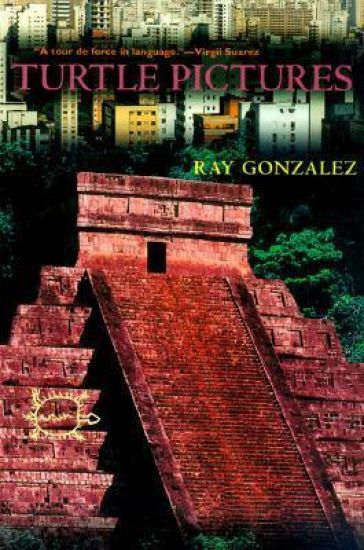
Turtle Pictures

Turtle Pictures

Ray Gonzalez

University of Arizona Press
2000
nidottu
The rhythm of vision, the rhythm of dream, the rhythm of voices saturating the hot southwestern landscape. These are the rhythms of Ray Gonzalez, the haunting incantations of Turtle Pictures. Gonzalez has forged a new Chicano manifesto, a cultural memoir that traces both his personal journey and the communal journey that Mexican Americans have traveled throughout this century, across this land. He interweaves lyrical poetry, prose poems, short fiction, and nonfiction commentary into a lush cacophony that traces the evolution of today's politically charged Chicano voices from the deafening silence of their ancestors. Adopting the turtle as a metaphor for the Native American origins of border culture, Gonzalez frames this multitextured individual vision until it becomes a universal portrait of American life: a slow, ancient creature morphing into one of voracious rapidity. In wild and challenging surrealistic images, he hammers out a political statement from language that takes on a special urgency. Walking a fine line between lyricism and polemic, and succeeding where others have stumbled, he calls on Mexican Americans to return to their roots in order to avoid being swept up in American material culture. Turtle Pictures is a complex body of work by a poet totally in tune with the spirit and nuances of language, imbued with a deep sense of craft and literary tradition. It invites readers to revel in its richness and vitality, to be caught up in its chantlike spirit, to luxuriate in its hauntingly beautiful passages. It is a work to devour, to savor, to return to, for it speaks with all the rhythms of the soul.
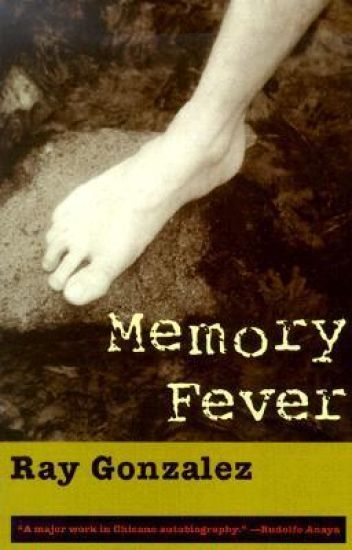
Memory Fever

Memory Fever

Ray Gonzalez

University of Arizona Press
1999
nidottu
For poet Ray Gonzalez, growing up in El Paso during the 1960s was a time of loneliness and vulnerability. He encountered discrimination in high school not only for being Latino but also for being a non-athlete in a school where sports were important. Like many young people, he found diversion in music; unlike most, he found solace in the desert. In these vignettes, Gonzalez shares memories of boyhood that tell how he discovered the natural world and his creative spirit. Through 29 storylike essays, he takes readers into the heart of the desert and the soul of a developing poet. Gonzalez introduces us to the people who shaped his life. We learn of his father's difficulties with running a pool hall and of his grandmother's steadfast religious faith. We meet sinister Texas Rangers, hallucinatory poets, illegal aliens, and racist high school jocks. His vivid recollections embrace lizard hunts and rattlesnake dreams, rock music and menudo making all in stories that convey the pains and joys of growing up on the border. As Gonzalez leads us through his desert of hope and vision, we come to recognize the humor and sadness that permeate this special place.
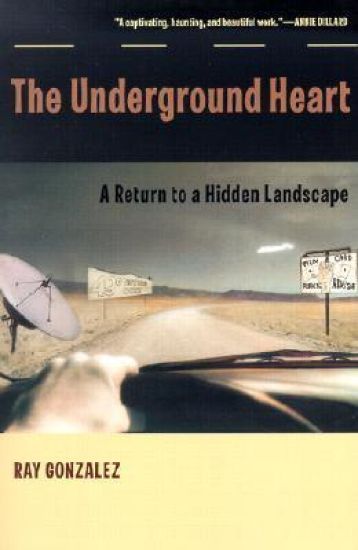
The Underground Heart

The Underground Heart

Ray Gonzalez

University of Arizona Press
2002
nidottu
Returning home after a long absence is not always easy. For Ray Gonzalez, it is more than a visit; it is a journey to the underground heart. He has lived in other parts of the country for more than twenty years, but this award-winning poet now returns to the desert Southwest a native son playing tourist in order to unearth the hidden landscapes of family and race. As Gonzalez drives the highways of New Mexico and west Texas, he shows us a border culture rejuvenated by tourist and trade dollars, one that will surprise readers for whom the border means only illegal immigration, NAFTA, and the drug trade. Played out against a soundtrack of the Allman Brothers and The Doors, The Underground Heart takes readers on a trip through a seemingly barren landscape that teems with life and stories. Gonzalez witnesses Minnesotans experiencing culture shock while attending a college football game in El Paso; he finds a proliferation of Pancho Villa death masks housed at different museums; he revisits Carlsbad Caverns, discovering unsuspected beauty beneath the desert's desolation; and he takes us shopping at El Mercado where tourists can buy everything from black velvet paintings of Elvis (or Jesus, or JFK) to Mexican flag underwear. From "nuclear tourism" in New Mexico to "heritage tourism" in the restored missions of San Antonio, Gonzalez goes behind the slogans of The Land of Enchantment and The Lone Star State to uncover a totally different Southwest. Here are tourist centers that give a distorted view of southwestern life to outsiders, who leave their dollars in museum gift shops and go home weighed down with pounds of Indian jewelry around their necks. Here border history is the story of one culture overlaid on another, re-forming itself into a whole new civilization on the banks of the Rio Grande. The Underground Heart is a book brimming with subtle ironies and insights both quiet and complex one which recognizes that sometimes one must go away and grow older to finally recognize home as a life-giving, spiritually sustaining place. As Gonzalez rediscovers the land of his past, he comes to understand the hyper, bilingual atmosphere of its future. And in the Southwest he describes, readers may catch a glimpse of their own hidden landscapes of home.
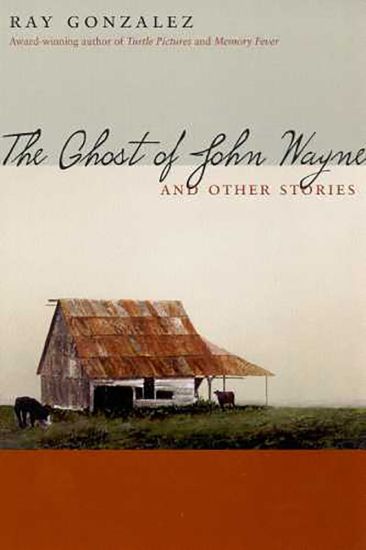
The Ghost of John Wayne

The Ghost of John Wayne

Ray Gonzalez

University of Arizona Press
2001
nidottu
The vast Texas borderland is a place divided, a land of legends and lies, sanctification and sinfulness, history and amnesia, haunted by the ghosts of the oppressed and the forgotten, who still stir beneath the parched fields and shimmering blacktops. It is a realm filled with scorpion eaters and mescal drinkers, cowboys and Indians, Anglos and Chicanos, spirit horses and beat-up pickups, brujos and putas, aching passion and seething rage, apparitions of the Virgin and bodies in the Rio Grande. In his first collection of short fiction, award-winning poet, editor, and anthologist Ray Gonzalez powerfully evokes both the mystery and the reality of the El Paso border country where he came to manhood. Here, in a riverbed filled with junked cars and old bones, a young boy is given a dark vision of a fiery future. Under the stones of the Alamo, amid the gift shops and tour buses, the wraiths of fallen soldiers cry out to be remembered. By an ancient burial site at the bottom of a hidden canyon, two lovers come face to face with their own dreams and fears. In these stories, Ray Gonzalez is a literary alchemist, blending contemporary culture with ancient tradition to give a new voice to the peoples of the border.
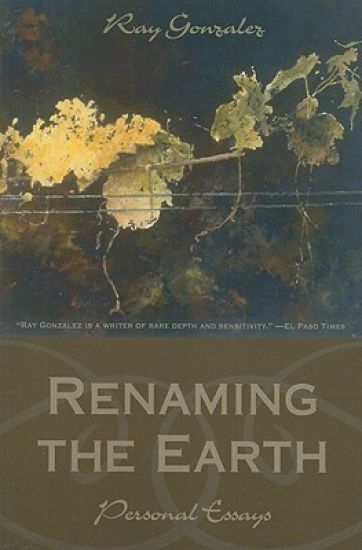
Renaming the Earth

Renaming the Earth

Ray Gonzalez

University of Arizona Press
2008
nidottu
In his distinctive and spirited way, Ray Gonzalez, the well-known essayist, poet, fiction writer, and anthologist, reflects on the American Southwest?where he was raised and to which he still feels attached (even though he has lived much of his life elsewhere). It is a place that tugs at him, from its arid desert landscapes to its polyglot citiespart Mexican, part Anglo, part something in-between, lways in the process of redefining themselves. Nowhere does the process of redefinition hit Gonzalez quite as hard as in his native city of El Paso, Texas. There he finds the 'segregated little town of my childhood transformed into , metropolis of fast Latino zip codes ...a world where the cell phone, the quick beer, the rented apartment, and the low-paying job say you can be young and happy on the border.? Readers will wonder, along with the author, whether life along the ?new border? is worth the extermination of the old boundaries.? But there is another side of the Southwest for this 'son of the desert? the world of dusty canyons, ponderosa pines, ocotillo, and mesquite. Here, he writes, there is a shadow, and it is called ancient home'structures erased from their seed to grow elsewhere, vultured strings searching for a frame that stands atop history and renames the ground.? Rooted in the desert sand and in the banks of the Rio Grande, the muddy river that forms the border between nations, these essays are by turns lyrical, mournful, warm to the ways of the land, and lukewarm to the ways of man.
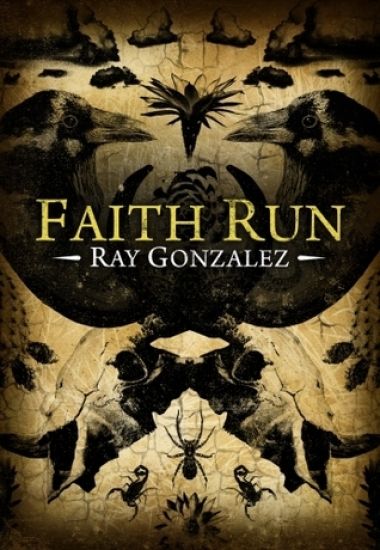
Faith Run

Faith Run

Ray Gonzalez

University of Arizona Press
2009
nidottu
Faith Run offers the most recent work by the well-known poet Ray Gonzalez. The poetry here is, t onceperhaps his most personal and most universal. At the heart of these lyrical, sometimes ethereal, poems is a deep sense of the mystery and even the divinity of our human lives. Although Gonzalez invokes the names of many poets who have come before him, including Walt Whitman, Pablo Neruda, Robert Frost, Charles Wright, Allen Ginsberg, and Federico Garcia Lorca, he writes in his own singular voice, one sculpted by the scorched and windblown landscapes of the American Southwest, by the complications of life in a borderland, by the voices of ancestors. With the confident touch of a master craftsman, he creates a new world out of the world we think we know. In his poems, the personal suddenly becomes the cosmic, the mundane unexpectedly becomes the sublime. For Gonzalez, it seems, we humans can transcend the ordinary?just as these poems transcend genre and create a poetic realm of their own but we never actually leave behind our rooted, earthbound lives. Although our landscape may be invisible to us, we never escape its powerful magnetism. Nor do we ever abandon our ancestors. No matter how fast or far we run, we can never outrun them. Like gravity, their influence is inexorable. These poems enchant with their language, which often leaps unexpectedly from worldly to otherworldly in the same stanza, but they cling and linger in our memories?not unlike the voices of friends and relatives.
Soul Over Lightning

Soul Over Lightning

Ray Gonzalez

University of Arizona Press
2014
nidottu
In this collection, which the poet calls his ""rebirth in the search for home,"" Ray Gonzalez expresses the gentle, humble intelligence that has made him a leading voice in Latino letters. He shares with the reader the voice of a soul searcher who has passed through middle age and still vibrates with passion for the world.Gonzalez shows his profound respect for other people, species, places, elements, and histories. Illusions to religious imagery knock against those of the natural world—feathers and rocks—creating a complex tableau of objects and feelings. Employing the image-driven approach for which he is renowned, in this collection Gonzalez is taut, using poetics that are fully formed. Even as the poems weave together highly intellectual, refined subject matter, the language remains accessible.The book is divided into three parts. The first section offers Gonzalez's most personal work yet, meditating on aging, forgetting, and the reader. The next section is more outward looking, as Gonzalez takes on great artists from both Old World and New World traditions. Finally, in the last section, Gonzalez opens himself up, reflecting in very personal ways on the everyday, such as a return from a hospital stay or a visit to the doctor.Soul Over Lightning weaves together elements of Native American and Chicano/a narratives, inspired by the landscape of the desert Southwest and the experience of living on the border. It offers a new supernarrative that lifts spirits and yet remains grounded in a timeless search for home and truth.
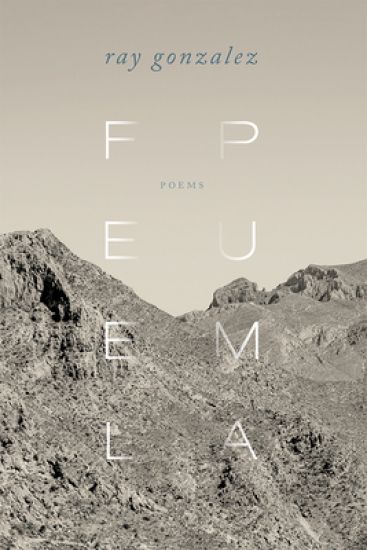
Feel Puma

Feel Puma

Ray Gonzalez

University of New Mexico Press
2020
nidottu
In Feel Puma, Ray Gonzalez traces his love of reading, philosophy, and learning with poems constantly in conversation - with each other, with texts by other writers and the writers themselves, with world history and his personal history and people he has encountered. Woven over three sections, this unique collection is a complex and gorgeous dive into creativity and the inner life of a poet at the height of his craft.
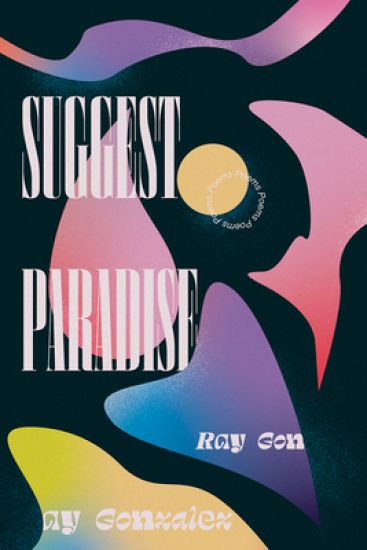
Suggest Paradise

Suggest Paradise

Ray Gonzalez

UNIVERSITY OF NEW MEXICO PRESS
2023
nidottu
Born and raised in El Paso, Texas, Ray Gonzalez returns to Texas and nearby New Mexico to meditate on love, literature, loss, and la línea in Suggest Paradise. The collection offers readers some of the richest and most complex poems that embody the Southwest and the borderlands, including a poignant look at the massacre at the El Paso Walmart. A unique voice of the Southwest, Gonzalez brings his intellect and his well-honed craft to this work and offers readers a nuanced and powerful perspective on poetry and the Border.
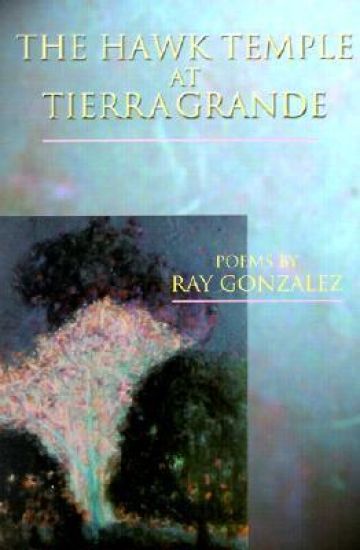
The Hawk Temple at Tierra Grande

The Hawk Temple at Tierra Grande

Ray Gonzalez

BOA Editions, Limited
2002
pokkari
Ray Gonzalez's most recent poetry collection, Cabato Sentora (BOA 1999), is currently in its second printing. He is the author of five books of poetry, including The Heat of Arrivals (BOA 1996), which won the 1997 Josephine Miles Book Award for Excellence in Literature. Among his awards are a 1998 Fellowship in Poetry from the Illinois Arts Council, a 1993 Before Columbus Foundation American Book Award for Excellence in Editing, and a 1998 Colorado Governor's Award for Excellence in the Arts.
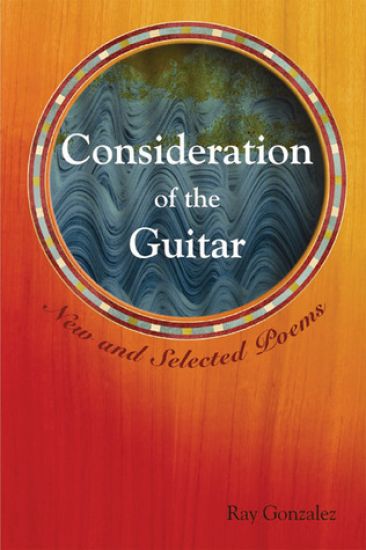
Consideration of the Guitar

Consideration of the Guitar

Ray Gonzalez

BOA Editions, Limited
2005
pokkari
Ray Gonzalez is a leading Latino writer. His reputation as a reviewer, editor, and anthologist, bolster the audience for his writing across genres (poetry, non-fiction, fiction)to give him high visibility in the literary world. His work combines Latino issues with a strong Southwestern flavor.
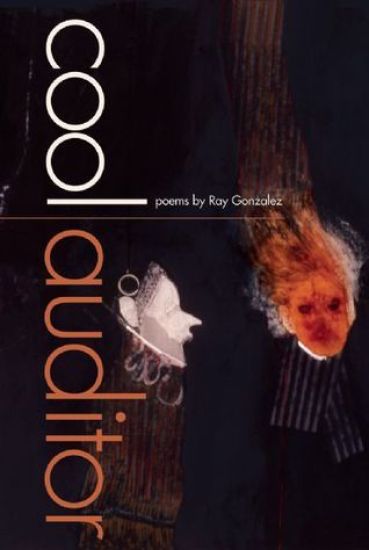
Cool Auditor

Cool Auditor

Ray Gonzalez

BOA Editions, Limited
2009
pokkari
Ray Gonzalez is a well-established author with nine previously published poetry collections. He has also served as poetry editor at Bloomsbury Review for almost 30 years. Gonzalez is particularly adept at a South American influenced surrealism that belies his Latino background.
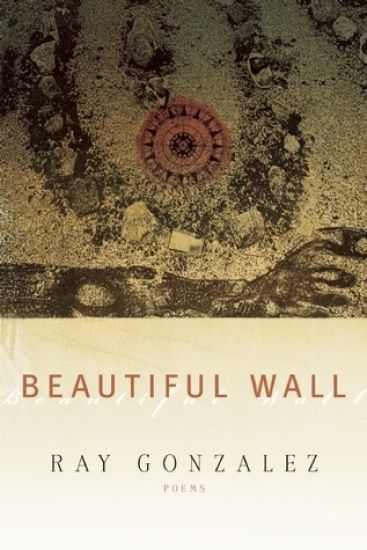
Beautiful Wall

Beautiful Wall

Ray Gonzalez

BOA Editions, Limited
2015
pokkari
Beautiful Wall takes us on a profound journey through the deserts of the Southwest where the ever-changing natural landscape and an aggressive border culture rewrite intolerance and ethnocentric thought into human history. Inextricably linked to his Mexican ancestry and American upbringing, Ray Gonzalez's new collection mounts the wall between the current realities of violence and politics, and a beautiful, never-to-be-forgotten past. Ray Gonzalez is the author of fifteen books of poetry. The recipient of numerous awards, including a 2002 Lifetime Achievement Award from the Southwest Border Regional Library Association, he is a professor at the University of Minnesota in Minneapolis, Minnesota.