Kirjojen hintavertailu. Mukana 11 627 067 kirjaa ja 12 kauppaa.

Kirjahaku

Etsi kirjoja tekijän nimen, kirjan nimen tai ISBN:n perusteella.

3 kirjaa tekijältä Ray Locker

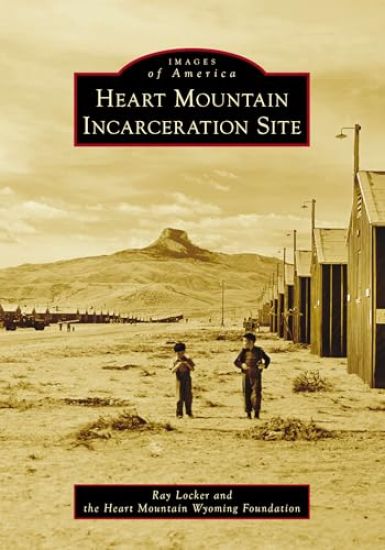
Heart Mountain Incarceration Site

Heart Mountain Incarceration Site

Ray Locker

Arcadia Publishing (SC)
2025
nidottu
More than 14,000 people of Japanese descent--two-thirds of them US citizens--were exiled from August 1942 to November 1945 to the Heart Mountain Incarceration Site on the high desert prairie of Wyoming's Big Horn Basin.The site was the temporary home for Japanese Americans forced from their homes in California, Oregon, and Washington. Believed to be saboteurs or spies or both, the prisoners were viewed with fear, hatred, and sometimes acceptance by their neighbors in nearby Cody and Powell. During their time at Heart Mountain, the incarcerated people lived like the residents of any American city. Under the eye of the federal War Relocation Authority, they taught school, worked at the fire and police departments, ran stores and barbershops, and spent much of their time wondering what had happened to their former lives. Today, the site is part of the Heart Mountain Interpretive Center and Mineta-Simpson Institute.Ray Locker is the director of communications and strategy for the Heart Mountain Wyoming Foundation. The foundation's staff consists of experts on Japanese American history, the intersections between Wyoming's Indigenous community and World War II's incarcerated people, and museum professionals dedicated to telling the story of this sad chapter of American history. They used donations from those incarcerated and their families, collections in the foundation archives, the National Archives, the Library of Congress, and museums from around the country.
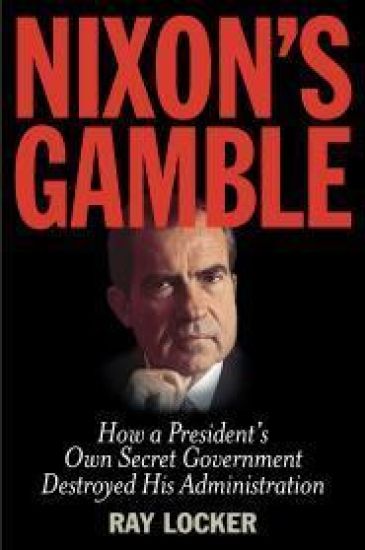
Nixon's Gamble

Nixon's Gamble

Ray Locker

The Lyons Press
2015
sidottu
After being sworn in as president, Richard Nixon told the assembled crowd that “government will listen. ... Those who have been left out, we will try to bring in.” But that same day, he obliterated those pledges of greater citizen control of government by signing National Security Decision Memorandum 2, a document that made sweeping changes to the national security power structure. Nixon’s signature erased the influence that the departments of State and Defense, as well as the CIA, had over Vietnam and the course of the Cold War. The new structure put Nixon at the center, surrounded by loyal aides and a new national security adviser, Henry Kissinger, who coordinated policy through the National Security Council under Nixon’s command. Using years of research and revelations from newly released documents, USA Today reporter Ray Locker upends much of the conventional wisdom about the Nixon administration and its impact and shows how the creation of this secret, unprecedented, extra-constitutional government undermined U.S. policy and values. In doing so, Nixon sowed the seeds of his own destruction by creating a climate of secrecy, paranoia, and reprisal that still affects Washington today.
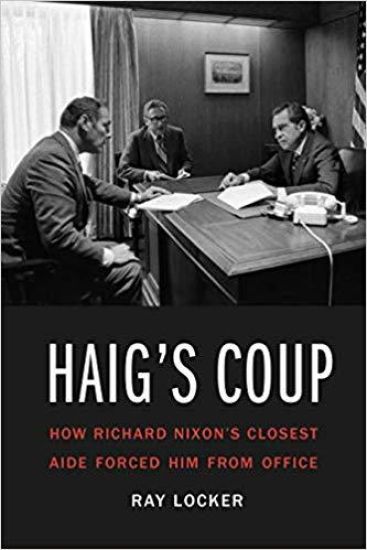
Haig's Coup

Haig's Coup

Ray Locker

Potomac Books Inc
2019
sidottu
When General Alexander M. Haig Jr. returned to the White House on May 3, 1973, he found the Nixon administration in worse shape than he had imagined. President Richard Nixon, reelected in an overwhelming landslide just six months earlier, had accepted the resignations of his top aides-the chief of staff H. R. Haldeman and the domestic policy chief John Ehrlichman-just three days earlier. Haldeman and Ehrlichman had enforced the president’s will and protected him from his rivals and his worst instincts for four years. Without them, Nixon stood alone, backed by a staff that lacked gravitas and confidence as the Watergate scandal snowballed. Nixon needed a savior, someone who would lift his fortunes while keeping his White House from blowing apart. He hoped that savior would be his deputy national security adviser, Alexander Haig, whom he appointed chief of staff. But Haig’s goal was not to keep Nixon in office-it was to remove him. In Haig’s Coup, Ray Locker uses recently declassified documents to tell the true story of how Haig orchestrated Nixon’s demise, resignation, and subsequent pardon. A story of intrigues, cover-ups, and treachery, this incisive history shows how Haig engineered the “soft coup” that ended our long national nightmare and brought Watergate to an end.