
Kirjahaku
Etsi kirjoja tekijän nimen, kirjan nimen tai ISBN:n perusteella.
12 kirjaa tekijältä Ray Robertson
"God and whiskey have got me where I am. Too little of the one, too much of the other." - David King, Chatham, Canada, 1895. Born a slave in 1847, but raised as a free man on the world-renowned, African-American Elgin Settlement near present-day Chatham, Ontario, David King is a man whose life has been defined by his violent rebellion against the very person who freed him - the Reverend William King. Far from the pulpit he was intended to fill as the Reverend King's anointed successor, David has lost his faith in God and humanity. He has also turned his back on both his past and his own people by abandoning the Elgin Settlement for nearby Chatham after a final, shattering confrontation with the Reverend King. Undoubtedly, the most unconventional man in town, David is also - thanks to his illegal after-hours tavern, Sophia's, and his highly lucrative grave robbing business - one of Chatham's richest citizens, white or black, and certainly its best read. Triggered by the news of the elderly Reverend King's death, the middle-aged David is compelled to revisit a past he thought he left behind, but which - as evidenced by his inability to embrace the happiness he so dearly earned - he clearly has not. Ranging over the early years of the pioneering Elgin Settlement, David's wild, whiskey-fueled early years in Chatham as a factory worker and apprentice grave-robber, and his day-to-day life with his ex-prostitute German lover in present-day, 1895 Chatham, David is a portal to a fascinating, if mostly unknown piece of Canadian history, as well as, the story of one man's search for wisdom, peace, and forgiveness.
Heroes tells the story of Peter Bayle - heavy drinker, philosopher, scholar, and anemic lover - as he visits a town in Kansas to write a story for Toronto Living magazine about the newfound love of middle-America for the quintessential Canadian game of hockey. During his research Bayle encounters a host of odd characters: a morphine-injecting reverend, a shunned reporter and his former crack-addict girlfriend, and a drug salesman with his sights set on a career as a cable mogul. The article never gets written, and as Bayle becomes more and more involved in the destructive behaviour of the friends and enemies he has made, his problems back home continue to build. His assignment long-since abandoned, Bayle returns to Toronto to face a future he does not want. It is a future obscured by a past he can’t let go of, but which he also can’t come to terms with.
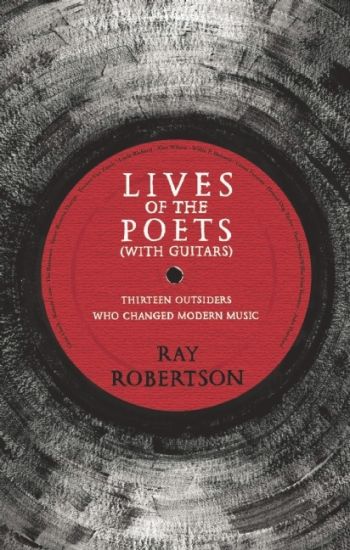
"The days of poets moping around castle steps wearing black capes is over. The poets of today are amplified." -- LEONARD COHEN Picking up where Samuel Johnson left off more than two centuries ago, Ray Robertson's Lives of the Poets (with Guitars) offers up an amplified gathering of thirteen portraits of rock & roll, blues, folk, and alt-country's most inimitable artists. Irreverent and riotous, Robertson explores the "greater or lesser heat" with which each musician shaped their genre, while offering absorbing insight into their often tumultuous lives. Includes essays on Gene Clark, Ronnie Lane, The Ramones, Sister Rosetta Tharpe, Townes Van Zandt, Little Richard, Alan Wilson, Willie P. Bennett, Gram Parsons, Hound Dog Taylor, Paul Siebel, Willis Alan Ramsey, and John Hartford.
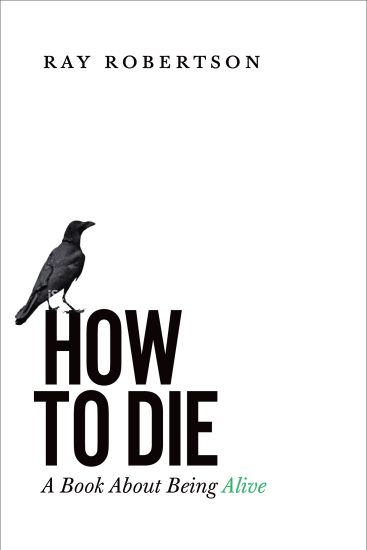
A radical revaluation of how contemporary society perceives death—and an argument for how it can make us happy. “He who would teach men to die would teach them to live,” writes Montaigne in Essais, and in How to Die: A Book about Being Alive, Ray Robertson takes up the challenge. Though contemporary society avoids the subject and often values the mere continuation of existence over its quality, Robertson argues that the active and intentional consideration of death is neither morbid nor frivolous, but instead essential to our ability to fully value life. How to Die is both an absorbing excursion through some of Western literature’s most compelling works on the subject of death as well as an anecdote-driven argument for cultivating a better understanding of death in the belief that, if we do, we’ll know more about what it means to live a meaningful life.
It’s 1979 and Tom Buzby is thirteen years old and living in the small working- class city of Chatham, Ontario. So far, so normal. Except that Tom’s dad is the local tattoo artist, his mother is a born-again former stripper who’s run off with the minister from the church where the pet store used to be, and his sister can’t wait to leave town for good. And everyone along his daily newspaper route looks at him a little differently, this boy who’s come back from the dead, who just might be the only one who understands the miraculous, heart-breaking mystery that is their lives. Set in the year that real newspaper headlines told of North America’s hard turn to the right, 1979 offers a smalltown take on the buried lives of those who almost never make the news, and one boy’s attempt to make sense of it all.
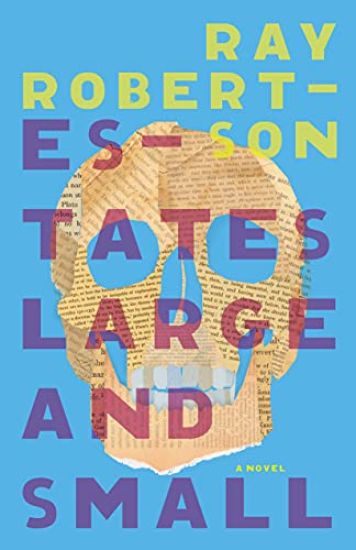
Profound, perceptive, and wryly observed, Estates Large and Small is the story of one man’s reckoning and an ardent defense of the shape books make in a life.What decades of rent increases and declining readership couldn’t do, a pandemic finally did: Phil Cooper has reluctantly closed his secondhand bookstore and moved his business online. Smoking too much pot and listening to too much Grateful Dead, he suspects that he’s overdue when it comes to understanding the bigger picture of who he is and what we’re all doing here. So he’s made another decision: to teach himself 2,500 years of Western philosophy.Thankfully, he meets Caroline, a fellow book lover who agrees to join him on his trek through the best of what’s been thought and said. But Caroline is on her own path, one that compels Phil to rethink what it means to be alive in the twenty-first century. In Estates Large and Small Ray Robertson renders one man’s reckoning with both wry humour and tender joy, reminding us of what it means to live, love, and, when the time comes, say goodbye.
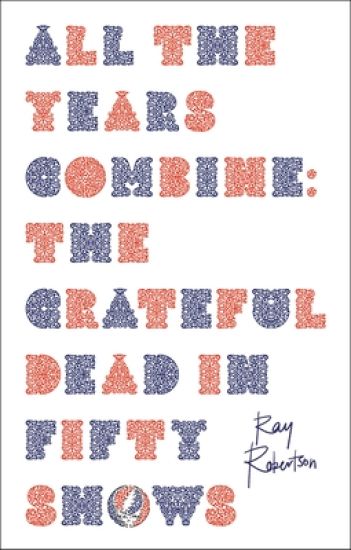
A Grateful Dead concert, Ray Robertson argues, is life. Like life, it can be alternately compelling and lackluster; familiar and foreign; occasionally sublime and sometimes insipid. Although the Grateful Dead stopped the day Jerry Garcia’s heart did, what the band left behind is the next best thing to being there in the third row, courtesy of the group’s unorthodox decision to record all of their concerts. Meaning that it’s possible to follow the band’s evolution (and devolution) through their shows, from the R&B-based garage band at the beginning, to the jazz-rock conjurers at their creative peak, to the lumbering monolith of their decline.In All the Years Combine: The Grateful Dead in Fifty Shows, Robertson listens to and writes ecstatically about ?fty of the band's most important and memorable concerts in order to better understand who the Grateful Dead were, what they became, and what they meant—and what they continue to mean.

“Robertson offers the whole picture, warts and all. In doing so, he honors the music of artists who have enriched his life—and opens the door for his readers to experience the same magic.”—Blues Blast MagazineDust: More Lives of the Poets (with Guitars) is a collection of a dozen biographical and critical portraits of some of the twentieth century’s most innovative, influential, and fascinating musicians. From rock to folk, blues to gospel, country to the unclassifiable; from the famous, to the forgotten, to the barely known, Ray Robertson combines a novelist’s eye for dramatic detail with an unapologetic fanboy’s obsession with the lives and lasting artistic achievements of twelve of his musical heroes, among them Alex Chilton, Duane Allman, Nick Drake, and Muddy Waters.
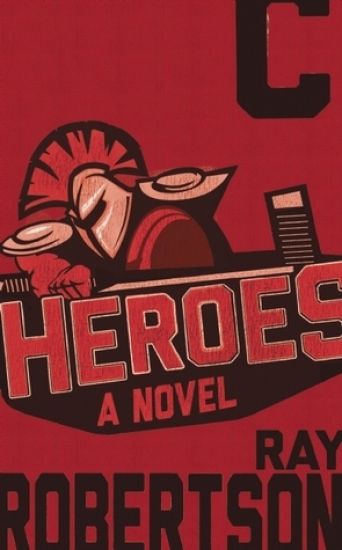
"Ray Robertson is an irrepressible voice, with brass balls and a heart of gold."-Jonathan Evison Peter Bayle-heavy drinker, philosopher, scholar, anemic lover-is in Kansas, writing a feature on middle America's newfound love for hockey. There he meets a morphine-injecting reverend, a reviled reporter, and a drug salesman; obsessed by his self-destructive new friends, Bayle abandons the project and returns home to confront a future and a girlfriend he may no longer want. Ray Robertson is the author of seven novels and two collections of award-nominated nonfiction. His novel David was a Women's National Book Association Great Group Reads Selection, 2013.
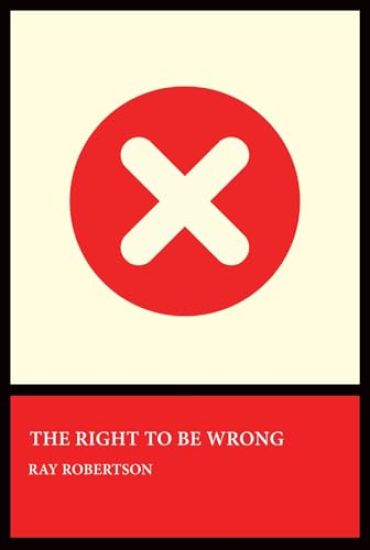
“Convictions are more dangerous foes of truth than lies,” Nietzsche declared. Religious or secular, born-again Baptist or the recently woke — fundamentalism is not unique to any particular political persuasion nor is it exclusively political. To those in narrow-minded pursuit of ideological purity, their narrative is the only narrative, and any disagreement is tantamount to treason and punishable by censure, ostracism, or cancellation. But when did moral certainty and intellectual omniscience become compulsory? How does this increasing trend toward reactionary thinking and an intransigent, us-versus-them mentality change the way we engage with contemporary politics, public opinions, or art? What do we lose if we lose the freedom to disagree and learn from our mistakes? Passionately argued, coolly critical, irreverently humorous, Ray Robertson’s The Right to Be Wrong is a vigorous defence of independent thinking in an increasingly polarized and ideationally intolerant society.