
Kirjahaku
Etsi kirjoja tekijän nimen, kirjan nimen tai ISBN:n perusteella.
26 kirjaa tekijältä Raymond Firth

Based on a wide range of field studies, Sir Raymond Firth discusses the geographical and historical factors that determine the development of racial groups; shows how culture is an out-growth of natural environment; and describes how various societies have solved the economic, technological, social and sexual problems that confront them. The book provides a framework for understanding all human societies and interpreting the changes that take place within them.
First published in 1939 and long out of print, this book remains unique as the only full and detailed account by a social anthropologist of a complete pagan Polynesian ritual cycle. This new single-volume edition omits some of the Tikopia vernacular texts, but includes a new theoretical introduction; postscripts have also been supplied to some of the chapters comparing the performances of 1928-9 with those witnessed by Professor Firth on his second visit to Tikopia in 1952. There is a specially written Epilogue on the final eclipse of the traditional ritual, based on a third visit by the author during the summer of 1966.
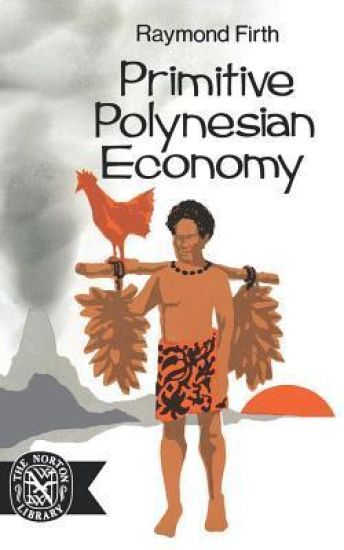
“Primitive Polynesian Economy is one of the first serious attempts to apply the concepts of modern economic theory to the institutions of a primitive community, studied by anthropological field methods. In the small Polynesian island of Tikopia, Raymond Firth was able in the course of a year to observe and analyze in remarkable detail the economic transactions of the thirteen hundred inhabitants of a primitive peasant economy of agriculturalists and fishermen. For the second edition, he has written a new chapter discussing the changes that have taken place since the book was first published.

Religion: A Humanist Interpretation represents a lifetime's work on the anthropology of religion from a rather unusual personal viewpoint. Raymond Firth treats religion as a human art, capable of great intellectual and artistic achievements, but also of complex manipulation to serve the human interests of those who believe in it and operate it. His study is comparative, drawing material from a range of religions around the world. Its findings are a challenge to established beliefs. This anthropological approach to the study of religion covers themes ranging from; religious belief and personal adjustment; gods and God; offering and sacrifice;religion and politics; Malay magic and spirit mediumship; truth and paradox in religion.

Religion: A Humanist Interpretation represents a lifetime's work on the anthropology of religion from a rather unusual personal viewpoint. Raymond Firth treats religion as a human art, capable of great intellectual and artistic achievements, but also of complex manipulation to serve the human interests of those who believe in it and operate it. His study is comparative, drawing material from a range of religions around the world. Its findings are a challenge to established beliefs. This anthropological approach to the study of religion covers themes ranging from; religious belief and personal adjustment; gods and God; offering and sacrifice;religion and politics; Malay magic and spirit mediumship; truth and paradox in religion.
The social, political and economic impact of the decline of the old colonial powers in Africa, India and the Middle East are still key areas of scholarly research and debate. Based on careful social observation and empirical research, the titles in The Sociology of Development set of the International Library of Sociology explore the tension between agriculture and industry in developing economies, and trace the complex political process of independence. Aimed at administratores and academics, thse studies are central to Development Studies.
An illuminating introduction to the methods and problems of social anthropology, this book draws on a wide range of illustrations, including Raymond Firth's own experiences in New Zealand, Malaya and the Solomon Islands. The concept of social organisation is discussed with special reference to the role of individual choice and decision in social affairs and the nature of social change. Social organisation in relation to economic, aesthetic, moral and religious values is also examined. First published in 1951. This re-issue is of the third, 1961 edition.

A great classic of British anthropology, Primitive Polynesian Economy is structured as follows: · Problems of Primitive Economics · Food and Population in Tikopia · Knowledge, Technique and Economic Lore · The Labour Situation · Ritual in Productive Activity · Economic Functions of the Chiefs · Property and Capital in Production · Principles of Distribution and Payment · Exchange and Value · Characteristics of a Primitive Economy First published in 1939.

Re-visiting Tikopia a decade after his first visit, Raymond Firth here examines what impact the forces of modernization had on Tikopia society with regard to economics, law, politics and social affairs. Suffering a famine whilst there, the author also examined the issues of responsibility for the famine; problems of distribution in ceremonial and ritual; institutional developments from the famine. Originally published in 1959.

Recognized as a major work when first published, this title has, over the years, become a classic. Forming the basis of modern social anthropology, We the Tikiopia stands in the forefront of its literature. The book is an excellent example of fieldwork analysis of a primitive society; a complete account of the working of a primitive kinship system; and an exhaustive and sophisticated study of Polynesian social institutions. First published in 1936.

Recognized as a major work when first published, this title has, over the years, become a classic. Forming the basis of modern social anthropology, We the Tikiopia stands in the forefront of its literature. The book is an excellent example of fieldwork analysis of a primitive society; a complete account of the working of a primitive kinship system; and an exhaustive and sophisticated study of Polynesian social institutions. First published in 1936.
The social, political and economic impact of the decline of the old colonial powers in Africa, India and the Middle East are still key areas of scholarly research and debate. Based on careful social observation and empirical research, the titles in The Sociology of Development set of the International Library of Sociology explore the tension between agriculture and industry in developing economies, and trace the complex political process of independence. Aimed at administratores and academics, thse studies are central to Development Studies.

This book first published in 1973 offers a broad survey of the study of symbolic ideas and behaviour.The study of symbolism is popular nowadays and anthropologists have made substantial contributions to it. Raymond Firth has long been internationally known for his field research in the Solomons and Malaysia, and for his theoretical work on kinship, economics and religion. Here from a new angle, he has produced a broad survey of the study of symbolic ideas and behaviour.Professor Firth examines definitions of symbol. He traces the history of scientific inquiry into the symbolism of religious cults, mythology and dreams back into the eighteenth century. He compares some modern approaches to symbolism in art, literature and philosophy with those in social anthropology. He then cites examples in anthropological treatment of symbolic material from cultures of varying sophistication. Finally he offers dispassionate analyses of symbols used in contemporary Western situations - from hair-styles to the use and abuse of national flags; from cults of Black Jesus to the Eucharistic rite. In all this Professor Firth combines social and political topicality with a scholarly and provocative theoretical inquiry.

This book first published in 1971 offers a broad survey of the study of symbolic ideas and behaviour.The study of symbolism is popular nowadays and anthropologists have made substantial contributions to it. Raymond Firth has long been internationally known for his field research in the Solomons and Malaysia, and for his theoretical work on kinship, economics and religion. Here from a new angle, he has produced a broad survey of the study of symbolic ideas and behaviour.Professor Firth examines definitions of symbol. He traces the history of scientific inquiry into the symbolism of religious cults, mythology and dreams back into the eighteenth century. He compares some modern approaches to symbolism in art, literature and philosophy with those in social anthropology. He then cites examples in anthropological treatment of symbolic material from cultures of varying sophistication. Finally he offers dispassionate analyses of symbols used in contemporary Western situations - from hair-styles to the use and abuse of national flags; from cults of Black Jesus to the Eucharistic rite. In all this Professor Firth combines social and political topicality with a scholarly and provocative theoretical inquiry.

First published in 1967, this book gives some of the fruits of the author's study of Tikopia ways of thought as the result of three field expeditions. Most Polynesians became Christians more than a century ago but Tikopia had a substantial pagan population until quite recent years. This book of essays describes rites and beliefs of a people who still maintained their traditional institutions remote from civilization. Studies of totemism, of magic and of beliefs in the fate of the soul in the afterworld, not only throw new light on Polynesian attitudes but also contribute some novel ideas to the interpretation of standard theoretical problems in social anthropology. Studies of rumour, suicide, and a new essay on spirit mediumship, also provide links between social anthropology and psychology. A general review based on the author's visit in 1966 describes the modern position after the adoption of Christianity.

First published in 1967, this book gives some of the fruits of the author's study of Tikopia ways of thought as the result of three field expeditions. Most Polynesians became Christians more than a century ago but Tikopia had a substantial pagan population until quite recent years. This book of essays describes rites and beliefs of a people who still maintained their traditional institutions remote from civilization. Studies of totemism, of magic and of beliefs in the fate of the soul in the afterworld, not only throw new light on Polynesian attitudes but also contribute some novel ideas to the interpretation of standard theoretical problems in social anthropology. Studies of rumour, suicide, and a new essay on spirit mediumship, also provide links between social anthropology and psychology. A general review based on the author's visit in 1966 describes the modern position after the adoption of Christianity.

Originally published in 1970, this book represents a unique study of beliefs and ritual practices in a pagan religion, and of the processes by which a transformation to Christianity took place.Christianity came to the major islands of Polynesia nearly two centuries ago, and within a couple of generations, the traditional pagan religion had disappeared. Only a few remote islands such as Tikopia preserved their ancient cults.Over eighty years ago, the author first observed and took part in these pagan rites, and on later visits he studied the change from paganism to Christian faith. Unique in its rich documentation, this book presents a systematic account of the traditional beliefs in gods and spirits and of the way in which these were fused with the social and political structure. The causes and dramatic results of the conversion to Christianity are then described, ending with an examination of the religious situation at the time of the book’s original publication.The book is both a contribution to anthropology and a case study in religious history. It completes the major series of studies of Tikopia society for which the author is famous. It gives the first full account of a Polynesian religious system in a state of change.

Originally published in 1970, this book represents a unique study of beliefs and ritual practices in a pagan religion, and of the processes by which a transformation to Christianity took place.Christianity came to the major islands of Polynesia nearly two centuries ago, and within a couple of generations, the traditional pagan religion had disappeared. Only a few remote islands such as Tikopia preserved their ancient cults.Over eighty years ago, the author first observed and took part in these pagan rites, and on later visits he studied the change from paganism to Christian faith. Unique in its rich documentation, this book presents a systematic account of the traditional beliefs in gods and spirits and of the way in which these were fused with the social and political structure. The causes and dramatic results of the conversion to Christianity are then described, ending with an examination of the religious situation at the time of the book’s original publication.The book is both a contribution to anthropology and a case study in religious history. It completes the major series of studies of Tikopia society for which the author is famous. It gives the first full account of a Polynesian religious system in a state of change.

Primitive Economics of the New Zealand Maori (Routledge Revivals)
Raymond Firth
Routledge
2011
sidottu
First published in 1929, Raymond Firth’s original and insightful study offers an incredibly detailed account of the social and economic organisation of the Maori people before their contact with Western civilisation.Bridging the gap between anthropology and economics, the work covers the class structure, land system, industry, methods of co-operative labour, exchange and distribution, and the psychological foundations of Maori society. This reissue will be welcomed by all students of anthropology and anyone interested the history of the Maori people.