Kirjojen hintavertailu. Mukana 11 342 296 kirjaa ja 12 kauppaa.

Kirjahaku

Etsi kirjoja tekijän nimen, kirjan nimen tai ISBN:n perusteella.

30 kirjaa tekijältä Raymond Williams

Raymond Williams on Television (Routledge Revivals)
First Published in 1989, this work is based around a monthly TV column which Raymond Williams wrote for The Listener between 1968 and 1972. Those were the years of the Prague Spring, of anti-Vietnam war demonstrations, of fighting in Cambodia and Northern Ireland, of hope for McGovern in the United States and attacks on the Wilson Labour Government in Britain. In The Listener articles Williams comments on all of these events, providing a rare glimpse not only into the events of his daily life but also into the continuing development of a personal sociology of culture. The articles also discuss such television forms as detective series, science programmes and sports, travelogue, education, gardening, and children’s programming. The book also includes Williams’ key lecture "Drama in a Dramatised Society", which sets a framework for his analysis; a London Review of Books piece on the Falklands/Malvinas adventure as a "tele-war"; and an interview with Williams on television and teaching. Cited by The Guardian as "The foremost political thinker of his generation", Williams’ writing amounts to a primer on ways of watching television and of critiquing its profound social and political impact.
Raymond Williams on Television (Routledge Revivals)
First Published in 1989, this work is based around a monthly TV column which Raymond Williams wrote for The Listener between 1968 and 1972. Those were the years of the Prague Spring, of anti-Vietnam war demonstrations, of fighting in Cambodia and Northern Ireland, of hope for McGovern in the United States and attacks on the Wilson Labour Government in Britain. In The Listener articles Williams comments on all of these events, providing a rare glimpse not only into the events of his daily life but also into the continuing development of a personal sociology of culture. The articles also discuss such television forms as detective series, science programmes and sports, travelogue, education, gardening, and children’s programming. The book also includes Williams’ key lecture "Drama in a Dramatised Society", which sets a framework for his analysis; a London Review of Books piece on the Falklands/Malvinas adventure as a "tele-war"; and an interview with Williams on television and teaching. Cited by The Guardian as "The foremost political thinker of his generation", Williams’ writing amounts to a primer on ways of watching television and of critiquing its profound social and political impact.
The Centenary Edition Raymond Williams

The Centenary Edition Raymond Williams

Raymond Williams

University of Wales Press
2021
nidottu
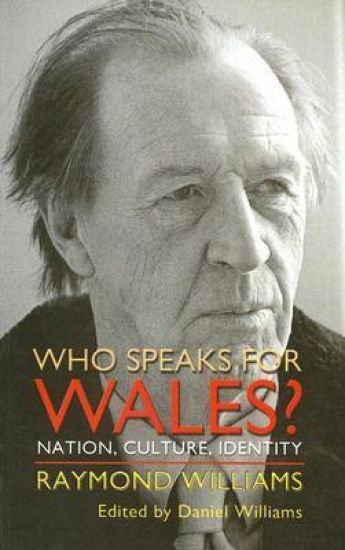
In the words of Cornel West, Raymond Williams was 'the last of the great European male revolutionary socialist intellectuals'. A figure of international importance in the fields of cultural criticism and social theory, Williams was also preoccupied throughout his life with the meaning and significance of his Welsh identity. Who Speaks for Wales? was the first collection of Raymond Williams's writings on Welsh culture, literature, history and politics. Published in 2003, it appeared in the early years of Welsh political devolution and offered a historical and theoretical basis for thinking across the divisions of nationalism and socialism in Welsh thought. This edition, appearing in the centenary of Williams's birth, appears at a very different moment in which - after the Brexit referendum of 2016 - Raymond Williams's 'Welsh-European' vision seems to have been soundly rejected and is now a reminder of what might have been. This new edition includes material that was not included in the first edition, with a new afterword in which the editor argues that Williams continues to speak to our moment. Daniel G. Williams's new edition further underlines the ways in which Raymond Williams's engagement with Welsh issues makes a significant contribution to contemporary international debates on nationalism, class and ethnicity. Who Speaks for Wales? remains essential reading for everyone interested in questions of nationhood and identity in Britain and beyond.
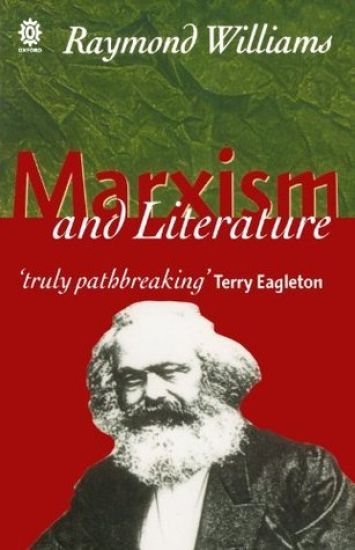
Marxism and Literature

Marxism and Literature

Raymond Williams

Oxford University Press
1977
nidottu
This book extends the theme of Raymond Williams's earlier work in literary and cultural analysis. He analyses previous contributions to a Marxist theory of literature from Marx himself to Lukacs, Althusser, and Goldmann, and develops his own approach by outlining a theory of `cultural materialism' which integrates Marxist theories of language with Marxist theories of literature. Williams moves from a review of the growth of the concepts of literature and idealogy to a redefinition of `determinism' and `hegemony'. His incisive discussion of the 'social material process' of cultural activity culminates in a re-examination of the problems of alignment and commitment and of the creative practice in individual authors and wider social groups.
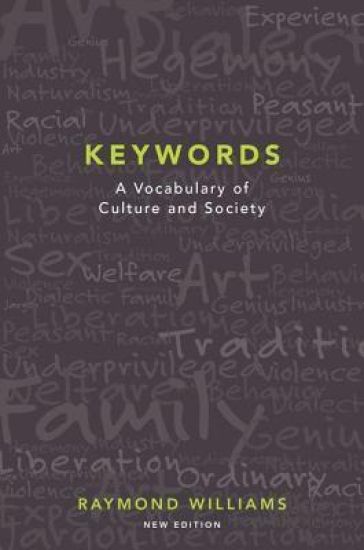
Keywords: A Vocabulary of Culture and Society

Keywords: A Vocabulary of Culture and Society

Raymond Williams

Oxford University Press
2014
nidottu
First published in 1976, Raymond Williams' highly acclaimed Keywords: A Vocabulary of Culture and Society is a collection of lively essays on words that are critical to understanding the modern world. In these essays, Williams, a renowned cultural critic, demonstrates how these key words take on new meanings and how these changes reflect the political bent and values of our past and current society. He chose words both essential and intangible--words like nature, underprivileged, industry, liberal, violence, to name a few--and, by tracing their etymology and evolution, grounds them in a wider political and cultural framework. The result is an illuminating account of the central vocabulary of ideological debate in English in the modern period. This edition features a new original foreword by Colin MacCabe, Distinguished Professor of English and Literature, University of Pittsburgh, that reflects on the significance of Williams' life and work. Keywords remains as relevant today as it was over thirty years ago, offering a provocative study of our language and an insightful look at the society in which we live.
The Columbia Guide to the Latin American Novel Since 1945

The Columbia Guide to the Latin American Novel Since 1945

Raymond Williams

Columbia University Press
2007
sidottu
In this expertly crafted, richly detailed guide, Raymond Leslie Williams explores the cultural, political, and historical events that have shaped the Latin American and Caribbean novel since the end of World War II. In addition to works originally composed in English, Williams covers novels written in Spanish, Portuguese, French, Dutch, and Haitian Creole, and traces the profound influence of modernization, revolution, and democratization on the writing of this era. Beginning in 1945, Williams introduces major trends by region, including the Caribbean and U.S. Latino novel, the Mexican and Central American novel, the Andean novel, the Southern Cone novel, and the novel of Brazil. He discusses the rise of the modernist novel in the 1940s, led by Jorge Luis Borges's reaffirmation of the right of invention, and covers the advent of the postmodern generation of the 1990s in Brazil, the Generation of the "Crack" in Mexico, and the McOndo generation in other parts of Latin America. An alphabetical guide offers biographies of authors, coverage of major topics, and brief introductions to individual novels. It also addresses such areas as women's writing, Afro-Latin American writing, and magic realism. The guide's final section includes an annotated bibliography of introductory studies on the Latin American and Caribbean novel, national literary traditions, and the work of individual authors. From early attempts to synthesize postcolonial concerns with modernist aesthetics to the current focus on urban violence and globalization, The Columbia Guide to the Latin American Novel Since 1945 presents a comprehensive, accessible portrait of a thoroughly diverse and complex branch of world literature.
Television

Television

Raymond Williams

Routledge
2003
nidottu
Television: Technology and Cultural Form was first published in 1974, long before the dawn of multi-channel TV, or the reality and celebrity shows that now pack the schedules. Yet Williams' analysis of television's history, its institutions, programmes and practices, and its future prospects, remains remarkably prescient. Williams stresses the importance of technology in shaping the cultural form of television, while always resisting the determinism of McLuhan's dictum that 'the medium is the message'. If the medium really is the message, Williams asks, what is left for us to do or say? Williams argues that, on the contrary, we as viewers have the power to disturb, disrupt and to distract the otherwise cold logic of history and technology - not just because television is part of the fabric of our daily lives, but because new technologies continue to offer opportunities, momentarily outside the sway of transnational corporations or the grasp of media moguls, for new forms of self and political expression.
Who Speaks for Wales?

Who Speaks for Wales?

Raymond Williams

University of Wales Press
2003
nidottu
Who Speaks for Wales? is the first collection of Raymond Williams' writings on Welsh culture, literature, history and politics. It brings together material that has long been overlooked by commentators on his work, and emphasises both the centrality of his Welshness to his work as a whole, and the continuing relevance of his thought for post-devolution Wales. Daniel Williams's introduction offers an original reading of Raymond Williams's career from a Welsh perspective and underlines the ways in which his engagement with Welsh issues makes a significant contribution to contemporary debates on nation, race and class. Who Speaks for Wales? will be essential reading for everyone interested in questions of identity, nationhood and ethnicity in Britain and beyond.
Politics and Letters

Politics and Letters

Raymond Williams

Verso Books
1981
nidottu
Raymond Williams has made a central contribution to the culture of the Left in the English-speaking world. Politics and Letters is a volume of interviews with Williams, conducted by members of the New Left Review editorial committee, that is designed to bring into clear focus the major theoretical and political issues posed by his work. Ranging across his biographical development, the evolution of his cultural theory and literary criticism, his work on dramatic forms and his fiction, the volume concludes with an exploration of Williams's positions on British and international politics.
Writing in Society

Writing in Society

Raymond Williams

Verso Books
1985
nidottu
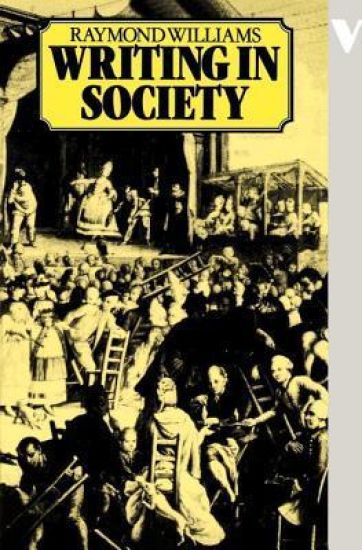
Raymond Williams's work was always concerned with the relation between culture and society. This book focuses on specific texts and authors, exploring the historical and cultural sources of their particular forms of writing. In it, Williams examines dramatic form and language in Racine and Shakespeare; the politics of fiction in the English Jacobin novel; David Hume and Charles Dickens and the changing characteristics of English prose; Robert Tressell, The Ragged-Trousered Philanthropists, and the role of region and class in the English novel. Also included are Williams's reflections on the rise of English studies, on their crisis as the literary traditions of Cambridge University were beset by the 'structuralist controversy', and on the wider implications of this redefinition of the critical field.
Resources of Hope

Resources of Hope

Raymond Williams

Verso Books
1989
nidottu
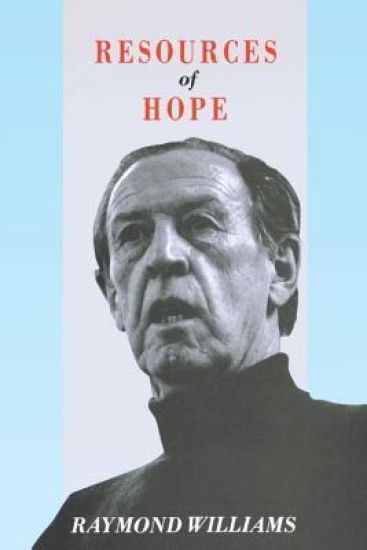
Raymond Williams possessed unique authority as Britain's foremost cultural theorist and public intellectual. Informed by an unparalleled range of reference and the resources of deep personal experience, his life's work represents a patient, exemplary commitment to the building of a socialist future.This book brings together important early writings including "Culture is Ordinary," "The British Left," "Welsh Culture" and "Why Do I Demonstrate?" with major essays and talks of the last decade. It includes work on such central themes as the nature of a democratic culture, the value of community, Green socialism, the nuclear threat, and the relation between the state and the arts. Here too, collected for the first time, are the important later political essays which undertake a thorough revaluation of the principles fundamental to the idea of socialist democracy, and confirm Williams as a shrewd and imaginative political theorist. In a sober yet constructive assessment of the possibilities for socialist advance, Williams-in the face of much recent intellectual fashion-powerfully reasserts his lifelong commitment to "making hope practical, rather than despair convincing."This valuable collection confirms Raymond Williams as a thinker of rare versatility and one of the outstanding intellectuals of our century.
Drama From Ibsen to Eliot

Drama From Ibsen to Eliot

Raymond Williams

Hassell Street Press
2021
sidottu
This work has been selected by scholars as being culturally important and is part of the knowledge base of civilization as we know it.This work is in the public domain in the United States of America, and possibly other nations. Within the United States, you may freely copy and distribute this work, as no entity (individual or corporate) has a copyright on the body of the work.Scholars believe, and we concur, that this work is important enough to be preserved, reproduced, and made generally available to the public. To ensure a quality reading experience, this work has been proofread and republished using a format that seamlessly blends the original graphical elements with text in an easy-to-read typeface.We appreciate your support of the preservation process, and thank you for being an important part of keeping this knowledge alive and relevant.
Drama From Ibsen to Eliot

Drama From Ibsen to Eliot

Raymond Williams

Hassell Street Press
2021
nidottu
This work has been selected by scholars as being culturally important and is part of the knowledge base of civilization as we know it.This work is in the public domain in the United States of America, and possibly other nations. Within the United States, you may freely copy and distribute this work, as no entity (individual or corporate) has a copyright on the body of the work.Scholars believe, and we concur, that this work is important enough to be preserved, reproduced, and made generally available to the public. To ensure a quality reading experience, this work has been proofread and republished using a format that seamlessly blends the original graphical elements with text in an easy-to-read typeface.We appreciate your support of the preservation process, and thank you for being an important part of keeping this knowledge alive and relevant.
Television

Television

Raymond Williams

Routledge
2015
sidottu
Television: Technology and Cultural Form was first published in 1974, long before the dawn of multi-channel TV, or the reality and celebrity shows that now pack the schedules. Yet Williams' analysis of television's history, its institutions, programmes and practices, and its future prospects, remains remarkably prescient. Williams stresses the importance of technology in shaping the cultural form of television, while always resisting the determinism of McLuhan's dictum that 'the medium is the message'. If the medium really is the message, Williams asks, what is left for us to do or say? Williams argues that, on the contrary, we as viewers have the power to disturb, disrupt and to distract the otherwise cold logic of history and technology - not just because television is part of the fabric of our daily lives, but because new technologies continue to offer opportunities, momentarily outside the sway of transnational corporations or the grasp of media moguls, for new forms of self and political expression.
Politics and Letters

Politics and Letters

Raymond Williams

Verso Books
2015
nidottu
Raymond Williams made a central contribution to the intellectual culture of the Left in the English-speaking world. He was also one of the key figures in the foundation of cultural studies in Britain, which turned critical skills honed on textual analysis to the examination of structures and forms of resistance apparent in everyday life. Politics and Letters is a volume of interviews with Williams, conducted by New Left Review, designed to bring into clear focus the major theoretical and political issues posed by his work. Introduced by writer Geoff Dyer, Politics and Letters ranges across Williams's biographical development, the evolution of his cultural theory and literary criticism, his work on dramatic forms and his fiction, and an exploration of British and international politics.