Kirjojen hintavertailu. Mukana 11 342 296 kirjaa ja 12 kauppaa.

Kirjahaku

Etsi kirjoja tekijän nimen, kirjan nimen tai ISBN:n perusteella.

4 kirjaa tekijältä Rebecca Hamlin

Let Me Be a Refugee

Let Me Be a Refugee

Rebecca Hamlin

Oxford University Press Inc
2014
sidottu
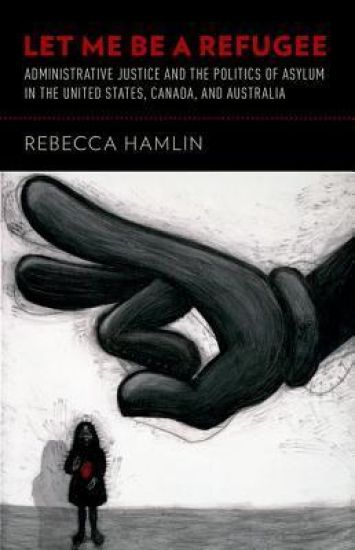
Why do decision-makers in similar liberal democracies interpret the same legal definition in very different ways? International law provides states with a common definition of a 'refugee' as well as guidelines outlining how asylum claims should be decided. Yet, the processes by which countries determine who should be granted refugee status look strikingly different, even across nations with many political, cultural, geographical, and institutional commonalities. This book compares the refugee status determination (RSD) regimes of three popular asylum seeker destinations - the United States, Canada, and Australia. Despite similarly high levels of political resistance to accepting asylum seekers across these three states, once asylum seekers cross their borders, they access three very different systems. These differences are significant both in terms of asylum seekers' experience of the process and in terms of their likelihood of being found to be a refugee. The book moves beyond the claim by some scholars that asylum seeker destinations are uniformly becoming more exclusionary, and the contrary assertions of other scholars that the same destinations are converging on a new inclusive internationalism leading to the decline of state sovereignty. Instead, I find these states to be running on three distinct trajectories, none of which are totally restrictive or expansive. Based on a multi-method analysis of all three countries, including a year of fieldwork with in-depth interviews of policy-makers and asylum-seeker advocates, observations of refugee status determination hearings, and a large-scale case analysis, I find that cross-national differences have less to do with political debates over admission and border control policy than with the level of insulation the administrative decision-making agency enjoys from either political interference or judicial review. Administrative justice is conceptualized and organized differently in every state, and so states vary in how they draw the line between refugee and non-refugee.
Let Me Be a Refugee

Let Me Be a Refugee

Rebecca Hamlin

Oxford University Press Inc
2014
nidottu
Why do decision-makers in similar liberal democracies interpret the same legal definition in very different ways? International law provides states with a common definition of a 'refugee' as well as guidelines outlining how asylum claims should be decided. Yet, the processes by which countries determine who should be granted refugee status look strikingly different, even across nations with many political, cultural, geographical, and institutional commonalities. This book compares the refugee status determination (RSD) regimes of three popular asylum seeker destinations - the United States, Canada, and Australia. Despite similarly high levels of political resistance to accepting asylum seekers across these three states, once asylum seekers cross their borders, they access three very different systems. These differences are significant both in terms of asylum seekers' experience of the process and in terms of their likelihood of being found to be a refugee. The book moves beyond the claim by some scholars that asylum seeker destinations are uniformly becoming more exclusionary, and the contrary assertions of other scholars that the same destinations are converging on a new inclusive internationalism leading to the decline of state sovereignty. Instead, I find these states to be running on three distinct trajectories, none of which are totally restrictive or expansive. Based on a multi-method analysis of all three countries, including a year of fieldwork with in-depth interviews of policy-makers and asylum-seeker advocates, observations of refugee status determination hearings, and a large-scale case analysis, I find that cross-national differences have less to do with political debates over admission and border control policy than with the level of insulation the administrative decision-making agency enjoys from either political interference or judicial review. Administrative justice is conceptualized and organized differently in every state, and so states vary in how they draw the line between refugee and non-refugee.
Crossing

Crossing

Rebecca Hamlin

Stanford University Press
2021
sidottu
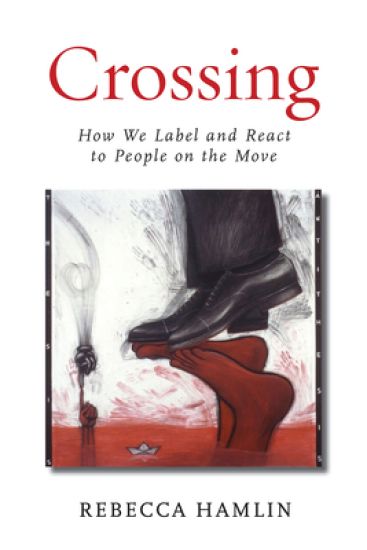
Today, the concept of "the refugee" as distinct from other migrants looms large. Immigration laws have developed to reinforce a dichotomy between those viewed as voluntary, often economically motivated, migrants who can be legitimately excluded by potential host states, and those viewed as forced, often politically motivated, refugees who should be let in. In Crossing, Rebecca Hamlin argues against advocacy positions that cling to this distinction. Everything we know about people who decide to move suggests that border crossing is far more complicated than any binary, or even a continuum, can encompass. Drawing on cases of various "border crises" across Europe, North America, South America, and the Middle East, Hamlin outlines major inconsistencies and faulty assumptions on which the binary relies. The migrant/refugee binary is not just an innocuous shorthand—indeed, its power stems from the way in which it is painted as apolitical. In truth, the binary is a dangerous legal fiction, politically constructed with the ultimate goal of making harsh border control measures more ethically palatable to the public. This book is a challenge to all those invested in the rights and study of migrants to move toward more equitable advocacy for all border crossers.
Crossing

Crossing

Rebecca Hamlin

Stanford University Press
2021
pokkari
Today, the concept of "the refugee" as distinct from other migrants looms large. Immigration laws have developed to reinforce a dichotomy between those viewed as voluntary, often economically motivated, migrants who can be legitimately excluded by potential host states, and those viewed as forced, often politically motivated, refugees who should be let in. In Crossing, Rebecca Hamlin argues against advocacy positions that cling to this distinction. Everything we know about people who decide to move suggests that border crossing is far more complicated than any binary, or even a continuum, can encompass. Drawing on cases of various "border crises" across Europe, North America, South America, and the Middle East, Hamlin outlines major inconsistencies and faulty assumptions on which the binary relies. The migrant/refugee binary is not just an innocuous shorthand—indeed, its power stems from the way in which it is painted as apolitical. In truth, the binary is a dangerous legal fiction, politically constructed with the ultimate goal of making harsh border control measures more ethically palatable to the public. This book is a challenge to all those invested in the rights and study of migrants to move toward more equitable advocacy for all border crossers.