Kirjojen hintavertailu. Mukana 11 244 527 kirjaa ja 12 kauppaa.

Kirjahaku

Etsi kirjoja tekijän nimen, kirjan nimen tai ISBN:n perusteella.

74 kirjaa tekijältä Rebecca Solnit

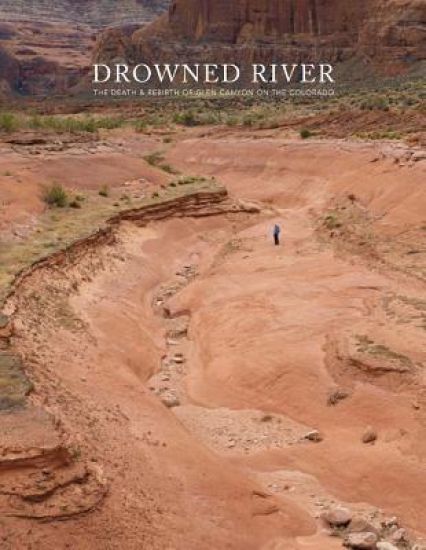
Mark Klett, Rebecca Solnit & Byron Wolfe - Drowned River
In 1963 the waters began rising behind Glen Canyon Dam and 170 miles of the Colorado River slowly disappeared as the riverbed and surrounding canyons filled with water. Environmentalists considered it a disaster and mourned Glen Canyon as gone forever. The Sierra Club joined forces with photographer Eliot Porter to document what would be lost under the dam’s waters, resulting in the publication of the landmark 1963 photobook The Place No One Knew: Glen Canyon on the Colorado. But in an unexpected victory that speaks to the pervasive disaster of climate change, the reservoir is now declining and the Colorado River is coming back. Photographers Byron Wolfe (born 1967) and Mark Klett (born 1952), along with writer Rebecca Solnit (born 1961), spent five years exploring the place as expectations and possibilities changed, and the river reemerged at the upper end of the reservoir. In dialogue with Porter’s book, Klett and Wolfe retraced the physical locations where Porter made his photographs, now often submerged by the reservoir’s waters. Solnit’s accompanying text meditates on the meanings and histories of the place, drawing from both the trio’s explorations and archival research. Drowned River is a book about climate change, about “the madness of the past and the terror of the future” (as Solnit puts it). But it is also a book about how photography can describe beauty and trouble simultaneously, and what it takes to understand a place and to come to terms with the changes we have set in motion.
Wanderlust: A History of Walking

Wanderlust: A History of Walking

Rebecca Solnit

PENGUIN BOOKS
2001
nidottu
A passionate, thought-provoking exploration of walking as a political and cultural activity, from the author of Orwell's Roses Drawing together many histories--of anatomical evolution and city design, of treadmills and labyrinths, of walking clubs and sexual mores--Rebecca Solnit creates a fascinating portrait of the range of possibilities presented by walking. Arguing that the history of walking includes walking for pleasure as well as for political, aesthetic, and social meaning, Solnit focuses on the walkers whose everyday and extreme acts have shaped our culture, from philosophers to poets to mountaineers. She profiles some of the most significant walkers in history and fiction--from Wordsworth to Gary Snyder, from Jane Austen's Elizabeth Bennet to Andre Breton's Nadja--finding a profound relationship between walking and thinking and walking and culture. Solnit argues for the necessity of preserving the time and space in which to walk in our ever more car-dependent and accelerated world.
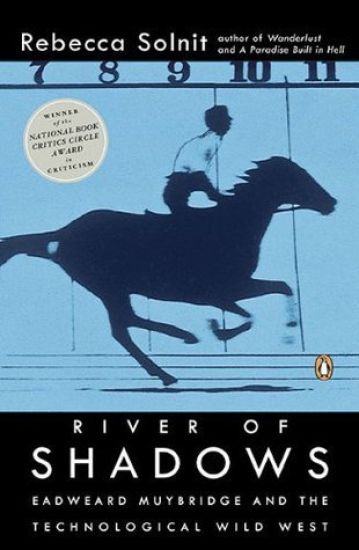
River of Shadows: Eadweard Muybridge and the Technological Wild West
A New York Times Notable Book Winner of the National Book Critics Circle Award for Criticism, The Mark Lynton History Prize, and the Sally Hacker Prize for the History of Technology "A panoramic vision of cultural change" --The New York Times Through the story of the pioneering photographer Eadweard Muybridge, the author of Orwell's Roses explores what it was about California in the late 19th-century that enabled it to become such a center of technological and cultural innovation The world as we know it today began in California in the late 1800s, and Eadweard Muybridge had a lot to do with it. This striking assertion is at the heart of Rebecca Solnit's new book, which weaves together biography, history, and fascinating insights into art and technology to create a boldly original portrait of America on the threshold of modernity. The story of Muybridge--who in 1872 succeeded in capturing high-speed motion photographically--becomes a lens for a larger story about the acceleration and industrialization of everyday life. Solnit shows how the peculiar freedoms and opportunities of post-Civil War California led directly to the two industries--Hollywood and Silicon Valley--that have most powerfully defined contemporary society.
A Field Guide to Getting Lost

A Field Guide to Getting Lost

Rebecca Solnit

PENGUIN BOOKS
2006
nidottu
A series of autobiographical essays draws on key moments and relationships in the author's life to explore such issues as trust, loss, and desire, in a volume that focuses on a central theme of losing oneself in the pleasures of experience. By the author of River of Shadows and Wanderlust. Reprint. 25,000 first printing.
A Paradise Built In Hell

A Paradise Built In Hell

Rebecca Solnit

Penguin USA
2010
nidottu
"A landmark book that gives impassioned challenge to the social meaning of disasters" (The New York Times Book Review) from the author of the memoir Recollections of My Nonexistence"Solnit argues that disasters are opportunities as well as oppressions, each one a summons to rediscover the powerful engagement and joy of genuine altruism, civic life, grassroots community, and meaningful work." --San Francisco Chronicle Chosen as a Best Book of the Year by the New York Times, Los Angeles Times, New Yorker, San Francisco Chronicle, Washington Post, and Chicago Tribune The most startling thing about disasters, according to award-winning author Rebecca Solnit, is not merely that so many people rise to the occasion, but that they do so with joy. That joy reveals an ordinarily unmet yearning for community, purposefulness, and meaningful work that disaster often provides. A Paradise Built in Hell is an investigation of the moments of altruism, resourcefulness, and generosity that arise amid disaster's grief and disruption and considers their implications for everyday life. It points to a new vision of what society could become-one that is less authoritarian and fearful, more collaborative and local.
The Faraway Nearby

The Faraway Nearby

Rebecca Solnit

PENGUIN BOOKS
2014
nidottu
A New York Times Notable Book Finalist for the National Book Critics Circle Award A personal, lyrical narrative about storytelling and empathy, from the author of Orwell's Roses Apricots. Her mother's disintegrating memory. An invitation to Iceland. Illness. These are Rebecca Solnit's raw materials, but The Faraway Nearby goes beyond her own life, as she spirals out into the stories she heard and read--from fairy tales to Mary Shelley's Frankenstein--that helped her navigate her difficult passge. Solnit takes us into the lives of others--an arctic cannibal, the young Che Guevara among the leprosy afflicted, a blues musician, an Icelandic artist and her labyrinth--to understand warmth and coldness, kindness and imagination, decay and transformation, making art and making self. This captivating, exquisitely written exploration of the forces that connect us and the way we tell our stories is a tour de force of association, a marvelous Russian doll of a book that is a fitting companion to Solnit's much-loved A Field Guide to Getting Lost.
Infinite City

Infinite City

Rebecca Solnit

University of California Press
2010
sidottu
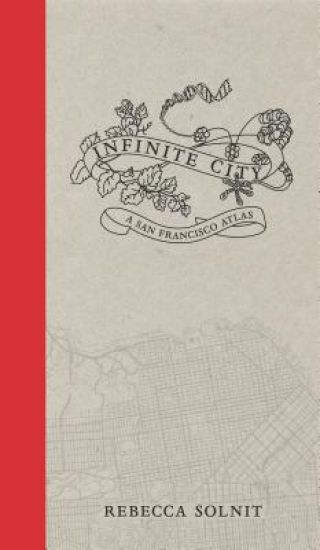
What makes a place? "Infinite City", Rebecca Solnit's brilliant reinvention of the traditional atlas, searches out the answer by examining the many layers of meaning in one place, the San Francisco Bay Area. Aided by artists, writers, cartographers, and twenty-two gorgeous color maps, each of which illuminates the city and its surroundings as experienced by different inhabitants, Solnit takes us on a tour that will forever change the way we think about place. She explores the area thematically - connecting, for example, Eadweard Muybridge's foundation of motion-picture technology with Alfred Hitchcock's filming of "Vertigo". Across an urban grid of just seven by seven miles, she finds seemingly unlimited landmarks and treasures - butterfly habitats, queer sites, murders, World War II shipyards, blues clubs, Zen Buddhist centers. She roams the political terrain, both progressive and conservative, and details the cultural geographies of the Mission District, the culture wars of the Fillmore, the South of Market world being devoured by redevelopment, and much, much more. Breathtakingly original, this atlas of the imagination invites us to search out the layers of San Francisco that carry meaning for us - or to discover our own infinite city, be it Cleveland, Toulouse, or Shanghai. Contributors include: Cartographers - Ben Pease and Shizue Seigel; Designer - Lia Tjandra; Artists - Sandow Birk, Mona Caron, Jaime Cortez, Hugh D'Andrade, Robert Dawson, Paz de la Calzada, Jim Herrington, Ira Nowinski, Alison Pebworth, Michael Rauner, Gent Sturgeon and Sunaura Taylor; Writers and researchers - Summer Brenner, Adriana Camarena, Chris Carlsson, Lisa Conrad, Guillermo Gomez-Pena, Joshua Jelly-Schapiro, Paul La Farge, Genine Lentine, Stella Lochman, Aaron Shurin, Heather Smith and Richard Walker; and, Additional cartography - Darin Jensen, Robin Grossinger and Ruth Askevold, as well as San Francisco Estuary Institute.
Infinite City

Infinite City

Rebecca Solnit

University of California Press
2010
pokkari
What makes a place? "Infinite City", Rebecca Solnit's brilliant reinvention of the traditional atlas, searches out the answer by examining the many layers of meaning in one place, the San Francisco Bay Area. Aided by artists, writers, cartographers, and twenty-two gorgeous color maps, each of which illuminates the city and its surroundings as experienced by different inhabitants, Solnit takes us on a tour that will forever change the way we think about place. She explores the area thematically - connecting, for example, Eadweard Muybridge's foundation of motion-picture technology with Alfred Hitchcock's filming of "Vertigo". Across an urban grid of just seven by seven miles, she finds seemingly unlimited landmarks and treasures - butterfly habitats, queer sites, murders, World War II shipyards, blues clubs, Zen Buddhist centers. She roams the political terrain, both progressive and conservative, and details the cultural geographies of the Mission District, the culture wars of the Fillmore, the South of Market world being devoured by redevelopment, and much, much more. Breathtakingly original, this atlas of the imagination invites us to search out the layers of San Francisco that carry meaning for us - or to discover our own infinite city, be it Cleveland, Toulouse, or Shanghai. Contributors include: Cartographers - Ben Pease and Shizue Seigel; Designer - Lia Tjandra; Artists - Sandow Birk, Mona Caron, Jaime Cortez, Hugh D'Andrade, Robert Dawson, Paz de la Calzada, Jim Herrington, Ira Nowinski, Alison Pebworth, Michael Rauner, Gent Sturgeon and Sunaura Taylor; Writers and researchers - Summer Brenner, Adriana Camarena, Chris Carlsson, Lisa Conrad, Guillermo Gomez-Pena, Joshua Jelly-Schapiro, Paul La Farge, Genine Lentine, Stella Lochman, Aaron Shurin, Heather Smith and Richard Walker; and, Additional cartography - Darin Jensen, Robin Grossinger and Ruth Askevold, as well as San Francisco Estuary Institute.
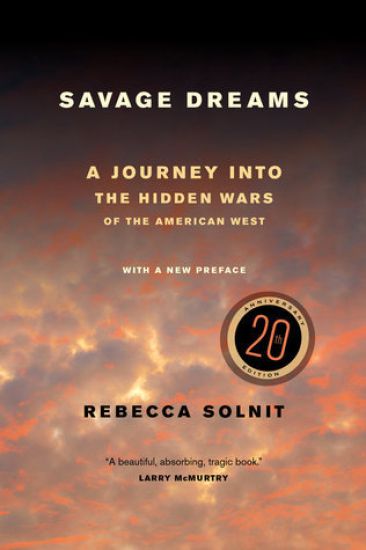
Savage Dreams

Savage Dreams

Rebecca Solnit

University of California Press
2014
pokkari
"A beautiful, absorbing, tragic book."--Larry McMurtry In 1851, a war began in what would become Yosemite National Park, a war against the indigenous inhabitants. A century later--in 1951--and a hundred and fifty miles away, another war began when the U.S. government started setting off nuclear bombs at the Nevada Test Site. It was called a nuclear testing program, but functioned as a war against the land and people of the Great Basin. In this foundational book of landscape theory and environmental thinking, Rebecca Solnit explores our national Eden and Armageddon and offers a pathbreaking history of the west, focusing on the relationship between culture and its implementation as politics. In a new preface, she considers the continuities and changes of these invisible wars in the context of our current climate change crisis, and reveals how the long arm of these histories continue to inspire her writing and hope.
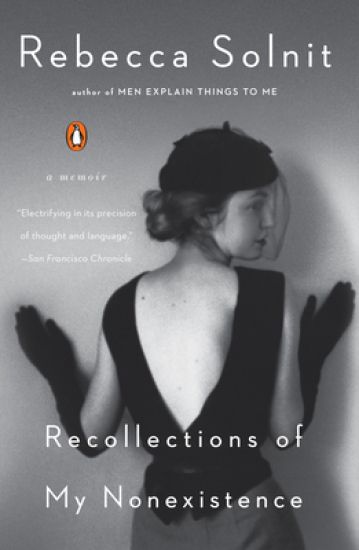
Recollections of My Nonexistence: A Memoir
Shortlisted for the James Tait Black Prize for BiographyLonglisted for The Orwell Prize for Political Writing An electric portrait of the artist as a young woman that asks how a writer finds her voice in a society that prefers women to be silent, from the author of Orwell's Roses In Recollections of My Nonexistence, Rebecca Solnit describes her formation as a writer and as a feminist in 1980s San Francisco, in an atmosphere of gender violence on the street and throughout society and the exclusion of women from cultural arenas. She tells of being poor, hopeful, and adrift in the city that became her great teacher, and of the small apartment that, when she was nineteen, became the home in which she transformed herself. She explores the forces that liberated her as a person and as a writer--books themselves; the gay community that presented a new model of what else gender, family, and joy could mean; and her eventual arrival in the spacious landscapes and overlooked conflicts of the American West. Beyond being a memoir, Solnit's book is also a passionate argument: that women are not just impacted by personal experience, but by membership in a society where violence against women pervades. Looking back, she describes how she came to recognize that her own experiences of harassment and menace were inseparable from the systemic problem of who has a voice, or rather who is heard and respected and who is silenced--and how she was galvanized to use her own voice for change.
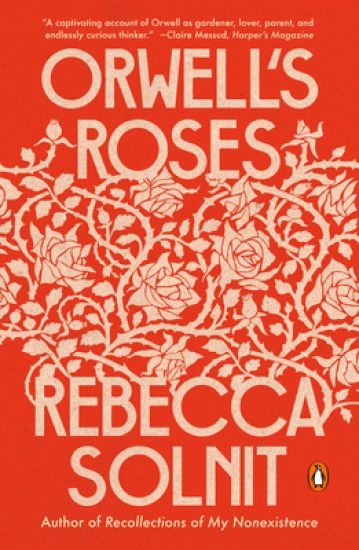
Orwell's Roses

Orwell's Roses

Rebecca Solnit

PENGUIN BOOKS
2022
nidottu
Finalist for the National Book Critics Circle Award for NonfictionFinalist for the PEN/Jacqueline Bograd Weld Award for Biography "An exhilarating romp through Orwell's life and times and also through the life and times of roses." --Margaret Atwood "A captivating account of Orwell as gardener, lover, parent, and endlessly curious thinker." --Claire Messud, Harper's "Nobody who reads it will ever think of Nineteen Eighty-Four in quite the same way." --Vogue A lush exploration of politics, roses, and pleasure, and a fresh take on George Orwell as an avid gardener whose political writing was grounded by his passion for the natural world "In the spring of 1936, a writer planted roses." So be-gins Rebecca Solnit's new book, a reflection on George Orwell's passionate gardening and the way that his involvement with plants, particularly flowers, illuminates his other commitments as a writer and antifascist, and on the intertwined politics of nature and power. Sparked by her unexpected encounter with the roses he reportedly planted in 1936, Solnit's account of this overlooked aspect of Orwell's life journeys through his writing and his actions--from going deep into the coal mines of England, fighting in the Spanish Civil War, critiquing Stalin when much of the international left still supported him (and then critiquing that left) to his analysis of the relationship between lies and authoritarianism. Through Solnit's celebrated ability to draw unexpected connections, readers are drawn onward from Orwell's own work as a writer and gardener to encounter photographer Tina Modotti's roses and her politics, agriculture and illusion in the USSR of his time with forcing lemons to grow in impossibly cold conditions, Orwell's slave-owning ancestors in Jamaica, Jamaica Kincaid's examination of colonialism and imperialism in the flower garden, and the brutal rose industry in Colombia that supplies the American market. The book draws to a close with a rereading of Nineteen Eighty-Four that completes Solnit's portrait of a more hopeful Orwell, as well as offering a meditation on pleasure, beauty, and joy as acts of resistance.
Pandemic Solidarity

Pandemic Solidarity

Rebecca Solnit

Pluto Press
2020
pokkari
In times of crisis, when institutions of power are laid bare, people turn to one another. Pandemic Solidarity collects firsthand experiences from around the world of people creating their own narratives of solidarity and mutual aid in the time of the global crisis of Covid-19. The world’s media was quick to weave a narrative of selfish individualism, full of empty supermarket shelves and con-men. However, if you scratch the surface, you find a different story of community and self-sacrifice. Looking at eighteen countries and regions, including India, Rojava, Taiwan, South Africa, Iraq and North America, the personal accounts in the book weave together to create a larger picture, revealing a universality of experience - a housewife in Istanbul supports her neighbour in the same way as a teacher in Argentina, a punk in Portland, and a disability activist in South Korea does. Moving beyond the present, these stories reveal what an alternative society could look like, and reflect the skills and relationships we already have to create that society, challenging institutions of power that have already shown their fragility.
Pandemic Solidarity

Pandemic Solidarity

Rebecca Solnit

Pluto Press
2020
sidottu
In times of crisis, when institutions of power are laid bare, people turn to one another. Pandemic Solidarity collects firsthand experiences from around the world of people creating their own narratives of solidarity and mutual aid in the time of the global crisis of Covid-19. The world’s media was quick to weave a narrative of selfish individualism, full of empty supermarket shelves and con-men. However, if you scratch the surface, you find a different story of community and self-sacrifice. Looking at eighteen countries and regions, including India, Rojava, Taiwan, South Africa, Iraq and North America, the personal accounts in the book weave together to create a larger picture, revealing a universality of experience - a housewife in Istanbul supports her neighbour in the same way as a teacher in Argentina, a punk in Portland, and a disability activist in South Korea does. Moving beyond the present, these stories reveal what an alternative society could look like, and reflect the skills and relationships we already have to create that society, challenging institutions of power that have already shown their fragility.
Motion Studies

Motion Studies

Rebecca Solnit

Bloomsbury Publishing PLC
2004
nidottu
In 1872 an Englishman photographed a running horse in California and succeeded for the first time in capturing an image of high-speed motion - the crucial breakthrough that eventually made movies possible. From Muybridge's invention came Hollywood and from his patron's sponsorship of technological research came Silicon Valley - two industries that have most powerfully shaped the modern world. The story of Muybridge's own life while he was making his motion studies is equally riveting. He became an internationally renowned inventor and photographer whose pictures have now become classics - and in a blaze of publicity, stood trial for the murder of his wife's lover. Gripping and erudite, this is a fascinating biography of a true pioneer and the larger story of how time and space were revolutionized in the 19th century.
As Eve Said to the Serpent

As Eve Said to the Serpent

Rebecca Solnit

University of Georgia Press
2003
nidottu
To Rebecca Solnit, the word "landscape" implies not only literal places, but also the ground on which we invent our lives and confront our innermost troubles and desires. The organic world, to Solnit, gives rise to the social, political, and philosophical landscapes we inhabit. As Eve Said to the Serpent skillfully weaves the natural world with the realm of art—its history, techniques, and criticism—to offer a remarkable compendium of Solnit's research and ruminations.The nineteen pieces in this book range from the intellectual formality of traditional art criticism to highly personal, lyrical meditations. All are distinguished by Solnit's vivid, original style that blends imaginative associations with penetrating insights. These thoughts produce quirky, intelligent, and wryly humorous content as Solnit ranges across disciplines to explore nuclear test sites, the meaning of national borders, deserts, clouds, and caves—as well as ideas of the feminine and the sublime as they relate to our physical and psychological terrains.Sixty images throughout the book display the work of the contemporary artists under discussion, including landscape photographers, performance artists, sculptors, and installation artists. Alongside her text, Solnit's gallery of images provides a vivid excursion into new ways of perceiving landscape, bodies, and art. Animals and the human body appear together with space and terra firma as Solnit reconfigures the blurred lines that define nature.
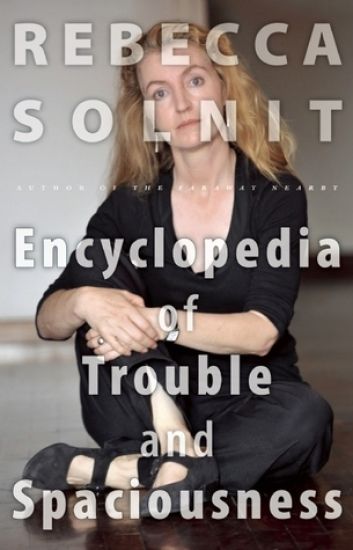
The Encyclopedia of Trouble and Spaciousness

The Encyclopedia of Trouble and Spaciousness

Rebecca Solnit

Trinity University Press,U.S.
2014
sidottu
The incomparable Rebecca Solnit, author of more than a dozen acclaimed books of nonfiction, brings the same dazzling writing to the twenty-nine essays in The Encyclopedia of Trouble and Spaciousness. As the title suggests, the territory of Solnit's concerns is vast, and in her signature alchemical style she combines commentary on history, justice, war and peace, and explorations of place, art, and community, all while writing with the lyricism of a poet to achieve incandescence and wisdom. Gathered here are celebrated iconic essays along with little-known pieces that create a powerful survey of the world we live in. In its encyclopedic reach and its generous compassion, Solnit's collection charts a way through the thickets of our complex social and political worlds. Like the women who've pioneered before her--Sontag, Didion, and Dillard--her essays are a beacon.
The Encyclopedia of Trouble and Spaciousness

The Encyclopedia of Trouble and Spaciousness

Rebecca Solnit

Trinity University Press,U.S.
2015
pokkari
The incomparable Rebecca Solnit, author of more than a dozen acclaimed, prizewinning books of nonfiction including Men Explain Things To Me, brings the same dazzling writing to the essays in The Encyclopedia of Trouble and Spaciousness; hailed by the Los Angeles Times as "globally wide-ranging and topically urgent and the Boston Globe as "luminous and precise.". As the title suggests, the territory of Solnit's concerns is vast, and in her signature alchemical style she combines commentary on history, justice, war and peace, and explorations of place, art, and community, all while writing with the lyricism of a poet to achieve incandescence and wisdom. Gathered here are celebrated iconic essays along with little-known pieces that create a powerful survey of the world we live in, from the jungles of the Zapatistas in Mexico to the splendors of the Arctic. This rich collection tours places as diverse as Haiti and Iceland; movements like Occupy Wall Street and the Arab Spring; an original take on the question of who did Henry David Thoreau's laundry; and a searching look at what the hatred of country music really means. Solnit moves nimbly from Orwell to Elvis, to contemporary urban gardening to 1970s California macrame and punk rock, and on to searing questions about the environment, freedom, family, class, work, and friendship. It's no wonder she's been compared in Bookforum to Susan Sontag and Annie Dillard and in the San Francisco Chronicle to Joan Didion. The Encyclopedia of Trouble and Spaciousness proves Rebecca Solnit worthy of the accolades and honors she's received. Rarely can a reader find such penetrating critiques of our time and its failures leavened with such generous heapings of hope. Solnit looks back to history and the progress of political movements to find an antidote to despair in what many feel as lost causes. In its encyclopedic reach and its generous compassion, Solnit's collection charts a way through the thickets of our complex social and political worlds. Her essays are a beacon for readers looking for alternative ideas in these imperiled times.
Call Them by Their True Names

Call Them by Their True Names

Rebecca Solnit

Haymarket Books
2018
sidottu
Rebecca Solnit is the author of more than twenty books including the international bestseller Men Explain Things to Me. Called "the voice of the resistance" by the New York Times, she has emerged as an essential guide to our times, through her incisive commentary on feminism, violence, ecology, hope, and everything in between.In this powerful and wide-ranging collection, Solnit turns her attention to battles over meaning, place, language, and belonging at the heart of the defining crises of our time. She explores the way emotions shape political life, electoral politics, police shootings and gentrification, the life of an extraordinary man on death row, the pipeline protest at Standing Rock, and the existential threat posed by climate change.Changing the world means changing the story, the names, and the language in which we describe it. Calling things by their true names can also cut through the lies that excuse, disguise, avoid, or encourage inaction, indifference, obliviousness in the face of injustice and violence.
Men Explain Things to Me

Men Explain Things to Me

Rebecca Solnit

Haymarket Books
2015
nidottu
"This slim book--seven essays, punctuated by enigmatic, haunting paintings by Ana Teresa Fernandez--hums with power and wit."--Boston Globe"The antidote to mansplaining."--The Stranger"Feminist, frequently funny, unflinchingly honest and often scathing in its conclusions."--Salon"Solnit tackles big themes of gender and power in these accessible essays. Honest and full of wit, this is an integral read that furthers the conversation on feminism and contemporary society."--San Francisco Chronicle Top Shelf"Solnit [is] the perfect writer to tackle the subject: her prose style is so clear and cool."--The New Republic"The terrain has always felt familiar, but Men Explain Things To Me is a tool that we all need in order to find something that was almost lost."--National PostIn her comic, scathing essay, "Men Explain Things to Me," Rebecca Solnit took on what often goes wrong in conversations between men and women. She wrote about men who wrongly assume they know things and wrongly assume women don't, about why this arises, and how this aspect of the gender wars works, airing some of her own hilariously awful encounters.This updated edition with two new essays of this national bestseller book features that now-classic essay as well as "#YesAllWomen," an essay written in response to 2014 Isla Vista killings and the grassroots movement that arose with it to end violence against women and misogyny, and the essay "Cassandra Syndrome." This book is also available in hardcover.Writer, historian, and activist Rebecca Solnit is the author of eighteen or so books on feminism, western and indigenous history, popular power, social change and insurrection, wandering and walking, hope and disaster, including the books Men Explain Things to Me and Hope in the Dark, both also with Haymarket; a trilogy of atlases of American cities; The Faraway Nearby;A Paradise Built in Hell: The Extraordinary Communities that Arise in Disaster; A Field Guide to Getting Lost; Wanderlust: A History of Walking; and River of Shadows, Eadweard Muybridge and the Technological Wild West (for which she received a Guggenheim, the National Book Critics Circle Award in criticism, and the Lannan Literary Award). A product of the California public education system from kindergarten to graduate school, she is a columnist at Harper's and a regular contributor to the Guardian.
Hope in the Dark

Hope in the Dark

Rebecca Solnit

Haymarket Books
2016
nidottu
"One of the Best Books of the 21st Century."--The Guardian"No writer has better understood the mix of fear and possibility, peril and exuberance that's marked this new millennium."--Bill McKibben "An elegant reminder that activist victories are easily forgotten, and that they often come in extremely unexpected, roundabout ways."--The New YorkerA book as powerful and influential as Rebecca Solnit's Men Explain Things to Me, her Hope in the Dark was written to counter the despair of radicals at a moment when they were focused on their losses and had turned their back to the victories behind them--and the unimaginable changes soon to come. In it, she makes a radical case for hope as a commitment to act in a world whose future remains uncertain and unknowable. Drawing on her decades of activism and a wide reading of environmental, cultural, and political history, Solnit argued that radicals have a long, neglected history of transformative victories, that the positive consequences of our acts are not always immediately seen, directly knowable, or even measurable, and that pessimism and despair rest on an unwarranted confidence about what is going to happen next. Now, with a moving new introduction explaining how the book came about and a new afterword that helps teach us how to hope and act in our unnerving world, she brings a new illumination to the darkness of 2016 in an unforgettable new edition of this classic book.Writer, historian, and activist Rebecca Solnit is the author of eighteen or so books on feminism, western and indigenous history, popular power, social change and insurrection, wandering and walking, hope and disaster, including the books Men Explain Things to Me and Hope in the Dark, both also with Haymarket; a trilogy of atlases of American cities; The Faraway Nearby;A Paradise Built in Hell: The Extraordinary Communities that Arise in Disaster; A Field Guide to Getting Lost; Wanderlust: A History of Walking; and River of Shadows, Eadweard Muybridge and the Technological Wild West (for which she received a Guggenheim, the National Book Critics Circle Award in criticism, and the Lannan Literary Award). A product of the California public education system from kindergarten to graduate school, she is a columnist at Harper's and a regular contributor to the Guardian.