Kirjojen hintavertailu. Mukana 12 016 292 kirjaa ja 12 kauppaa.

Kirjahaku

Etsi kirjoja tekijän nimen, kirjan nimen tai ISBN:n perusteella.

9 kirjaa tekijältä Recep Dogan

Unforgettable Words: Selection of Prophet Muhammad's (pbuh) Sayings from the Most Authentic Hadith Books
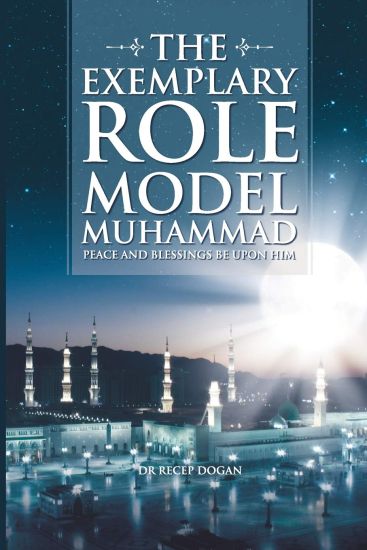
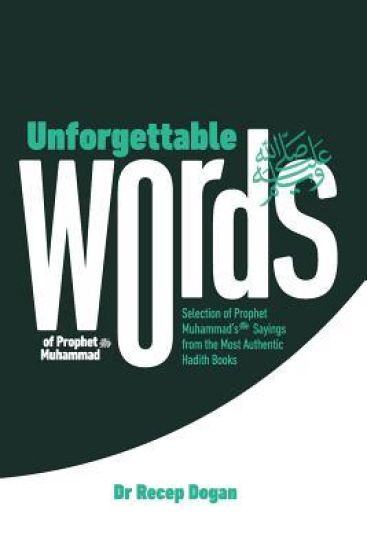
Hadith is the second source of Islam and it covers the Prophet's every act, word, and confirmation and as well as his physical descriptions. The science of hadith deals with Prophet Muhammad's life and intends to explain based on certain methodology and key concepts. The scholars in the field of hadith have undertaken painstaking efforts to verify the authenticity of hadith and developed hadith sciences and terminological concepts in this field. However, understanding the prophetic traditions based on methodology of hadith is not covered much in English language. Furthermore, hadith studies written in English which combine both traditional and contemporary approaches are very few. Therefore, I tried answer the need in this area by combining both traditional and contemporary approaches on the selected hadiths of important topics. Prophet Muhammad (ﷺ) is the exemplary role model for all human beings, especially, for Muslims. In order to live Islam in its best way possible Muslims must know the life, words and teachings of the Prophet. Because, it is one of the primary sources of Islam. Allah bestowed upon the Prophet the interpretation of al-Qur'an for the Sunnah of the Messenger of Allah (ﷺ) is composed of statement and action, it is derived from the Book of Allah, and is indicative of its meaning. Hadith, its plural form ahādīth, is a main source to learn Islam directly from the Prophet in its pure form. Although Prophet Muhammad addressed every aspect of life by his words, acts and conformation I could not take all ahādīth in this book for it requires very voluminous works. Thus, I chose hadiths on the most important topics which are most relevant to contemporary Muslims. Instead of making this book many volumes I restricted it to one volume to make it easy and handy for readers.
The Doctrine of Necessity (?aruriyyat) at the Hands of Political Islamists of Turkey
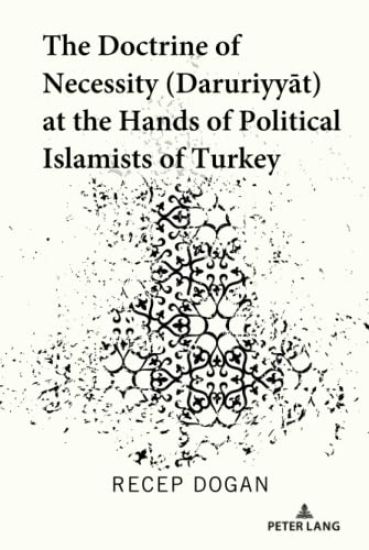
The Justice and Development Party (AKP), the ruling political Islamists of Turkey since 2002, has been using the doctrine of necessity to legitimize human rights violations. Recep Tayyip Erdogan, president of Turkey, founder of the AKP and leader of the political Islamists, demands unconditional obedience and full control of the state. Under his leadership, the AKP government has shut down all opposing media, schools and universities and put thousands of people in prisons based on a manipulation of the necessity doctrine. In the political context, hardships are interpreted as obstacles in the way of the political Islamists holding absolute power in the state. Therefore, they use this "necessity" concept as a means to preserve their political power against all potential threats after taking full control of the state. According to the political Islamists, minority groups can be sacrificed for the benefit of the majority. Their properties can be usurped and their lives can be terminated. In moderate Islamic understanding, the state and the ruler are in the service of Muslims, not the other way around. For political Islamists, the state and the ruler (the caliph) are considered so sacred that they need to be protected against all opponents. In order to protect the state against internal and external "infidels" the caliph can resort to unlawful means because the necessity doctrine makes the forbidden things permissible. In this book, the author analyzes the concept of necessity and its exploitation by the political Islamists.
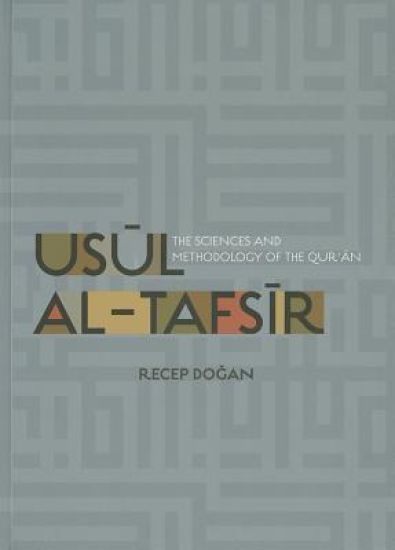
Usul al Tafsir

Usul al Tafsir

Recep Dogan

The Light Inc
2014
pokkari
This valuable work on the methodology of exegesis by Dr. Recep Dogan will serve as an important source of future works in the field. With his expertise in the history and exegesis of the Qur'an, as well as his familiarity and comprehensive understanding of Islamic disciplines, Dr. Dogan has managed to combine both classical and modern acquis. Presenting a variety of different approaches, Dr. Dogan also offers a broad range of Western approaches in reading the Qur'an.
Usul al-Fiqh

Usul al-Fiqh

Recep Dogan

The Light Inc
2014
nidottu
This book deals with the sources of Islamic jurisprudence and their importance in deducing the religious rulings. It covers the concept of ijtih d (independent reasoning), its conditions and application and illustrates why it is a practice for experts rather than laymen. It also explains the differences in the levels of expertise of the mujtahids. In fact, there are seven distinct classifications of mujtahid. The book also covers the communication of God as Lawgiver with regard to the conduct of liable persons. It details the difference in probative value of communication based on the extent to which it binds an individual be it absolutely binding, a recommendation or mere permissibility. The reader will be able to understand the difference between fiqh (law) and Us l al-Fiqh (methodology of law). Fiqh is the law itself whereas Us l al-Fiqh is the methodology utilized to extract the law. The relationship between the two disciplines resembles that of the rules of grammar to a language, or of logic to philosophy. Us l al-Fiqh in this sense provides the standard criteria for the correct deduction of the rulings of fiqh from the sources of Shari ah (the Qur an and Sunnah)."
Five Pillars of Islam

Five Pillars of Islam

Recep Dogan

Independently Published
2019
nidottu
Islam aims to bring happiness to the lives of human beings in this world and the afterlife by providing them with the most suitable lifestyle for the human condition. Islam is not imposed on individuals; it is practiced by the free will of human kind, and therefore leaves people free and respects their decisions. The religion of Islam has two main categories: the theological and the practical. Kalām, the theoretical aspect, is the belief system. Worship and life make up the practical aspect. Worship includes purification (wudu), the five daily prayers (salah), charity (zakat), fasting (sawm), pilgrimage (hajj) and similar activities. Life, is applying the religion to every aspect of human existence; individual, family, society and so on. This book focuses on worship and its relevant topics. To be able to perform sound and healthy worship, a Muslim must have an accurate knowledge of the religion. Islamic religion is a set of rules conveyed by Allah to human beings through messengers. Allah revealed Islam through Prophet Muhammad (pbuh) giving Muslims two main sources from which to learn their duties and worship: the Qur'an and Sunnah (the behavior and words of Prophet Muhammad (pbuh). In order to worship in the most authentic way, a Muslim must know both the Qur'an and Sunnah. Understanding the Qur'an and Sunnah has such an importance in Islam that prominent scholars with exemplary knowledge such as Abū Ḫanīfa (699-767 CE / 80-148 AH), Mālik (c. 711-795 CE / 93-179 AH), Shāfi (767-820 CE / 150-204 AH) and Aḫmad bin Hanbal (780-855 CE / 164-241 AH), established law schools enabling ordinary Muslims to practice Islam correctly in their daily lives by following their instruction.This book addresses the topic of worship from the perspective of the Ḫanafī School of Thought and explains the evidence for their rulings from the Qur'an, Sunnah and other sources. Since the emergence of the Ḫanafī School of Thought, its scholars have controversially been accused of neglecting the Sunnah and giving legal rulings based on personal opinions. During his life, Abū Ḫanīfa was able to successfully defend his position, proving that he followed the way of the Prophet (pbuh) precisely. This book also presents evidence that the Ḫanafī School of Thought gave rulings based on the Qur'an and Sunnah. If there was more than one piece of evidence for a ruling, they chose the strongest, most authentic evidence from the Sunnah and ruled accordingly. Abū Ḫanīfa belongs to the Kūfa School of Thought which goes all the way back to prominent jurists and Companions such as 'Ali bin Abū Tālib and 'Abdullah ibn Masud. Both of these Companions spent most of their time with the Prophet (pbuh) from the beginning of his prophethood until his death, not only did they witness the practices of Islam at first hand, but also had a deep understanding of the whole religion. When giving a ruling, if there were any conflicting pieces of evidence, Abū Ḫanīfa preferred the narration of a Hadith from these Companions over the others. In this book I have covered the pillars of Islam; the book of purification (wudu), the five daily prayers (ṣalah), charity (zakat), fasting (sawm) and pilgrimage (ḫajj). Before explaining these topics, I have described some concepts that are frequently used in fiqh terminology with the aim of making the topic easier to understand for those who are not familiar with such words.
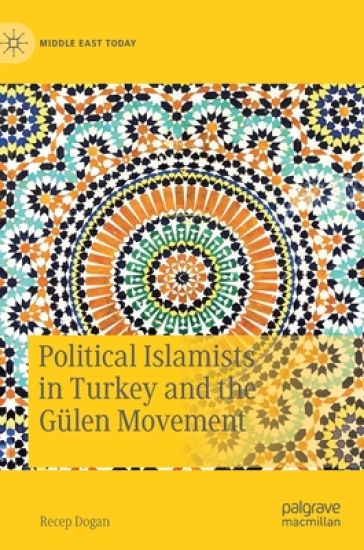
Political Islamists in Turkey and the Gülen Movement

Political Islamists in Turkey and the Gülen Movement

Recep Dogan

Springer Nature Switzerland AG
2019
sidottu
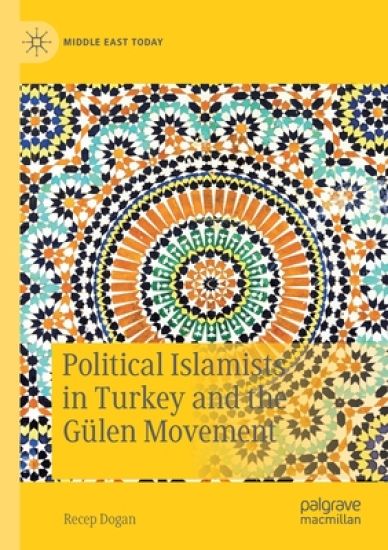
This book explores the struggle and differences between the current governmental power, the AKP, and the Gülen movement, the leading civic Islamic movement, in Turkey. It discusses the history of relations between the AKP and the Gülen movement and analyzes the reasons that caused tensions and, eventually, a radical rupture between them. In order to help readers to better understand the difference between Political Islam and civil Islam, the project explains the political theology of each group and compares them to each other. The author explains the human rights violations, restrictions on the media and the destruction of democratic institutions in Erdogan’s New Turkey project. This is an ideal monograph for scholars interested in the Middle East, sociology, and political Islam.
Political Islamists in Turkey and the Gülen Movement

Political Islamists in Turkey and the Gülen Movement

Recep Dogan

Springer Nature Switzerland AG
2020
nidottu
This book explores the struggle and differences between the current governmental power, the AKP, and the Gülen movement, the leading civic Islamic movement, in Turkey. It discusses the history of relations between the AKP and the Gülen movement and analyzes the reasons that caused tensions and, eventually, a radical rupture between them. In order to help readers to better understand the difference between Political Islam and civil Islam, the project explains the political theology of each group and compares them to each other. The author explains the human rights violations, restrictions on the media and the destruction of democratic institutions in Erdogan’s New Turkey project. This is an ideal monograph for scholars interested in the Middle East, sociology, and political Islam.