Kirjojen hintavertailu. Mukana 11 447 317 kirjaa ja 12 kauppaa.

Kirjahaku

Etsi kirjoja tekijän nimen, kirjan nimen tai ISBN:n perusteella.

3 kirjaa tekijältä Reena Tiwari

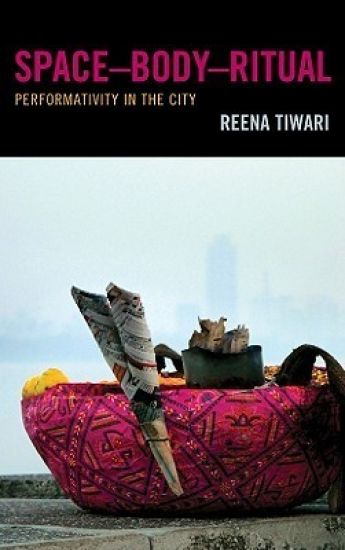
Space-Body-Ritual

Space-Body-Ritual

Reena Tiwari

Lexington Books
2010
sidottu
Set against the contemporary thinking of the city as a spectacle, Space–Body–Ritual: Performativity in the City establishes everyday life in the city as a ground for authentic experience. Reena Tiwari emphasizes the city as a space of lived experience-an intricately layered space giving people a poetic experience, responding to their memories and desires. She also explores the conflict between two ideas: the idea of thee 'city as text' to be read and understood from a distance, and the 'city as body,' where the body, after writing the text through its performance, achieves the capacity to read and understand it. Space–Body–Ritual demonstrates that the abstract 'seeing' embedded in the 'city as a text' is underwritten by the idea of power operating at deeper levels in the city. This hidden power is the power of the user's body in space. Furthermore, Tiwari proposes that an understanding of the 'city as body' through lived experience-through rhythmanalysis, where rhythms of everyday and extra everyday practices are understood-leads to the design of an environment that is evocative and is able to generate a bodily response from the user. To understand the rhythms, it becomes essential to know the way users inhabit, understand and map or present the city spaces by their bodies. Space–Body–Ritual will compel its readership to think of the parameters of spatial design as cultural generator.
Connecting Places, Connecting People
What is a better community? How can we reconfigure places and transport networks to create environmentally friendly, economically sound, and socially just communities? How can we meet the challenges of growing pollution, depleting fossil fuels, rising gasoline prices, traffic congestion, traffic fatalities, increased prevalence of obesity, and lack of social inclusion? The era of car-based planning has led to the disconnection of people and place in developed countries, and is rapidly doing so in the developing countries of the Global South. The unfolding mega-trend in technological innovation, while adding new patterns of future living and mobility in the cities, will question the relevance of face-to-face connections. What will be the ‘glue’ that holds communities together in the future? To build better communities and to build better cities, we need to reconnect people and places. Connecting Places, Connecting People offers a new paradigm for place making by reordering urban planning principles from prioritizing movement of vehicles to focusing on places and the people who live in them. Numerous case studies, including many from developing countries in the Global South, illustrate how this can be realized or fallen short of in practical terms. Importantly, citizens need to be engaged in policy development, to connect with each other and with government agencies. To measure the connectivity attributes of places and the success of strategies to meet the needs, an Audit Tool is offered for a continual quantitative and qualitative evaluation.
Connecting Places, Connecting People
What is a better community? How can we reconfigure places and transport networks to create environmentally friendly, economically sound, and socially just communities? How can we meet the challenges of growing pollution, depleting fossil fuels, rising gasoline prices, traffic congestion, traffic fatalities, increased prevalence of obesity, and lack of social inclusion? The era of car-based planning has led to the disconnection of people and place in developed countries, and is rapidly doing so in the developing countries of the Global South. The unfolding mega-trend in technological innovation, while adding new patterns of future living and mobility in the cities, will question the relevance of face-to-face connections. What will be the ‘glue’ that holds communities together in the future? To build better communities and to build better cities, we need to reconnect people and places. Connecting Places, Connecting People offers a new paradigm for place making by reordering urban planning principles from prioritizing movement of vehicles to focusing on places and the people who live in them. Numerous case studies, including many from developing countries in the Global South, illustrate how this can be realized or fallen short of in practical terms. Importantly, citizens need to be engaged in policy development, to connect with each other and with government agencies. To measure the connectivity attributes of places and the success of strategies to meet the needs, an Audit Tool is offered for a continual quantitative and qualitative evaluation.