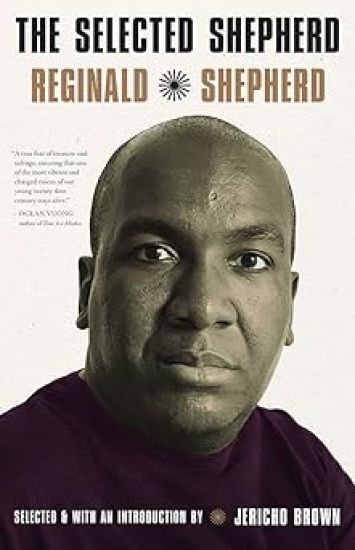
Drawing from all six of his collections, The Selected Shepherd offers a new retrospective on the work of an important and sometimes controversial Black, gay poet. Although well known for his erotic poems about white men, Shepherd also wrote consistently about the natural world and its endangerment and his grief over his mother’s death. Presented in both publication order and the order in which they originally appeared within each collection, these poems highlight the most important themes of Shepherd’s work, along with both his predictability and unpredictability as a poet. Jericho Brown’s introduction provides additional context and insight on the life and work of this complex, groundbreaking figure in American poetry.
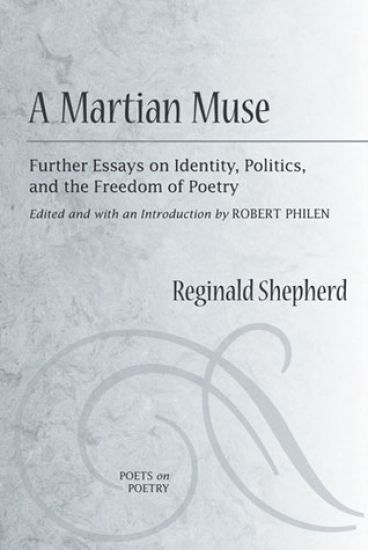
Those who have read Orpheus in the Bronx, Reginald Shepherd's previous collection of essays about the act of creating poetry, and those who take on the task, can immediately understand why it was a national finalist for a prestigious National Book Critics Circle Award. Shepherd was candid and disarming, practical and funny, able to mix thoughts about the Transformers with meditations on the realities of growing up poor. This is Reginald Shepherd's final opportunity to speak his mind about the craft he loved, the art of using words to express the soul and the wit of every person's experience. Edited by Shepherd's longtime partner and intellectual confidant, Robert Philen, A Martian Muse stands as a final monument to a master in the craft, but is also a readable, important work in its own right."Reginald Shepherd died September 10, 2008, after a hard struggle with cancer. While he had completed the essays presented here and had selected them from his available essays to form a collection, he didn't have time to organize the presentation of the essays within the collection. "The task of editing this collection has been a daunting challenge as I struggle to live up to the level of intellectual engagement, clarity, and coherence that Reginald always expected. While daunting, it has also been a labor of love and a compulsion for me, based on the many years I spent with him as a partner, friend, lover, intellectual companion, and sharer of common passions." ---Robert Philen, from the Introduction Reginald Shepherd was the editor of The Iowa Anthology of New American Poetries and Lyric Postmodernisms: An Anthology of Contemporary Innovative Poetries and the author of five books of poetry. He was a finalist for the 2009 National Book Critics Circle Award and was the recipient of grants from the NEA, the Illinois Arts Council, the Saltonstall Foundation, the Florida Arts Council, and the Vogelstein Foundation, among many other awards and honors.
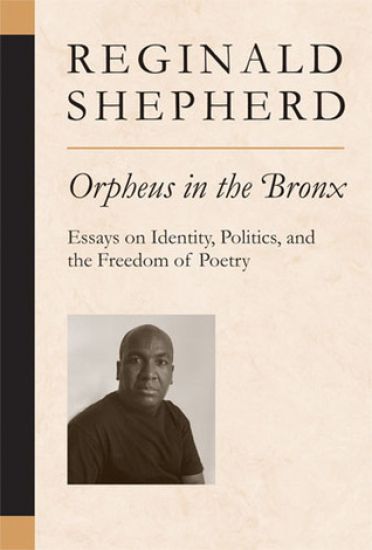
"Orpheus in the Bronx not only extols the freedom language affords us; it embodies that freedom, enacting poetry's greatest gift---the power to recognize ourselves as something other than what we are. These bracing arguments were written by a poet who sings."---James LongenbachA highly acute writer, scholar, editor, and critic, Reginald Shepherd brings to his work the sensibilities of a classicist and a contemporary theorist, an inheritor of the American high modernist canon, and a poet drawing and playing on popular culture, while simultaneously venturing into formal experimentation. In the essays collected here, Shepherd offers probing meditations unified by a "resolute defense of poetry's autonomy, and a celebration of the liberatory and utopian possibilities such autonomy offers." Among the pieces included are an eloquent autobiographical essay setting out in the frankest terms the vicissitudes of a Bronx ghetto childhood; the escape offered by books and "gifted" status preserved by maternal determination; early loss and the equivalent of exile; and the formation of the writer's vocation. With the same frankness that he brings to autobiography, Shepherd also sets out his reasons for rejecting "identity politics" in poetry as an unnecessary trammeling of literary imagination. His study of the "urban pastoral," from Baudelaire through Eliot, Crane, and Gwendolyn Brooks, to Shepherd's own work, provides a fresh view of the place of urban landscape in American poetry.Throughout his essays---as in his poetry---Shepherd juxtaposes unabashed lyricism, historical awareness, and in-your-face contemporaneity, bristling with intelligence.A volume in the Poets on Poetry series, which collects critical works by contemporary poets, gathering together the articles, interviews, and book reviews by which they have articulated the poetics of a new generation.
Those who have read Orpheus in the Bronx, Reginald Shepherd's previous collection of essays about the act of creating poetry, and those who take on the task, can immediately understand why it was a national finalist for a prestigious National Book Critics Circle Award. Shepherd was candid and disarming, practical and funny, able to mix thoughts about the Transformers with meditations on the realities of growing up poor. This is Reginald Shepherd's final opportunity to speak his mind about the craft he loved, the art of using words to express the soul and the wit of every person's experience. Edited by Shepherd's longtime partner and intellectual confidant, Robert Philen, A Martian Muse stands as a final monument to a master in the craft, but is also a readable, important work in its own right."Reginald Shepherd died September 10, 2008, after a hard struggle with cancer. While he had completed the essays presented here and had selected them from his available essays to form a collection, he didn't have time to organize the presentation of the essays within the collection. "The task of editing this collection has been a daunting challenge as I struggle to live up to the level of intellectual engagement, clarity, and coherence that Reginald always expected. While daunting, it has also been a labor of love and a compulsion for me, based on the many years I spent with him as a partner, friend, lover, intellectual companion, and sharer of common passions." ---Robert Philen, from the Introduction Reginald Shepherd was the editor of The Iowa Anthology of New American Poetries and Lyric Postmodernisms: An Anthology of Contemporary Innovative Poetries and the author of five books of poetry. He was a finalist for the 2009 National Book Critics Circle Award and was the recipient of grants from the NEA, the Illinois Arts Council, the Saltonstall Foundation, the Florida Arts Council, and the Vogelstein Foundation, among many other awards and honors.
"Orpheus in the Bronx not only extols the freedom language affords us; it embodies that freedom, enacting poetry's greatest gift---the power to recognize ourselves as something other than what we are. These bracing arguments were written by a poet who sings."---James LongenbachA highly acute writer, scholar, editor, and critic, Reginald Shepherd brings to his work the sensibilities of a classicist and a contemporary theorist, an inheritor of the American high modernist canon, and a poet drawing and playing on popular culture, while simultaneously venturing into formal experimentation. In the essays collected here, Shepherd offers probing meditations unified by a "resolute defense of poetry's autonomy, and a celebration of the liberatory and utopian possibilities such autonomy offers." Among the pieces included are an eloquent autobiographical essay setting out in the frankest terms the vicissitudes of a Bronx ghetto childhood; the escape offered by books and "gifted" status preserved by maternal determination; early loss and the equivalent of exile; and the formation of the writer's vocation. With the same frankness that he brings to autobiography, Shepherd also sets out his reasons for rejecting "identity politics" in poetry as an unnecessary trammeling of literary imagination. His study of the "urban pastoral," from Baudelaire through Eliot, Crane, and Gwendolyn Brooks, to Shepherd's own work, provides a fresh view of the place of urban landscape in American poetry.Throughout his essays---as in his poetry---Shepherd juxtaposes unabashed lyricism, historical awareness, and in-your-face contemporaneity, bristling with intelligence.A volume in the Poets on Poetry series, which collects critical works by contemporary poets, gathering together the articles, interviews, and book reviews by which they have articulated the poetics of a new generation.
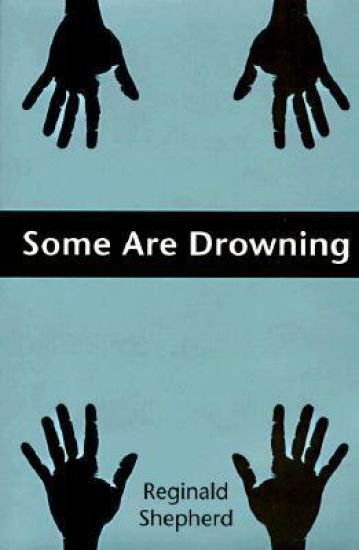
This first collection of poems enacts the struggle of a young black gay man in his search for identity. Many voices haunt these poems: black and white, male and female, the oppressor's voice as well as the oppressed. The poet's aim, finally, is to rescue some portion of the drowned and the drowning.
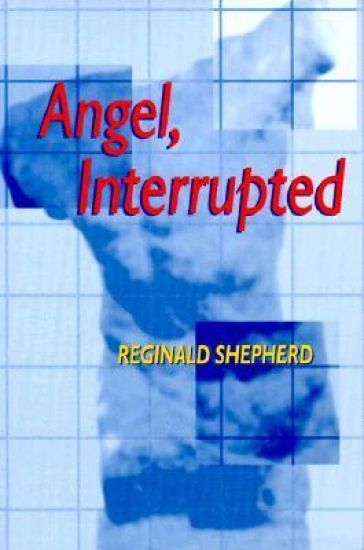
Angel, Interupted is Reginald Shepherd's second poetry collection. The poems are lyrical, streetwise and contemporary, yet timeless, classically referential, and introspective.
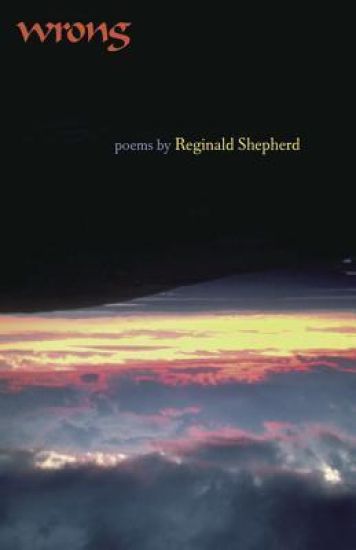
The poems of Reginald Shepherd’s third book move among, mix, and manufacture stories, seeking to redefine the meaning of mythology. From the ruined representatives of Greek divinity (broken statues and fragmented stories), and the dazzling extravagances of predecessors like Hart Crane and Wallace Stevens, to the fleeting promises of popular music and the laconic demigods of the contemporary gay subculture, they sketch maps of a world in which desire may find a restless home. But desire leads the maps astray and maps mislead desire. The poems poems both enact language’s powers to create a world and enforce the world’s insistence (material, social, sexual, racial, historical) that mind (and body) surrender to circumstance. The struggle between these two halves that will never make a whole produces new myths of occasion, “packing the rifts/with sleeplessness, filling the gaps with lack.” In that space between promise and deprivation, Wrong builds its song.
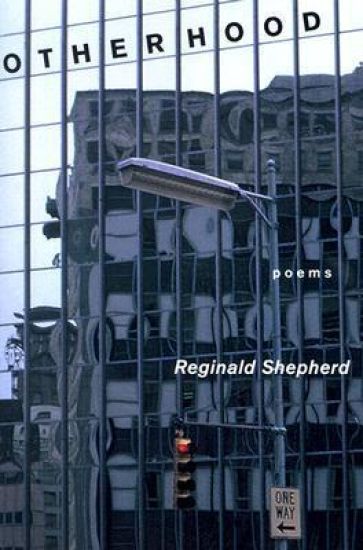
Written in the spaces between otherness and brotherhood, Otherhood combines traditional lyricism with experimentalism, passionate engagement with cold-eyed investigation, and personal details with a depersonalized distance to create a new poetic synthesis.
Fata Morgana mingles personal experience, history, mythology, politics, and natural science to explore the relationships of conception and perception, the self finding its way through a physical and social world not of its own making, but changing the world by its presence.
“Among other things, Shepherd has always been an elemental poet. His work abounds with the imagery and motifs of water and fire, and while those elements are important here, it is air and earth that are the more dominant elements in this collection. . . .Clay, red clay in particular, recurs several times throughout the collection as a motif of earth. It is the substance of creation, but always of impermanent things, whether heroes or Babylonian statues with feet of clay, or of things durable but fragile, such as the cuneiform tablets of ‘A Parking Lot Just Outside the Ruins of Babylon.’”—Robert Philen, from the Foreword