Kirjojen hintavertailu. Mukana 11 627 220 kirjaa ja 12 kauppaa.

Kirjahaku

Etsi kirjoja tekijän nimen, kirjan nimen tai ISBN:n perusteella.

7 kirjaa tekijältä Regna Darnell

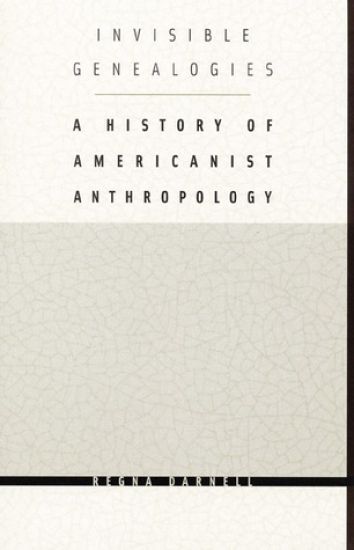
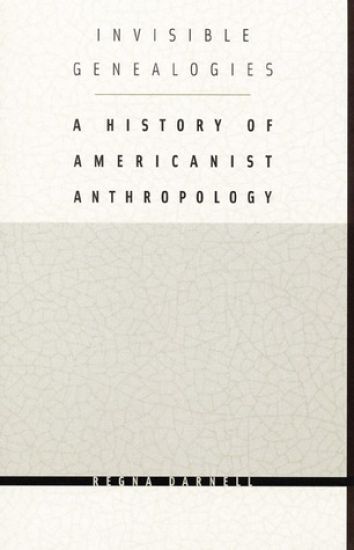
Invisible Genealogies

Invisible Genealogies

Regna Darnell

University of Nebraska Press
2001
sidottu
"Invisible Genealogies" is a landmark reinterpretation of the history of anthropology in North America. During the past two decades, theorizing by many American anthropologists has called for an 'experimental moment' grounded in explicit self-reflexive scholarship and experimentation with alternate forms of presentation. Such postmodern anthropology has effectively downplayed connections with past luminaries in the field, whose scholarship is perceived to be uncomfortably colonialist and non reflexive.Ironically, as the American Anthropological Association nears its one hundredth anniversary and interest in the history of the discipline is at an all-time high, that history has been effectively presented as removed and irrelevant to the new generation. "Invisible Genealogies" offers an alternative, compelling vision of the development of anthropology in North America, one that emphasizes continuity rather than discontinuity from legendary founder Franz Boas to the present.Regna Darnell identifies key interpretive assumptions and practices that have persisted, sometimes in modified form, since the seminal work of A. L.Kroeber, Boas, Ruth Benedict, Edward Sapir, Elsie Clews Parsons, Paul Radin, Benjamin Lee Whorf, and A. Irving Hallowell during the founding decades of anthropology. Also highlighted are the Americanist roots of postmodern anthropology and the work of seminal recent scholars like Claude Levi-Strauss and Clifford Geertz. Regna Darnell is a professor of anthropology at the University of Western Ontario. Her many works include "And Along Came Boas: Continuity and Revolution in Americanist Anthropology" and "Edward Sapir: Linguist, Anthropologist, Humanist".
Edward Sapir

Edward Sapir

Regna Darnell

University of Nebraska Press
2010
pokkari
This first full-scale biography of Edward Sapir (1884–1939) does justice to the life and ideas of the most distinguished linguist of Boasian anthropology, who contributed substantially to the professionalization of linguistics as an independent discipline. Sapir was the first to apply comparative Indo-European methods to the study of American Indian languages, pursuing fieldwork on more than twenty of them. His theoretical work on the relationship between the individual personality and culture remains a major part of culture theory in anthropology, as does his insistence on the symbolic nature of culture and the importance of culture as understood and articulated by its members. The first professional anthropologist in Canada and teacher of a whole generation of North American linguists and anthropologists at Chicago and Yale, Sapir also wrote poetry and literary criticism. He insisted on the humanistic nature of anthropology and was the most articulate spokesman for the interdisciplinary social science of the late 1920s and 1930s. All the richness and diversity of Sapir’s relatively short life are conveyed by Regna Darnell in an engrossing narrative that combines profound knowledge of her subject with historical reconstruction.
Invisible Genealogies

Invisible Genealogies

Regna Darnell

University of Nebraska Press
2001
pokkari
Invisible Genealogies is a landmark reinterpretation of the history of anthropology in North America. During the past two decades, theorizing by many American anthropologists has called for an "experimental moment" grounded in explicit self-reflexive scholarship and experimentation with alternate forms of presentation. Such postmodern anthropology has effectively downplayed connections with past luminaries in the field, whose scholarship is perceived to be uncomfortably colonialist and nonreflexive. Ironically, as the American Anthropological Association nears its one hundredth anniversary and interest in the history of the discipline is at an all-time high, that history has been effectively presented as removed from and irrelevant to the new generation. Invisible Genealogies offers an alternative, compelling vision of the development of anthropology in North America, one that emphasizes continuity rather than discontinuity from legendary founder Franz Boas to the present. Regna Darnell identifies key interpretive assumptions and practices that have persisted, sometimes in modified form, since the groundbreaking work of A. L. Kroeber, Boas, Ruth Benedict, Edward Sapir, Elsie Clews Parsons, Paul Radin, Benjamin Lee Whorf, and A. Irving Hallowell during the founding decades of anthropology. Also highlighted are the Americanist roots of postmodern anthropology and the work of innovative recent scholars like Claude Lévi-Strauss and Clifford Geertz.
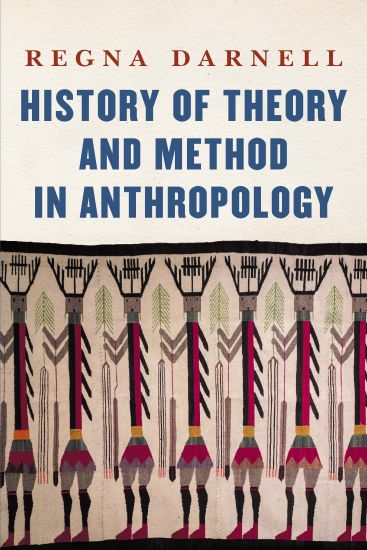
History of Theory and Method in Anthropology

History of Theory and Method in Anthropology

Regna Darnell

University of Nebraska Press
2022
sidottu
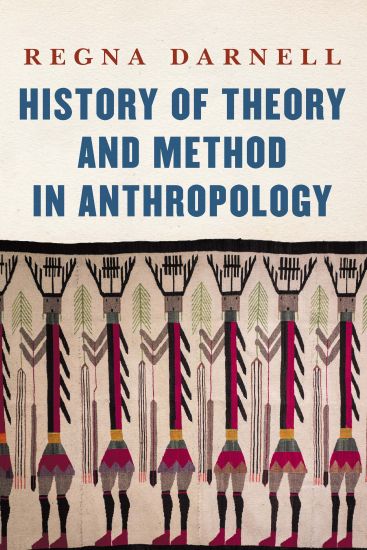
Regna Darnell offers a critical reexamination of the theoretical orientation of the Americanist tradition, centered on the work of Franz Boas, and the professionalization of anthropology as an academic discipline in the United States in the late nineteenth and early twentieth centuries. History of Theory and Method in Anthropology reveals the theory schools, institutions, and social networks of scholars and fieldworkers primarily interested in the ethnography of North American Indigenous peoples. Darnell’s fifty-year career entails foundational writings in the four fields of the discipline: cultural anthropology, ethnography, linguistics, and physical anthropology. Leading researchers, theorists, and fieldwork subjects include Claude Lévi-Strauss, Franz Boas, Benjamin Lee Whorf, John Wesley Powell, Frederica de Laguna, Dell Hymes, George Stocking Jr., and Anthony F. C. Wallace, as well as nineteenth-century Native language classifications, ethnography, ethnohistory, social psychology, structuralism, rationalism, biologism, mentalism, race science, human nature and cultural relativism, ethnocentrism, standpoint-based epistemology, collaborative research, and applied anthropology. History of Theory and Method in Anthropology is an essential volume for scholars and undergraduate and graduate students to enter into the history of the inductive theory schools and methodologies of the Americanist tradition and its legacies.
The History of Anthropology

The History of Anthropology

Regna Darnell

University of Nebraska Press
2021
sidottu
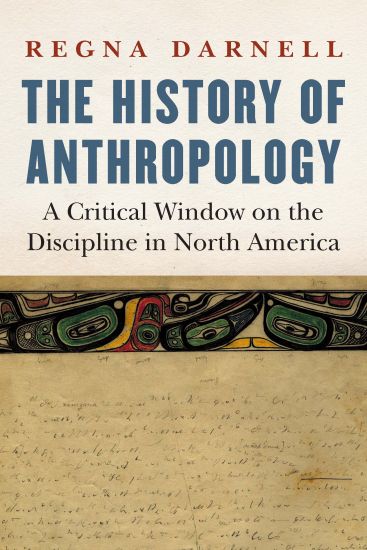
In The History of Anthropology Regna Darnell offers a critical reexamination of the Americanist tradition centered around the figure of Franz Boas and the professionalization of anthropology as an academic discipline in the late nineteenth and early twentieth centuries. Focused on researchers often known as the Boasians, The History of Anthropology reveals the theoretical schools, institutions, and social networks of scholars and fieldworkers primarily interested in the anthropology and ethnography of North American Indigenous peoples. Darnell’s fifty-year career entails seminal writings in the history of anthropology’s four fields: cultural anthropology, ethnography, linguistics, and physical anthropology. Leading researchers, theorists, and fieldwork subjects include Edward Sapir, Daniel Brinton, Mary Haas, Franz Boas, Leonard Bloomfield, Benjamin Lee Whorf, Stanley Newman, and A. Irving Hallowell, as well as the professionalization of anthropology, the development of American folklore scholarship, theories of Indigenous languages, Southwest ethnographic research, Indigenous ceremonialism, text traditions, and anthropology’s forays into contemporary public intellectual debates.The History of Anthropology is the essential volume for scholars, undergraduates, and graduate students to enter into the history of the Americanist tradition and its legacies, alternating historicism and presentism to contextualize anthropology’s historical and contemporary relevance and legacies.
The History of Anthropology

The History of Anthropology

Regna Darnell

University of Nebraska Press
2021
pokkari
In The History of Anthropology Regna Darnell offers a critical reexamination of the Americanist tradition centered around the figure of Franz Boas and the professionalization of anthropology as an academic discipline in the late nineteenth and early twentieth centuries. Focused on researchers often known as the Boasians, The History of Anthropology reveals the theoretical schools, institutions, and social networks of scholars and fieldworkers primarily interested in the anthropology and ethnography of North American Indigenous peoples. Darnell’s fifty-year career entails seminal writings in the history of anthropology’s four fields: cultural anthropology, ethnography, linguistics, and physical anthropology. Leading researchers, theorists, and fieldwork subjects include Edward Sapir, Daniel Brinton, Mary Haas, Franz Boas, Leonard Bloomfield, Benjamin Lee Whorf, Stanley Newman, and A. Irving Hallowell, as well as the professionalization of anthropology, the development of American folklore scholarship, theories of Indigenous languages, Southwest ethnographic research, Indigenous ceremonialism, text traditions, and anthropology’s forays into contemporary public intellectual debates.The History of Anthropology is the essential volume for scholars, undergraduates, and graduate students to enter into the history of the Americanist tradition and its legacies, alternating historicism and presentism to contextualize anthropology’s historical and contemporary relevance and legacies.
History of Theory and Method in Anthropology

History of Theory and Method in Anthropology

Regna Darnell

University of Nebraska Press
2022
pokkari
Regna Darnell offers a critical reexamination of the theoretical orientation of the Americanist tradition, centered on the work of Franz Boas, and the professionalization of anthropology as an academic discipline in the United States in the late nineteenth and early twentieth centuries. History of Theory and Method in Anthropology reveals the theory schools, institutions, and social networks of scholars and fieldworkers primarily interested in the ethnography of North American Indigenous peoples. Darnell’s fifty-year career entails foundational writings in the four fields of the discipline: cultural anthropology, ethnography, linguistics, and physical anthropology. Leading researchers, theorists, and fieldwork subjects include Claude Lévi-Strauss, Franz Boas, Benjamin Lee Whorf, John Wesley Powell, Frederica de Laguna, Dell Hymes, George Stocking Jr., and Anthony F. C. Wallace, as well as nineteenth-century Native language classifications, ethnography, ethnohistory, social psychology, structuralism, rationalism, biologism, mentalism, race science, human nature and cultural relativism, ethnocentrism, standpoint-based epistemology, collaborative research, and applied anthropology. History of Theory and Method in Anthropology is an essential volume for scholars and undergraduate and graduate students to enter into the history of the inductive theory schools and methodologies of the Americanist tradition and its legacies.