Kirjojen hintavertailu. Mukana 11 244 527 kirjaa ja 12 kauppaa.

Kirjahaku

Etsi kirjoja tekijän nimen, kirjan nimen tai ISBN:n perusteella.

6 kirjaa tekijältä Reina Lewis

Gendering Orientalism

Gendering Orientalism

Reina Lewis

Routledge
1995
nidottu
In contrast to most cultural histories of imperialism, which analyse Orientalist images of rather than by women, Gendering Orientalism focuses on the contributions of women themselves. Drawing on the little-known work of Henriette Browne, other `lost' women Orientlist artists and the literary works of George Eliot, Reina Lewis challenges masculinist assumptions relating to the stability and homogeneity of the Orientalist gaze.Gendering Orientalism argues that women did not have a straightforward access to an implicitly nale position of western superiority, Their relationship to the shifting terms of race, nation and gender produced positions from which women writers and artists could articulate alternative representations of racial difference. It is this different, and often less degrading, gaze on the Orientalized `Other' that is analysed in this book. By revealing the extent of women's involvement in the popular field of visual Orientalism and highlighting the presence of Orientalist themes in the work of Browne, Eliot and Charlotte Bronte, reina Lewis uncovers women's roles in imperial culture and discourse.Gendering Orientalism will appeal to students, lecturers and researchers in cultural studies, literature, art history, women's studies and anthropology.
Rethinking Orientalism

Rethinking Orientalism

Reina Lewis

RUTGERS UNIVERSITY PRESS
2004
pokkari
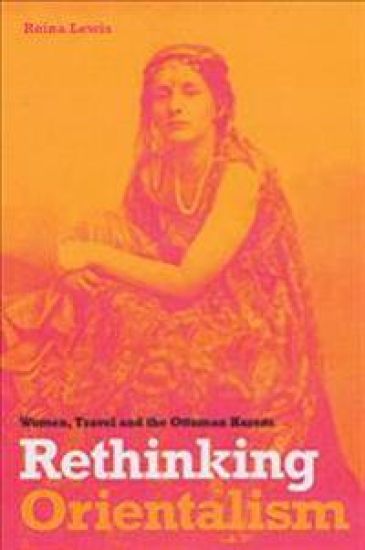
During the nineteenth century, the figure of the passive, oppressed, yet highly sexualized female of the Muslim harem became the pivotal figure of Western orientalism. Despite recent challenges to orientalist thinking, however, an enduring mystique continues to surround Western perceptions of Eastern women. In Rethinking Orientalism, Reina Lewis makes a major contribution to correcting the prevailing stereotype of the subjugated, silenced woman of the harem. Bringing together published autobiographical accounts of self-identified "Oriental" women at the turn of the twentieth century, she reveals that these women were, in fact, able to intervene in orientalist culture and manipulate cultural codes. Lewis shows how the writings of Demetra Vaka Brown, Halide Edib, Zeyneb Hanum, Melek Hanum, and Grace Ellison were part of a social and textual dialogue with Western women, and how their contentious engagement with Western feminism was an important facet of regional modernization. Exploring the complicated ways that these writers addressed topics such as seclusion, the veil, and polygamy, Lewis vividly illustrates the possibilities and limitations of resistance that women from Islamic societies have experienced and continue to work within.
Muslim Fashion

Muslim Fashion

Reina Lewis

Duke University Press
2015
sidottu
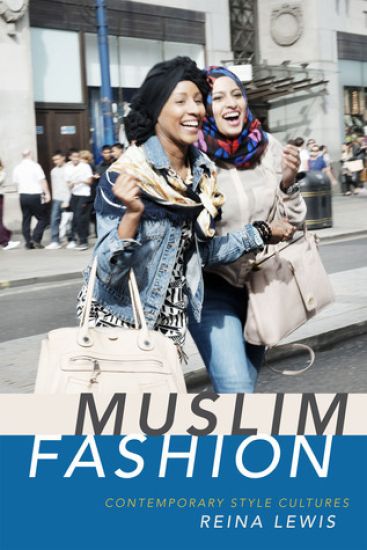
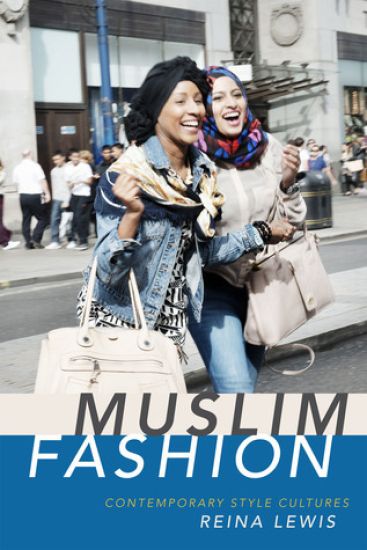
In the shops of London's Oxford Street, girls wear patterned scarves over their hair as they cluster around makeup counters. Alongside them, hip twenty-somethings style their head-wraps in high black topknots to match their black boot-cut trousers. Participating in the world of popular mainstream fashion-often thought to be the domain of the West-these young Muslim women are part of an emergent cross-faith transnational youth subculture of modest fashion. In treating hijab and other forms of modest clothing as fashion, Reina Lewis counters the overuse of images of veiled women as "evidence" in the prevalent suggestion that Muslims and Islam are incompatible with Western modernity. Muslim Fashion contextualizes modest wardrobe styling within Islamic and global consumer cultures, interviewing key players including designers, bloggers, shoppers, store clerks, and shop owners. Focusing on Britain, North America, and Turkey, Lewis provides insights into the ways young Muslim women use multiple fashion systems to negotiate religion, identity, and ethnicity.
Muslim Fashion

Muslim Fashion

Reina Lewis

Duke University Press
2015
pokkari
In the shops of London's Oxford Street, girls wear patterned scarves over their hair as they cluster around makeup counters. Alongside them, hip twenty-somethings style their head-wraps in high black topknots to match their black boot-cut trousers. Participating in the world of popular mainstream fashion-often thought to be the domain of the West-these young Muslim women are part of an emergent cross-faith transnational youth subculture of modest fashion. In treating hijab and other forms of modest clothing as fashion, Reina Lewis counters the overuse of images of veiled women as "evidence" in the prevalent suggestion that Muslims and Islam are incompatible with Western modernity. Muslim Fashion contextualizes modest wardrobe styling within Islamic and global consumer cultures, interviewing key players including designers, bloggers, shoppers, store clerks, and shop owners. Focusing on Britain, North America, and Turkey, Lewis provides insights into the ways young Muslim women use multiple fashion systems to negotiate religion, identity, and ethnicity.
Gendering Orientalism

Gendering Orientalism

Reina Lewis

Routledge
2017
sidottu
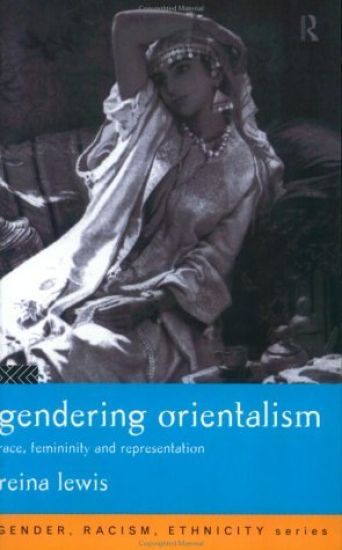
In contrast to most cultural histories of imperialism, which analyse Orientalist images of rather than by women, Gendering Orientalism focuses on the contributions of women themselves. Drawing on the little-known work of Henriette Browne, other `lost' women Orientlist artists and the literary works of George Eliot, Reina Lewis challenges masculinist assumptions relating to the stability and homogeneity of the Orientalist gaze.Gendering Orientalism argues that women did not have a straightforward access to an implicitly nale position of western superiority, Their relationship to the shifting terms of race, nation and gender produced positions from which women writers and artists could articulate alternative representations of racial difference. It is this different, and often less degrading, gaze on the Orientalized `Other' that is analysed in this book. By revealing the extent of women's involvement in the popular field of visual Orientalism and highlighting the presence of Orientalist themes in the work of Browne, Eliot and Charlotte Bronte, reina Lewis uncovers women's roles in imperial culture and discourse. Gendering Orientalism will appeal to students, lecturers and researchers in cultural studies, literature, art history, women's studies and anthropology.
Rethinking Orientalism

Rethinking Orientalism

Reina Lewis

I.B. Tauris
2004
nidottu
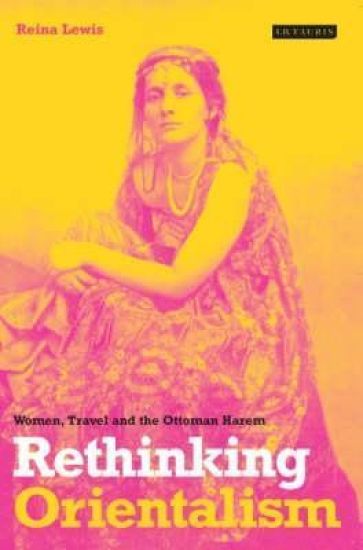
The oppressed yet highly sexualized woman of the Muslim harem is arguably the pivotal figure of Western orientalism. Yet, as Reina Lewis demonstrates, while orientalist thinking had recently been challenged, Western understandings of Middle Eastern culture remain limited. This book presents alternative dialogues between Ottoman and Western women. Lewis examines, from the position of cultural theory, the published autobiographical accounts about segregated life of self-identified "Oriental" women Demetra Vaka Brown, Halide Edib, Zeyneb Hanum, Melek Hanum and Grace Ellison. Bringing her subjects vividly to life, Lewis uses these texts to challenge the Western orientalist stereotypes that have become commonplace within postcolonial theory.