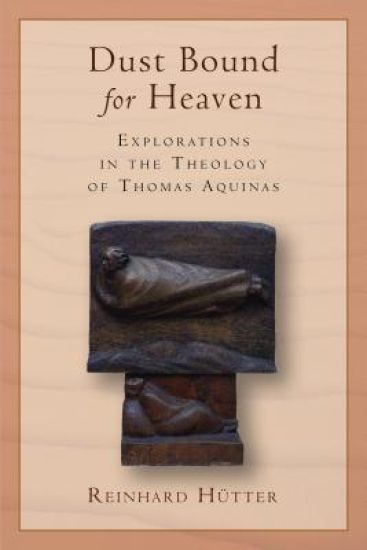
In Dust Bound for Heaven Reinhard Hutter shows how Thomas Aquinas's view of the human being as dust bound for heaven weaves together elements of two questions without fusion or reduction. Does humanity still have an insatiable thirst for God that sends each person on an irrepressible religious quest that only the vision of God can quench? Or must the human being, living after the fall, become a -new creation- in order to be readied for heaven? Hutter also applies Thomas's anthropology to a host of pressing contemporary concerns, including the modern crisis of faith and reason, political theology, the relationship between divine grace and human freedom, and many more. The concluding chapter explores the Christological center of Thomas's theology.
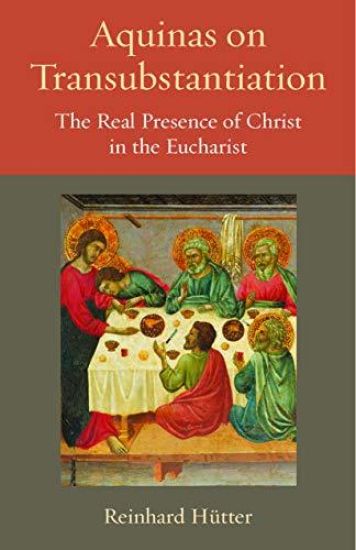
Aquinas on Transubstantiation treats one of the most frequently misunderstood and misrepresented teachings of Thomas Aquinas - Eucharistic transubstantiation. The study interprets Aquinas’s teaching as an exercise of “holy teaching” (sacra doctrina) that intends to show theologically and back up philosophically the simple yet profound thesis that “transubstantiation” affirms nothing but the truth of Christ’s words at the Last Supper - “This is my body,” “This is my blood.”Yet in order to achieve a contemporary ressourcement of this simple yet profound truth, it is necessary to probe the depths of Thomas Aquinas’s philosophical interpretation of it. For Thomas Aquinas, in regarding the truth of Eucharistic conversion, it is faith that preserves the human intellect from missing or dismissing the mystery announced in Christ’s words. Faith, however, is not intellectually blind, a faith that, as is often erroneously held, is commanded by arbitrary divine dictates to which the will submits in blind obedience. Rather, Aquinas takes faith is sustained, but not constituted, by an intellectual contemplation of the proposed mystery of faith, by faith seeking understanding.Thomas Aquinas unfolds this exercise of understanding guided by faith in the medium of a metaphysical contemplation that affords a profound intellectual appreciation of this central mystery of faith - precisely as mystery. Thomas’s metaphysical contemplation of Eucharistic conversion gestures toward the blinding light of superintelligibility, experienced as the unique darkness that surrounds this sublime mystery of faith.A ressourcement in Thomas Aquinas’s doctrine of transubstantiation also affords a renewed appreciation of the Church’s affirmation of transubstantiation as the most apt term for the interpretation of the mystery of Eucharistic conversion and a greater precision of what is centrally at stake in this mystery in the ongoing ecumenical conversation of this most central Christian teaching. A doctrinally sound, ecumenically informed, and philosophically reflected contemporary Catholic theology cannot afford to ignore or dismiss Aquinas’s surpassing account of Eucharistic conversion.
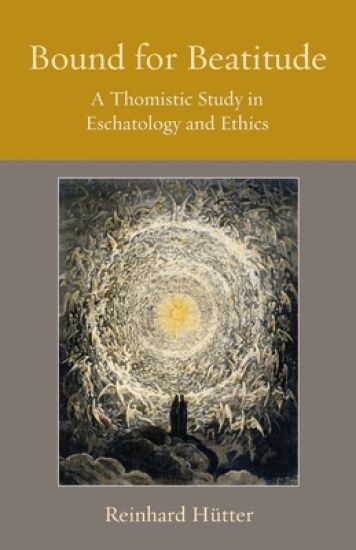
Bound for Beatitude is about St. Thomas Aquinas’s theology of beatitude and the journey thereto. Consequently, the work’s topic is the meaning and purpose of human life embedded in that of the whole cosmos. This study is not an antiquarian exercise in the thought of some sundry medieval thinker, but an exercise of ressourcement in the philosophical and theological wisdom of one of the most profound theologians of the Catholic Church, one whom the Church has canonized, granted the title “Doctor of the Church,” and for a long time regarded as the common doctor. This exercise of ressourcement takes its methodological cues from the common doctor; hence, it is an integrated exercise of philosophical, dogmatic, and moral theology. Its specific theological topic, the ultimate human end, perfect happiness, beatitude, and the journey thereto—stands at the very heart of St. Thomas’s theology. Far from being passé, his theology of beatitude is of urgent pertinence as the crisis of humanity and of creation and the exile of God seems to approach its apogee.By way of a presentation, interpretation, and defense of Thomas Aquinas’s doctrine of beatitude and the journey thereto, Bound for Beatitude advances an argument based on four theses: (1) The loss of a theology of beatitude has greatly impoverished contemporary theology. In order to succeed and flourish, theology must recover a sound teleological orientation. (2) In order to recover a sound teleological orientation, theology must recover metaphysics as its privileged instrument. (3) Thomas Aquinas provides a still pertinent model for how theology might achieve these goals in a metaphysically profound theology of beatitude and the beatific vision. Finally, (4) Aquinas’s rich and sophisticated account of the virtues charts the journey to beatitude in a way that still has analytic force and striking relevance in the early twenty-first century.
Bound for Beatitude is about St. Thomas Aquinas’s theology of beatitude and the journey thereto. Consequently, the work’s topic is the meaning and purpose of human life embedded in that of the whole cosmos. This study is not an antiquarian exercise in the thought of some sundry medieval thinker, but an exercise of ressourcement in the philosophical and theological wisdom of one of the most profound theologians of the Catholic Church, one whom the Church has canonised, granted the title "Doctor of the Church," and for a long time regarded as the common doctor. This exercise of ressourcement takes its methodological cues from the common doctor; hence, it is an integrated exercise of philosophical, dogmatic, and moral theology. Its specific theological topic, the ultimate human end, perfect happiness, beatitude, and the journey thereto-stands at the very heart of St. Thomas’s theology. Far from being passé, his theology of beatitude is of urgent pertinence as the crisis of humanity and of creation and the exile of God seems to approach its apogee.By way of a presentation, interpretation, and defense of Thomas Aquinas’s doctrine of beatitude and the journey thereto, Bound for Beatitude advances an argument based on four theses: (1) The loss of a theology of beatitude has greatly impoverished contemporary theology. In order to succeed and flourish, theology must recover a sound teleological orientation. (2) In order to recover a sound teleological orientation, theology must recover metaphysics as its privileged instrument. (3) Thomas Aquinas provides a still pertinent model for how theology might achieve these goals in a metaphysically profound theology of beatitude and the beatific vision. Finally, (4) Aquinas’s rich and sophisticated account of the virtues charts the journey to beatitude in a way that still has analytic force and striking relevance in the early twenty-first century.