Kirjojen hintavertailu. Mukana 11 384 323 kirjaa ja 12 kauppaa.

Kirjahaku

Etsi kirjoja tekijän nimen, kirjan nimen tai ISBN:n perusteella.

50 kirjaa tekijältä René Chartrand

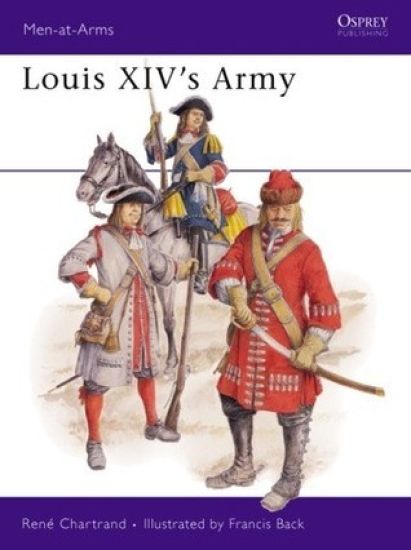
Louis XIV's Army

Louis XIV's Army

René Chartrand

Osprey Publishing
1988
nidottu
A concise, illustrated study of the army of late seventeenth and early 18th century France.Louis XIV's army was in many ways the first modern army. After assuming power in 1661, Louis abolished the post of Colonel Général of Infantry so he could exercise direct control over the armed forces in his realm. The king demanded order, discipline and absolute loyalty from his army, and he introduced a military draft in 1688 - the first step towards what we know as conscription in modern armies. This book chronicles the development of Louis XIV's army during his 54-year reign, including the units, uniforms and weapons of the elite Maison du Roi. Numerous illustrations including detailed colour figure artwork portray the uniforms, colours and standards of his troops in vivid detail.
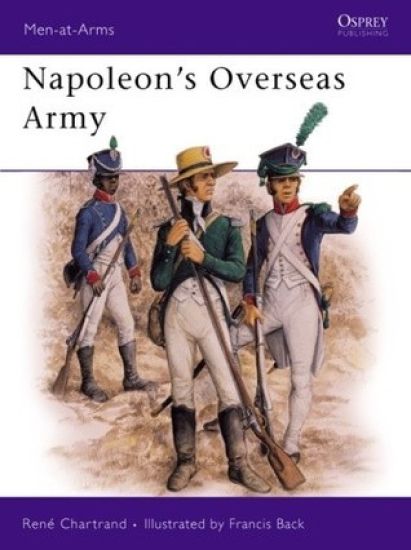
Napoleon's Overseas Army

Napoleon's Overseas Army

René Chartrand

Osprey Publishing
1989
nidottu
When the French Revolution broke out in 1789, France possessed numerous colonies spread over three continents. To defend and keep the peace in these territories, a small army of colonial troops, distinct from the metropolitan line regiments or marines, had existed since the days of Louis XIV. This book examines the history and uniforms of the often-overlooked French armies in Saint-Domingue, Guadeloupe, Martinique, St Lucia, Tobago, Ile-de-France, La Réunion, Pondichéry, Guiana, Senegal and Saint-Pierre-et-Miquelon. The text is backed by numerous illustrations offering a rare glimpse into dress and equipment of Napoleon's overseas army.
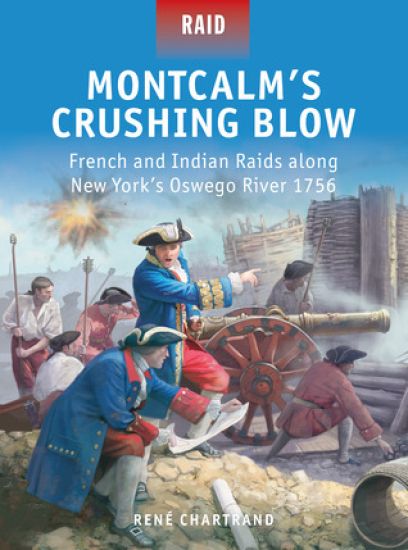
Montcalm’s Crushing Blow

Montcalm’s Crushing Blow

René Chartrand

Osprey Publishing
2014
nidottu
The year 1755 saw the rivalry between Britain and France in North America escalate into open warfare as both sides sought to overcome the other’s forts and trading posts. Lord Loudoun and the Marquis de Montcalm were sent out to lead their forces and Montcalm was soon tasked with capturing the formidable Anglo-American post at Oswego. Montcalm’s 3,000-strong force surrounded the forts at Oswego and soon forced the defenders to surrender – an outstanding French success. Featuring specially commissioned full colour artwork, expert analysis, and lively narrative, this engaging study casts light on a daring feat of arms at the height of the French and Indian War.
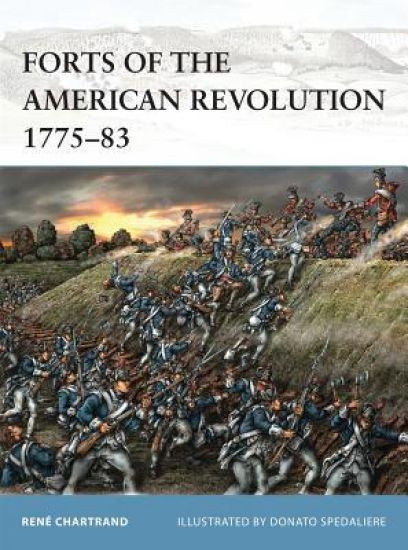
Forts of the American Revolution 1775-83

Forts of the American Revolution 1775-83

René Chartrand

Osprey Publishing
2016
nidottu
Though primarily fought in the field, the American Revolution saw fortifications play an important part in some of the key campaigns of the war.Field fortifications were developed around major towns including Boston, New York and Savannah, while the frontier forts at Stanwix, Niagara and Cumberland were to all be touched by the war. This book details all the types of fortification used throughout the conflict, the engineers on all sides who constructed and maintained them, and the actions fought around and over them.
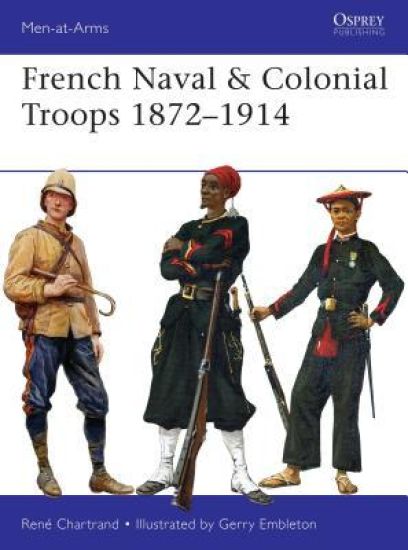
French Naval & Colonial Troops 1872–1914

French Naval & Colonial Troops 1872–1914

René Chartrand

Osprey Publishing
2018
nidottu
A fully illustrated study of the colourful regiments raised for France's late 19th-century colonial wars in Africa and Vietnam.France's colonial wars in sub-Saharan Africa and South-East Asia were very largely fought by an organization completely separate from both the home-defence Metropolitan Army and the Armée d'Afrique in Algeria. The Naval Troops (Troupes de la Marine) were volunteers, and earned a reputation for greater toughness and hardiness than the conscripted Metropolitan Army. Spread throughout the French Empire, Naval Troops in this period were characterized by very large infantry and artillery regiments based in France, mixed race regiments (Régiments Mixtes), and entire native regiments raised in West Africa, Madagascar and Indochina. The latter, the so-called 'Tirailleurs’ were organized and led by officers and cadres from the Naval Troops, and wore very varied and colourful uniforms based on formalized versions of traditional local costumes.French Naval & Colonial Troops 1872–1914 uses rich and detailed full colour plates as well as thorough analysis to detail the story of these tough colonial units which bore the brunt of French colonial campaigns in Africa and Vietnam.
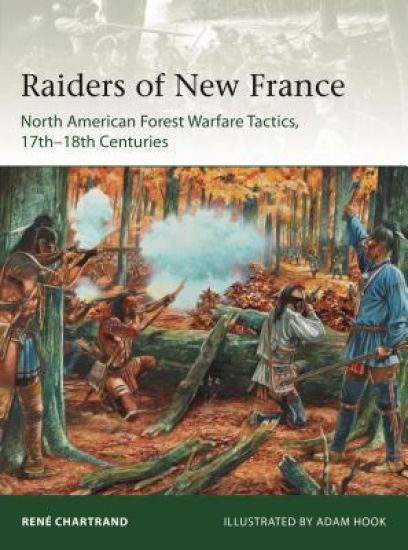
Raiders from New France

Raiders from New France

René Chartrand

Osprey Publishing
2019
nidottu
Though the French and British colonies in North America began on a 'level playing field', French political conservatism and limited investment allowed the British colonies to forge ahead, pushing into territories that the French had explored deeply but failed to exploit. The subsequent survival of 'New France' can largely be attributed to an intelligent doctrine of raiding warfare developed by imaginative French officers through close contact with Indian tribes and Canadian settlers. The ground-breaking new research explored in this study indicates that, far from the ad hoc opportunism these raids seemed to represent, they were in fact the result of a deliberate plan to overcome numerical weakness by exploiting the potential of mixed parties of French soldiers, Canadian backwoodsmen and allied Indian warriors.Supported by contemporary accounts from period documents and newly explored historical records, this study explores the 'hit-and-run' raids which kept New Englanders tied to a defensive position and ensured the continued existence of the French colonies until their eventual cession in 1763.
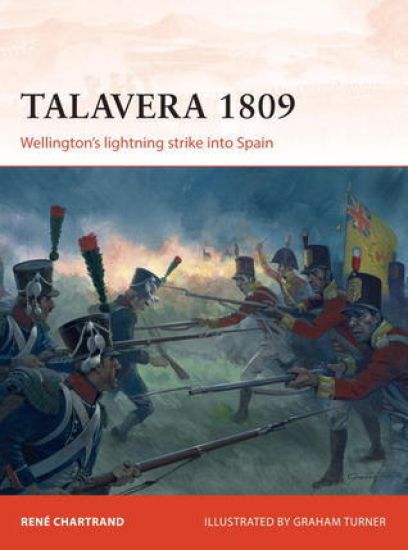
Talavera 1809

Talavera 1809

René Chartrand

Osprey Publishing
2013
nidottu
A highly illustrated account of the battle of Talavera in 1809, one of the major battles of the Peninsular War.The battle of Talavera in 1809 was one of the major battles of the Peninsular War and Arthur Wellesley’s first victory in Spain itself, following which he was created Viscount Wellington of Talavera and Wellington. Although Wellesely’s forces were outnumbered, and a sizeable contingent of the Spanish ran away, he had chosen a superb defensive position and was able to beat off successive French attacks, though at a heavy cost in terms of casualties.Although the French had withdrawn leaving Wellesley the master of the field, his high casualties and approaching French reinforcements led to Wellesley withdrawing to Portugal. His foray into Spain had an enormous effect on Spanish morale as they realized they were not alone in the struggle. British redcoats had had got to within 70km of Madrid, and they would return in future years.With full-colour maps, as well as contemporary prints and illustrations, this detailed yet concise volume examines the battle in detail.
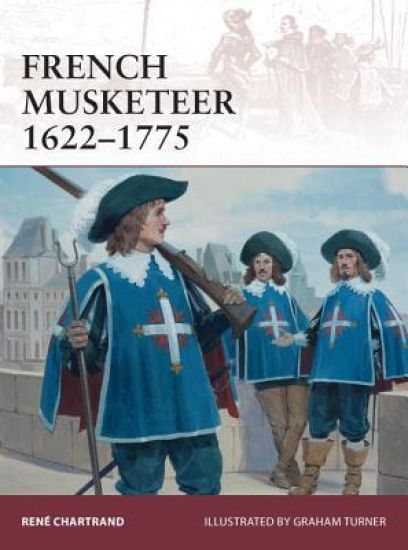
French Musketeer 1622–1775

French Musketeer 1622–1775

René Chartrand

Osprey Publishing
2013
nidottu
The works of French novelist Alexandre Dumas have been reproduced time and again on stage and screen. Based on a genuine memoir by an officer named D’Artagnan, Dumas published The Three Musketeers. The King’s Musketeers were formed in 1622 and were populated by young men of noble birth, but often of poorer means. The Musketeers served as a form of military academy, which enabled these men to qualify for commission into the regular army, but the academy was not just a schoolroom - the Musketeers served in all major battles and campaigns of the period; their reputation for bravery was well deserved. This title explores the history behind the legends created by Dumas. Drawing on historical and fascinating accounts the truth of this most colourful and flamboyant of units is revealed.
Ticonderoga 1758

Ticonderoga 1758

René Chartrand

Osprey Publishing
2000
nidottu
A detailed, illustrated account of France's unexpectedly won battle at Ticonderoga.On 5 July 1758 General Abercromby's expedition against Fort Carillon set off from its camp. Within hours, tragedy struck. Some rangers ran into a French scouting party and in the fierce skirmish that followed Lord Howe, the darling of the army, was shot through the heart. The army was shattered at the loss, but Abercromby went to pieces.He decided to attack Montcalm's completed breastworks head-on. Battalion after battalion was sacrificed, the most famous of these hopeless assaults being that of the Black Watch. With the failure of his plan and the exhaustion of his army Abercromby retreated to the foot of Lake George – Montcalm had saved Canada, with Abercromby's help.René Chartrand describes the skirmish as it unfolded, including profiles of the commanders and key aspects of their plans.
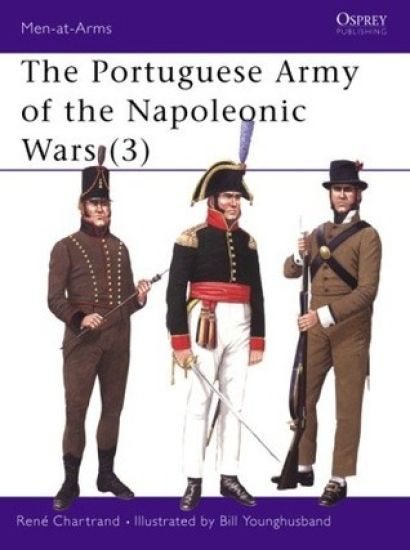
The Portuguese Army of the Napoleonic Wars (3)

The Portuguese Army of the Napoleonic Wars (3)

René Chartrand

Osprey Publishing
2001
nidottu
Rene Chartrand examines the background to the ancient alliances of Britain and Portugal in this, the concluding volume of a three part Men-at-Arms mini-series. He investigates the formative events of the War of the Oranges, the army reforms of 1806, and the French invasion of Portugal in 1807 that resulted in massive aid and equipment being given to the Portuguese by the British. 'The Portuguese Army of the Napoleonic Wars 'concludes with a detailed description of the service, battle record and uniform of each regular regiment in the Pennisular War from 1808 to 1814.
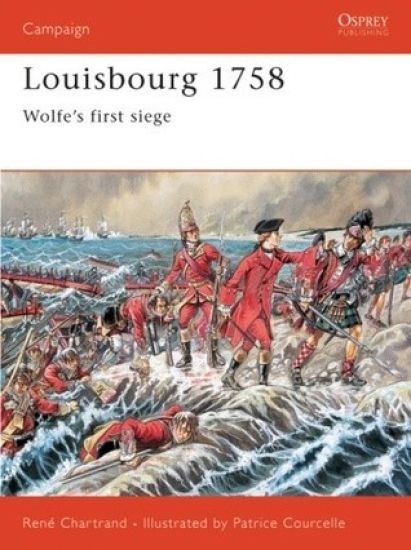
Louisbourg 1758

Louisbourg 1758

René Chartrand

Osprey Publishing
2000
nidottu
Featuring information from a previously unpublished journal, an illustrated account of this strategically important battle in Canada.Louisbourg represented a major threat to Anglo-American plans to invade Canada. Bypassing it would leave an immensely powerful enemy base astride the Anglo-American lines of communication – Louisbourg had to be taken. Faced with strong beach defences and rough weather, it took six days to land the troops, and it was only due to a stroke of daring on the part of a young brigadier named James Wolfe, who managed to turn the French beach position, that this was achieved.The story is largely based on firsthand accounts from the journals of several participants, including French Governor Drucour's, whose excellent account has never been published.
Canadian Forces in World War II

Canadian Forces in World War II

René Chartrand

Osprey Publishing
2001
nidottu
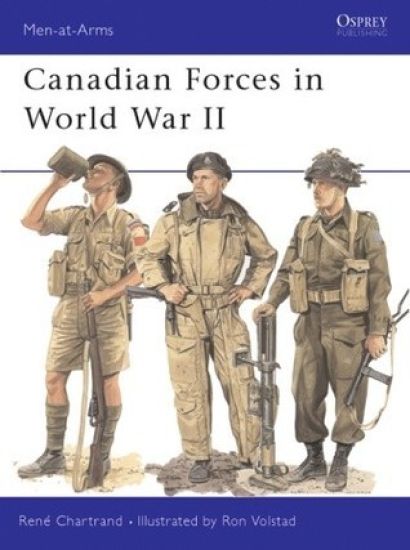
Canada was the first Commonwealth ally to come to Britain's aid in 1940, and until final victory Canadian troops fought alongside the British and later the US armies. The Canadian divisions earned a high reputation on the battlefields of Italy, Normandy and North-West Europe, and others fought in the Far East. This is an illustrated study of their uniforms, weapons and equipment, with many battlefield photographs, and eight colour plates by famous Canadian military illustrator Ron Volstad. Navy, Airforce, tank crews and paratroopers are all discussed in detail.
Vimeiro 1808

Vimeiro 1808

René Chartrand

Osprey Publishing
2001
nidottu
In August 1808, a 14,000-man British army landed at Figura da Fozin Portugal under the future Wellington, Sir Arthur Wellesley. General Andoche Junot had 25,000 French troops in Portugal but these were scattered trying to contain the Portuguese. A 6,000-strong French force under General de Laborde was sent against the British. Wellesley outmanoeuvred his opponent and, at Rolica on 17 August, defeated the French. The suprized French mustered a further 13,000 men and hoped to defeat the British quickly as more troops were arriving from England. Junot met Wellesley (16,000 British, 2,000 Portuguese) at Vimeiro on 21 August.
Bussaco 1810

Bussaco 1810

René Chartrand

Osprey Publishing
2001
nidottu
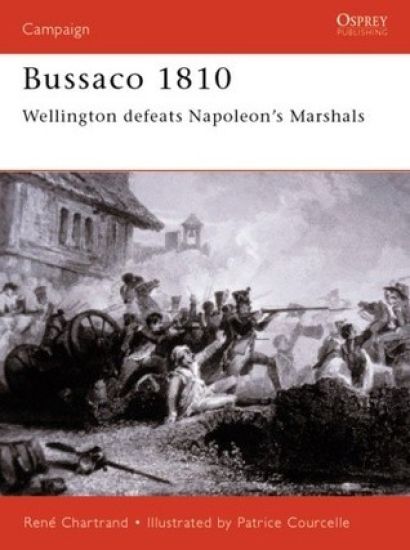
By 1810 Viscount Wellington had been forced onto the defensive. Napoleon was not about to give up and ordered a third massive invasion of Portugal. Wellington was now faced by 80,000 men of the Army of Portugal under Marshal Massena. At Bussaco on 27 September the British/Portuguese force offered battle. They had taken up a strong defensive position on high ground. Massena was perhaps too confident; the determined attacks of the French were all repulsed with the loss of 4500 French casualties against less than 1300 for the Anglo-Portuguese. This title shows how Bussaco was both a stinging defeat for the French army, and a demonstration of the courage and quality of the newly reorganized Portuguese army. It includes coverage of the construction of the defence lines around Lisbon - a masterpiece of military engineering.
Fuentes de Oñoro 1811

Fuentes de Oñoro 1811

René Chartrand

Osprey Publishing
2002
nidottu
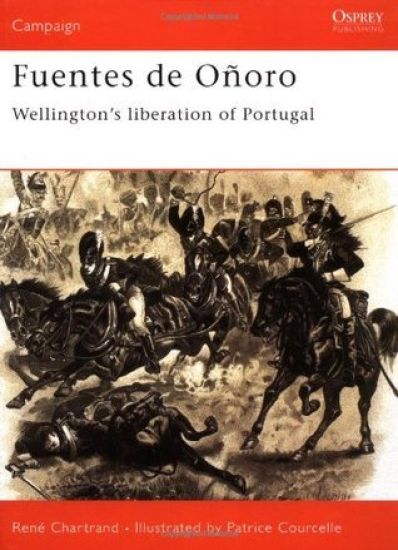
In 1811, the French again took the offensive in the peninsula. Soult moved to Badajoz and Massena advanced to relieve Almeida which Wellington had invested. At Fuentes de Onoro Massena and Wellington's armies clashed in a hard-fought contest. The attacks of the French cavalry were thwarted by the stalwart resistance of the British infantry in square. Wellington lost 1800 men, Massna 2700 but the French failed to break Wellington's siege of Almeida and were forced to withdraw. Massena was relieved of his command in disgrace to be relieved by Marshal Marmont. This book features the full story of the construction of the lines of Torres Vedras, the most massive undertakings of military engineering in the whole of the Napoleonic wars.
Colonial American Troops 1610–1774 (1)

Colonial American Troops 1610–1774 (1)

René Chartrand

Osprey Publishing
2002
nidottu
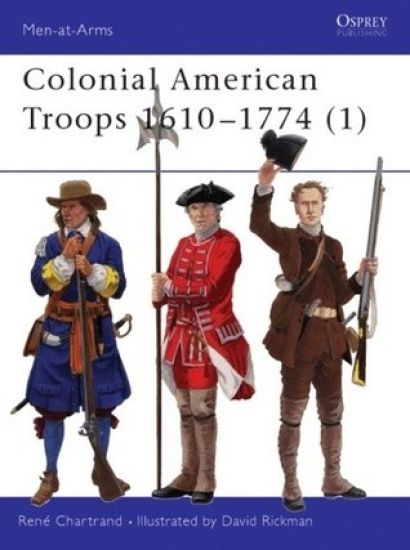
This volume tells the story of how, almost from the first arrival of French and English colonists in eastern North America in the 16th century, the settlers were forced to raise militias to protect themselves from the Indians. French and English soon made alliances with different tribes and fought alongside them against their Native American and European enemies during a long series of frontier wars. In the absence of more than tiny forces of European troops it was the colonists themselves who had to bear the brunt of the periodic fighting. Remote forts were planted on the vital waterways and along the advancing frontiers and these were often the objectives of long, dangerous expeditions through the wilderness.
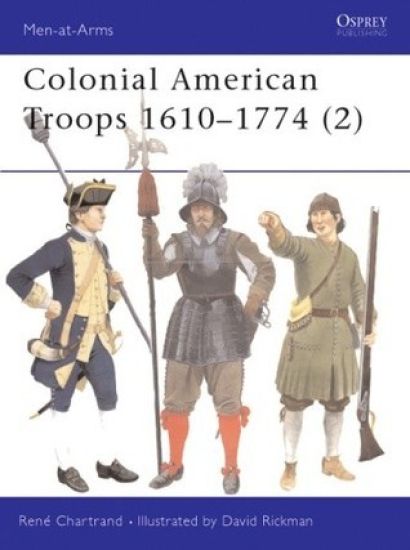
Colonial American Troops 1610–1774 (2)

Colonial American Troops 1610–1774 (2)

René Chartrand

Osprey Publishing
2002
nidottu
This book describes the dramatic and colourful history of the provincial units which were raised in the 13 original American colonies. They were raised to protect themselves from the Indians as well as to fight alongside British regular troops during the climatic French/Indian War of 1754-1763 and against Pontiac's Rebellion which followed final victory over the French. Units raised include the Virginia Regiment (in which George Washington served), and the 'Ranger Companies' of forest guerrillas such as that led by the legendary Robert Rogers. These units were the seeds from which grew the future American army of the Revolutionary War.
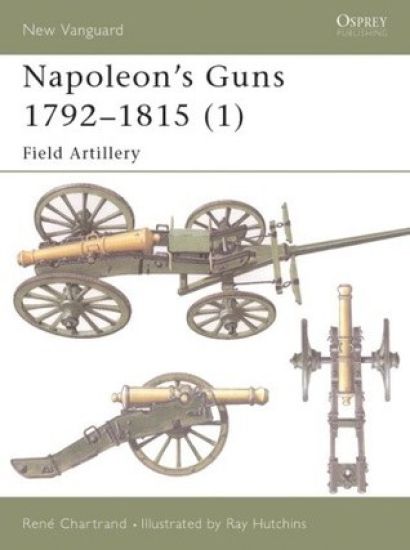
Napoleon's Guns 1792–1815 (1)

Napoleon's Guns 1792–1815 (1)

René Chartrand

Osprey Publishing
2003
nidottu
Napoleon, as a young artilleryman, was trained with the Gribeauval system, created to standardise the French field artillery. He remained faithful to this system throughout the Revolutionary and Napoleonic Wars, only introducing a few minor changes. The consistency of the Gribeauval system, along with Napoleon's personal preference for artillery ensured that the French artillery had a strong advantage over their opponents, possessing considerably more guns than any other army. This volume will deal with 4-, 8- and 12-pdr guns, light 1-pdr guns and later innovations such as the 6-pdr gun, which were used with great success by Napoleon in Italy, Germany and Austria.
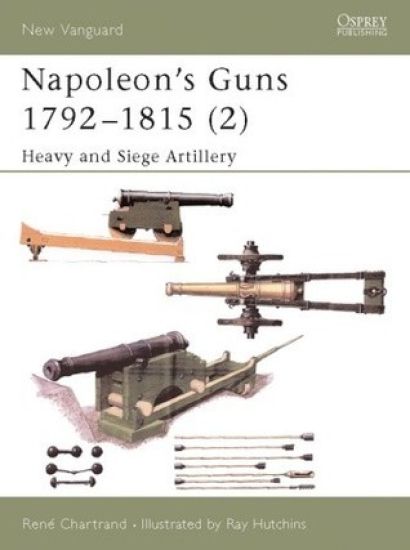
Napoleon's Guns 1792–1815 (2)

Napoleon's Guns 1792–1815 (2)

René Chartrand

Osprey Publishing
2003
nidottu
This volume is the second half of the story of the French artillery during the Revolutionary and Napoleonic Wars. It covers the howitzers, mortars and large siege (16- and 24-pdrs) and garrison (8- and 12-pdrs) guns, placing a special emphasis on their role, technical significance and operational use. The introduction of the Gribeauval system put in place a collection of mortars and large guns that were lighter and more manageable than those previously used, while offering first class hitting power.
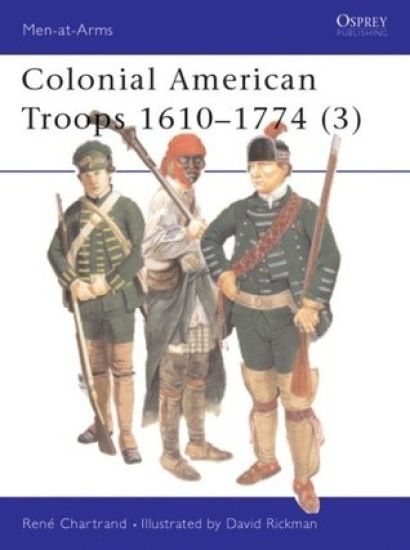
Colonial American Troops 1610–1774 (3)

Colonial American Troops 1610–1774 (3)

René Chartrand

Osprey Publishing
2003
nidottu
This work concludes the three-part mini-series that describes the history of the local forces raised in the 13 original colonies of eastern North America. From the earliest English settlements the survival of the infant colonies depended upon these militias and they included conventional line regiments, provincial units, militias, and the legendary Rangers. They fought in many frontier campaigns against the Indians, French and Spanish, including: King Philip's War (1675-78); Queen Anne's War (1702-13); the Tuscarora War (1711-12); the Yamassee War (1715-28); King George's War (1740-48); the climactic French/Indian War (1754-63); and Pontiac's Rebellion which followed final victory over the French.